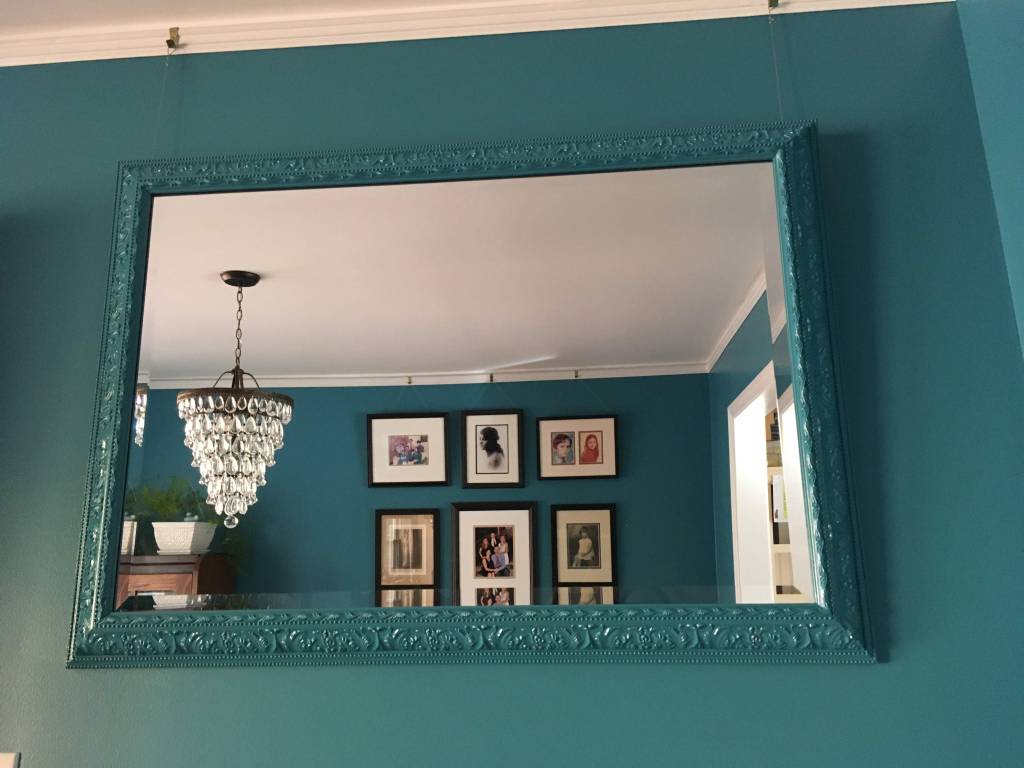
#24 Salzburg mirror

Transformation cost: $24.85

This transformation was made possible by the demise of an earlier one; I was getting ready to give TT#12 (Bevelled mirror with ornate frame) another new look when I accidentally damaged the frame. It was a long shot whether a repair would be possible, so when a neighbor was discarding this piece, I snatched it up. The glass in this piece needed replacing but by a stroke of luck the glass in TT#12 was the exact same size! I was able to use the glass from the damaged frame in the new frame.
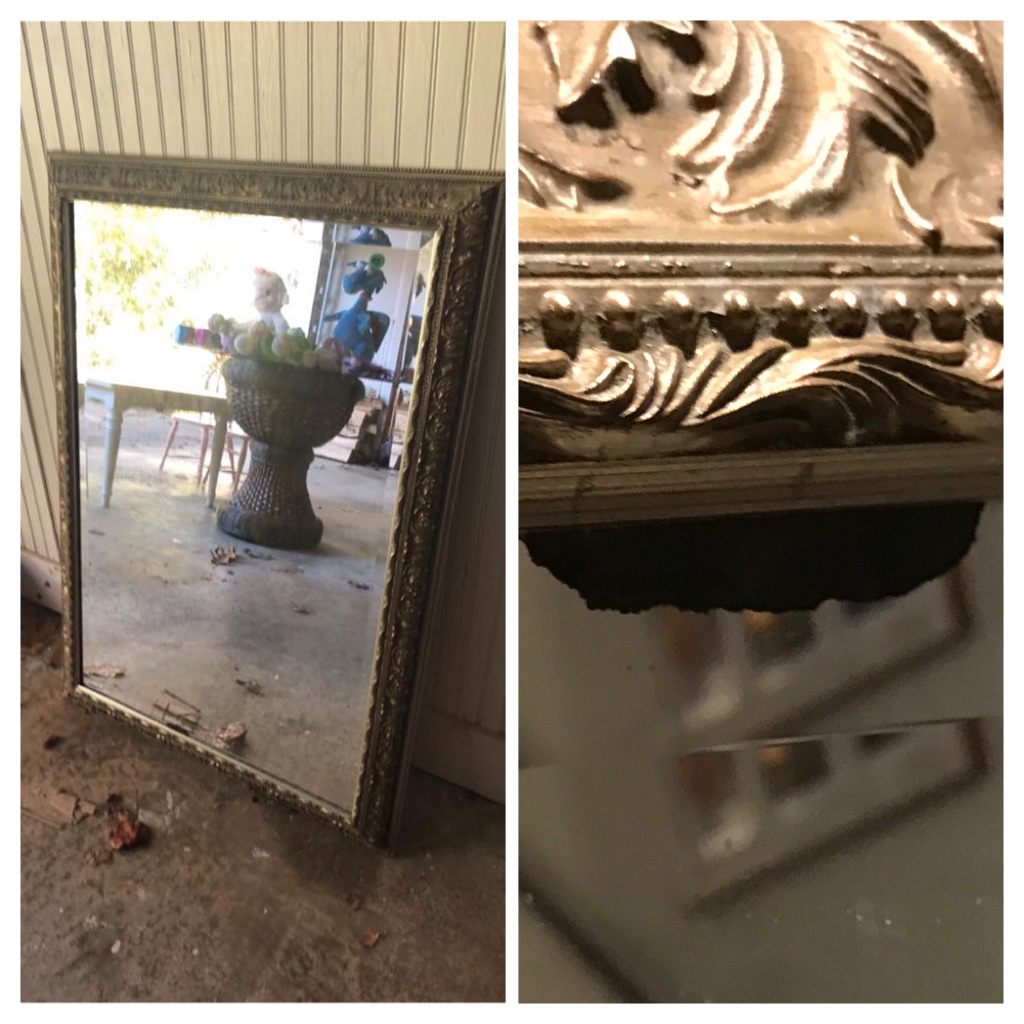
In places the mirror coating on this glass was damaged, so I began by removing it from the frame.

I then cleaned the back and front of the frame, including removing the pasted-on backing paper and the black adhesive/caulk that had been used to attach the glass.

A couple of coats of Kilz primer were followed by two coats of the same Benjamin Moore satin latex paint I used on my dining room walls.

Gloss lacquer over the paint gave the frame the finish I was looking for.

Finally it was time to put glass back into the frame. A thin layer of cardboard and a new piece of hardboard atop the glass are kept in place with glazing points and panel pins; no need for glue or caulk. A second piece of thicker cardboard pads out the rest of the space and is finished off with some craft paper and hangers.
#23 Ocean Mist table

Transformation cost: $19.02

This piece reminded me of TT#8 (The Book Lover’s table), which I completed back in February 2018. They are made of similar materials and are assembled in a similar way. Oddly enough I had the exact same setback with both pieces!

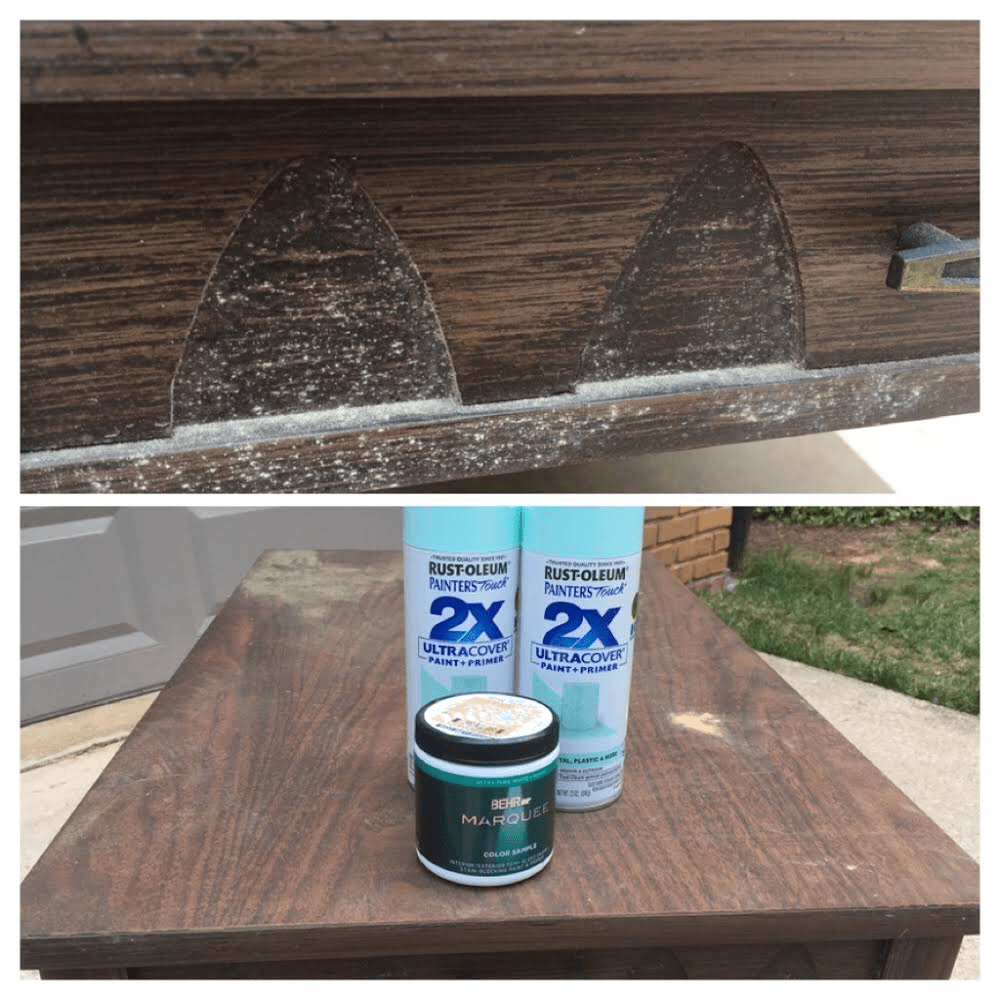
I had no qualms about painting the piece and decided to have a little fun with it. The Gothic arch shaped indentations on the front were my inspiration.

The supplies I needed for my arch inspired design were RustOleum Ultra Cover (Paint + Primer) spray paint in ocean mist gloss finish and a color-matched sample of Behr latex paint.

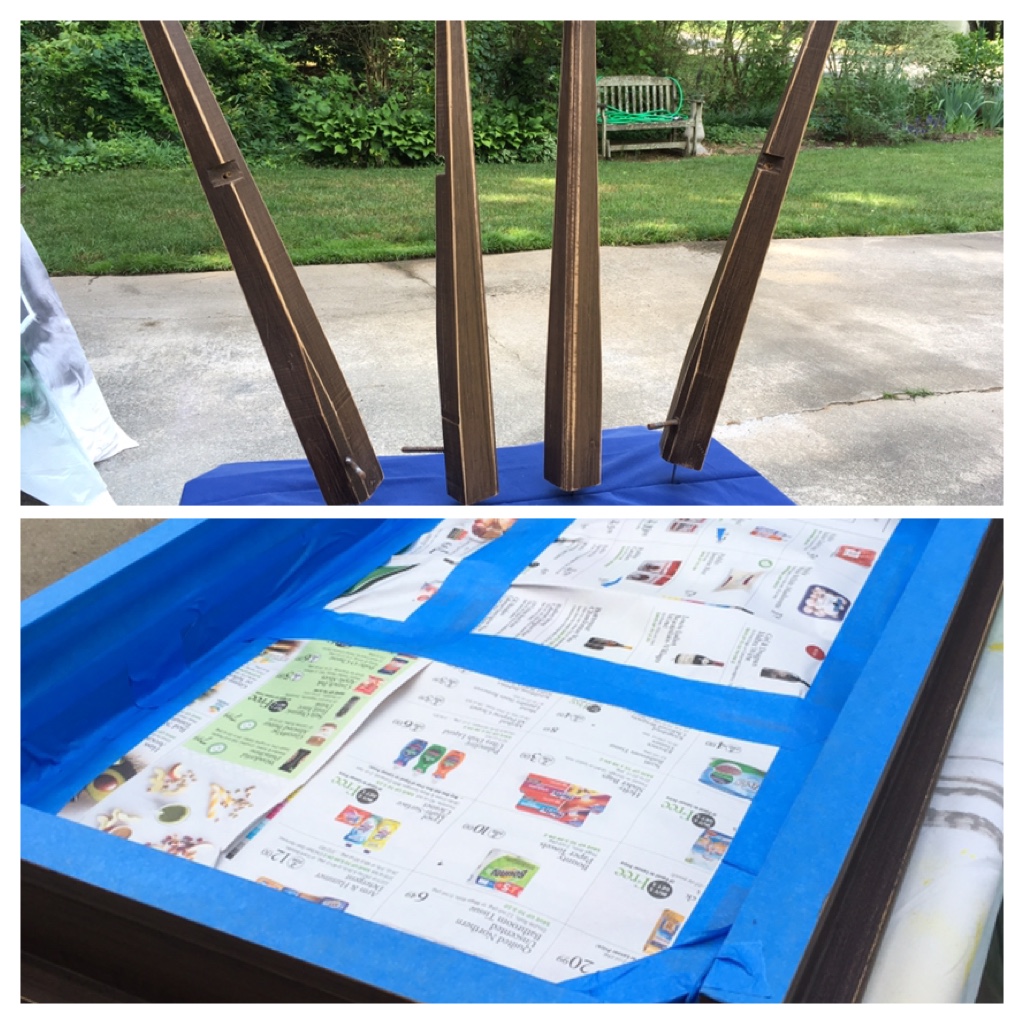
Next, the usual sequence: Disassemble. Clean. Sand. Mask. I put extra effort into the sanding because I would be applying a gloss finish that would highlight every flaw. A nail hammered into the top of each leg made it easier to clamp them for painting.

The paint was going on beautifully until it wasn’t! In certain areas the paint started to wrinkle, just as it had with the Book Lover’s table. Whereas with the Book Lover’s table I made lemonade out of lemons, this piece was destined for a different look. There was nothing for it but to let the paint dry thoroughly, sand away the wrinkles, and try again.

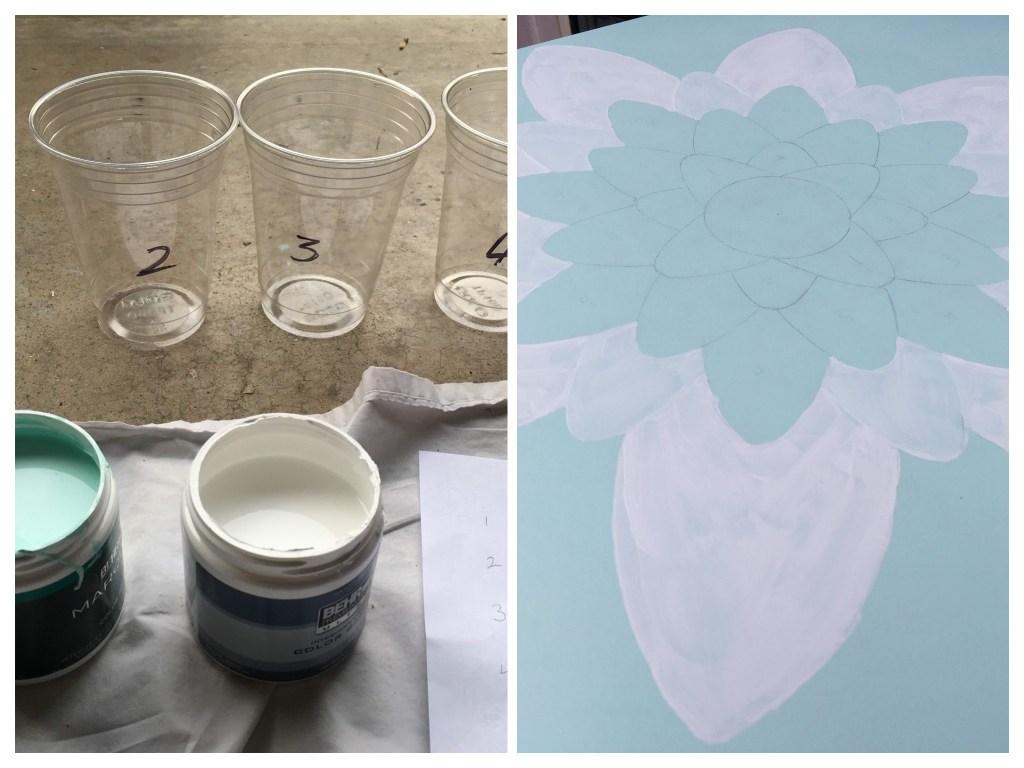
When all the components had been reworked to my satisfaction, I was ready to start on the design. I made a template from the indentations and used it to pencil my design on the table top. It was starting to look like a Paint by Numbers kit.

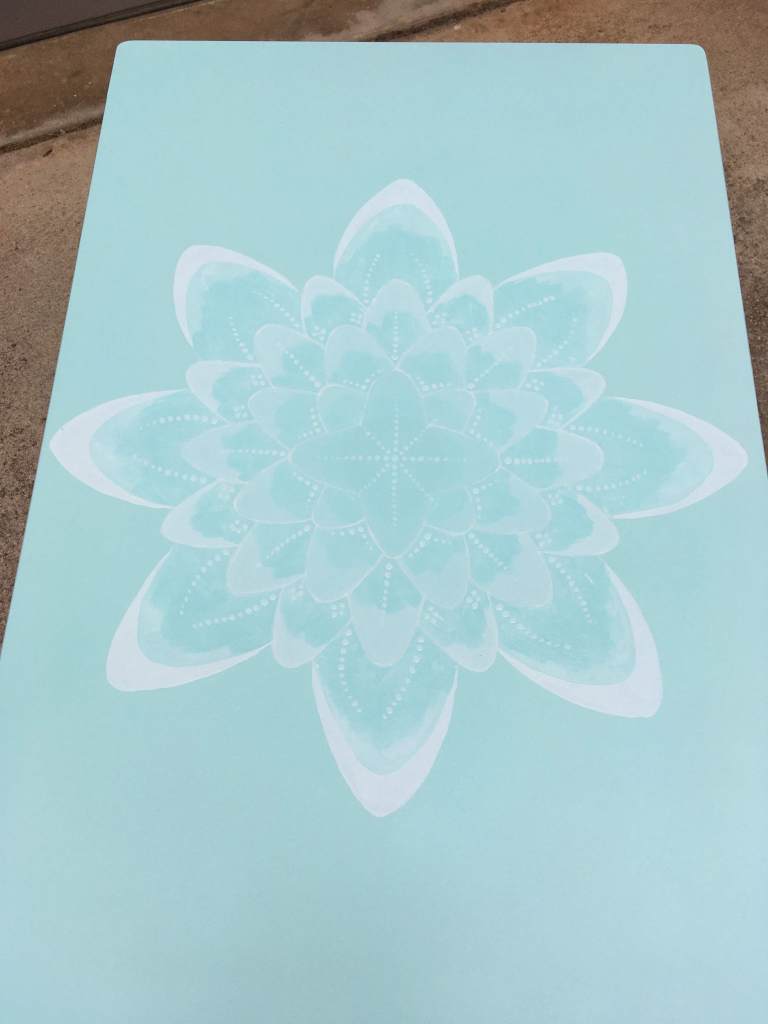
With the color-matched sample and some white paint I already had, I mixed six different shades of the Ocean Mist color and began hand painting.

Some time later ……. I locked in the finished design by adding a few coats of gloss lacquer over the hand-painted areas.

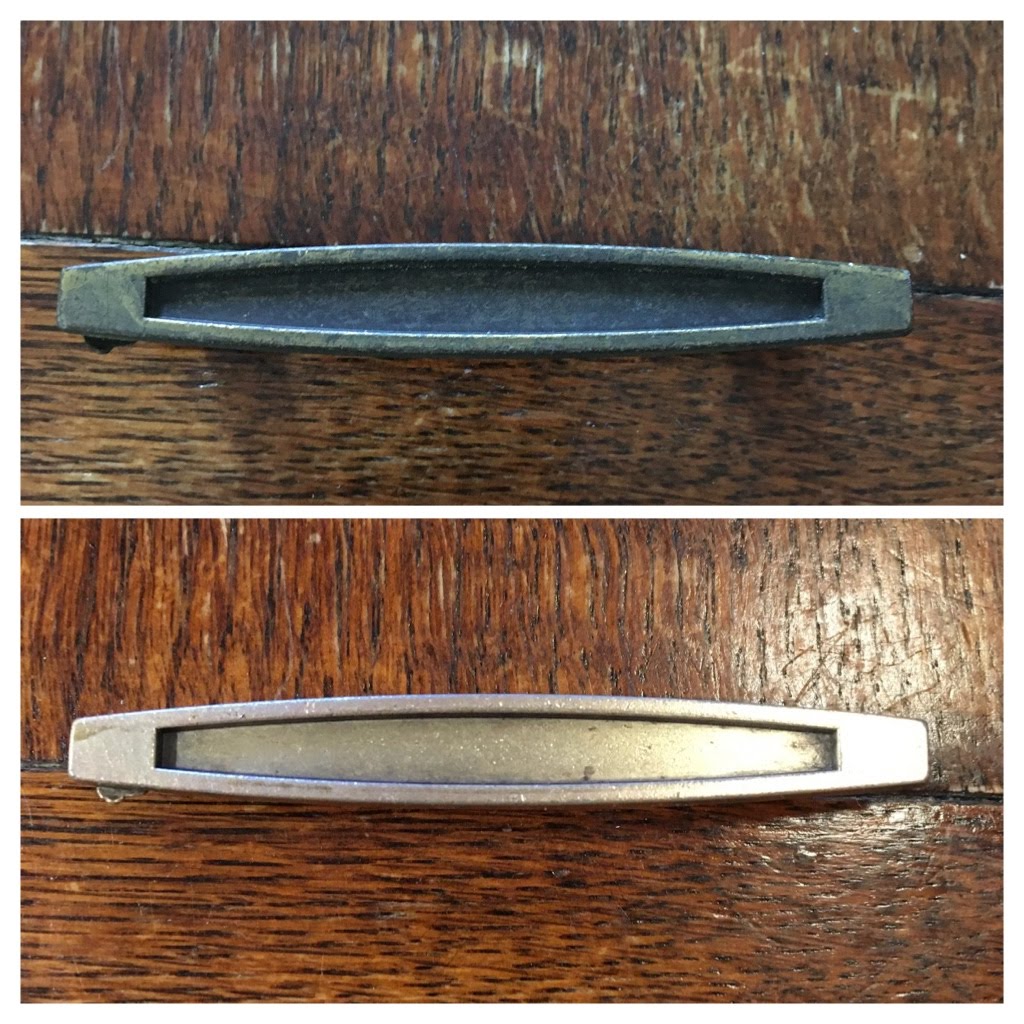
Finally, I cleaned the original hardware with some Bar Keeper’s Friend and put everything back together.

#22 Queen bed

Transformation cost: $30.07 (disclaimer at bottom of page)

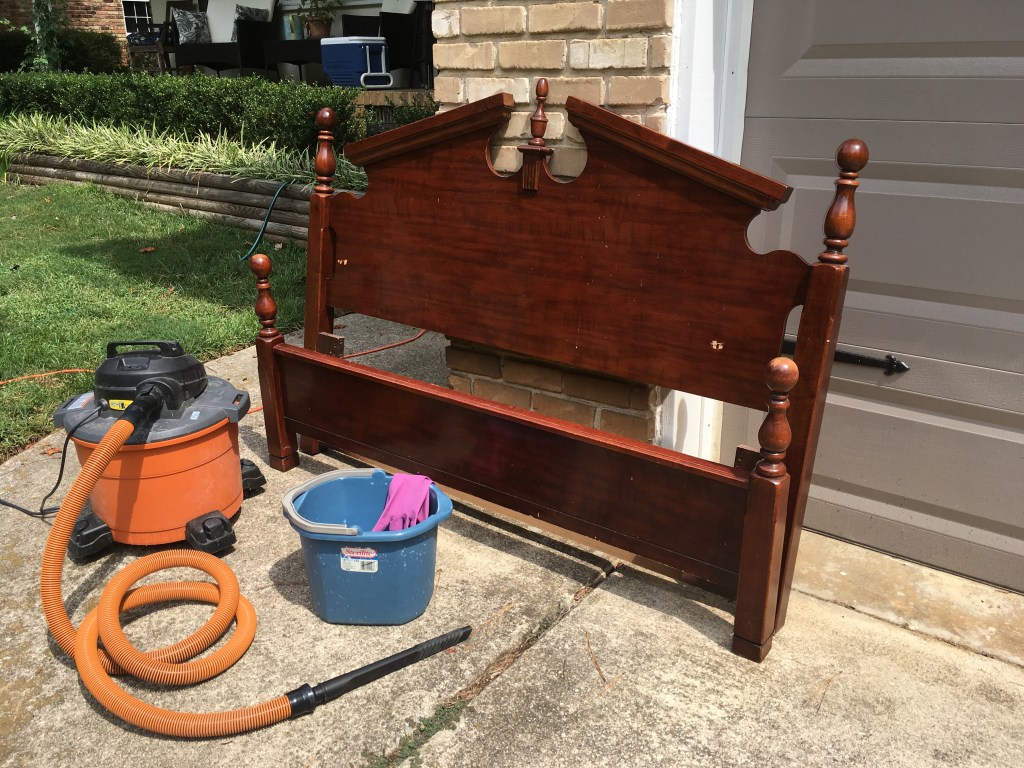
Ordinarily I would not take on a piece this big due to space restraints. However when my son moved into a student apartment, taking his bed with him, we found ourselves with a guest bed void at the same time that a neighbor was discarding this piece. It turns out this bed has a delightful history: Apart from being the owner’s childhood bed it also accompanied her and her husband to England when he was stationed there for a while. It seems fitting for an Englishwoman to be responsible for its make-over.

Step 1: The habitual cleaning.

Step 2: Sanding. Although sanding is not necessary when using chalk paint, this piece had some chips and dents that I wanted to smooth out.

Step 3: Painting. Once the piece was properly prepped I began applying Annie Sloan’s Paris Grey chalk paint.

Step 4: Distressing. After 3 coats of chalk paint I used fine sandpaper (400 grit) and a light touch to GENTLY distress the contoured parts of the bed. I deliberately was not heavy handed because I want this piece to look like it belongs in a chateau not a farmhouse.

Step 5: Waxing. I then applied 2 coats of clear wax, buffing after each coat. The piece now has a lovely waxy sheen instead of a flat finish. Isn’t it amazing how different this grey looks in the morning light?

The very last thing I did was to go back with some dark wax to add a trace more texture. You can barely see the darker wax which was my intention; again I didn’t want it looking too rustic. Applying dark wax so lightly is not as straightforward as you might think. When it first goes on it is very distinct. The way to cut it back is to have some clear wax and a clean, dry cloth on hand. Once the dark wax is on use a different brush to apply clear wax on top and blend. If there is still more distinction than you want take the cloth and simply rub it off until you get the coverage you want.

DISCLAIMER: The cost shown above is the cost to me which (especially on chalk paint projects) is often less than market price. This is because I always have left-over materials from previous projects. For example: On this piece I used a negligible amount of Annie Sloan dark wax that I already had. The cost of a small can of that wax is $17 but I did not factor it into this project.

#21 Hekman coffee table

Transformation cost: $20.50

When a neighbor was discarding this table I almost didn’t take it because it is large and heavy and I was short on storage space. I’m glad I changed my mind because it is going to be perfect for the large living room my son will have in his shared apartment. Also, it’s incredibly robust so will hopefully withstand the wear and tear from four 19-year old boys.

Markings on the underside of the table quickly revealed its distinguished heritage. Despite knowing the manufacturer and serial number, my internet searches for more information have been fruitless. However, I will rest with the knowledge that a similar Hekman coffee table would today cost upwards of $500, and that “Now, almost a century old, Hekman is widely recognized as one of America’s premier furniture suppliers.” (excerpt from http://www.hekman.com/our_history)

Removing the worn and damaged finish on the table top was my first priority. Once I had also cleaned the legs with a mild soap solution, the piece was ready for its new finishes.

First was Annie Sloan “Coco” chalk paint. I applied three coats to the legs.

I then sealed the chalk paint with one coat of clear wax. Once it was dry and buffed, I applied a second coat of clear wax, followed by Annie Sloan dark wax. By working the brush and using more clear wax as needed, I got exactly the look I was going for. Once it was dry, I finished by buffing the legs one more time.

For the table top I began by applying a coat of MinWax stain & polyurethane in honey satin. I had intended to finish the piece with one or two more coats of this product, but changed my mind. I so liked the look of it after just one coat I decided to switch to an oil-based, clear, satin polyurethane to finish the job.

Two coats of clear, satin polyurethane gave the piece the protection and sheen it needed

5 things I’ve learned about chalk painting

Although I’ve been painting walls and furniture almost all my life I’m a beginner when it comes to chalk paint. It turns out that applying chalk paint (as long as it’s not to a glider rocker) is some of the most fun I’ve had in a long time. Here are some top tips I’ve already learned:

Disclaimer: These observations are made humbly in the knowledge that there are about a gazillion people out there with tons more chalk painting expertise. Some, if not all, of this might not apply to larger, more complex projects.

1. Invest in a good brush

So you won’t be picking bristles out of your paint job every 10 seconds.

2. Use a wax brush

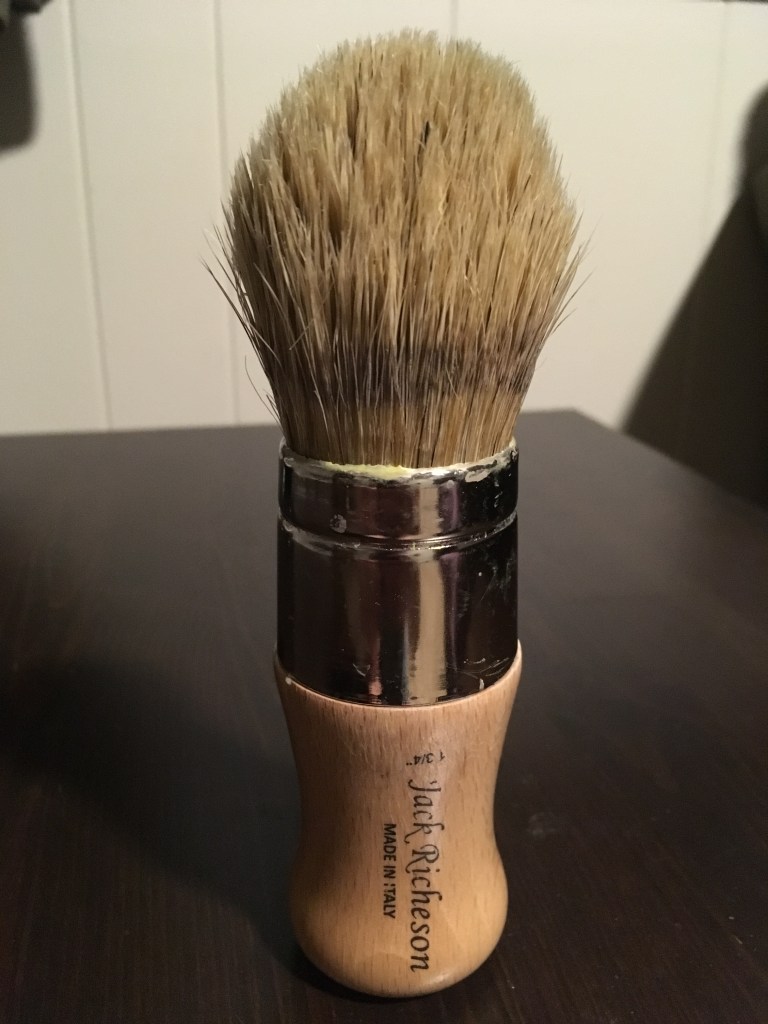
Even though you might read that chalk paint can be applied with any brush just go ahead and use a wax brush. Trust me.

UPDATE: Since this was originally posted nearly 2 years ago I have used both a regular brush and a roller to apply chalk paint. Both worked perfectly well; a roller works particularly well on large, flat surfaces such as the Sophia desk. So now you have to ask yourselves if you can really trust me at all!

3. Work it

Now you’re ready to apply the paint, it’s time to unleash your inner child. Using your lovely rounded wax brush you’re going to want to work that paint into every nook and cranny in a process I can best describe as daubing. Cast your mind back to preschool when you stood in front of an easel, wearing a cute apron and holding a big, fat paintbrush ready to paint your best sunflower. Now daub! About the only thing you can do wrong here is to cause runs by applying too much paint so just don’t overload your brush.

4. Don’t stop at 2

The first coat will look crappy. You will again be reminded of your preschool days. The second coat will look so good in comparison you will think you’ve nailed it. Don’t stop, though; go ahead and apply a third coat. You won’t regret it.

5. Wax on, wax off

Chalk paint needs a protective finish. Although there’s no law written that it must be wax, I like to finish my chalk paint projects with 2 or 3 coats of wax. If you just want to enhance the color then use a clear wax. If you want to add contrast or highlight features in the wood then use a pigmented wax (but still start with a coat of clear wax; it makes the pigmented wax easier to work with) . The more sheen you want, the more you need to buff each coat after it has dried.

#20 Bar stool bistro table

Transformation cost: $26.05

Part 1 of a 2-part transformation this bar stool-looking thing was acting as base for a larger, round table top. It could have become many things but its fate was sealed when I temporarily stored it on my front porch and realized it is perfect as the bistro table we needed. I probably could have bought a small table for about the same price but this way I have the satisfaction of knowing I made it and it didn’t get trashed! Part 2 will be the transformation of the table top piece.

Once separated from the particle board table top this base was ready for its stand-alone transformation. After sanding and cleaning, the legs were ready for a paint finish that would complement our porch furniture and decor.

I chose Rust-Oleum metallic oil-rubbed bronze because I had previously used it to freshen up our porch light casings. NOTE TO SELF: This paint clogs easily and I wasted some partial cans because they would no longer spray.

Once I had created a paper template for the top I was ready to take the tiling plunge. I started by sticking a single row of tiles to the rim. Meanwhile I laid out the design for the top on my paper template. I used wheeled mosaic nippers to cut some square tiles in half for the center of the design.

I let the rim dry for 24-hours before I applied the tile design to the top of the table. The old table top and some cookbooks made a handy weight to encourage everything to set level.

The next day I grouted everything with a pre-mixed grout in alabaster color.

To finish the top I applied one coat of mosaic grout sealer to protect against red wine and coffee!

The finished piece goes perfectly on our front porch and is just the right size for front porch essentials!

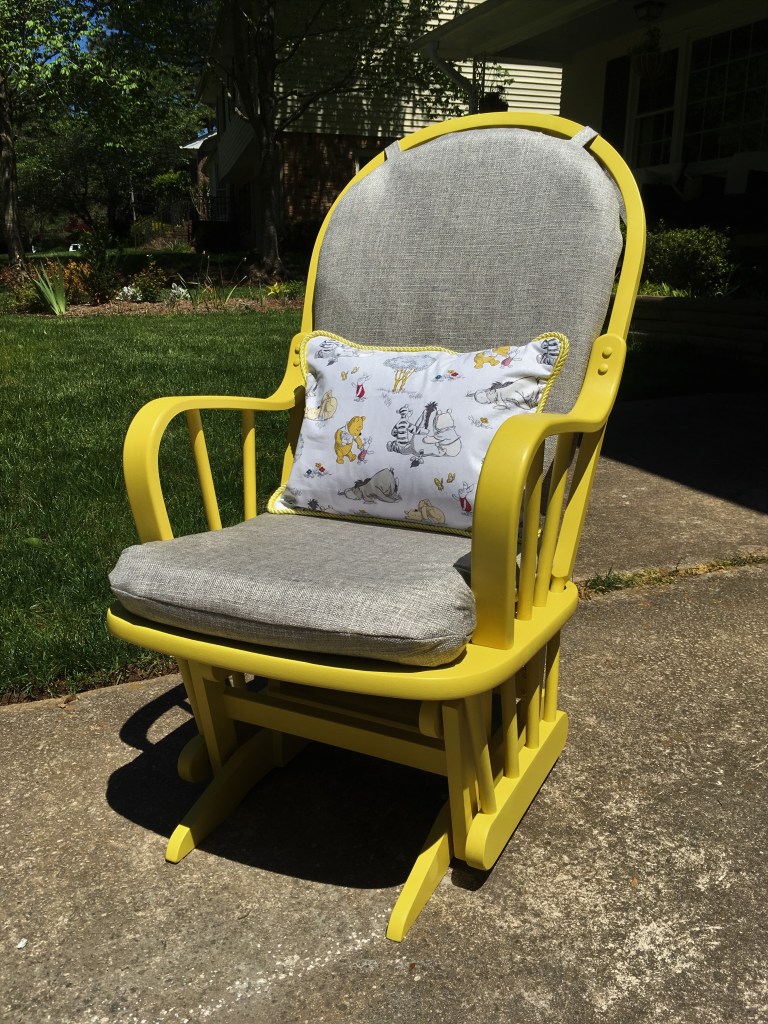
#19 Glider rocker with ottoman

Transformation cost: $73.51 (which includes $16.21 for the throw pillow)

Without doubt this was the most challenging and time consuming project I have worked on so far. Were it not for these two things I might have quit: 1) I had a special client: A dear friend’s daughter who is expecting the family’s first grand-baby 2) I never quit! I’m really a very stubborn person and when I start something I am pretty determined to see it through. There were times when I wasn’t sure I could finish it in time or to the standard I like to set. In the end my perseverance paid off and when it all came together I finally fell in love with the piece.

When I saw that a neighbor was discarding this furniture set I quickly thought of my friend’s expectant daughter. A little research showed that it was a project worth doing; a similar piece by this manufacturer would retail for >$400.

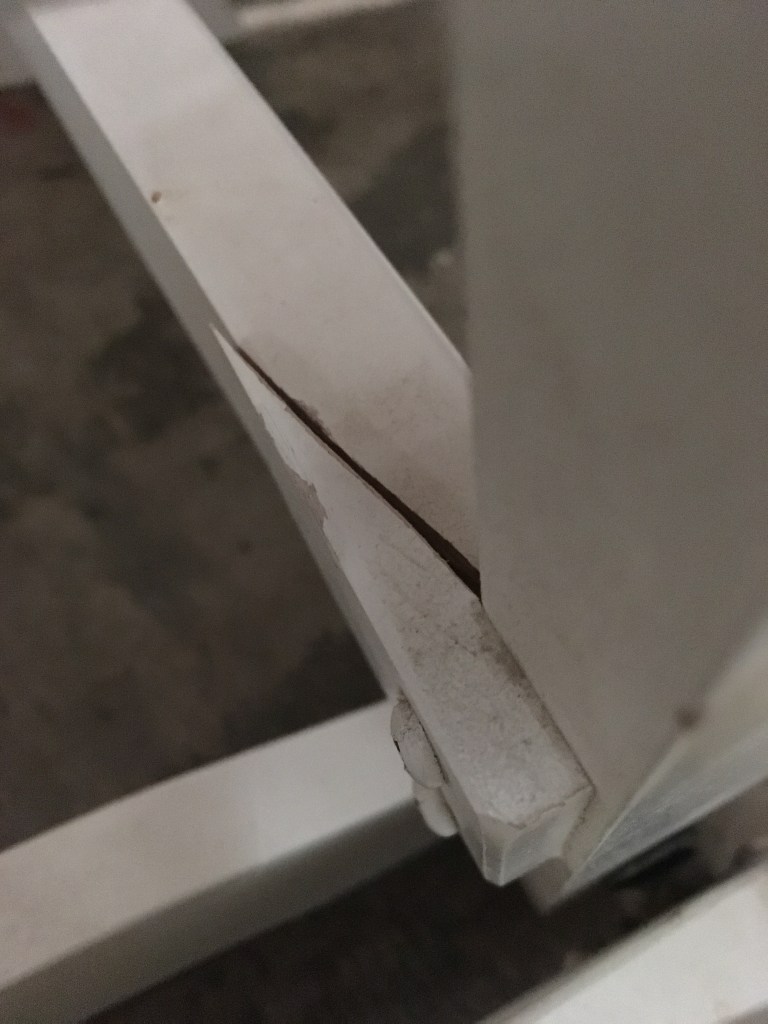
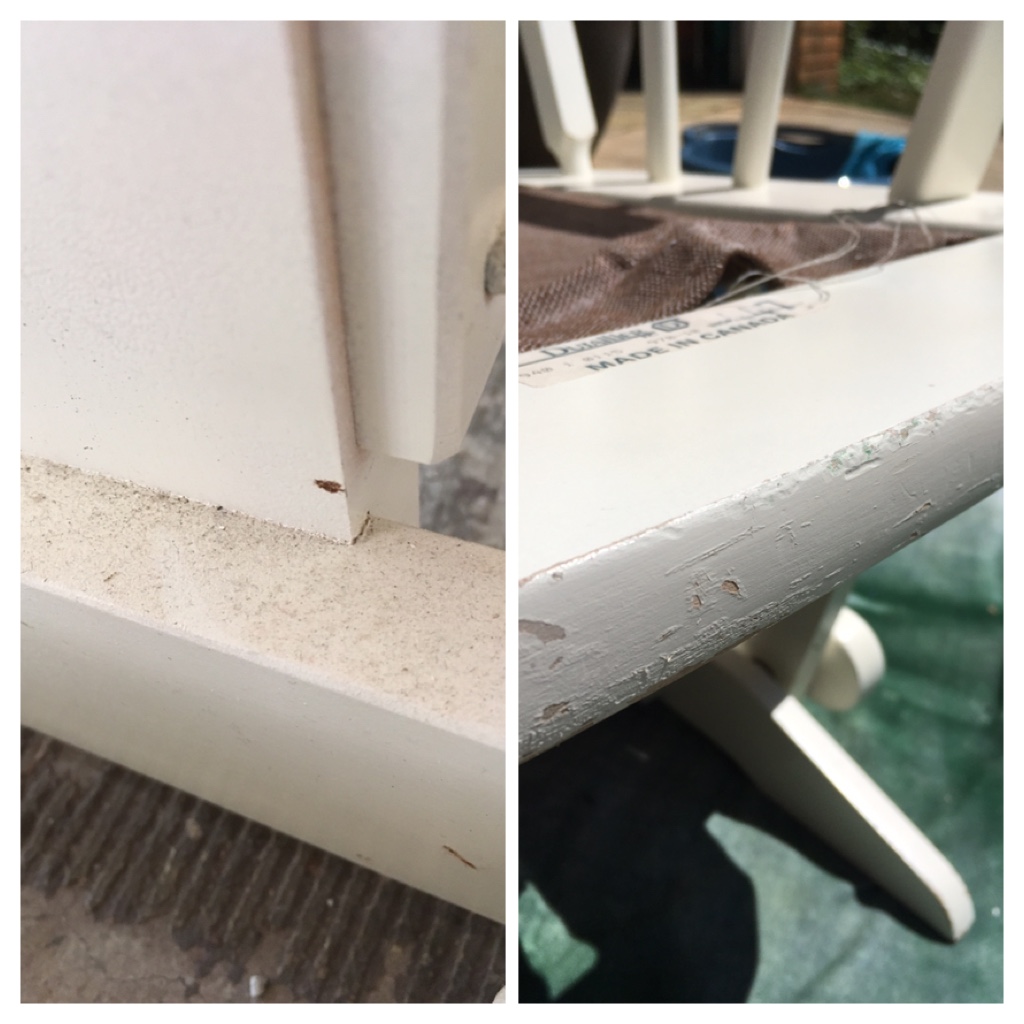
Apart from worn out cushion covers, some slats missing from the ottoman, and some scuffed paintwork, the piece was generally in good condition. The only repair it needed was to a crossbar on the chair.

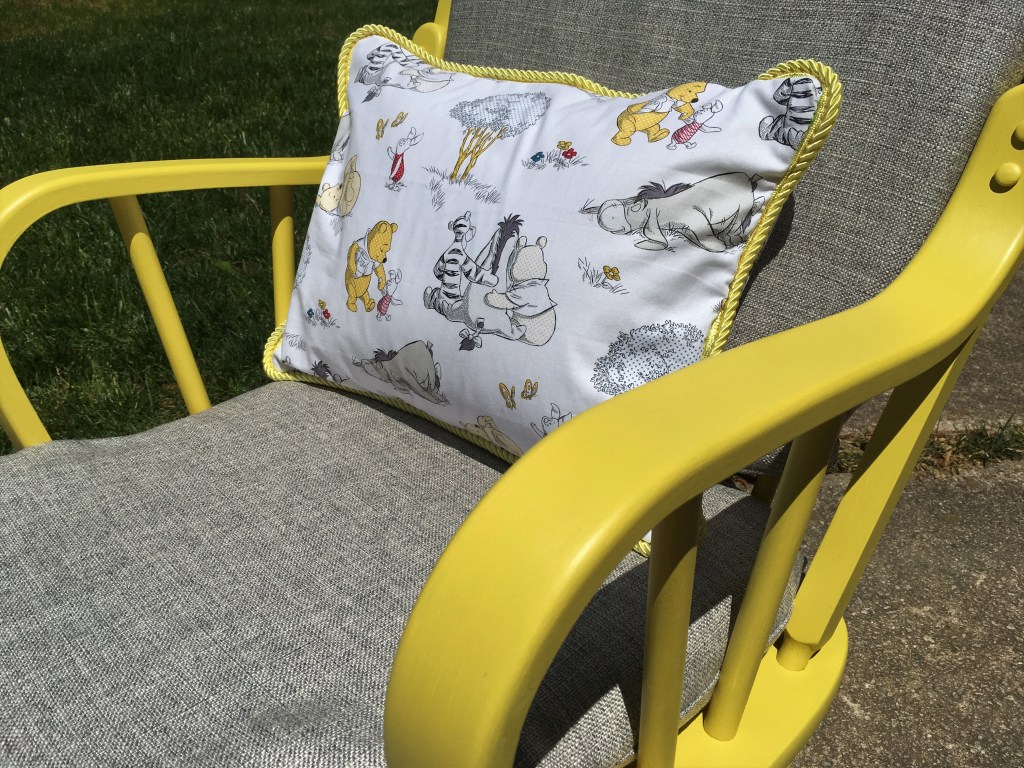
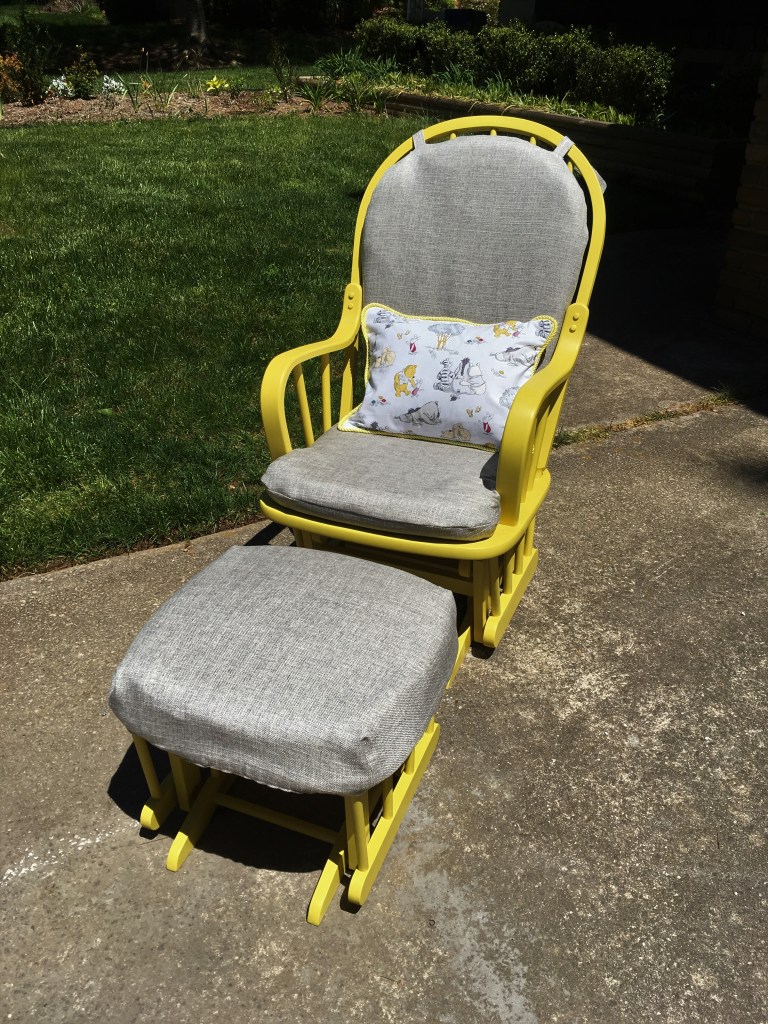
The theme for this piece was to be “Winnie The Pooh” with a yellow, gray and white color scheme. In the end I went with Annie Sloan chalk paint (not the paint pictured here) in English Yellow.

First order of the day was a thorough cleaning with a weak soap solution. Although you don’t have to sand a surface before applying chalk paint I did smooth out some blemishes in the paint finish and sand the very polished factory finish on the arms of the chair.

It transpired that painting a glider rocker and ottoman is nigh on impossible. Fortunately I’m always up for a challenge but my resolve did waver as I painstakingly applied coat after coat after coat. Fortunately by the third coat (which I applied with a wax brush rather than the regular paintbrush I had been using) I got the uniform look I was aiming for.

But the ordeal was not over! I still needed to add 2 coats of clear wax to give protection and a lovely sheen to the finish.

Once the painting was complete my husband added the slats that were missing from the ottoman

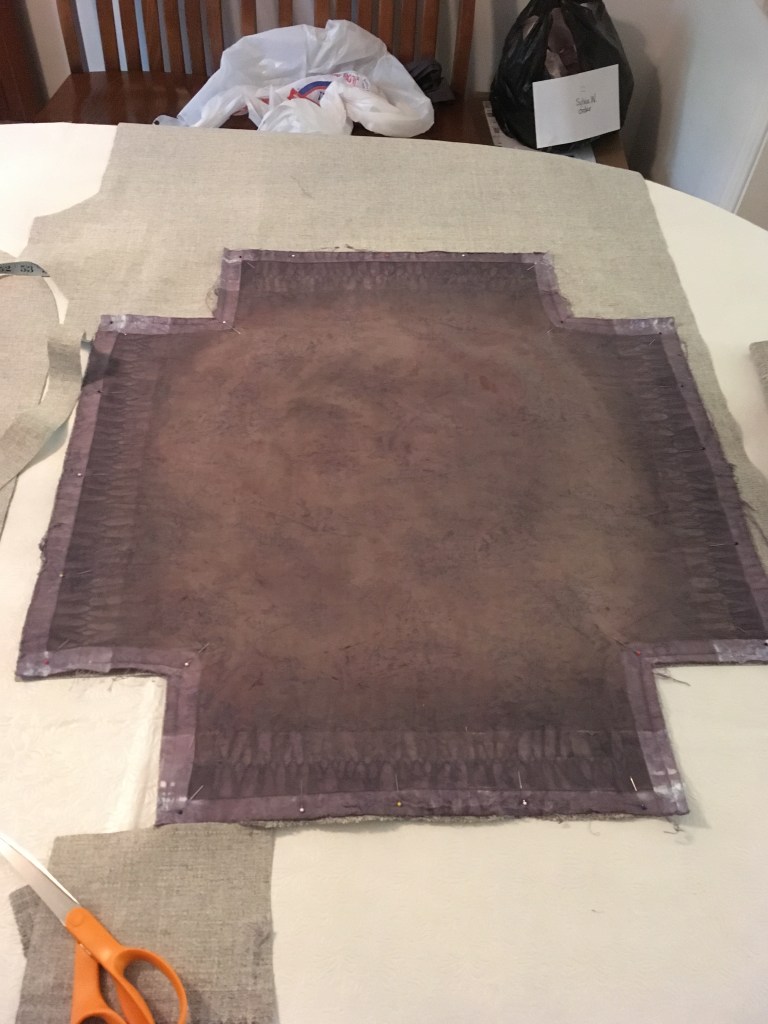
To replace the cushion covers I used the old, unpicked covers as a pattern guide for the new fabric. A brand new throw pillow in the feature fabric brings together all the colors of the piece.

#18 Rocking chair

Transformation cost: $26.53

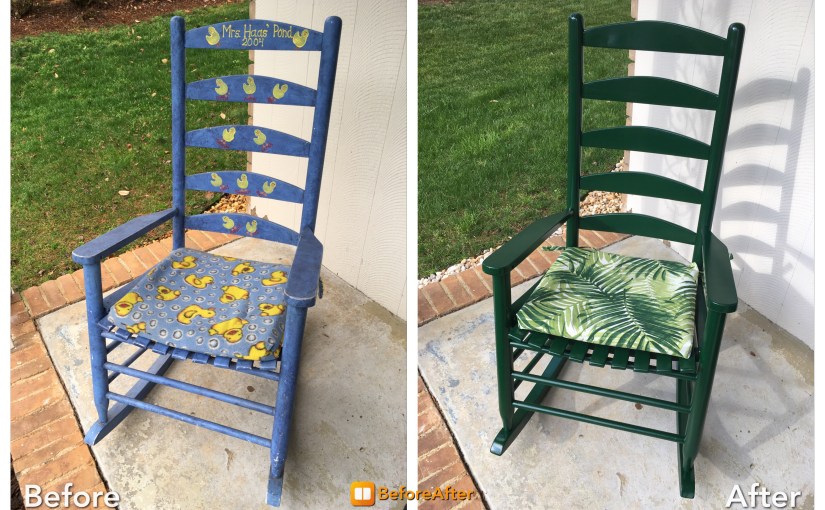
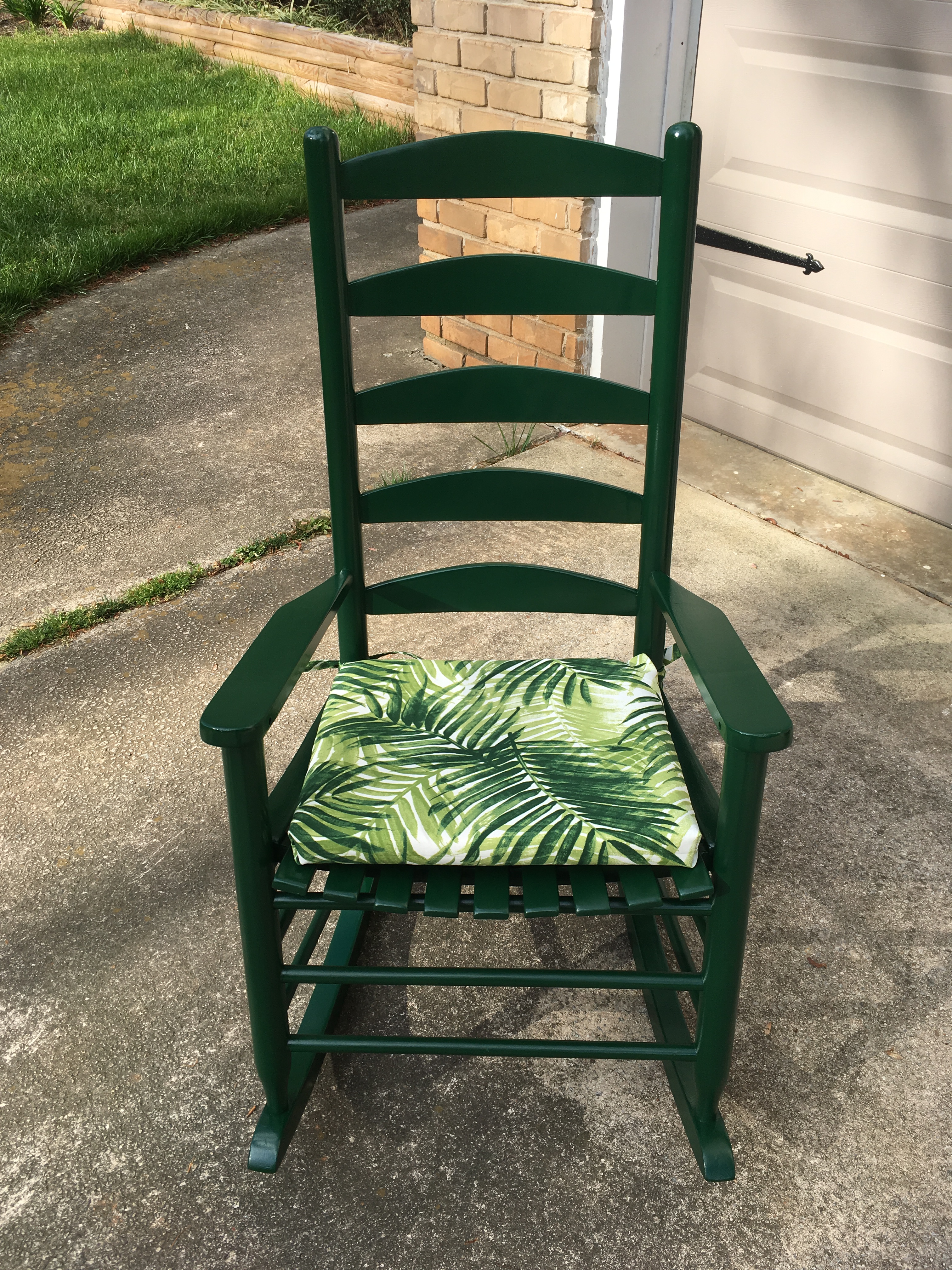
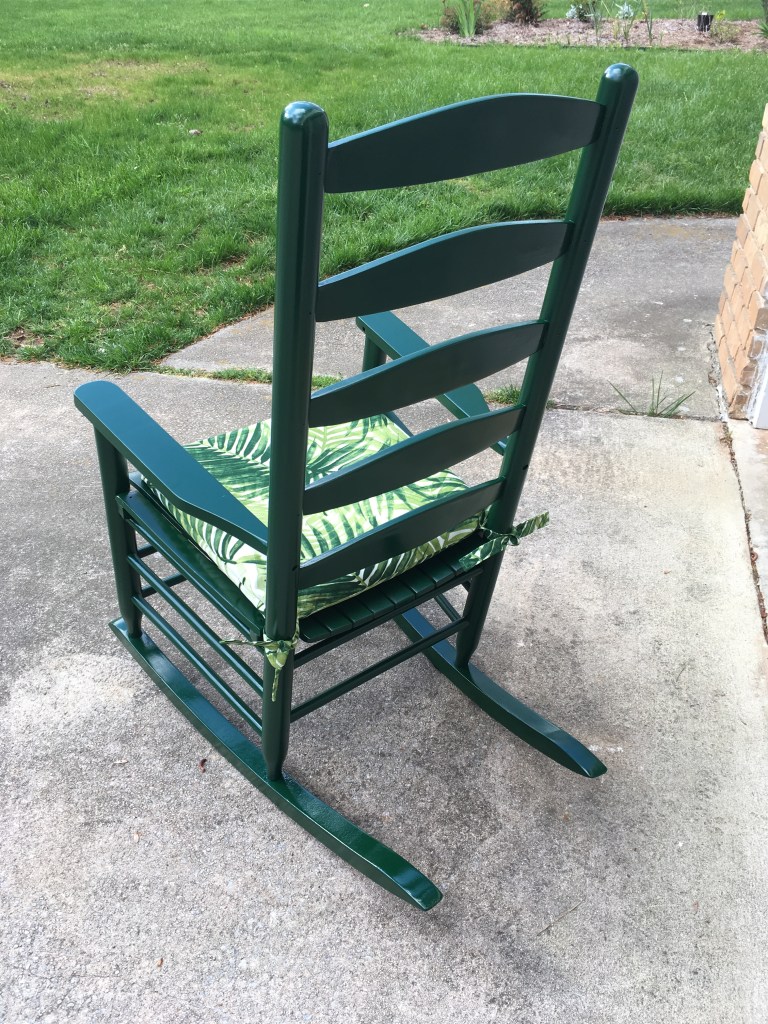
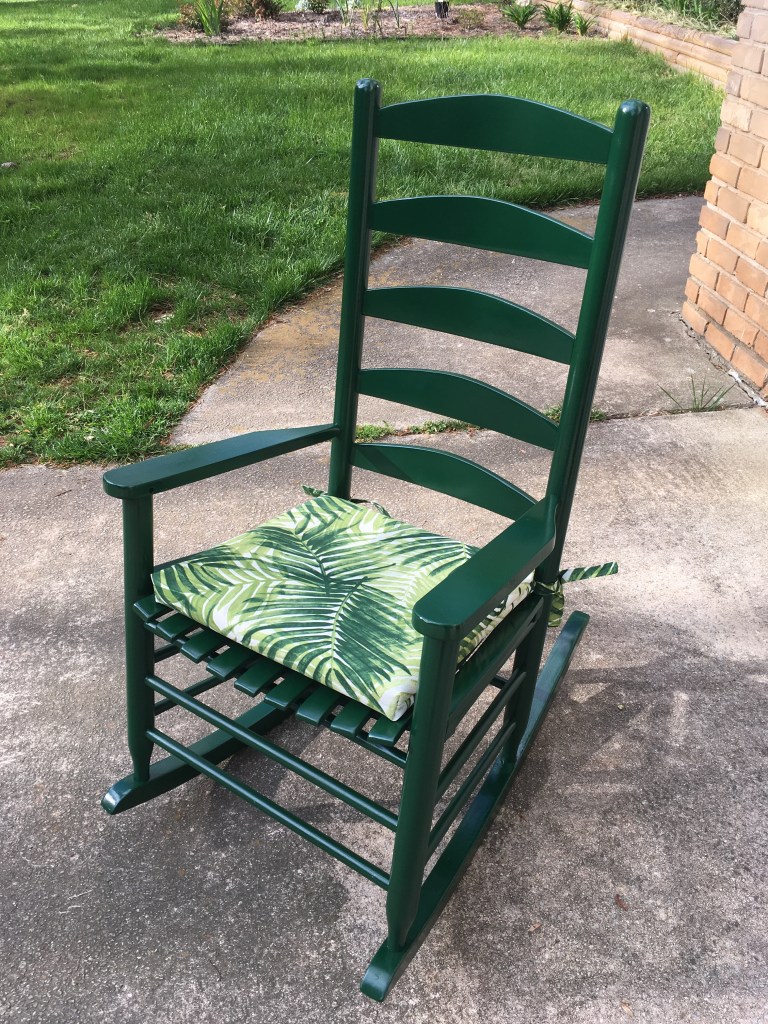
This was a bittersweet transformation; on the one hand it was slightly heartbreaking to eradicate the bespoke finish that had been lovingly and expertly applied by a parent; on the other hand the chair was ready to move on and it rocks its new sophisticated, tropical look.

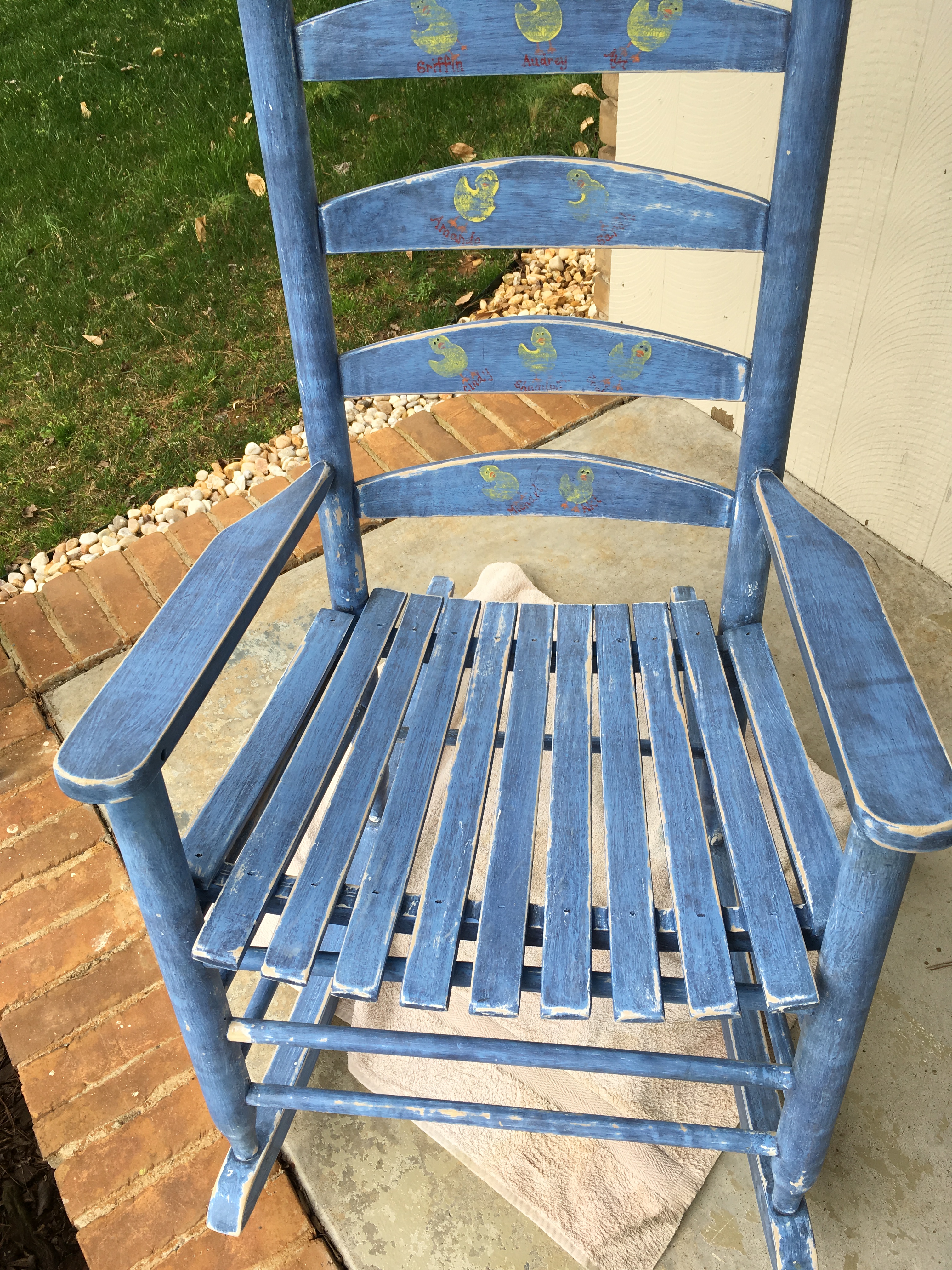
Since the previous finish was a textured one, it first needed a thorough sanding. Without spending days on it I wanted to get the surface as smooth as possible as it would be getting a gloss finish that would show every little defect. After sanding with three different grit papers I gave the chair a good clean with a mild detergent solution.

Beginning with the underside I started applying Rust-Oleum UltraCover spray paint in gloss hunter green. When several coats were thoroughly dry I applied felt pads to the rockers to protect the finish and any flooring it would eventually stand on.

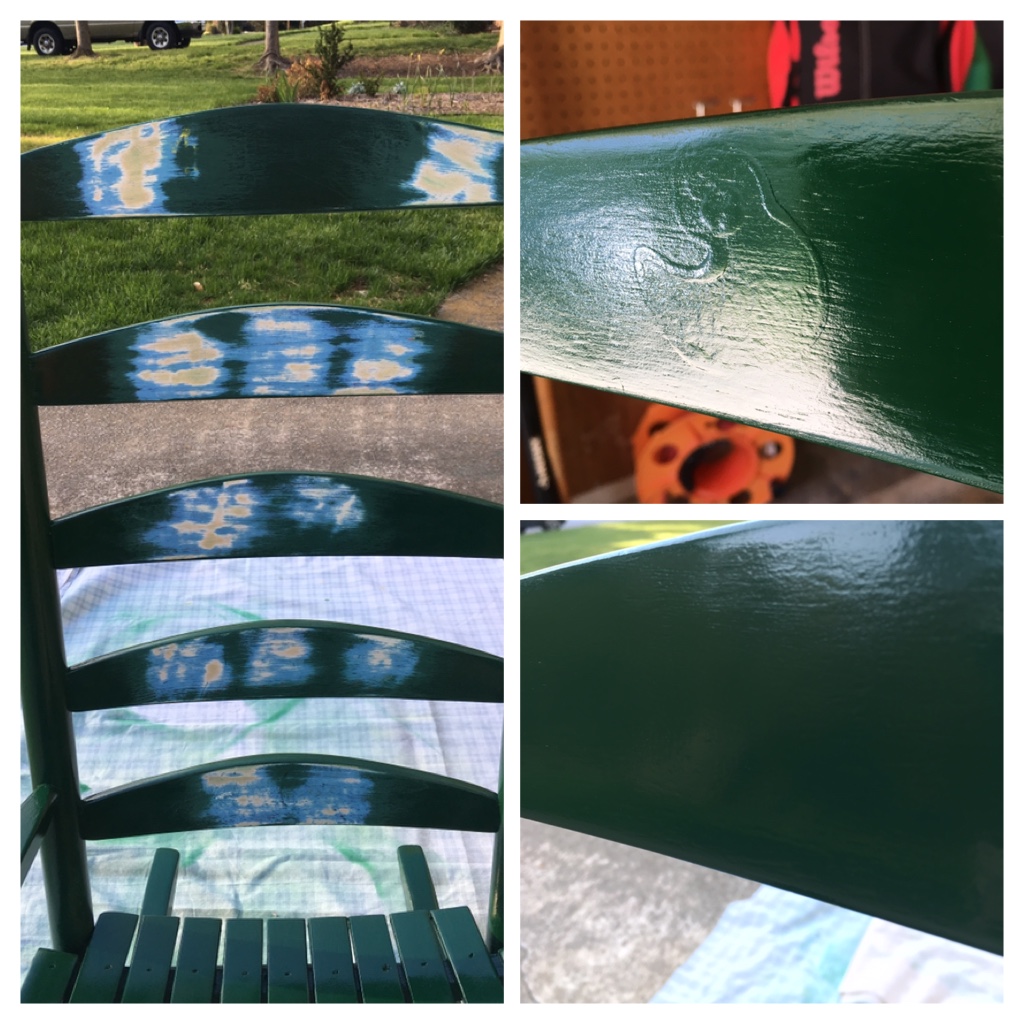
When I started painting the topside my fears were realized. Despite having done what I’d hoped was enough sanding, the outline of the ducks was still visible through the new finish. More sanding and more coats of paint did the trick. Ducks gone!

With the paintwork complete I now needed to revamp the cushion. Using the unpicked old cover as a pattern I cut and sewed a fashionable indoor/outdoor palm print fabric into a new cover.

When chair and cushion were re-united my vision was realized

#17 Lampshade hanging baskets

Transformation cost: $31.18

Despite knowing right away what I wanted to do with them it has taken over a year to get around to it. Although the shades were intact they were quite badly stained and were ready for a new lease of life. This transformation was fairly pricey but for a pair of hand-crafted baskets that will add character to my garden I think it was worth it. I can hardly wait to see them overflowing with flowers this summer 😍.

My first job was to strip the shades down to the bare metal frame. After removing all the fabric I was left with binding tape firmly attached to the top and bottom rims. Soaking it in water softened the glue enough to pull off the tape and get the frame clean.

Using branches as paint stands,  I applied several coats of Rust-Oleum Metallic Antique Brass to the shades.
I chose this color to match the artisan wire I would be using later.

Now I needed to add more structure to the frames to support the coco liners, soil and plants that would go inside. I attached two strands of 18 gauge antique brass artisan wire to the frames; one at the top and one at the bottom. By repeatedly drawing the two wires together in middle, threading them through a ceramic bead then wrapping them back around the rims, I created a diamond pattern with a bead in the center of each opening.

To finish them off I made bases by cutting discs from leftover pegboard. This will hopefully stop the bottom from falling out when they are planted. Finally I added black hanging chains found at Dollar Tree.

#16 Lyrical bar stools

Transformation cost: $19.47

I love it when a piece is commissioned; it brings about an outcome that often is not my first vision. These stool are a case in point. I initially envisaged these with a sports theme but when my client wanted musical instruments, and a nod to her husband’s Irish heritage, the idea of wood-burning was born. Beyond just a few characters I had never done wood-burning before but now I’m hooked!

I began by removing the finish from the tops of the stools to create
clean backdrops for the wood-burned images

Next I cleaned and sanded the legs. A previous sloppy paint job had left patches of white paint on the underside of the seat. Rather than try to remove them and then refinish the wood I decided to paint over them. I used painters tape to mark out geometric shapes then sanded those areas too. After several coats of Krylon Gloss Emerald Green spray paint (what better color for someone whose ancestors are from the “Emerald Isle”?) the legs were almost finished.

As a finishing touch (to make the stools more hard-wearing) I used vinyl tubing to cover the lower stretchers. I simply cut pieces the length of the stretcher, made a slit the full length of the piece then wrapped it around the painted wood.

Now I turned my attention to the seats. I created transfers by tracing printed images (embellished with some of my own artwork) onto parchment paper. Another nod to Ireland was adding the shamrock to the drum set image and the Celtic symbol for family to the guitar. Once the reverse side was also traced (so I wouldn’t transfer a mirror image) I transferred the designs onto the stool tops.

To finish the seats I applied 3 coats of oil-based, clear, gloss polyurethane for maximum protection.