#46 Ice Cream Parlor Set

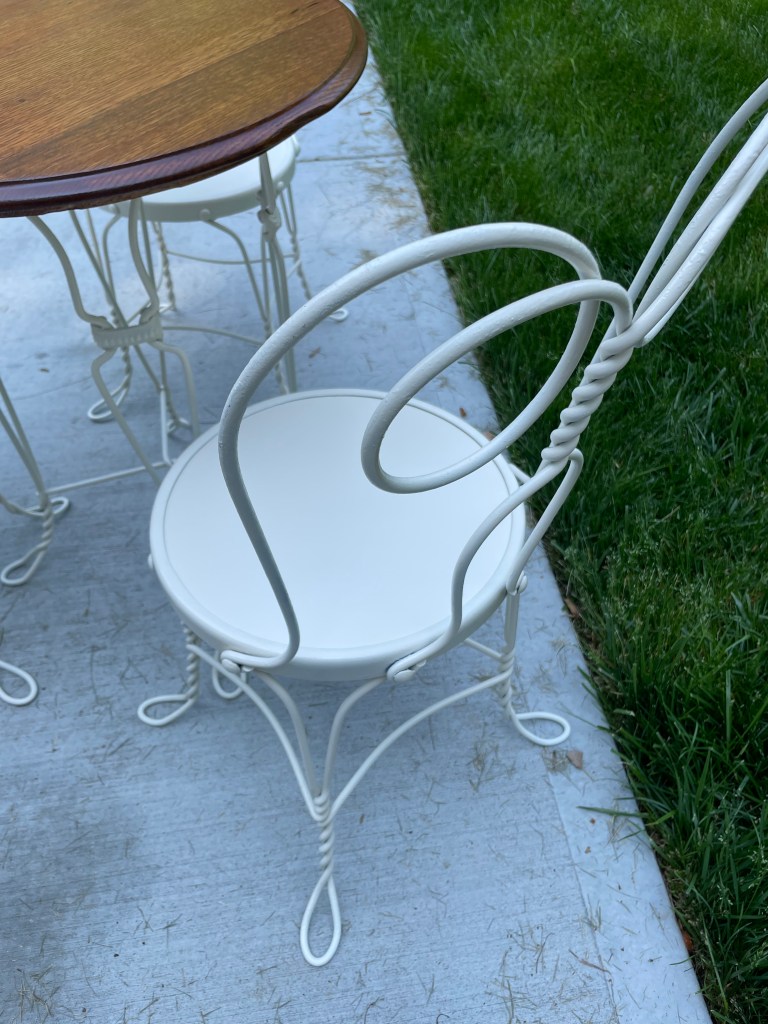
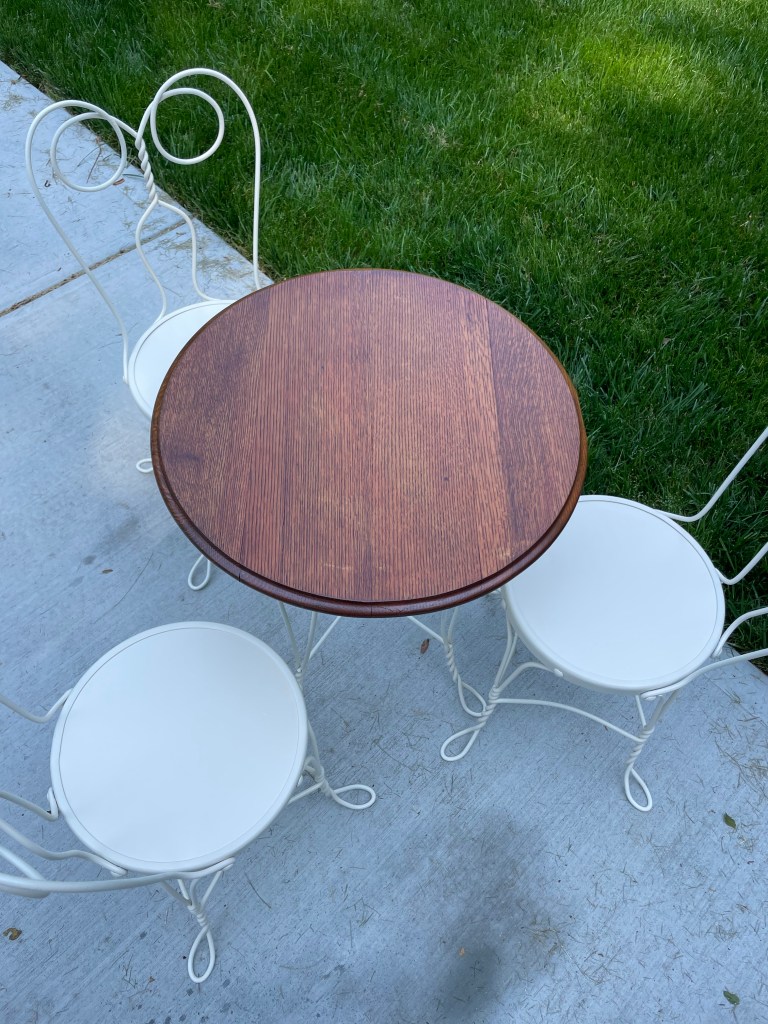
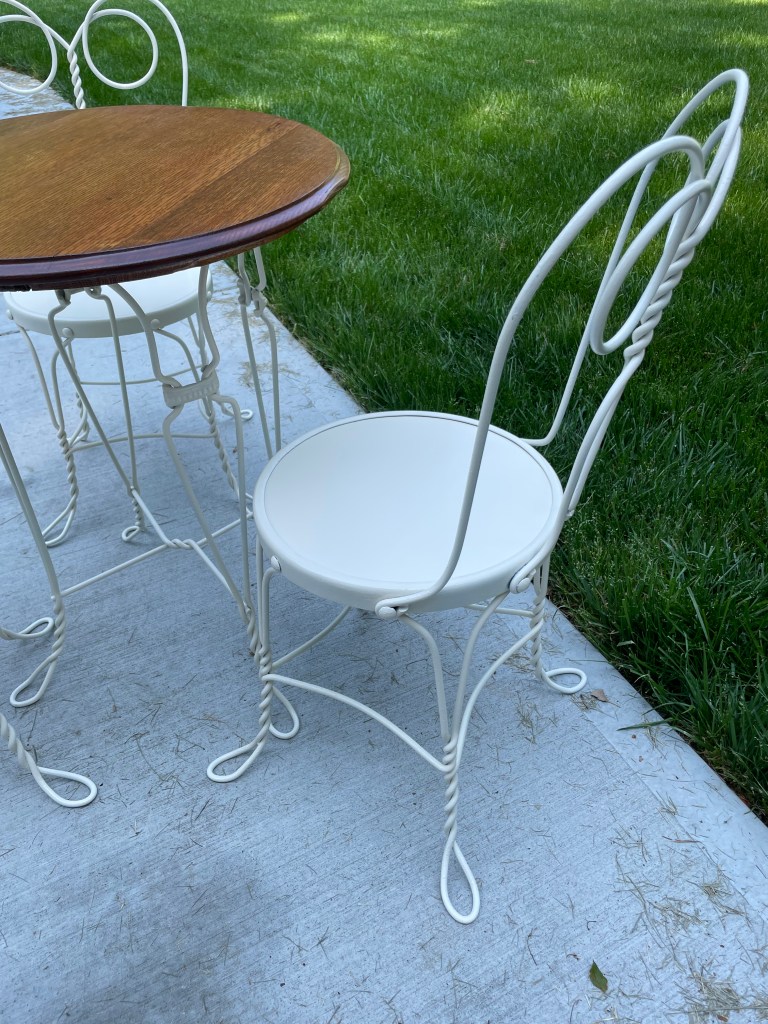
A friend asked if I wanted to transform this table and three chairs she was getting rid of. I didn’t hesitate to accept. Even though they were in a bad way, they have a charm I couldn’t resist. I’ve always loved bistro-type sets; they conjure up visions of outdoor dining in romantic European cities. It was only when I started work on them that I discovered they are 130+ years old and are a true gem.

Materials used: Rust-Oleum American Walnut stain, Varathane Dark Walnut stain, Rust-Oleum Rust Reformer, 1/4″ plywood, 1″ x 6′ red oak board, Rust-Oleum Satin Protective Enamel, Shellac, Varathane oil-based polyurethane.
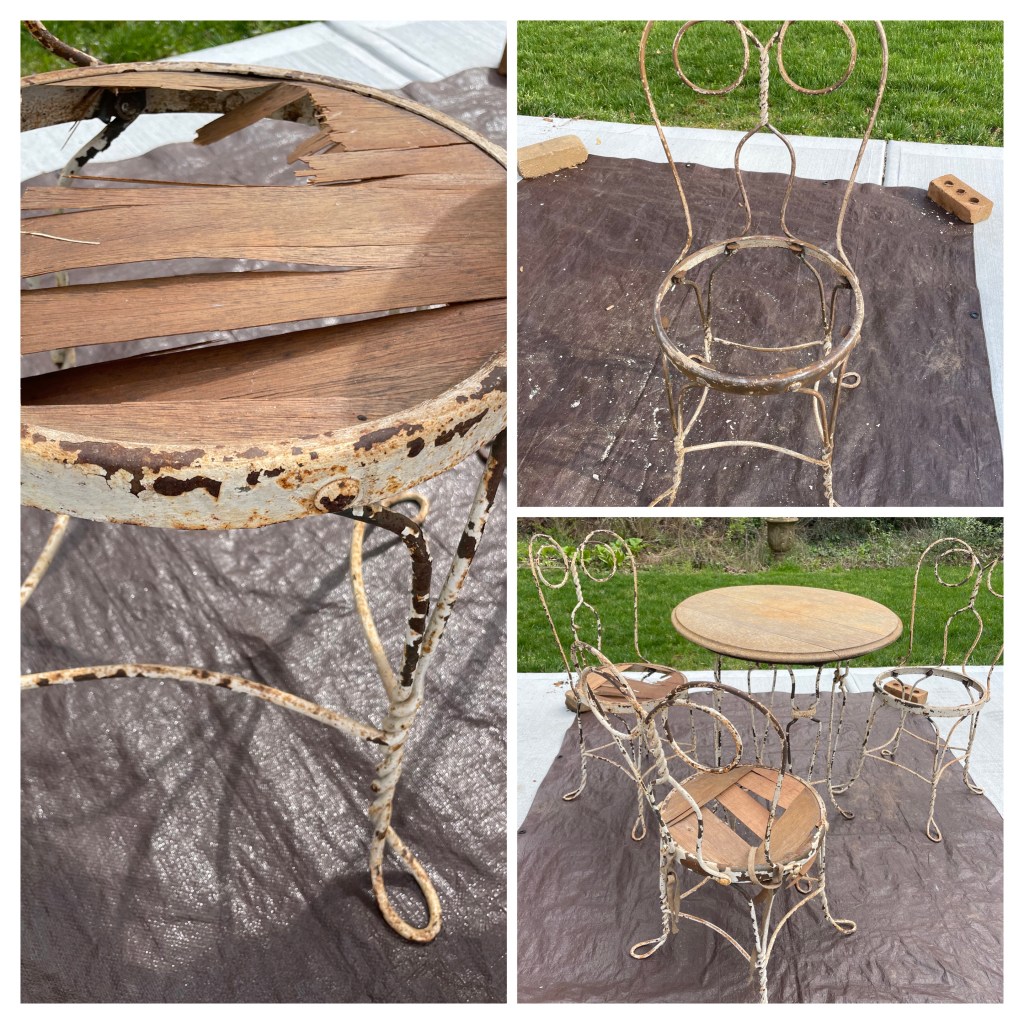
A bit of a mess: The original, laminated plywood seats were either missing completely or damaged beyond repair. The paintwork was flaking and rusted. The table top was only being held together by the leg brackets and a makeshift brace, and the finish had almost completely worn away.

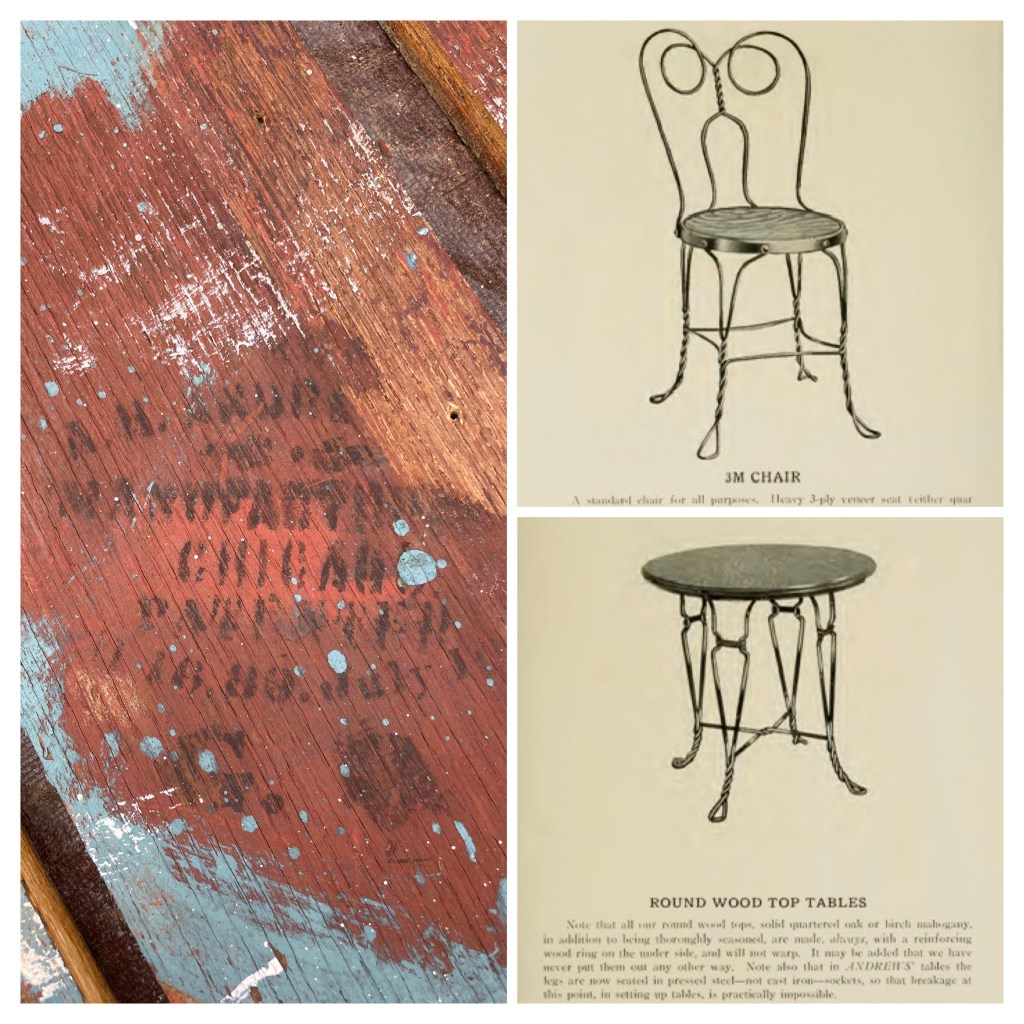
Researching the maker’s mark on the underside of the table revealed that this set was made in the late 19th-century by a company called A H Andrews of Chicago. In their catalog (where I found these images) they state that they made metal furniture for “Drug Stores, Confectioneries, Restaurants, Clubs, Billiard Parlors, Barber Shops, Shoe Stores, Offices and Reception Rooms”. This set is made of Bessemer steel and originally had a Japanese copper finish. The seats were laminated plywood and the table top was mahogany or quarter-sawn oak. When I read that another original finish option was white enamel, I knew I could paint with a clear conscience.
  1. Leg brackets and pine block holding the table top together.
  2. Separated table parts after removing the legs and block.
  3. Replacement reinforcing wood ring parts cut from new red oak.
  4. Glued, clamped and re-assembled table top.

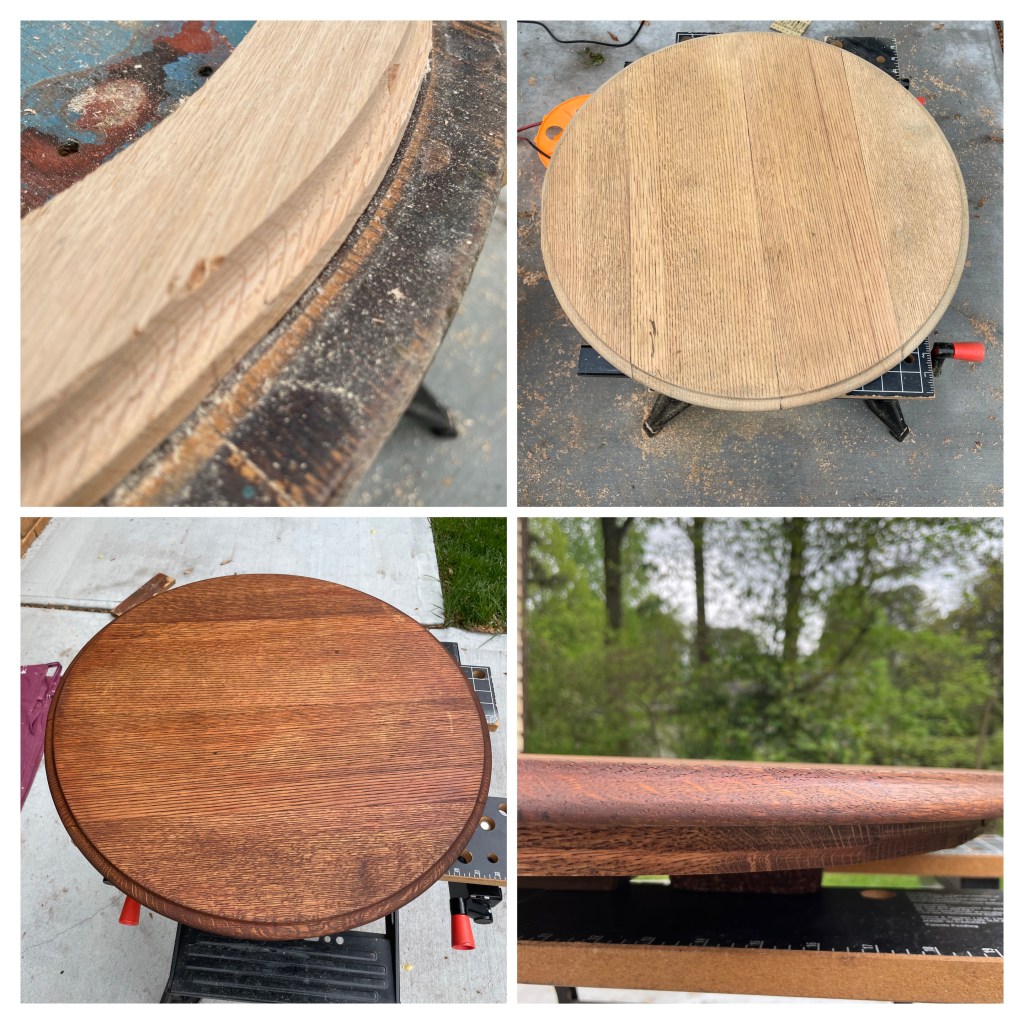
Once the table top had been repaired I routed the edge of the reinforcing wood ring, removed all the old finish and stained both the top and the new wood ring with Rust-Oleum American Walnut stain followed by Varathane Dark Walnut stain.
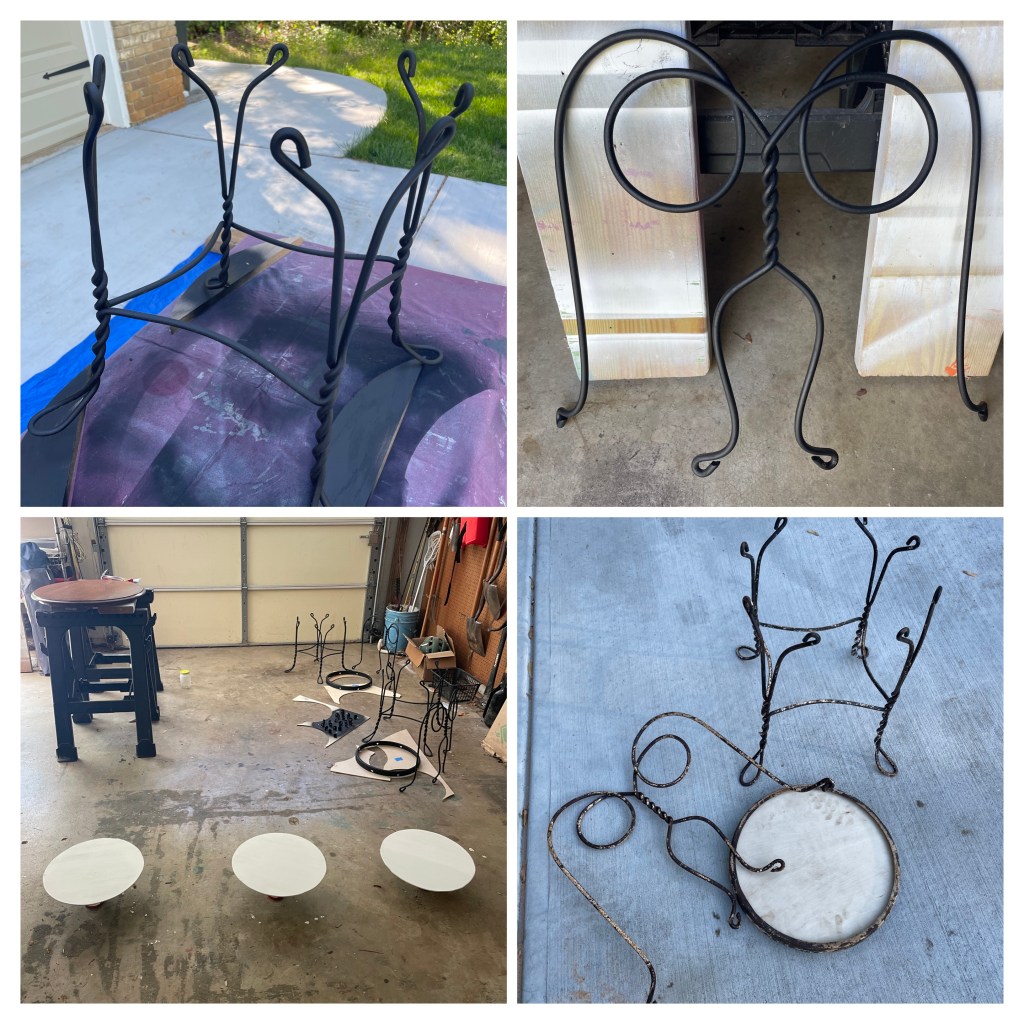
It was then time to prep the steelwork by first removing any loose paint. What was going to be the most effective way? I looked into sandblasting and chemical dipping but they were expensive. I tried wire brushes, sandpaper, and my Dremel but that was fiddly. Then I remembered our 173cc pressure washer and turbo nozzle which will take the skin off your bones if you’re not careful. It worked wonders.

With a little help from Handy Hubby I took apart the pressure-washed chairs so I could cut, prime and install new plywood seats. Next I used a product I have used before on old metalwork that had signs of rust: Rust-Oleum Rust Reformer “instantly bonds with rust and transforms it to a non-rusting, flat-black paintable surface and prevents future rust.”
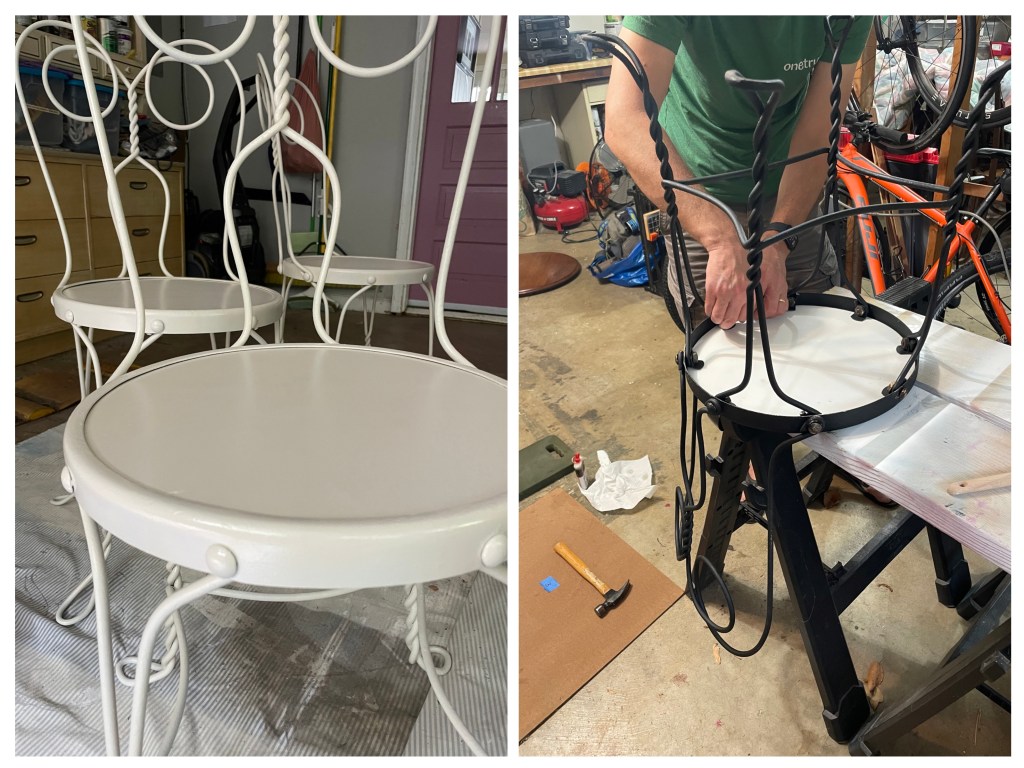
Once the chairs and table were re-assembled I applied 3 coats of Rust-Oleum Protective Enamel in shell white satin finish to all the metalwork.

Finally the stained tabletop was sealed with 2 coats of shellac and then finished with 2 coats of Varathane oil-based polyurethane in satin finish.

#25 Mini chandelier birdfeeder

Transformation cost: $12.60

I have my constipated dog to thank for this find. We were taking a long walk to get “things” moving and our route took us past this treasure. A chandelier was TT#1 (Chandelier) and I was excited to find another to work on; they make such good garden decor.

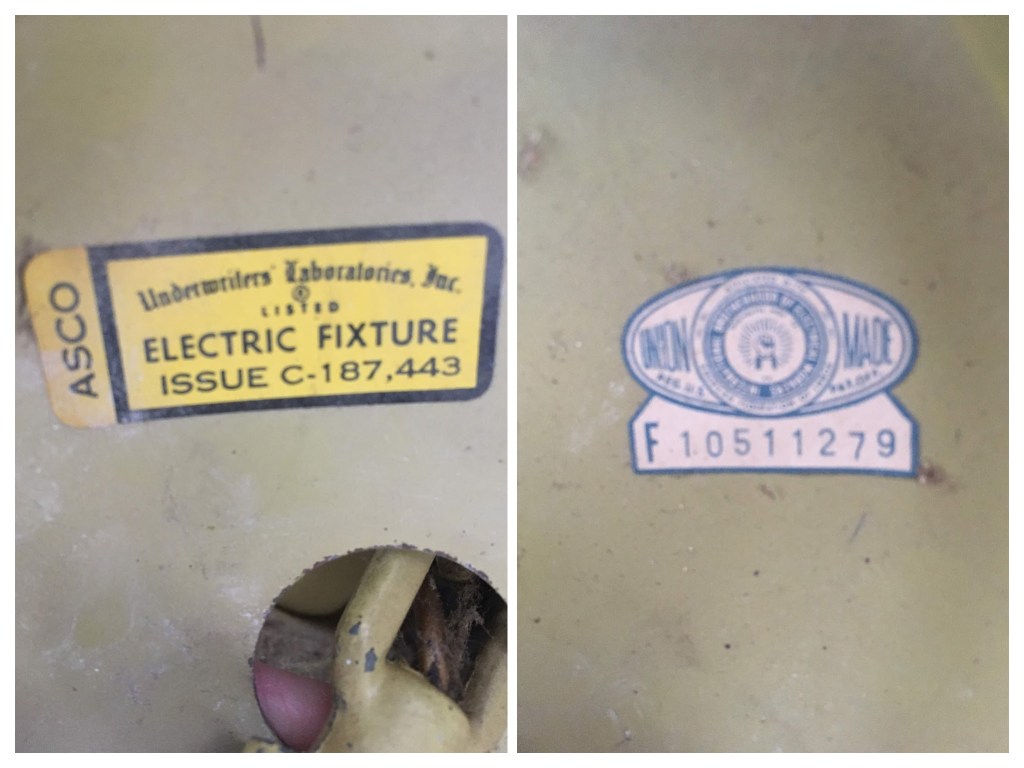
I am convinced this is a vintage piece but I’ve had mixed feedback to my enquiries. The International Brotherhood of Electrical Workers says this fixture was made in Newburgh, New York in October 2013 (according to the serial number). However, Underwriters’ Laboratories Inc. says it must be at least 25 years old because they stopped using that font on their labeling 25 years ago.

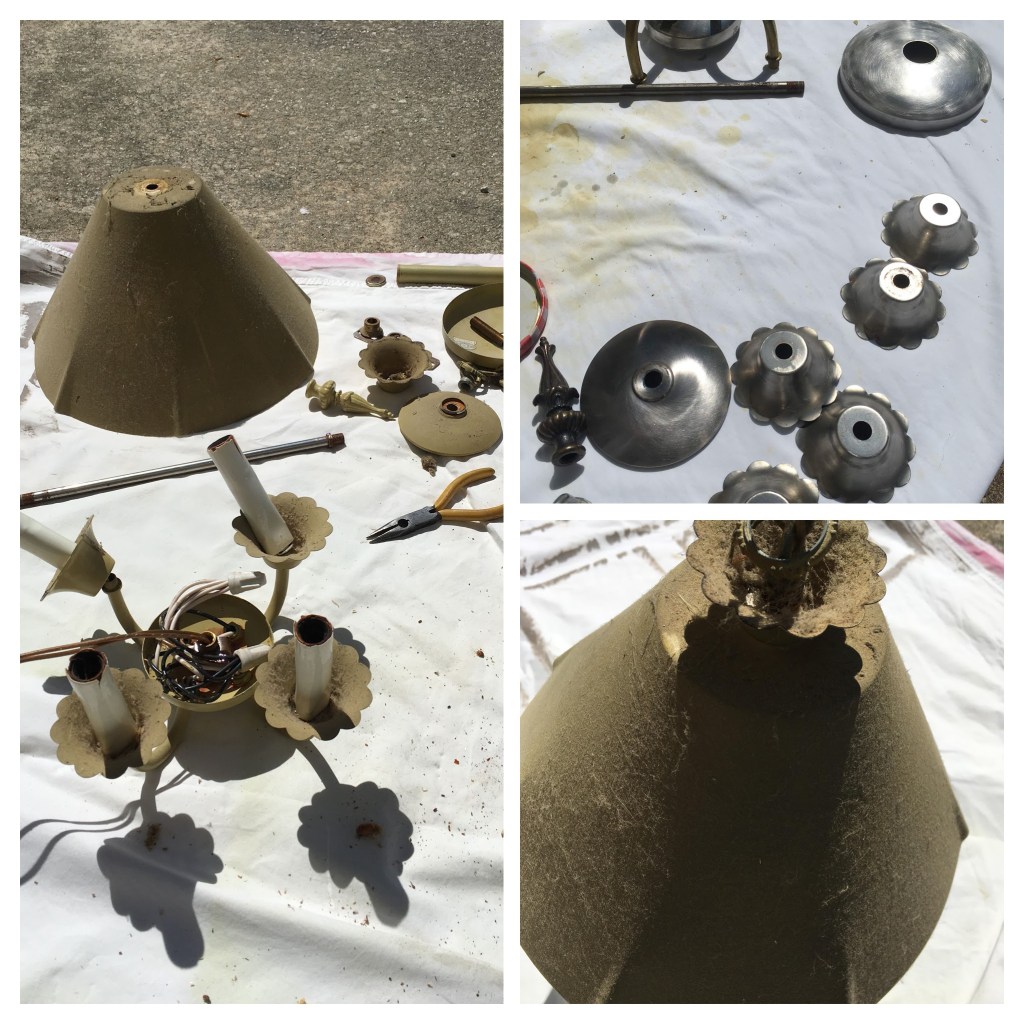
As I began cleaning the dismantled piece some of the paintwork dissolved and what was left peeled and cracked. Using acetone, a rag and a toothbrush I was able to remove all the paint completely.

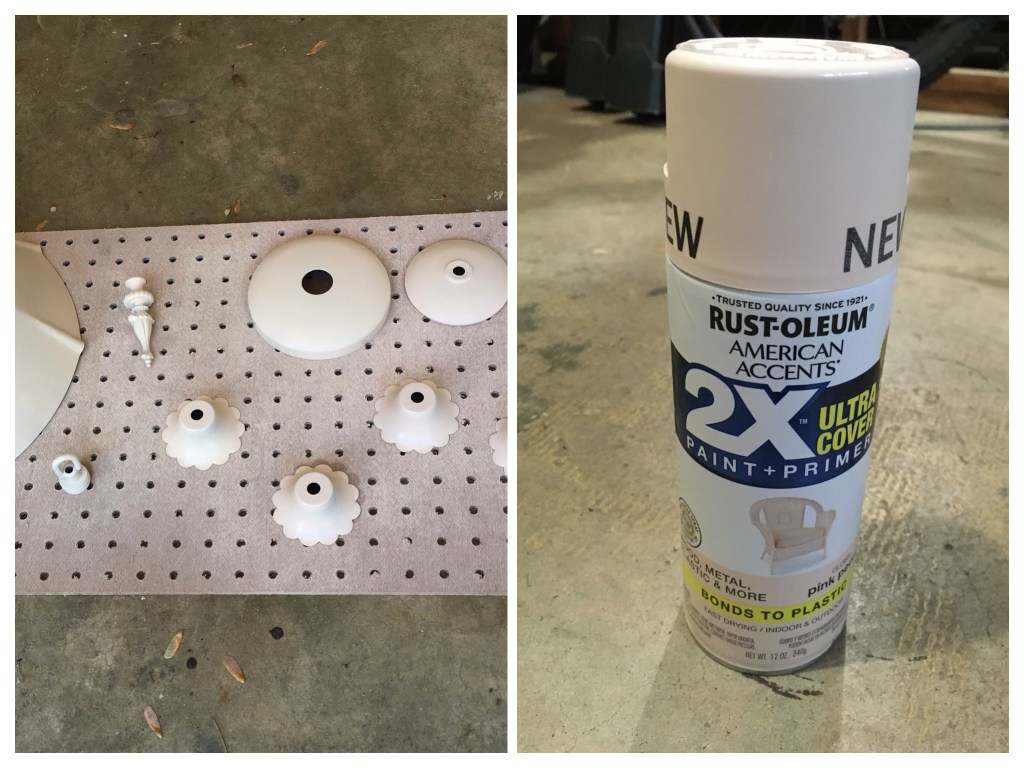
The bare metal parts were now ready for their finish coats of Rust-Oleum 2X Ultra Cover gloss in pink peony. I made sure to reserve some paint for finishing touches after reassembly.

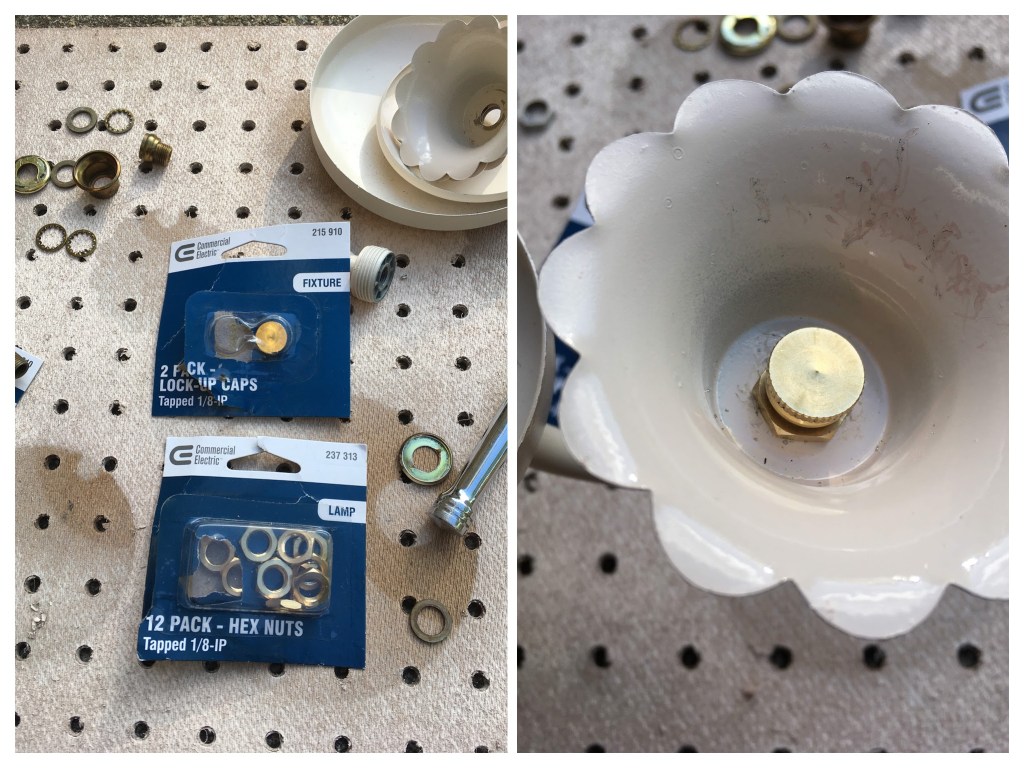
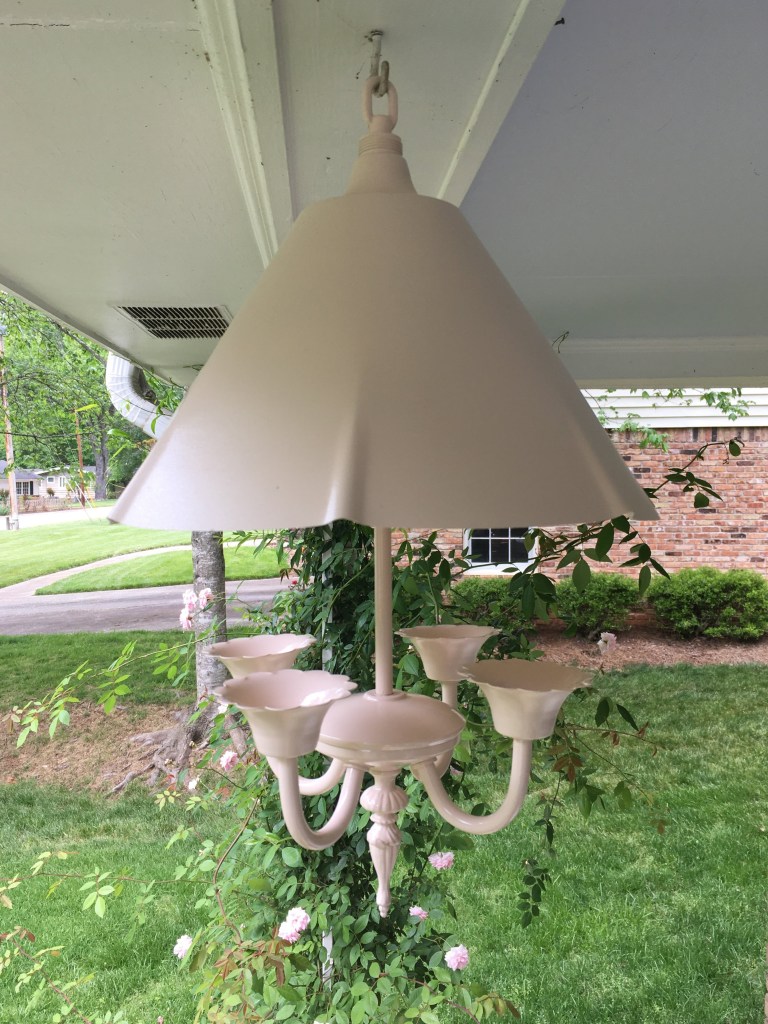
When it came to putting it back together I made a few changes. First I used lock up caps to seal the part of the arm that would have attached to the candle tube. I discarded the canopy and inverted the top bobeche so that rain water wouldn’t pool in it. The hanger loop neatly tops it off. I finished the job by touching up with the remaining paint.

#20 Bar stool bistro table

Transformation cost: $26.05

Part 1 of a 2-part transformation this bar stool-looking thing was acting as base for a larger, round table top. It could have become many things but its fate was sealed when I temporarily stored it on my front porch and realized it is perfect as the bistro table we needed. I probably could have bought a small table for about the same price but this way I have the satisfaction of knowing I made it and it didn’t get trashed! Part 2 will be the transformation of the table top piece.

Once separated from the particle board table top this base was ready for its stand-alone transformation. After sanding and cleaning, the legs were ready for a paint finish that would complement our porch furniture and decor.

I chose Rust-Oleum metallic oil-rubbed bronze because I had previously used it to freshen up our porch light casings. NOTE TO SELF: This paint clogs easily and I wasted some partial cans because they would no longer spray.

Once I had created a paper template for the top I was ready to take the tiling plunge. I started by sticking a single row of tiles to the rim. Meanwhile I laid out the design for the top on my paper template. I used wheeled mosaic nippers to cut some square tiles in half for the center of the design.

I let the rim dry for 24-hours before I applied the tile design to the top of the table. The old table top and some cookbooks made a handy weight to encourage everything to set level.

The next day I grouted everything with a pre-mixed grout in alabaster color.

To finish the top I applied one coat of mosaic grout sealer to protect against red wine and coffee!

The finished piece goes perfectly on our front porch and is just the right size for front porch essentials!

#18 Rocking chair

Transformation cost: $26.53

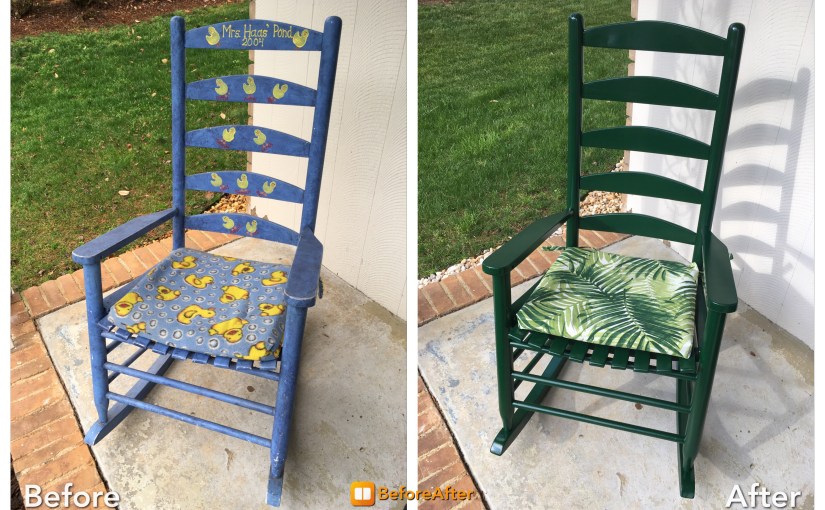
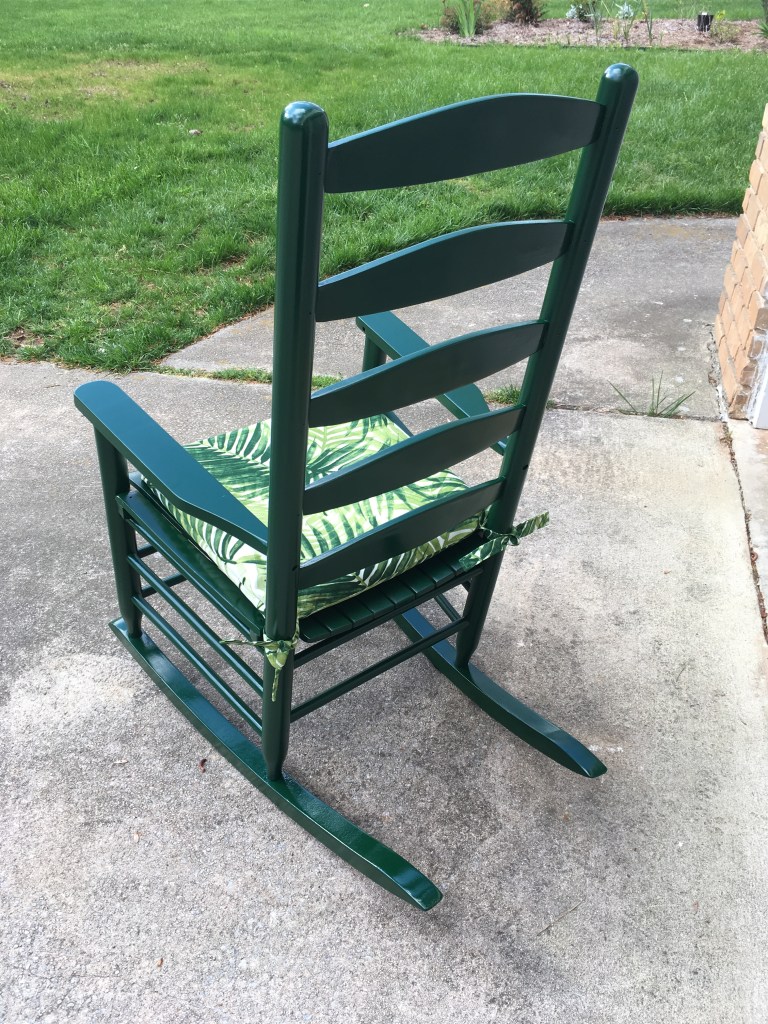
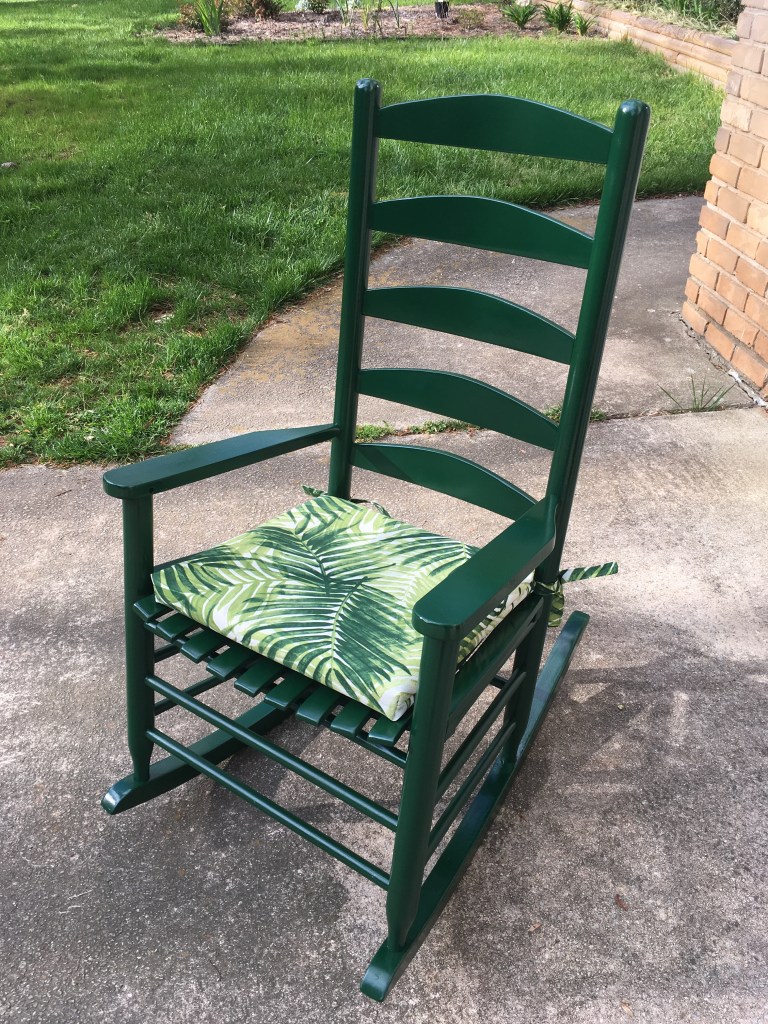
This was a bittersweet transformation; on the one hand it was slightly heartbreaking to eradicate the bespoke finish that had been lovingly and expertly applied by a parent; on the other hand the chair was ready to move on and it rocks its new sophisticated, tropical look.

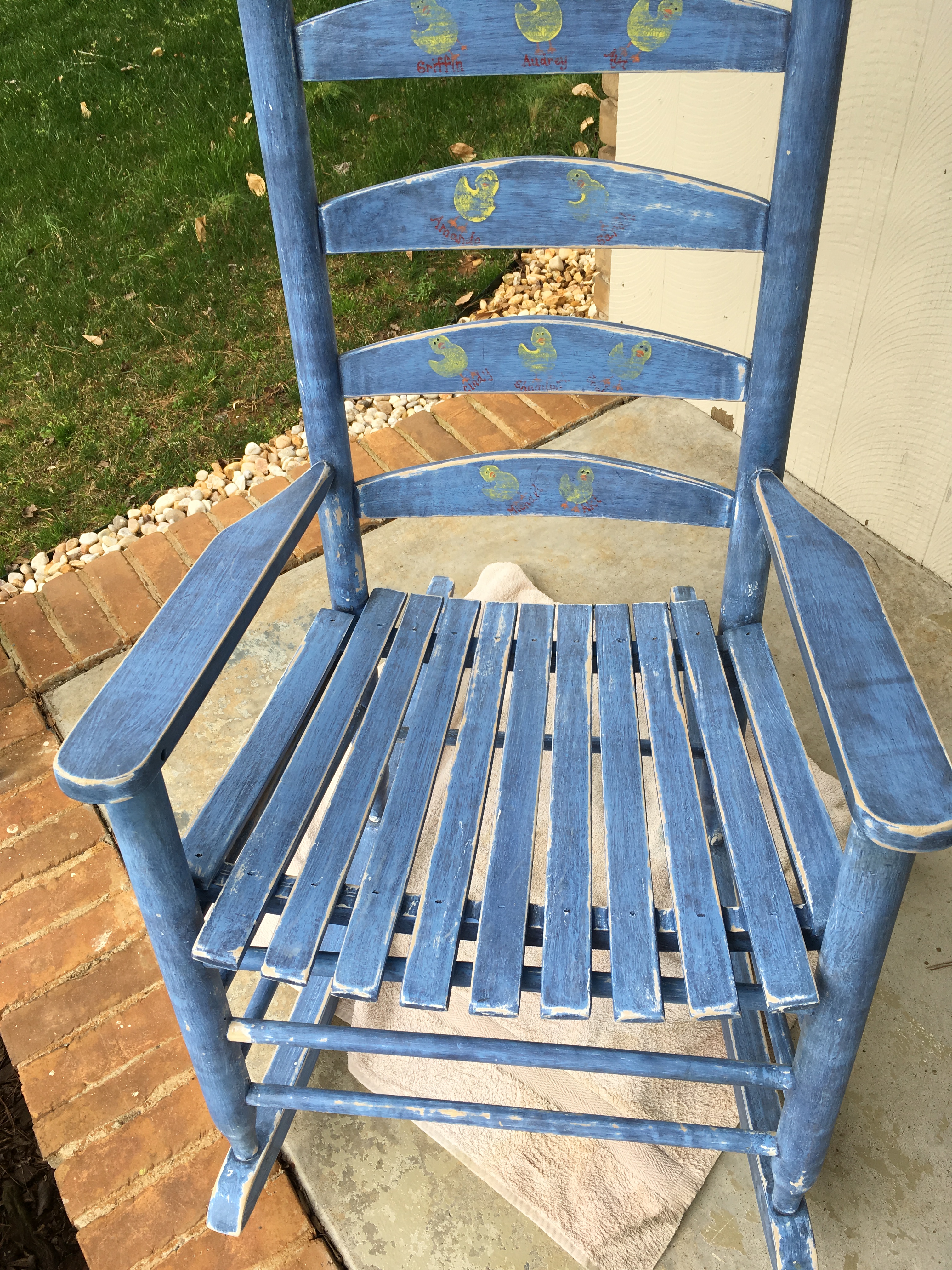
Since the previous finish was a textured one, it first needed a thorough sanding. Without spending days on it I wanted to get the surface as smooth as possible as it would be getting a gloss finish that would show every little defect. After sanding with three different grit papers I gave the chair a good clean with a mild detergent solution.

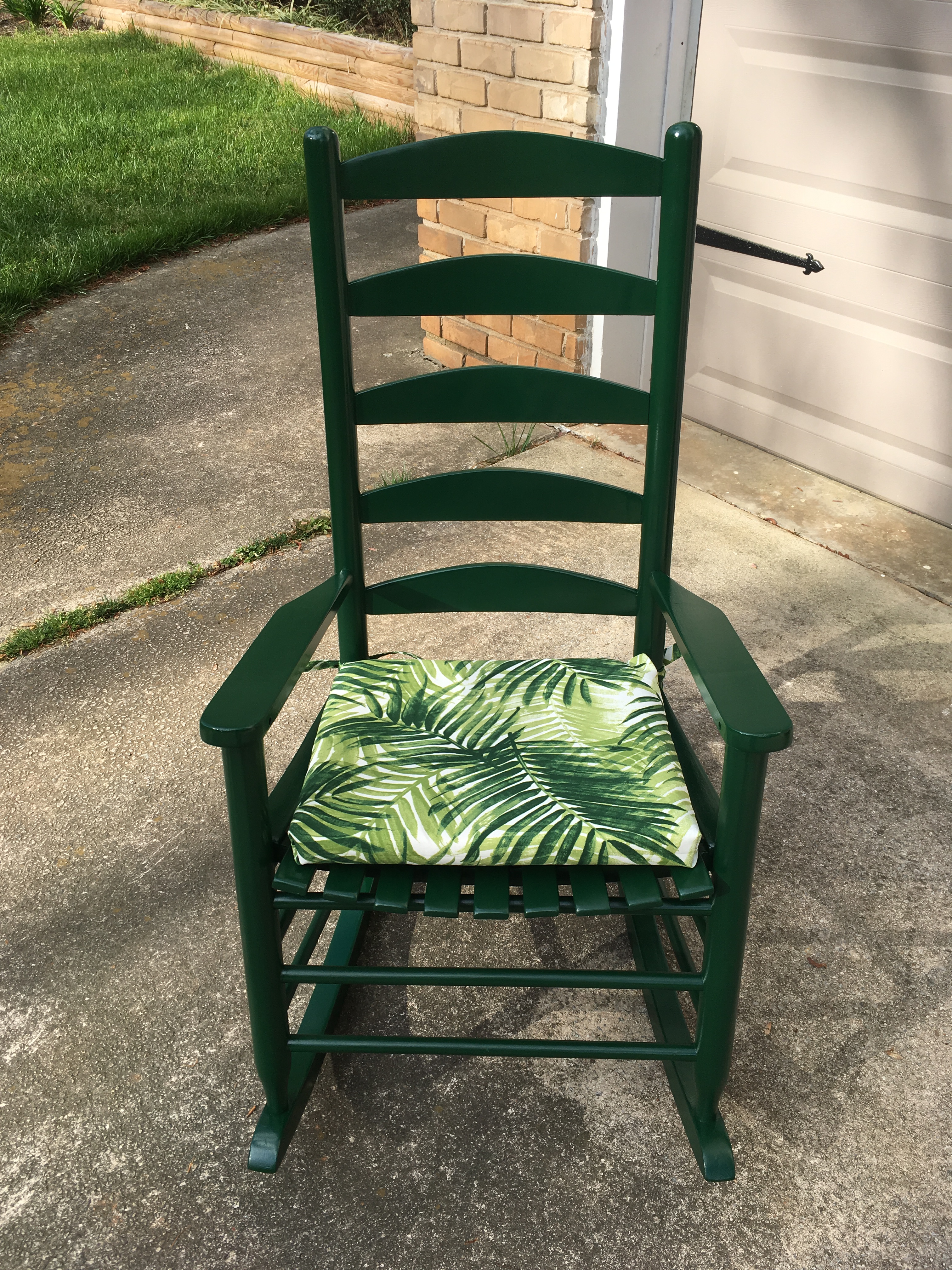
Beginning with the underside I started applying Rust-Oleum UltraCover spray paint in gloss hunter green. When several coats were thoroughly dry I applied felt pads to the rockers to protect the finish and any flooring it would eventually stand on.

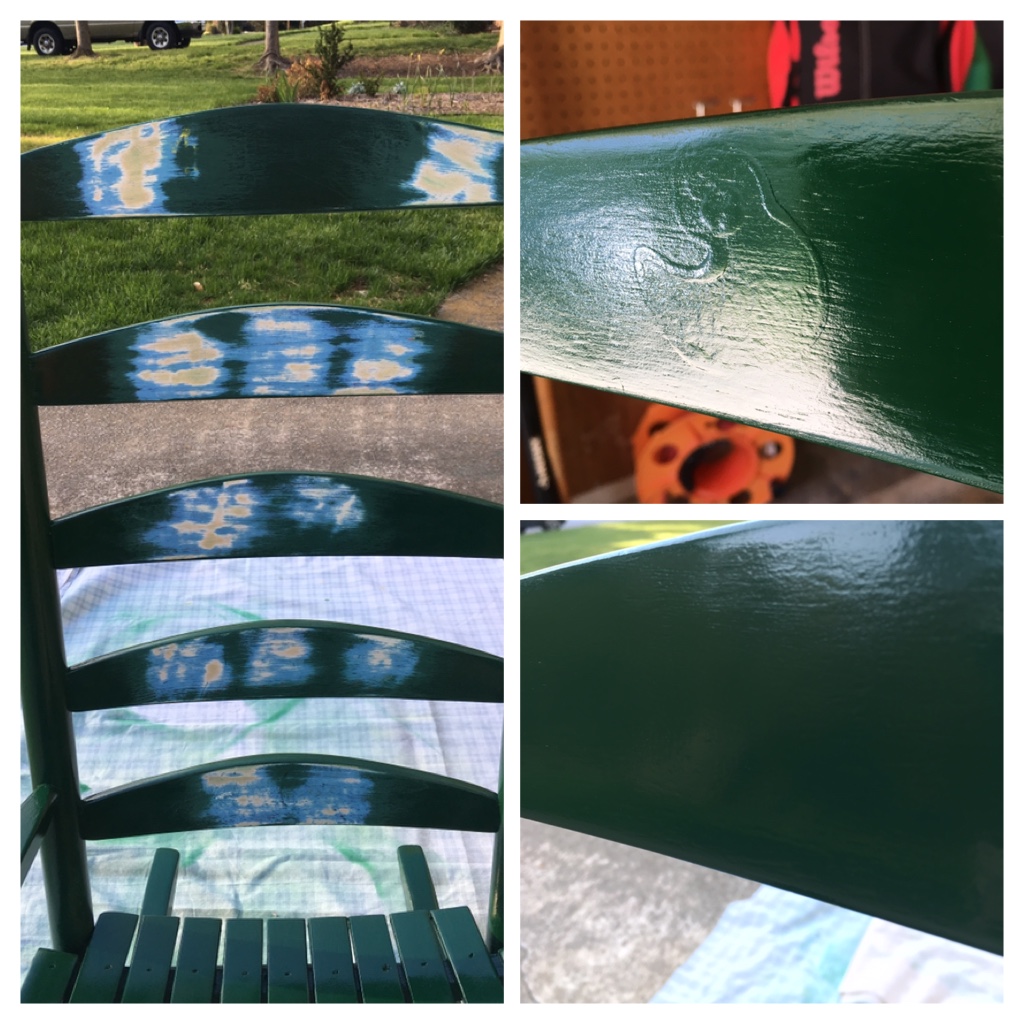
When I started painting the topside my fears were realized. Despite having done what I’d hoped was enough sanding, the outline of the ducks was still visible through the new finish. More sanding and more coats of paint did the trick. Ducks gone!

With the paintwork complete I now needed to revamp the cushion. Using the unpicked old cover as a pattern I cut and sewed a fashionable indoor/outdoor palm print fabric into a new cover.

When chair and cushion were re-united my vision was realized

#17 Lampshade hanging baskets

Transformation cost: $31.18

Despite knowing right away what I wanted to do with them it has taken over a year to get around to it. Although the shades were intact they were quite badly stained and were ready for a new lease of life. This transformation was fairly pricey but for a pair of hand-crafted baskets that will add character to my garden I think it was worth it. I can hardly wait to see them overflowing with flowers this summer 😍.

My first job was to strip the shades down to the bare metal frame. After removing all the fabric I was left with binding tape firmly attached to the top and bottom rims. Soaking it in water softened the glue enough to pull off the tape and get the frame clean.

Using branches as paint stands,  I applied several coats of Rust-Oleum Metallic Antique Brass to the shades.
I chose this color to match the artisan wire I would be using later.

Now I needed to add more structure to the frames to support the coco liners, soil and plants that would go inside. I attached two strands of 18 gauge antique brass artisan wire to the frames; one at the top and one at the bottom. By repeatedly drawing the two wires together in middle, threading them through a ceramic bead then wrapping them back around the rims, I created a diamond pattern with a bead in the center of each opening.

To finish them off I made bases by cutting discs from leftover pegboard. This will hopefully stop the bottom from falling out when they are planted. Finally I added black hanging chains found at Dollar Tree.

#11 Wrought iron garden chairs & footstools

Transformation cost: $23

These two chairs with footstools were curbside in a friend’s neighborhood when she texted me a photo. The conversation (which she started at 9:00 a.m.) went like this:

I justified my weak willpower by thinking I might keep these chairs for my own patio. However when I looked into buying cushions for them it looked cost prohibitive. Fortunately my dear friend Lori did a better job of finding affordable upholstery and claimed them for herself.

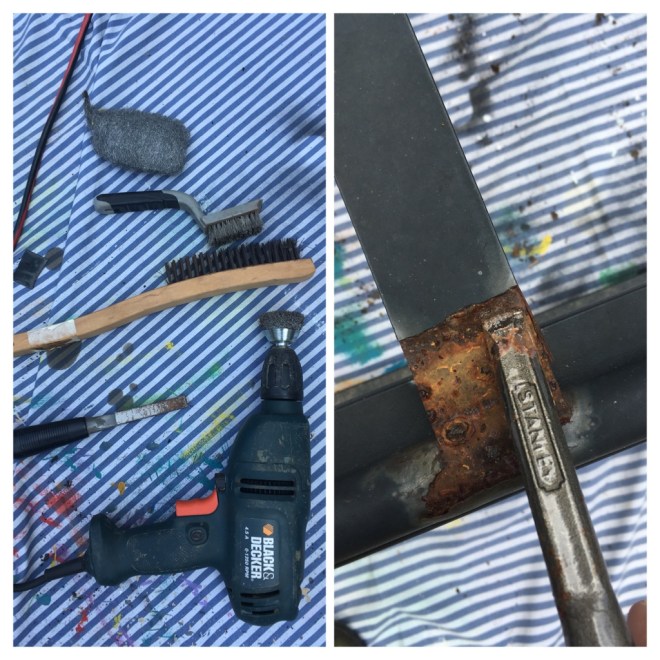
I began by having my husband assess the state of the furniture. A few swift kicks confirmed that, despite the rust spots, it was all still structurally sound. Using a chisel and various wire brushes I removed all the loose coating & rust.

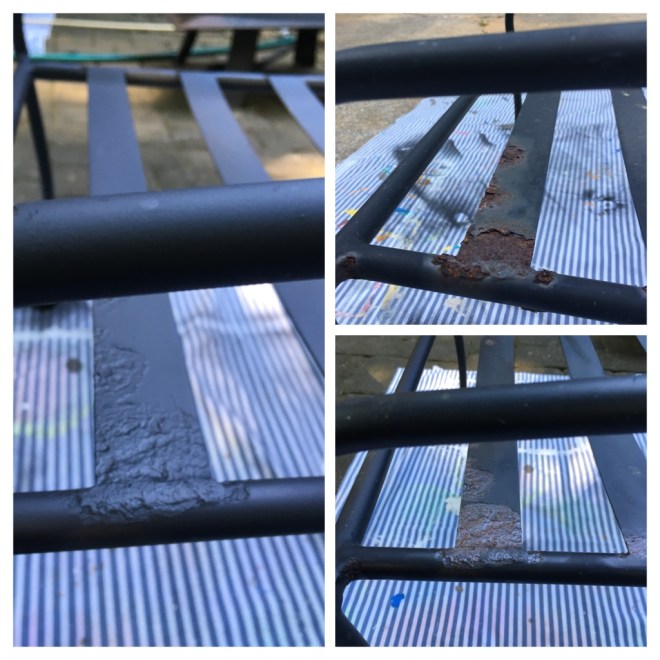
After cleaning everything with a weak solution of soap and water I applied a coat of Rust-Oleum Rust Reformer to the spots where there had been rust.

Already the rust spots were starting to look a lot better. (Top right: original, bottom right: after being scraped and brushed, left: after painting with Rust Reformer).

The finishing touch was to add several coats of Rust-Oleum flat black enamel.

Catching the morning sun on a neighbor’s deck

#2 Plant pot

Transformation cost: $23.99

It took several passes before I could envision this pot as anything but gaudy. When I did finally pick it up in my truck (this sucker weighs 37 lbs – I was not about to carry it the half a block to my house) it rolled over and spilled dirt all over my truck bed.  However, knowing the value of a heavy, clay pot like this I decided it was worth giving it a second chance.

After a good scrub and a light sanding I applied the base coat of Behr “Outdoor Cafe” in semi-gloss.

I then applied crackle medium to everywhere but the rope detail

I let the crackle medium dry for about 1.5 hours (don’t wait more than 4 hours) before applying the top coat of Behr “Anime” in semi-gloss. This was my first attempt at a crackle finish and I had some reservations after reading accounts of failed attempts. It turned out well though. I think the secret is to apply the top coat as quickly as you can (try to not brush over any one spot more than once. That means loading the brush with quite a lot of paint) then walk away and let the magic happen!

At this point the top coat color I chose was paler and more yellow than I wanted so I applied some Sepia “Tint It” which gave it a slightly darker and more aged look.

I finished the piece with a couple of coats of Krylon Crystal Clear Enamel

Overflowing with a garden mum in Nov 2018

#1 Chandelier

Transformation cost: $15.95

Having admired a chandelier hanging from a tree on a recent garden tour, I didn’t hesitate to snatch up this piece. Apart from a fairly decent layer of grime it was in good shape and didn’t need a lot of work.

I started by discarding the shades, bulbs and shafts that were sheathing the bulb holders.

These bulb holders were supposed to unscrew nicely but the little buggers wouldn’t budge.

Sometimes you just need more WD40 and the help of a friend even more stubborn than yourself.

I have to admit pulling out all the wiring “guts” was oddly satisfying.

Removing the grime and adding candles was the finishing touch