#22 Queen bed

Transformation cost: $30.07 (disclaimer at bottom of page)

Ordinarily I would not take on a piece this big due to space restraints. However when my son moved into a student apartment, taking his bed with him, we found ourselves with a guest bed void at the same time that a neighbor was discarding this piece. It turns out this bed has a delightful history: Apart from being the owner’s childhood bed it also accompanied her and her husband to England when he was stationed there for a while. It seems fitting for an Englishwoman to be responsible for its make-over.
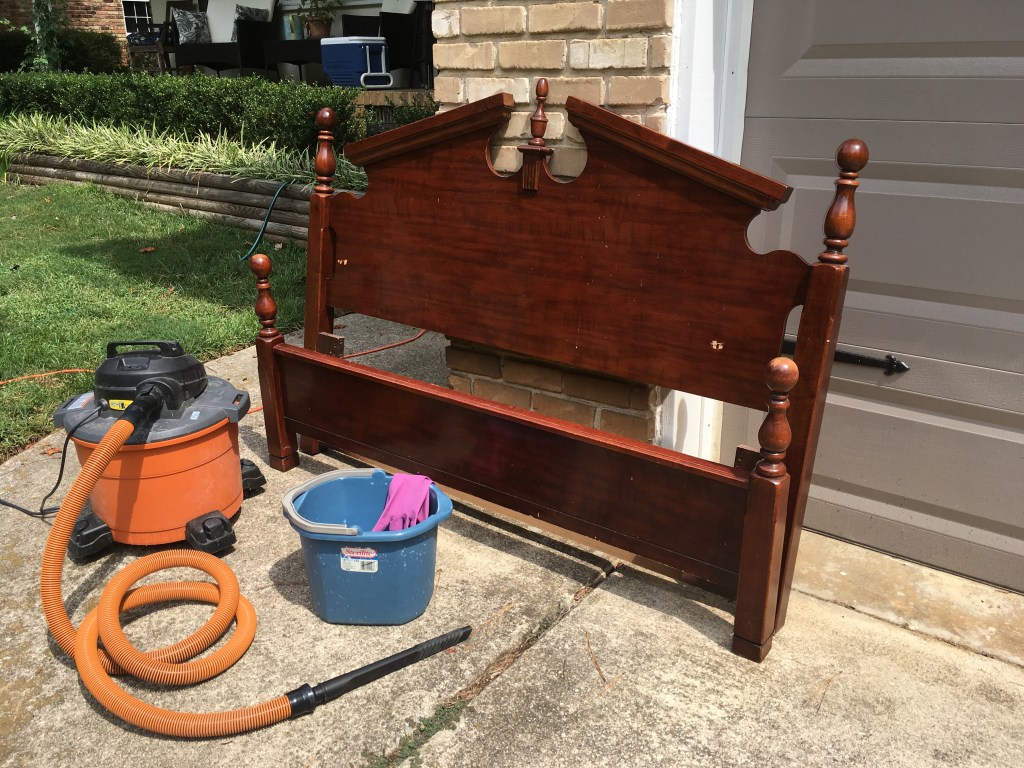
Step 1: The habitual cleaning.

Step 2: Sanding. Although sanding is not necessary when using chalk paint, this piece had some chips and dents that I wanted to smooth out.

Step 3: Painting. Once the piece was properly prepped I began applying Annie Sloan’s Paris Grey chalk paint.

Step 4: Distressing. After 3 coats of chalk paint I used fine sandpaper (400 grit) and a light touch to GENTLY distress the contoured parts of the bed. I deliberately was not heavy handed because I want this piece to look like it belongs in a chateau not a farmhouse.

Step 5: Waxing. I then applied 2 coats of clear wax, buffing after each coat. The piece now has a lovely waxy sheen instead of a flat finish. Isn’t it amazing how different this grey looks in the morning light?

The very last thing I did was to go back with some dark wax to add a trace more texture. You can barely see the darker wax which was my intention; again I didn’t want it looking too rustic. Applying dark wax so lightly is not as straightforward as you might think. When it first goes on it is very distinct. The way to cut it back is to have some clear wax and a clean, dry cloth on hand. Once the dark wax is on use a different brush to apply clear wax on top and blend. If there is still more distinction than you want take the cloth and simply rub it off until you get the coverage you want.

DISCLAIMER: The cost shown above is the cost to me which (especially on chalk paint projects) is often less than market price. This is because I always have left-over materials from previous projects. For example: On this piece I used a negligible amount of Annie Sloan dark wax that I already had. The cost of a small can of that wax is $17 but I did not factor it into this project.

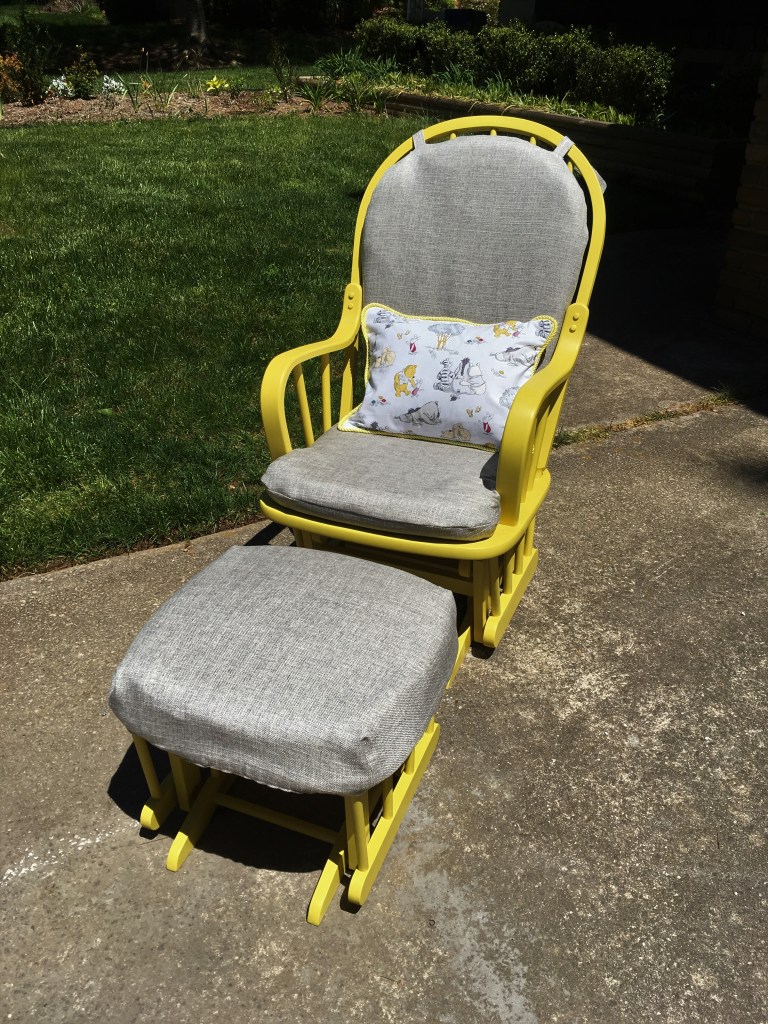
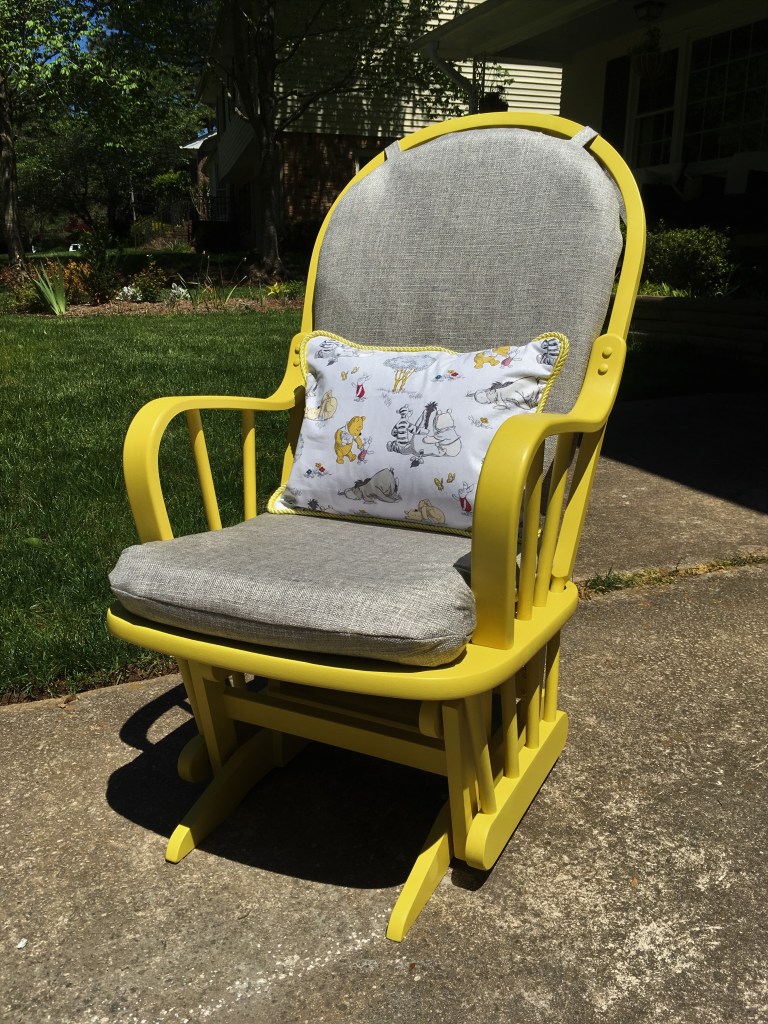
#19 Glider rocker with ottoman

Transformation cost: $73.51 (which includes $16.21 for the throw pillow)

Without doubt this was the most challenging and time consuming project I have worked on so far. Were it not for these two things I might have quit: 1) I had a special client: A dear friend’s daughter who is expecting the family’s first grand-baby 2) I never quit! I’m really a very stubborn person and when I start something I am pretty determined to see it through. There were times when I wasn’t sure I could finish it in time or to the standard I like to set. In the end my perseverance paid off and when it all came together I finally fell in love with the piece.

When I saw that a neighbor was discarding this furniture set I quickly thought of my friend’s expectant daughter. A little research showed that it was a project worth doing; a similar piece by this manufacturer would retail for >$400.

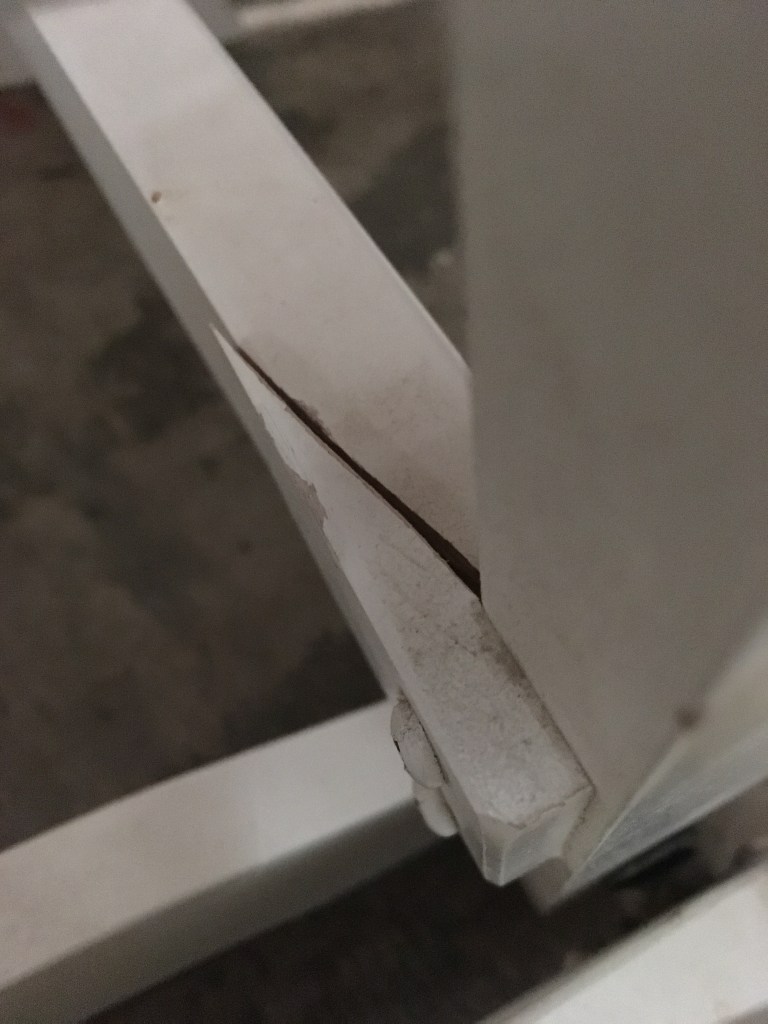
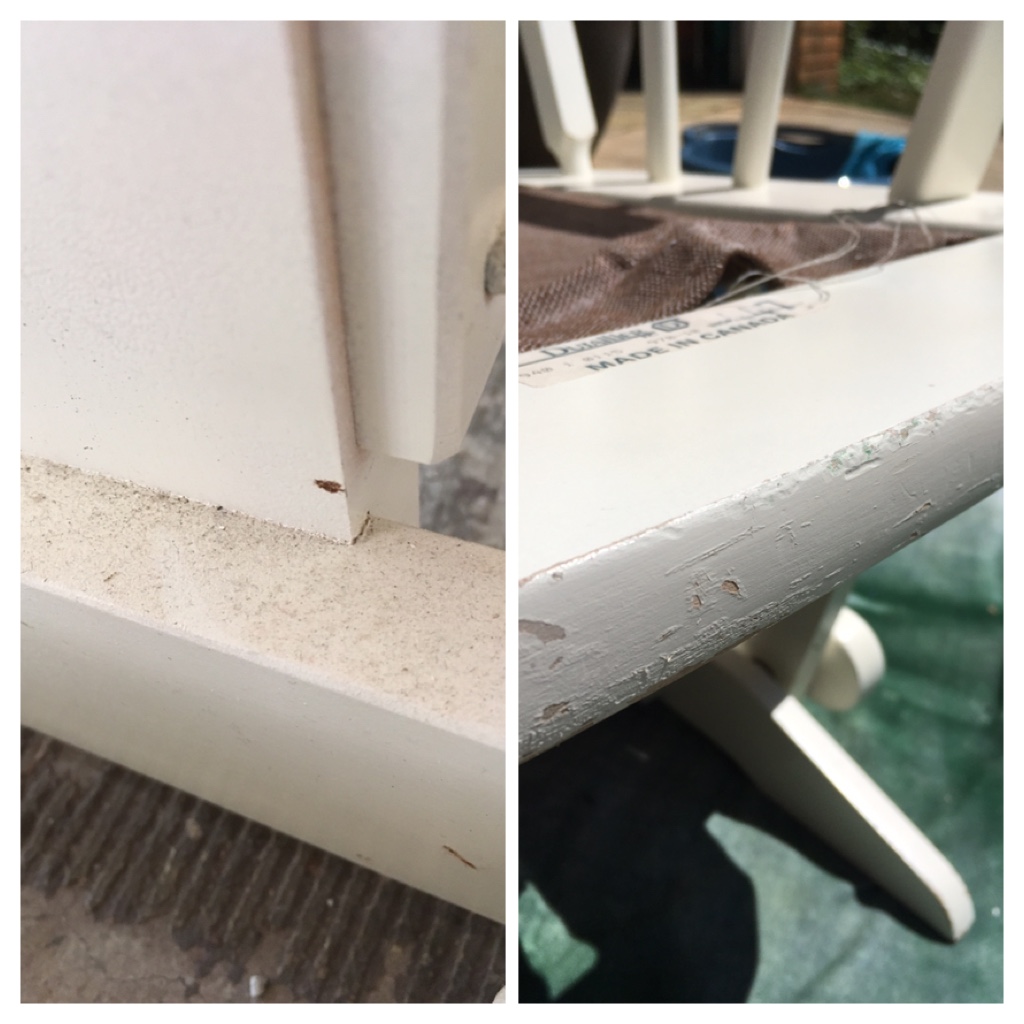
Apart from worn out cushion covers, some slats missing from the ottoman, and some scuffed paintwork, the piece was generally in good condition. The only repair it needed was to a crossbar on the chair.

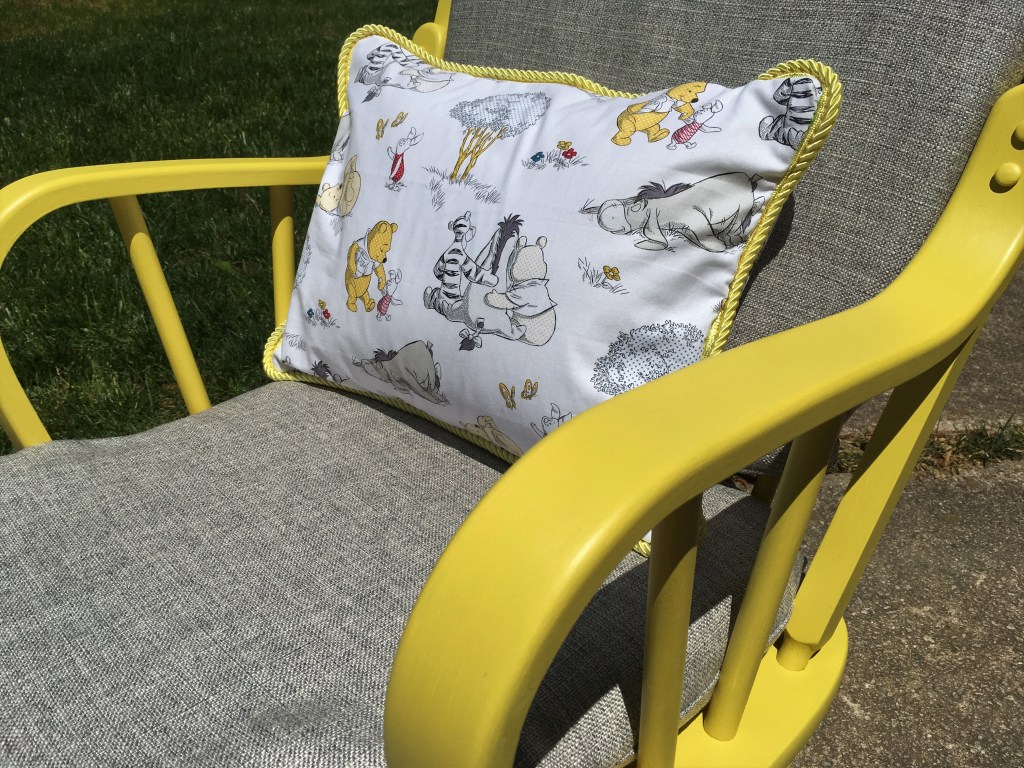
The theme for this piece was to be “Winnie The Pooh” with a yellow, gray and white color scheme. In the end I went with Annie Sloan chalk paint (not the paint pictured here) in English Yellow.

First order of the day was a thorough cleaning with a weak soap solution. Although you don’t have to sand a surface before applying chalk paint I did smooth out some blemishes in the paint finish and sand the very polished factory finish on the arms of the chair.

It transpired that painting a glider rocker and ottoman is nigh on impossible. Fortunately I’m always up for a challenge but my resolve did waver as I painstakingly applied coat after coat after coat. Fortunately by the third coat (which I applied with a wax brush rather than the regular paintbrush I had been using) I got the uniform look I was aiming for.

But the ordeal was not over! I still needed to add 2 coats of clear wax to give protection and a lovely sheen to the finish.

Once the painting was complete my husband added the slats that were missing from the ottoman

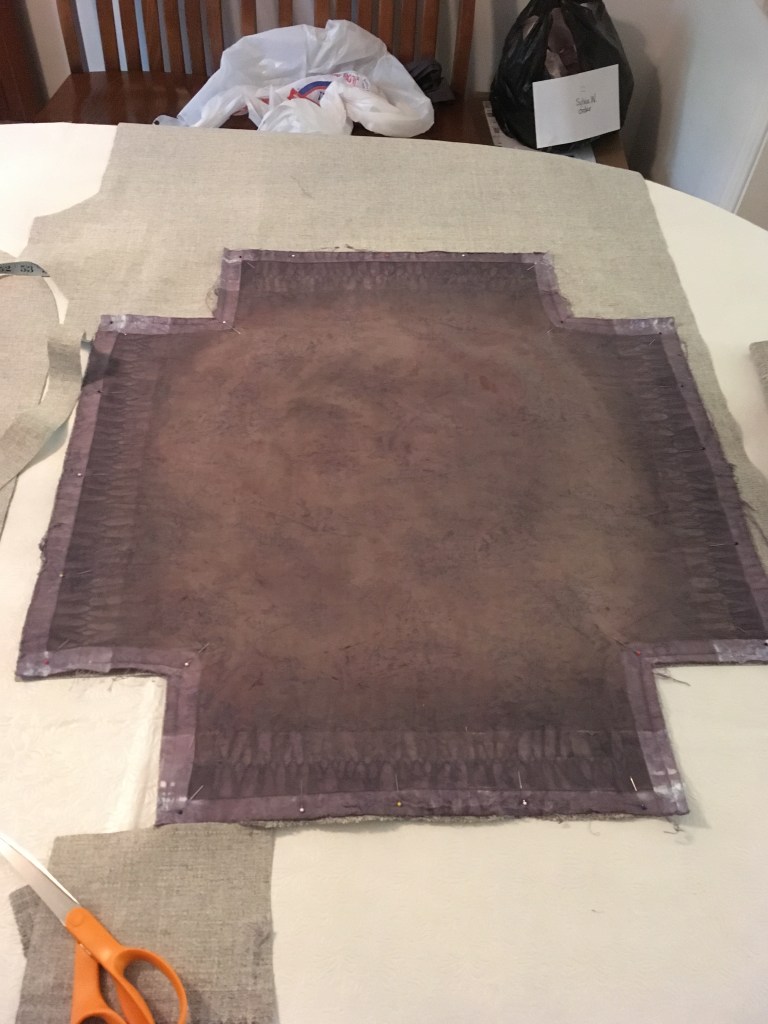
To replace the cushion covers I used the old, unpicked covers as a pattern guide for the new fabric. A brand new throw pillow in the feature fabric brings together all the colors of the piece.

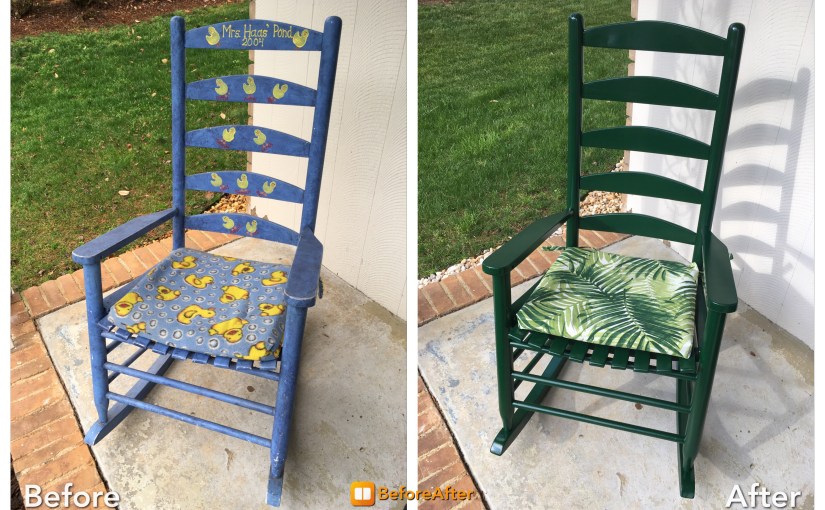
#18 Rocking chair

Transformation cost: $26.53

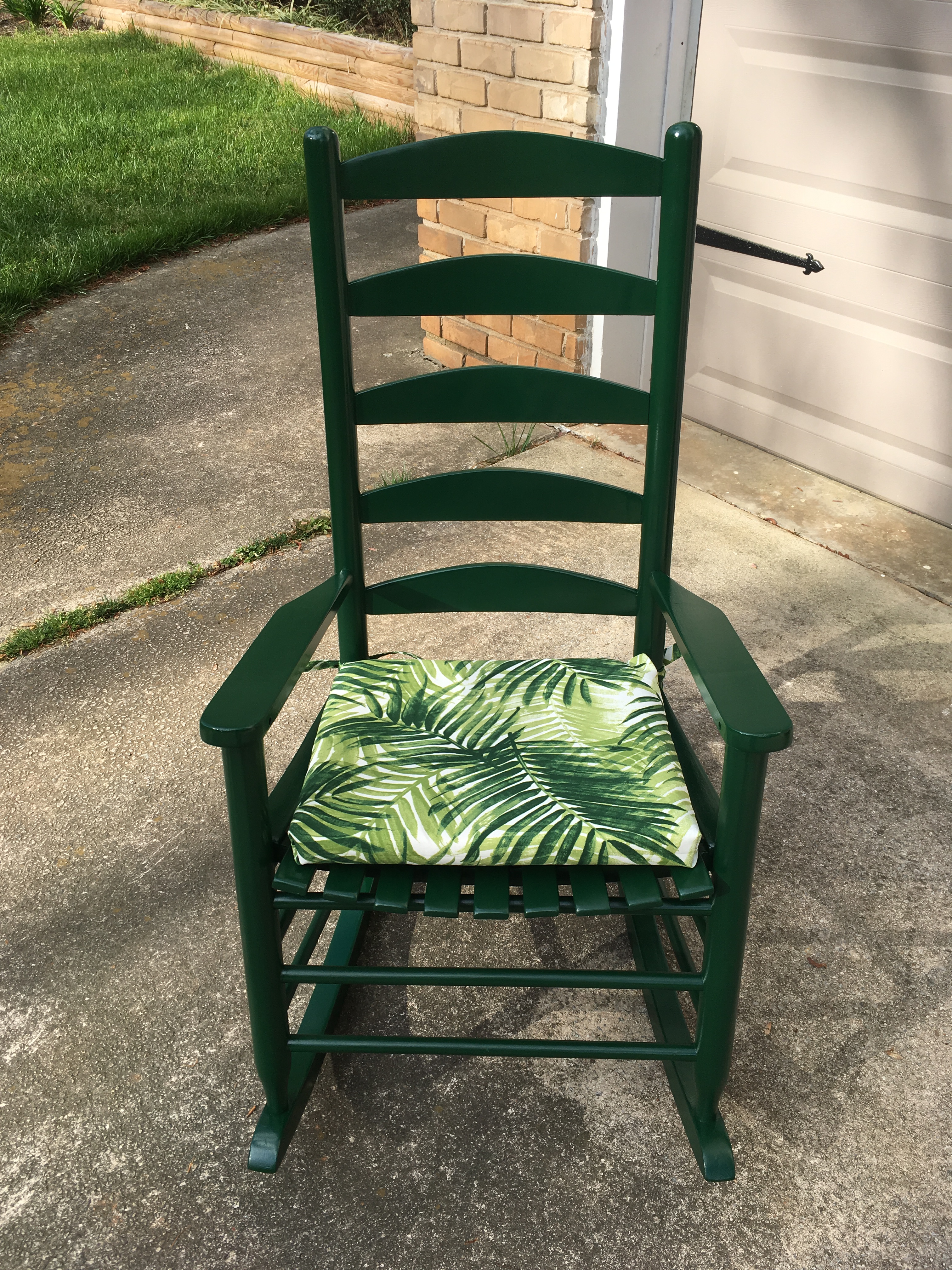
This was a bittersweet transformation; on the one hand it was slightly heartbreaking to eradicate the bespoke finish that had been lovingly and expertly applied by a parent; on the other hand the chair was ready to move on and it rocks its new sophisticated, tropical look.

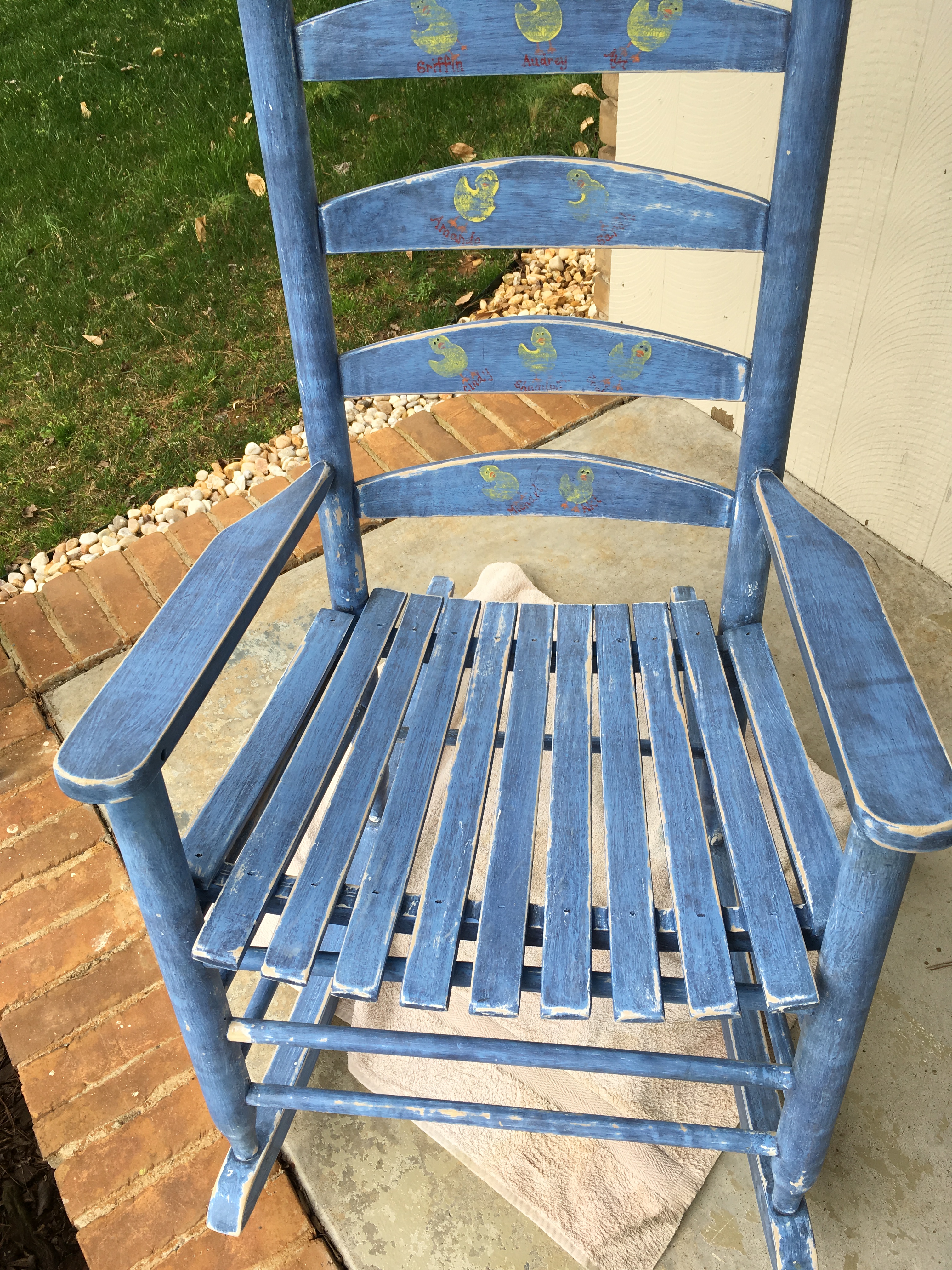
Since the previous finish was a textured one, it first needed a thorough sanding. Without spending days on it I wanted to get the surface as smooth as possible as it would be getting a gloss finish that would show every little defect. After sanding with three different grit papers I gave the chair a good clean with a mild detergent solution.

Beginning with the underside I started applying Rust-Oleum UltraCover spray paint in gloss hunter green. When several coats were thoroughly dry I applied felt pads to the rockers to protect the finish and any flooring it would eventually stand on.

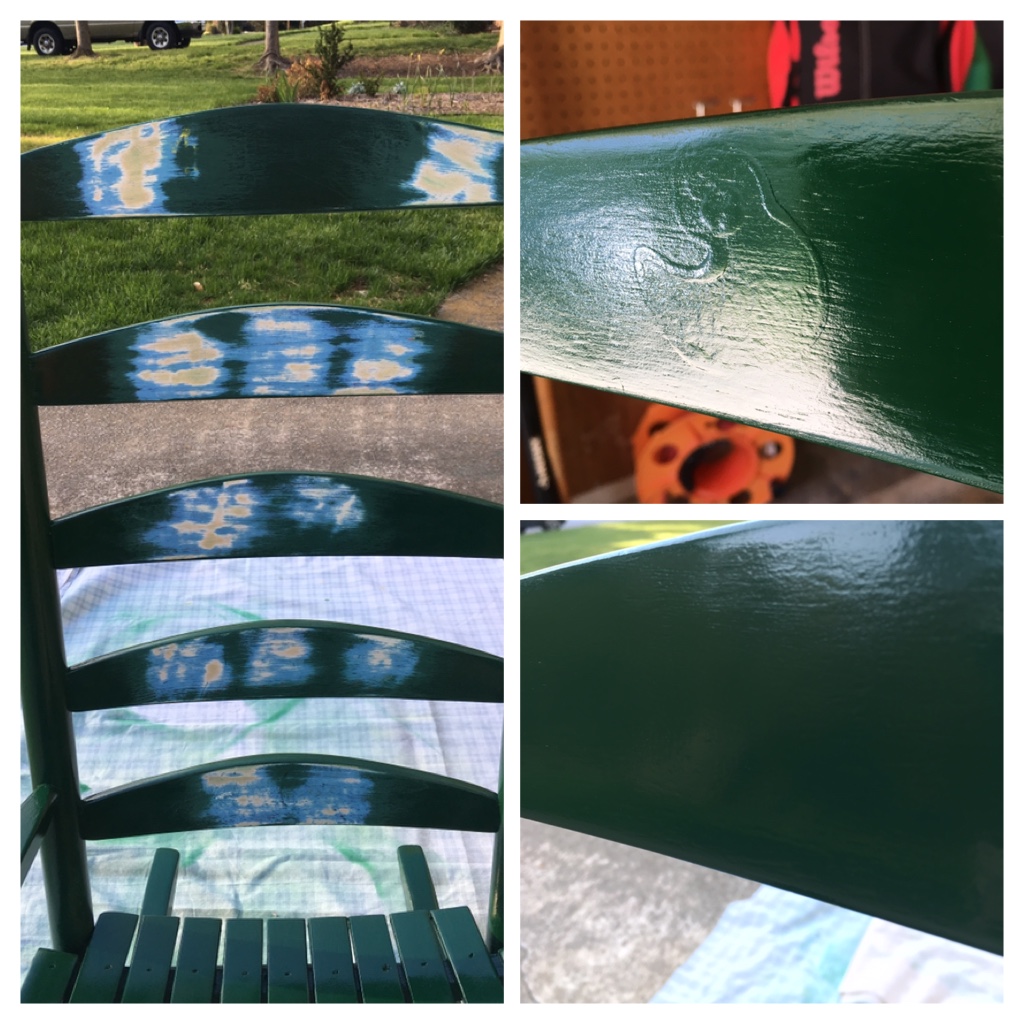
When I started painting the topside my fears were realized. Despite having done what I’d hoped was enough sanding, the outline of the ducks was still visible through the new finish. More sanding and more coats of paint did the trick. Ducks gone!

With the paintwork complete I now needed to revamp the cushion. Using the unpicked old cover as a pattern I cut and sewed a fashionable indoor/outdoor palm print fabric into a new cover.

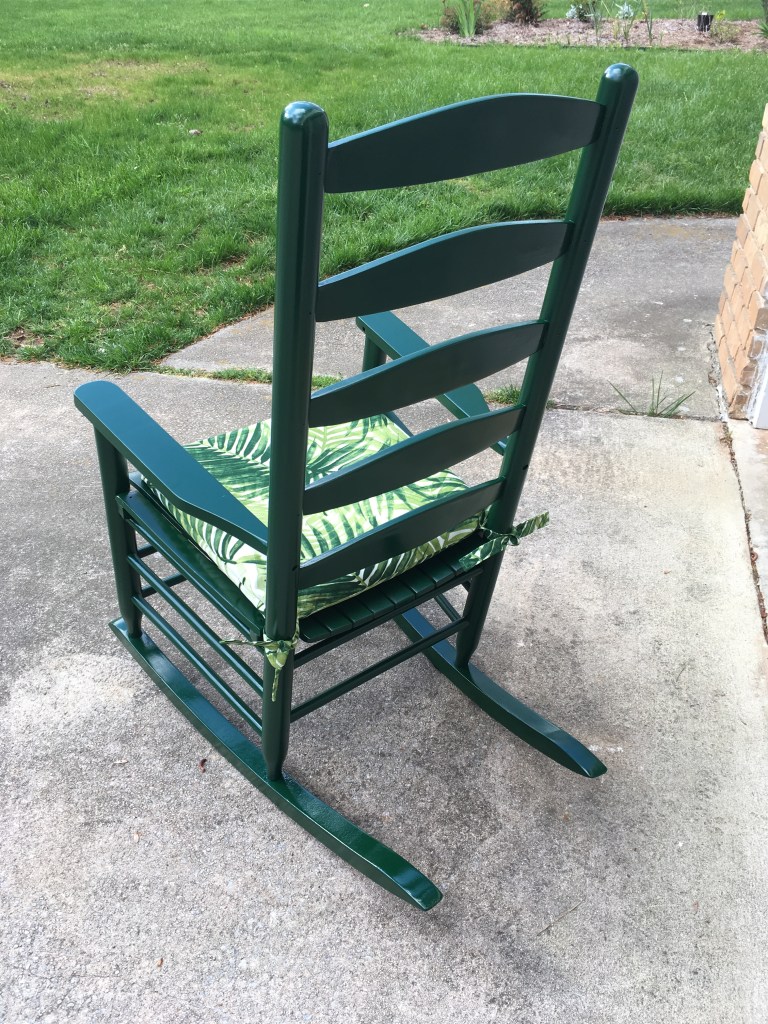
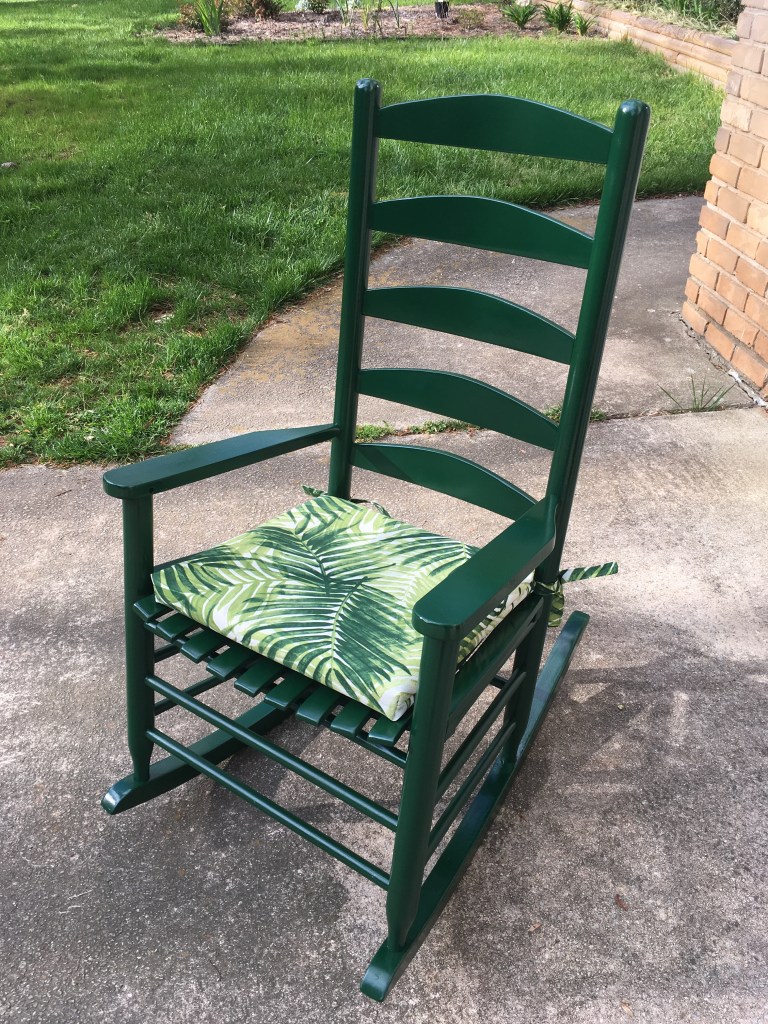
When chair and cushion were re-united my vision was realized