

Transformation expenses: About $20
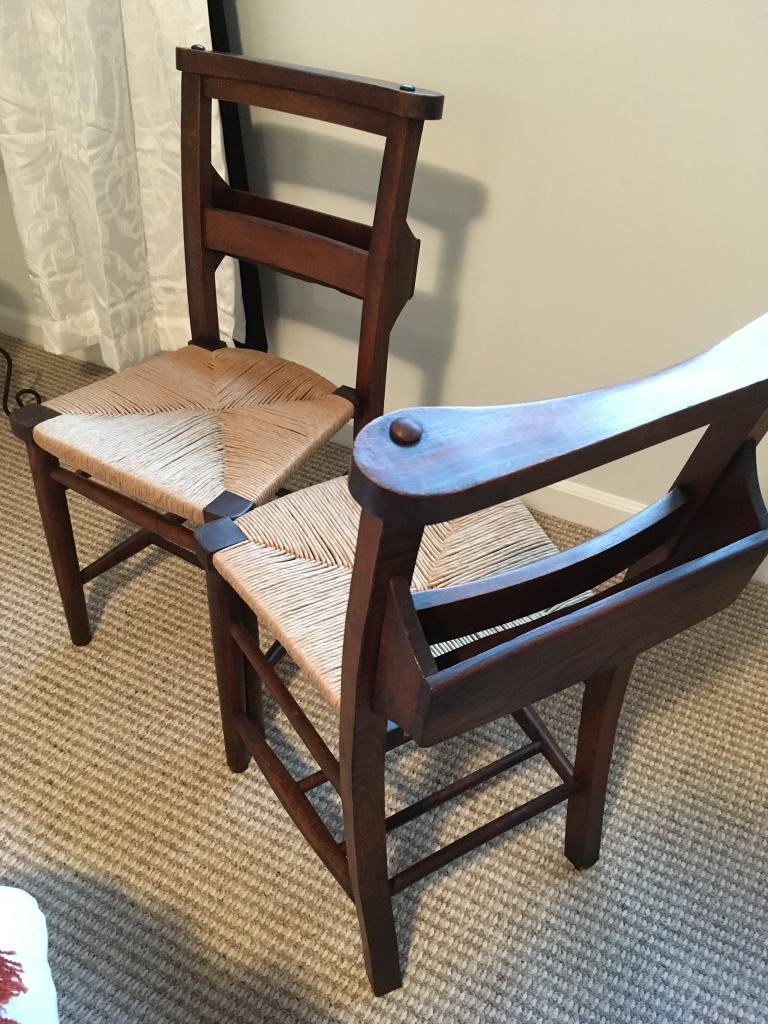
I nearly ignored these chairs thinking they were children’s furniture. Thank God I was sufficiently intrigued by the bible backs to pick them up! I quickly discovered they are antique church chairs, probably made in England in the late 19th century. The frames were dirty but in good condition, and responded beautifully to some simple restoration. A replacement plug and some newly woven rush seats completed their transformation to gorgeous accent chairs with a rich history.

It is likely these chairs were made in England by a company called West & Collier. They look just like chair # 112b from the company’s catalogue of the time. West & Collier was founded in 1869 in a village named Frieth in Buckinghamshire, England. The wood is probably elm and the two extra spindles between the back legs would have been for stowing a gentleman’s top hat during service.
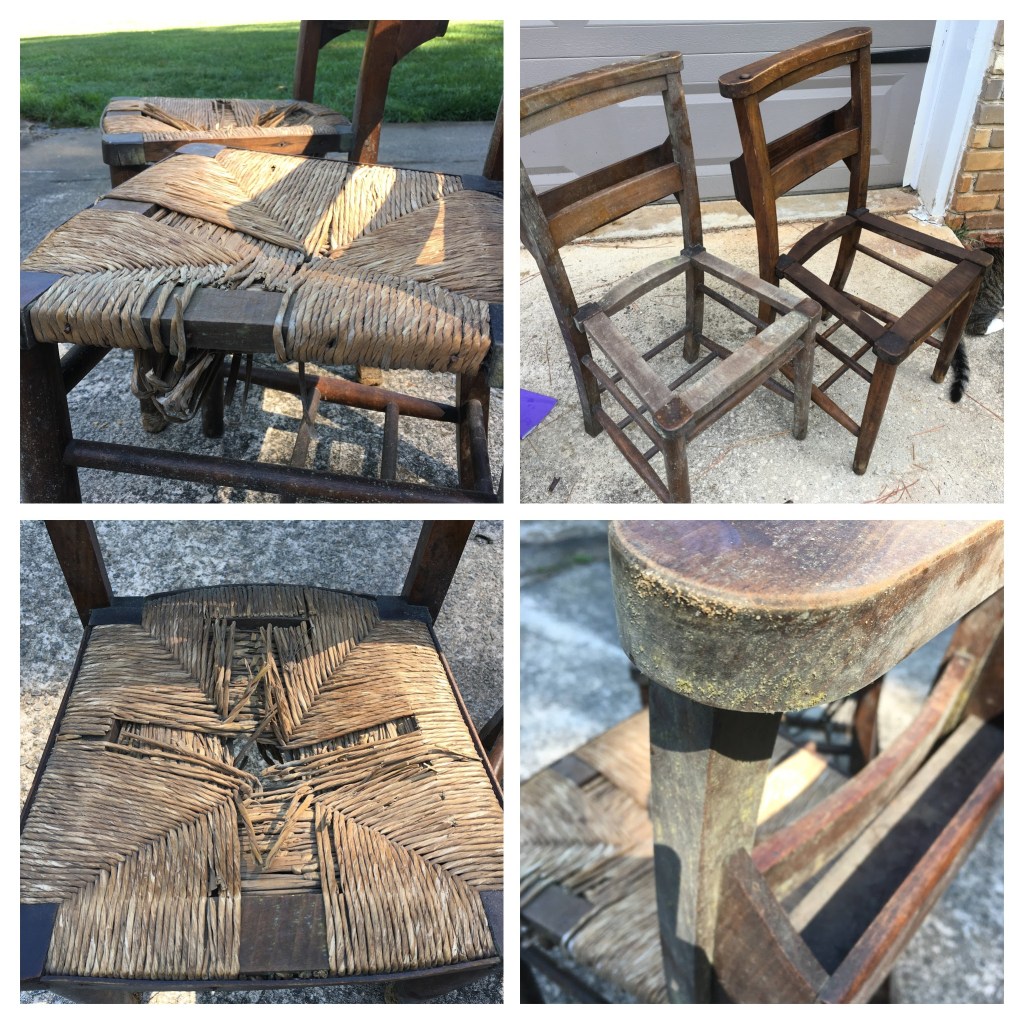
The chair frames were dirty but in good condition, while the rush seats were both damaged beyond repair. I began my restoration by removing the old rush and cleaning the frames with a very dilute solution of Simple Green all purpose cleaner.

After cleaning (bottom right), I applied Howard Restor-A-Finish in walnut (top right), and then Howard Feed-N-Wax (bottom left)

With the frames nicely restored I was ready to weave some new fiber rush seats. This was my second time using a technique I learned from an incredible instruction video by Ed Hammond of Peerless Rattan. I chose to not finish the woven rush with shellac because these seats will be indoors.
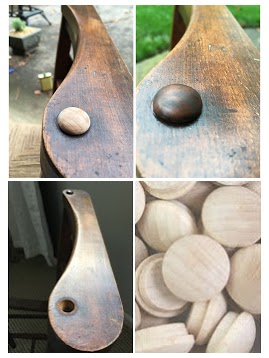
The final step of this restoration was to replace the missing button top wood plug. I got the part I needed from Widget Co. With a little sanding, I was able to make it fit like a glove and have the more rounded-off look of the originals. Once in place I used a mix of Varathane stains (dark walnut and kona) to give it the right color and antiqued look.
















 Transforming Trash