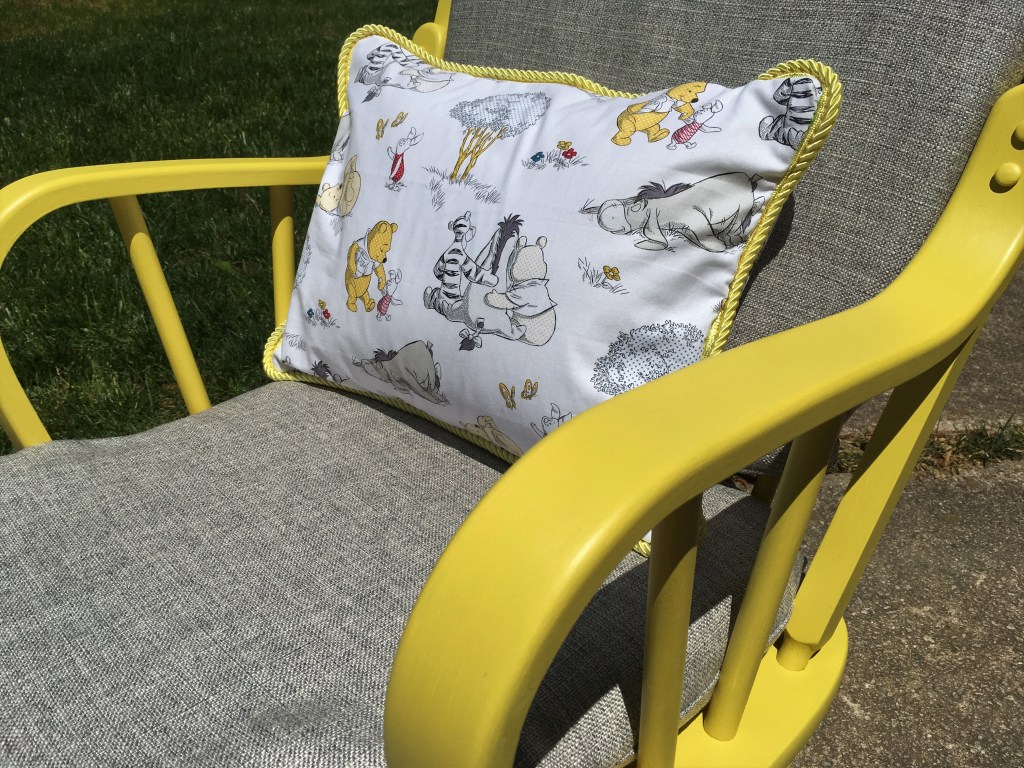
#29 Antique Queen Anne-style dressing table

Transformation expenses – $55.46

This circa 1910 dressing table was put to the curb just yards from my house! Its beautiful, long legs drew my attention immediately. Despite being disguised in paisley fabric I knew it could look amazing just because of its fine lines.

I secretly liked the fabric-covered look but it had been very badly done and was falling off in places. A lot of it just peeled away and the rest came off after a little dampening.
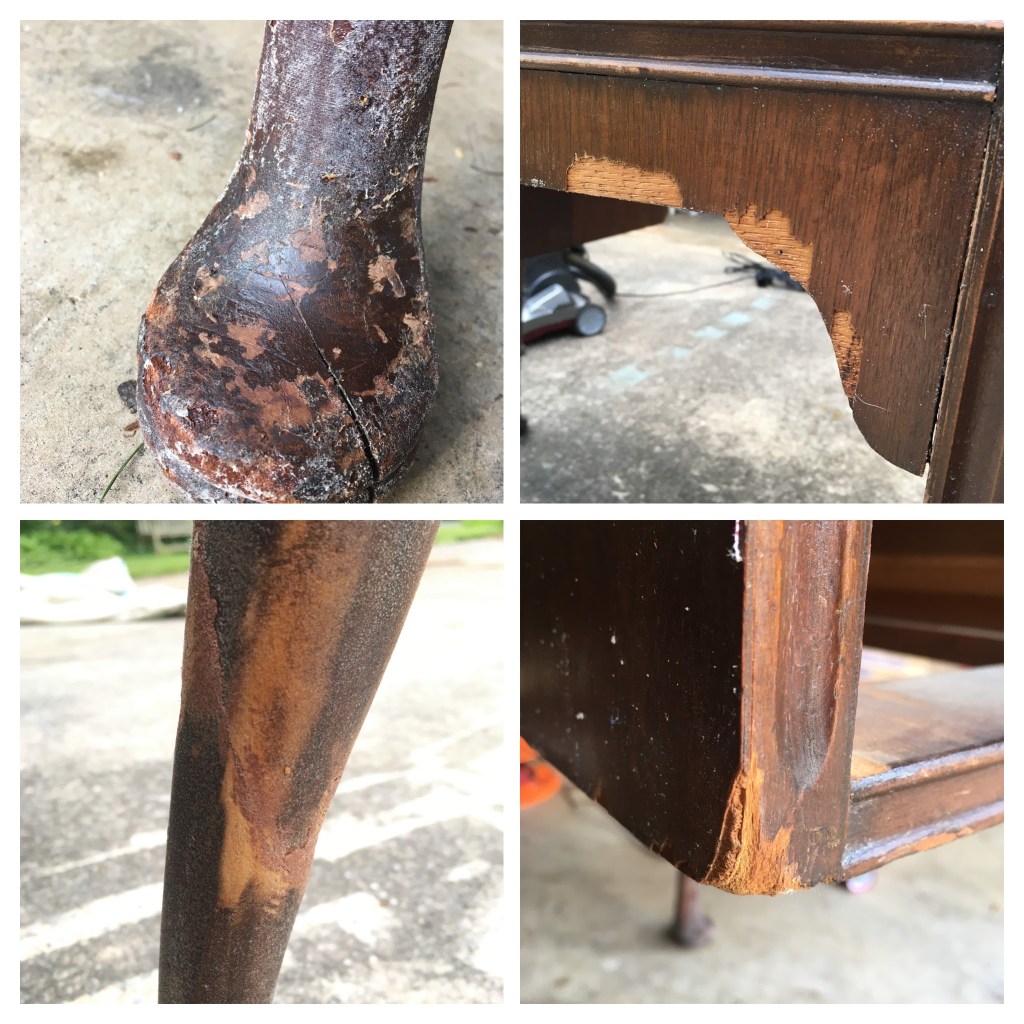
I was delighted to find the top and drawer fronts in pretty good condition, but other parts of the piece were seriously damaged, including a leg that had obviously been broken and shoddily repaired.

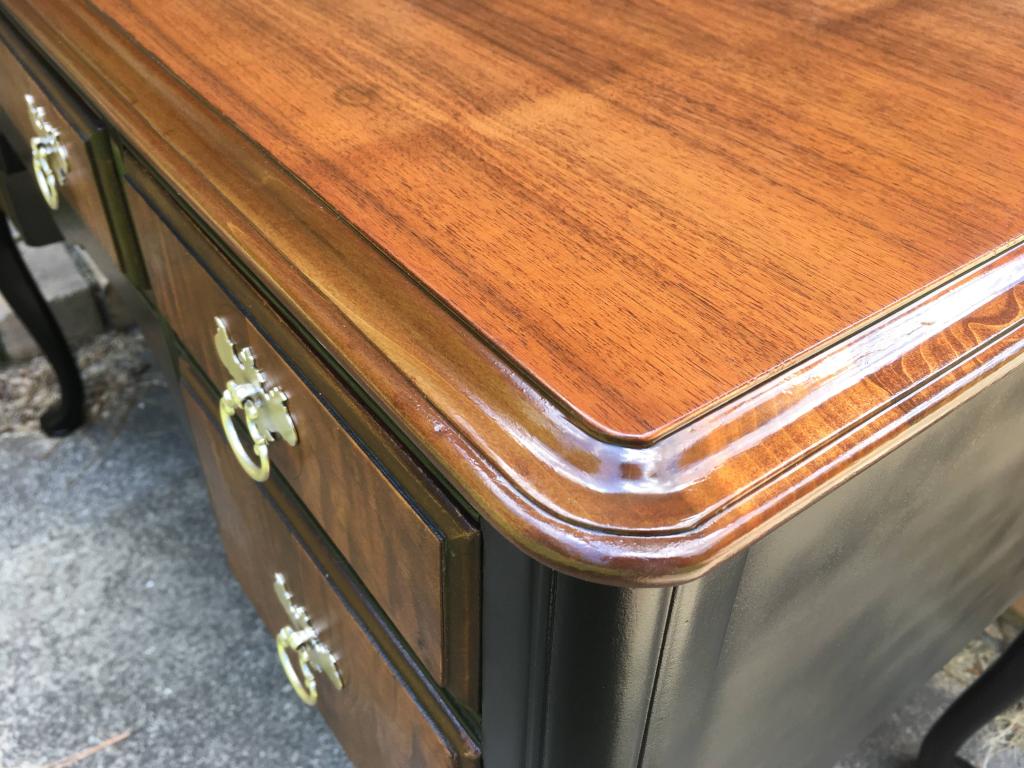
After much research and deliberation I realized it would not be worth attempting a full restoration so I decided on a combined restore & refinish approach. I started by restoring the drawer fronts, which have a beautiful tiger maple veneer. Fortunately the fabric adhesive came off with a dilute soap solution and did not require any solvent. Once they were cleaned, I used Howard Restor-A-Finish in walnut followed by Howard Feed-n-Wax oil-based wood conditioner.
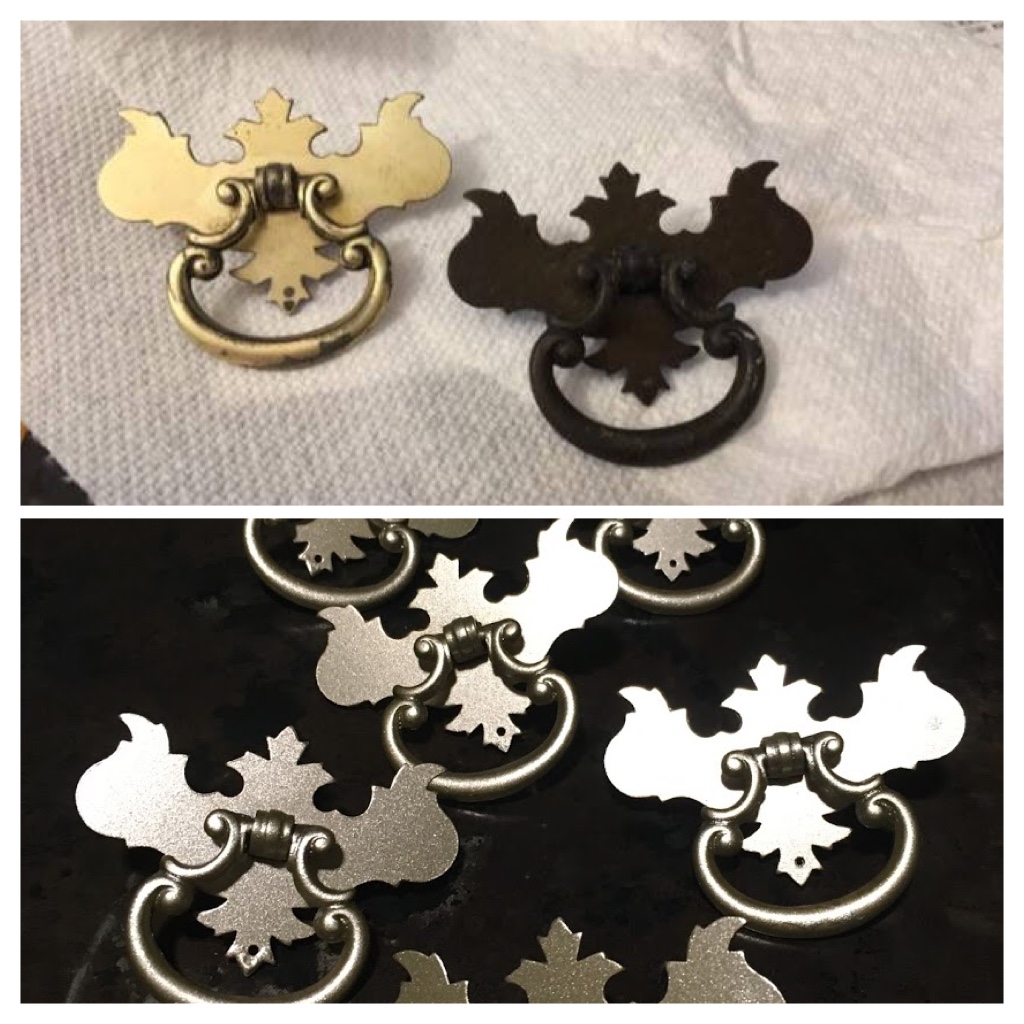
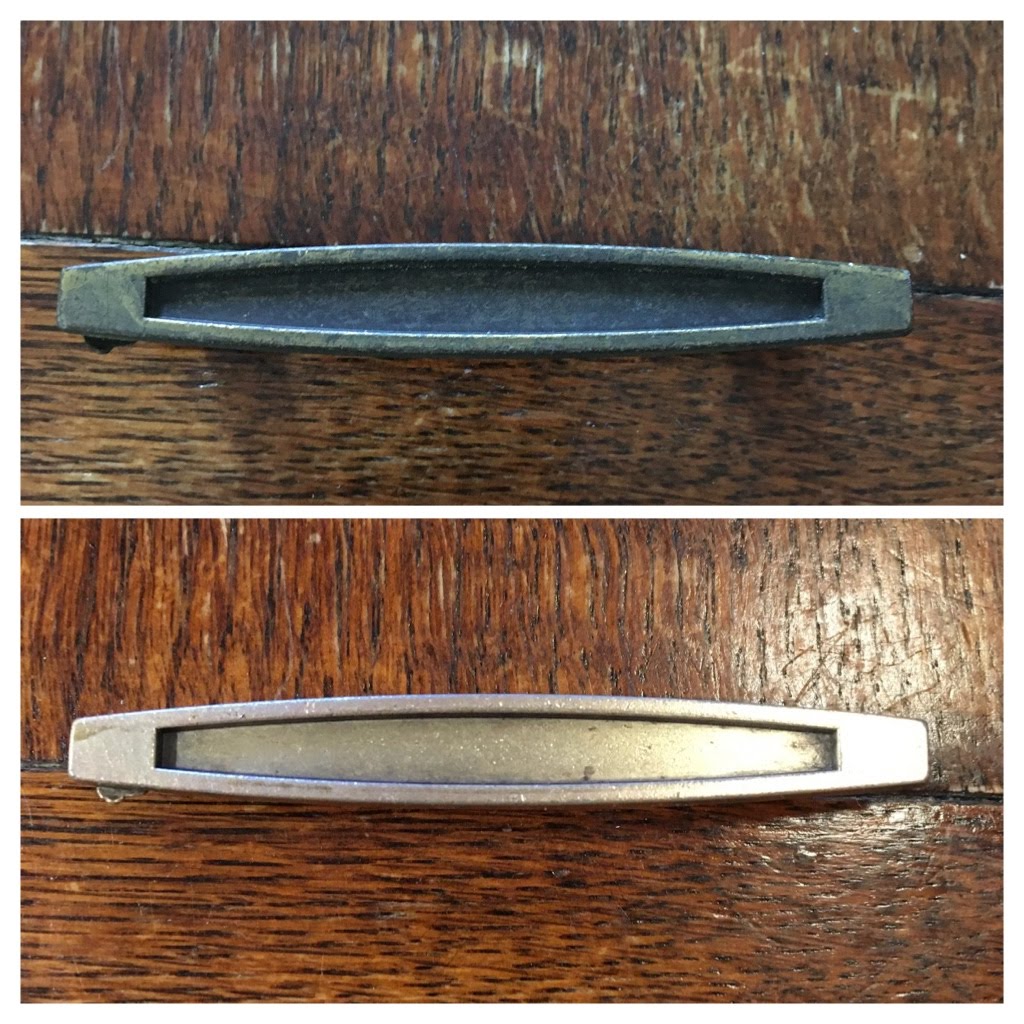
The Chippendale-style drawer pulls were so tarnished they were nearly black (top right). I considered leaving them that way but realized they would complement the restored drawer fronts more if they were refreshed. I set about polishing them, only to find they are brass plated, not solid brass. The Bar Keeper’s Friend I was using removed some of the brass plating (top left) but all other gentler approaches I tried were ineffective. I decided to go ahead and polish them all then touch them up with Rust-Oleum’s Metallic in gilded brass (bottom).

When it came to the table top, allowing myself to refinish rather than restore had a couple of advantages: For one thing it would have been impossible to remove the adhesive without damaging the old finish and for another I could now use a more modern, durable ,and practical polyurethane. I got back to the bare wood using stripper and sandpaper. I then applied Rust-Oleum wood stain in American Walnut, followed by 3 coats of Varathane polyurethane in semi-gloss. The color perfectly complements the drawer fronts.
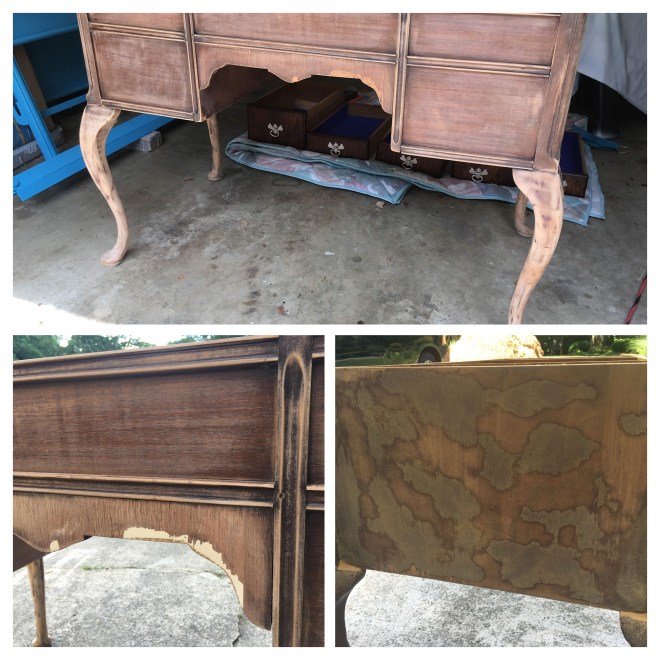
Finally it was time to tackle the frame and legs. The biggest challenge of this piece was the adhesive used to attach the old fabric covering. It behaved differently on every different surface. Some mineral spirits thinned it out in places but would not remove it completely. In the end there was nothing for it but to sand it off. Using 150, then 220, then 400 grit sandpaper I eventually removed all traces of adhesive. I used professional wood filler to repair some dings, cracks, and damaged veneer.

Once all the cavities were masked off ,I applied primer followed by two coats of Rust-Oleum Canyon Black in satin finish. The piece was then ready to reassemble.

#28 Full metal bed

Transformation expenses: $40.14

I’ve always loved seeing metal beds painted in interesting colors. When a neighbor posted that she was getting rid of this one I was equal parts excited by its prospects and intrigued by it’s design; I had never seen a metal bed shaped like this before. Luckily it was just what a friend wanted for her spare room so I gave myself the green light to pick it up knowing it already had a final destination.

My interest was really sparked when I found some of the original, wood effect finish on the side rails of this bed (bottom right pic). A bit of internet research has me believing this is probably a Simmons bed made in the 1920s or 30s. It might have originally looked like the 1930s one in the top right pic. Sadly any original labels/markings were long since painted over.

It wasn’t easy to tell what was rust and what was the original wood effect finish but a thorough cleaning and sanding was needed either way.

A coat of Rust-Oleum Rust Reformer in all the crevices and exposed spots will ensure if there is any residual rust it won’t rear it’s ugly head later.

This project was finished with 5 cans of Krylon Fusion satin spray paint in Lagoon Blue. The color (picked by my client to go with a family heirloom quilt) brings a smile to my face every time I see it. The industrial look of the frame has really been lifted by the cheerfulness of the color.

#27 Antique Jacobean-style chair

Transformation expenses: Frame restoration – $4.84, professional upholstering in leather – $420

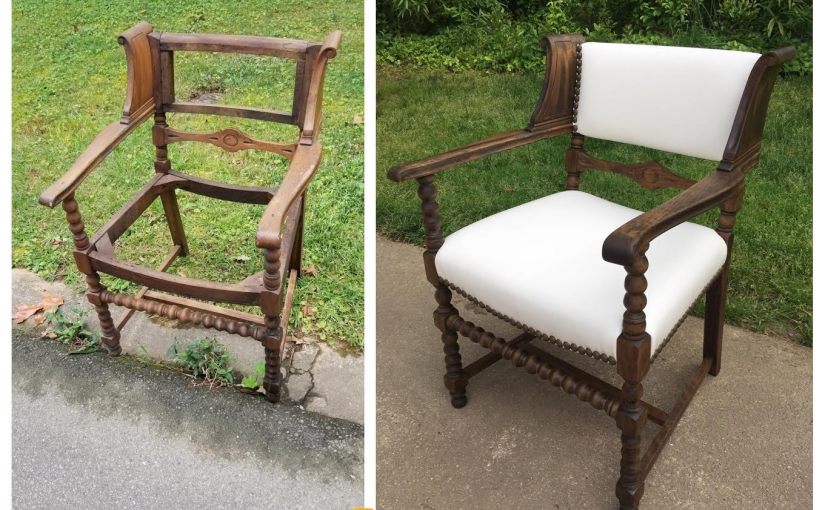
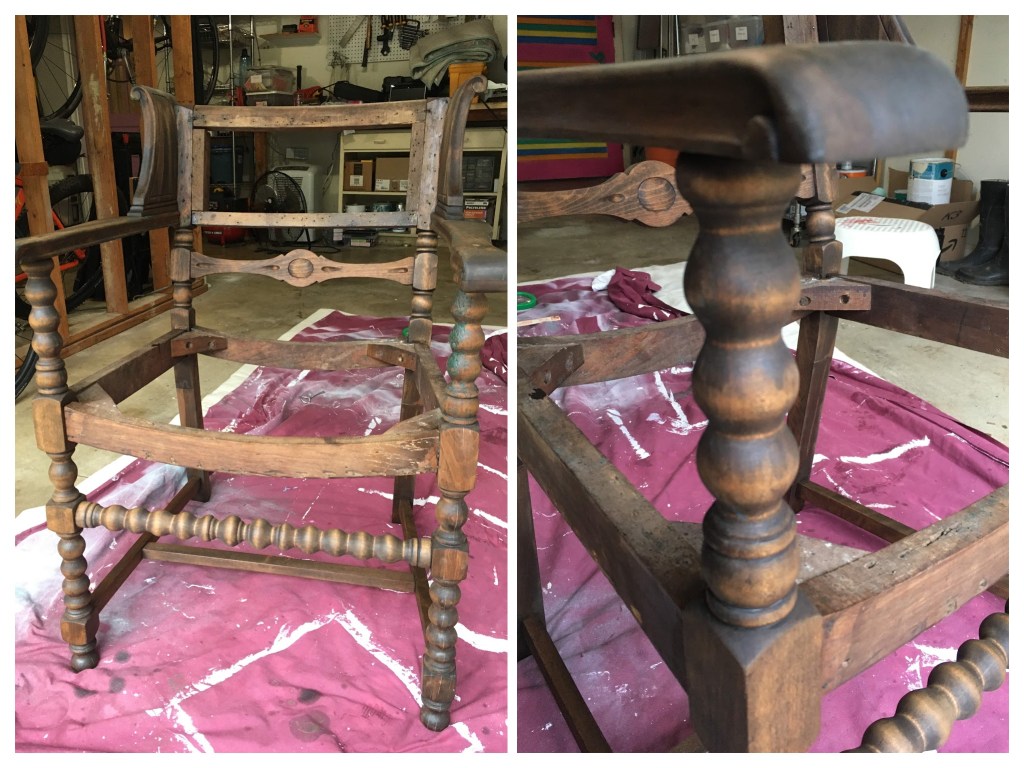
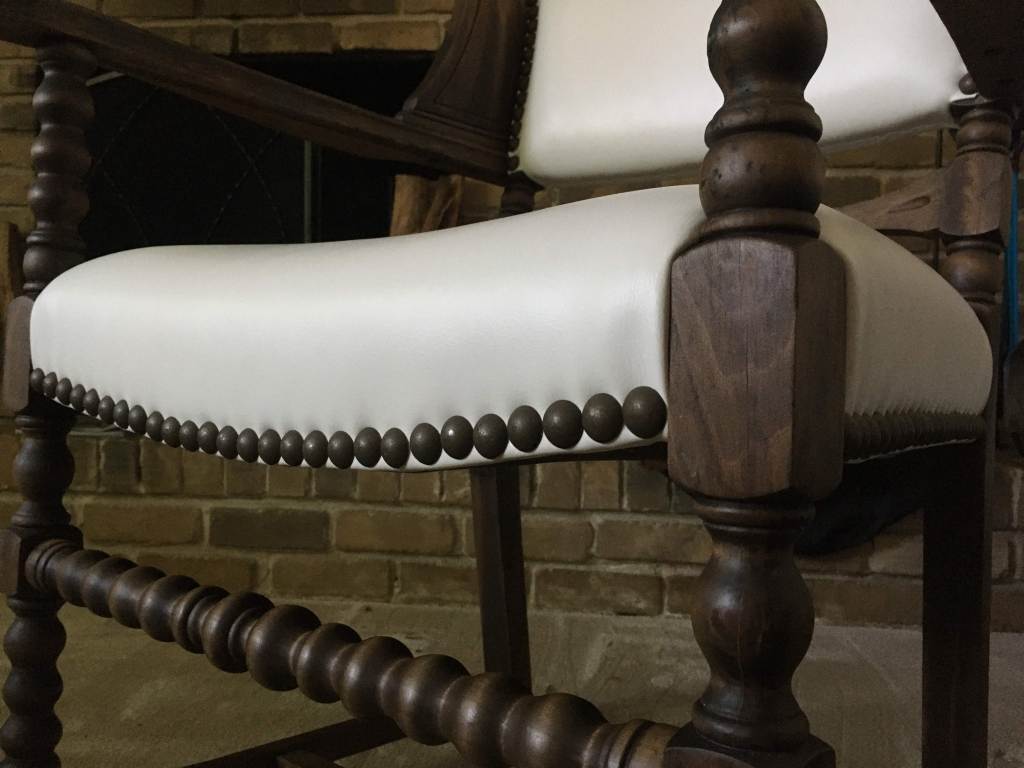
This circa 1890s winged armchair was put to the curb at a property that was being flipped. Its transformation was a labor of love. For the first time ever I employed the help of professionals; the re-upholstering of this chair was beyond my capabilities, so after I had transformed the frame, I took it to Budget Upholstery & Fabrics. I would not ordinarily have gone to such great expense but the antique value of this piece made it worthwhile.

Some people reading this might question me refinishing rather than restoring this chair. We’ve seen antique appraisers lamenting over a piece that has diminished in value by being refinished. This was not that type of piece (see below). I’d like to think the original furniture maker would be pleased to know that 120+ years later someone had put so much time and effort into making it functional and beautiful again. Read on for more on its journey from mildewed neglect to fireside treasure.

Peter Cook (executive producer of Antiques Roadshow) wrote: ” Understandably, our Americana experts on the Roadshow live for wonderful old pieces of furniture that have somehow survived in terrific condition …. Most old furniture, of course, doesn’t come close to meeting those standards. On the contrary, most furniture has been well used (even abused), scratched, broken, and often repaired many times. How could such furniture not be improved by a good job of refinishing or restoring? A comparison with a friend’s antique left me in no doubt that this piece was beyond simple restoration. On the left is my friend’s chair which is well preserved and still has its original patina. On the right is this chair which was dull and mildewed in places.

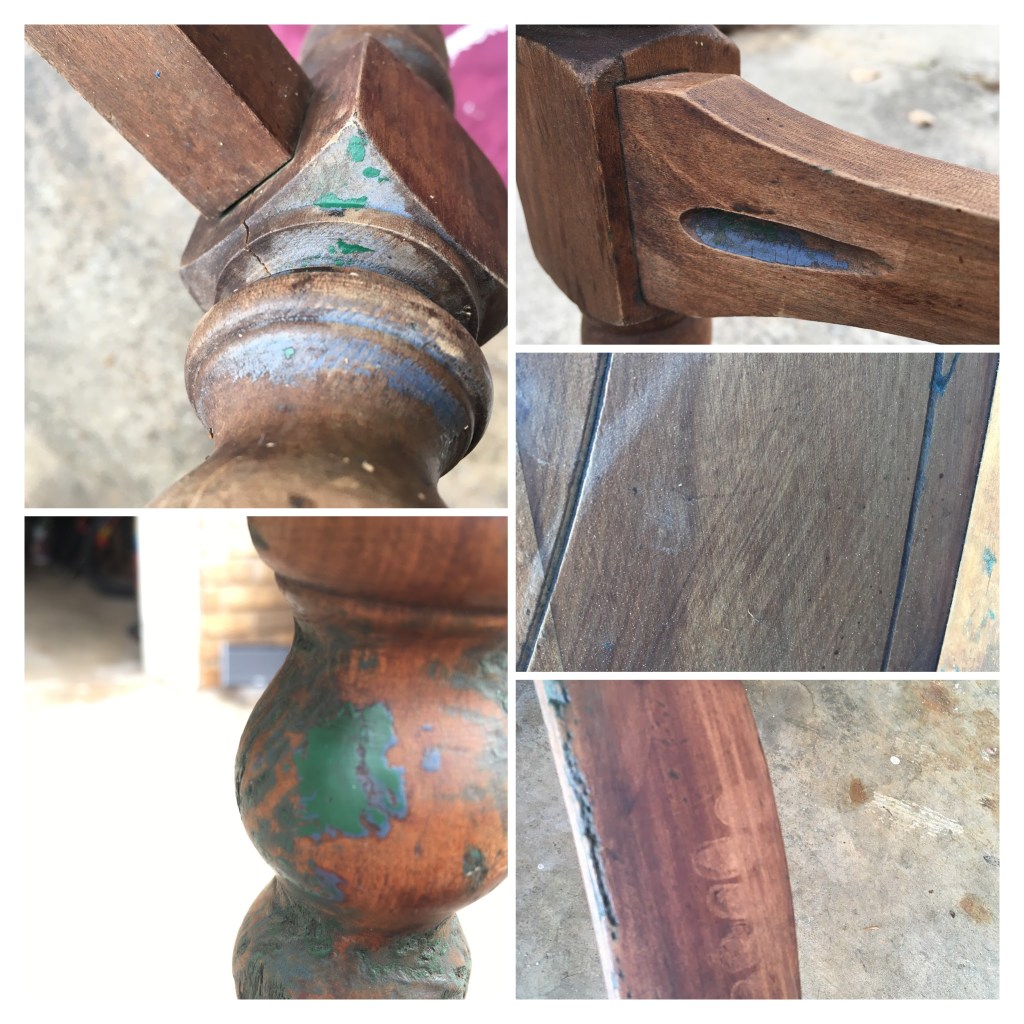
As well as signs of neglect this chair had evidence of poorly applied stain (see brush marks and fingerprints) and at least two different applications of paint (blue & green).

I first cleaned the piece with a mild detergent and then with TSP All Purpose Heavy Duty Cleaner (used by antique restorers). After both cleanings the chair still needed more than just a finish coat. I knew then that I would need to sand it back to the raw wood.

My goal was never to get it looking like new, rather to remove all ingrained dirt/mildew and get it a fairly even color for staining. After many, many hours of painstaking work (using just 220 or 400 grit finishing sandpaper) the sanding was finally complete. The piece still bears a lot of the marks of old age (scratches, dings, traces of old paint) but those all give it character.

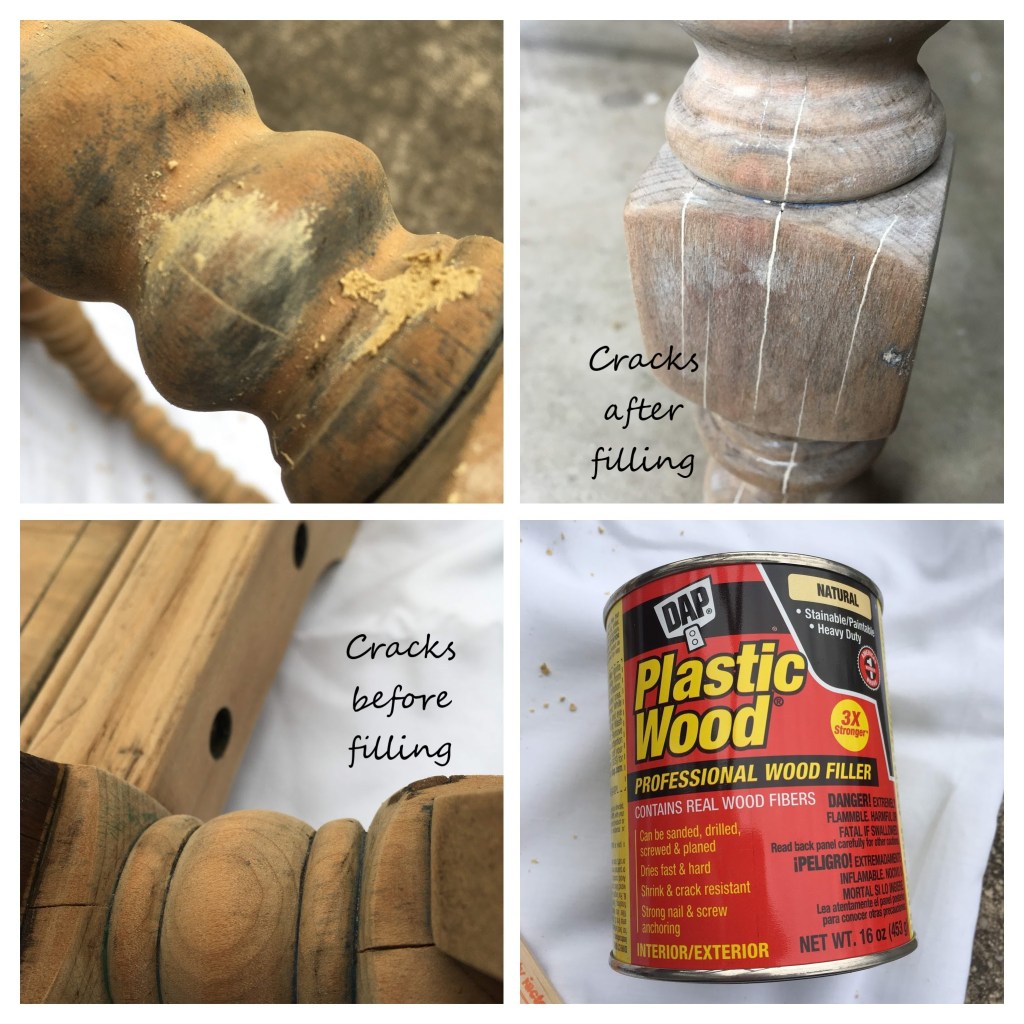
Before staining I filled the hairline cracks (probably from water damage) with Plastic Wood Professional Wood Filler. I simply rubbed it in with a (glove-covered) finger, let it dry, then sanded away the excess.

On recommendation from an online appraiser I chose a dark walnut oil-based stain by MinWax. I applied it with a brush then immediately removed any excess with a clean rag.

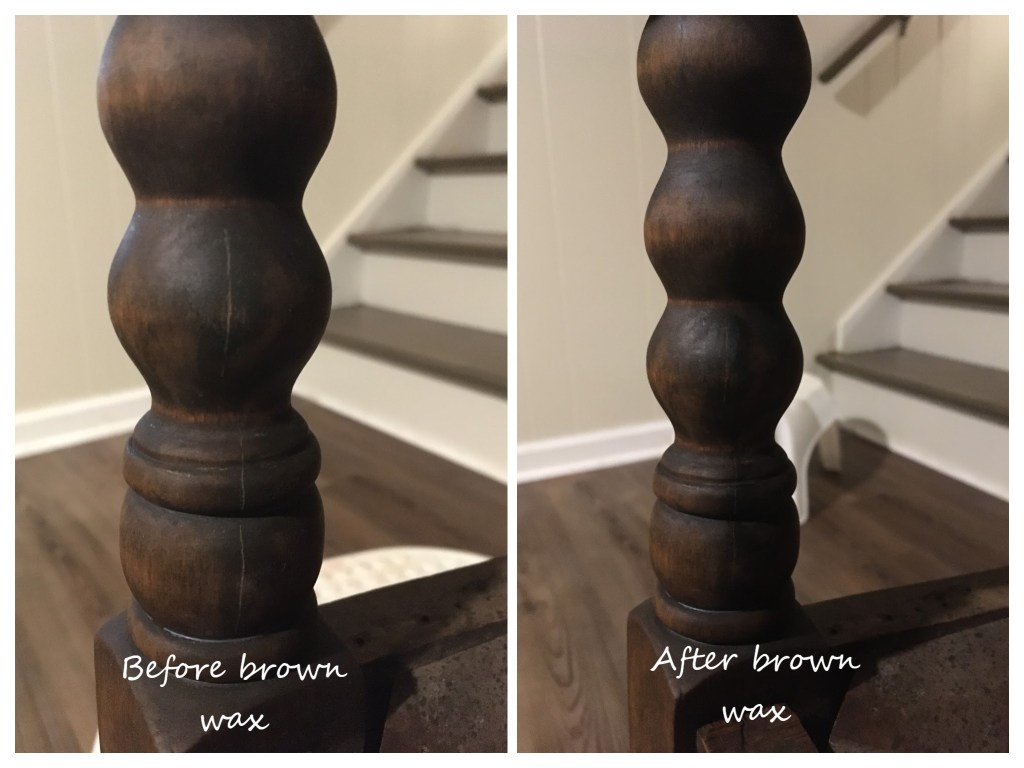
Despite it saying it “May be stained, sealed, or painted immediately after sanding” I was disappointed the wood filler did not pick up enough of the dark walnut color. The filled cracks were still visible, but thankfully I was able to blend them in with a little Annie Sloan dark wax.

As I began applying the finishing coats of Kilz clear sealing wax, some previously unnoticeable smudges of wood filler appeared (left pic). To fix the problem, I removed the wax with some solvent, sanded again, and re-touched the stain. After the whole frame had two coats of buffed wax and cured for 30 days it was ready to go the upholsterer.

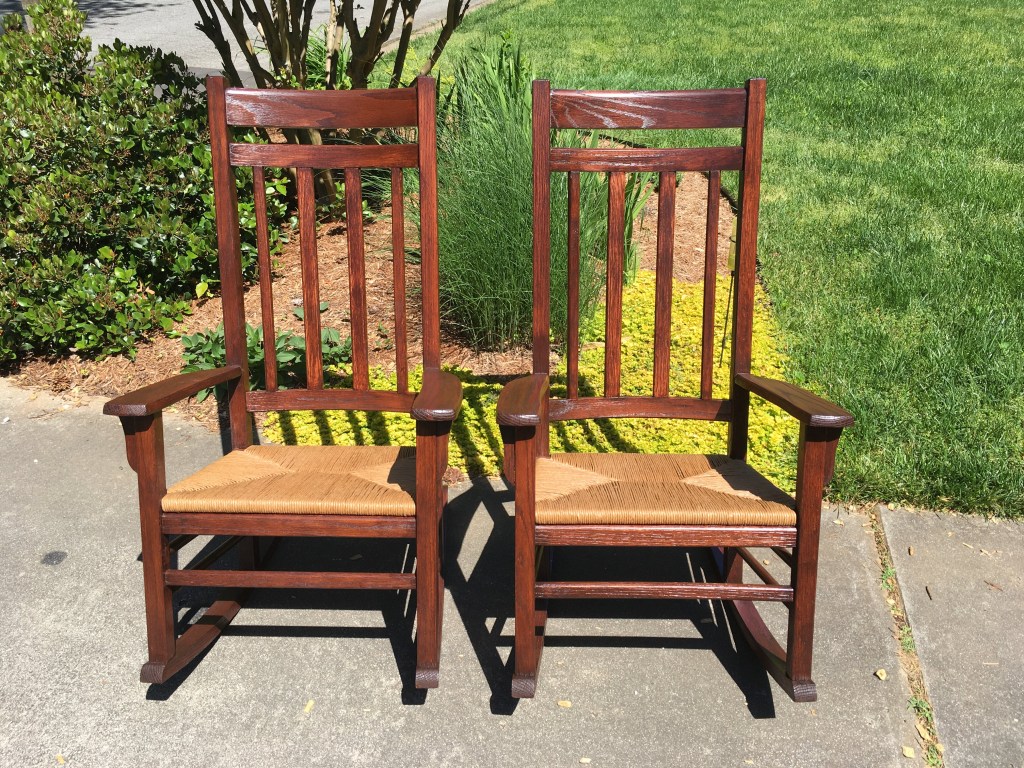
#26 Pair of solid oak rocking chairs

Transformation expenses: $120.16

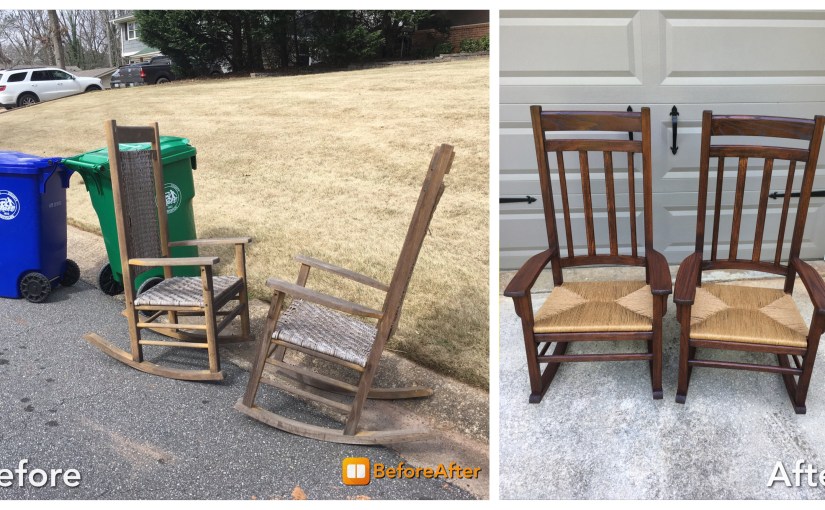
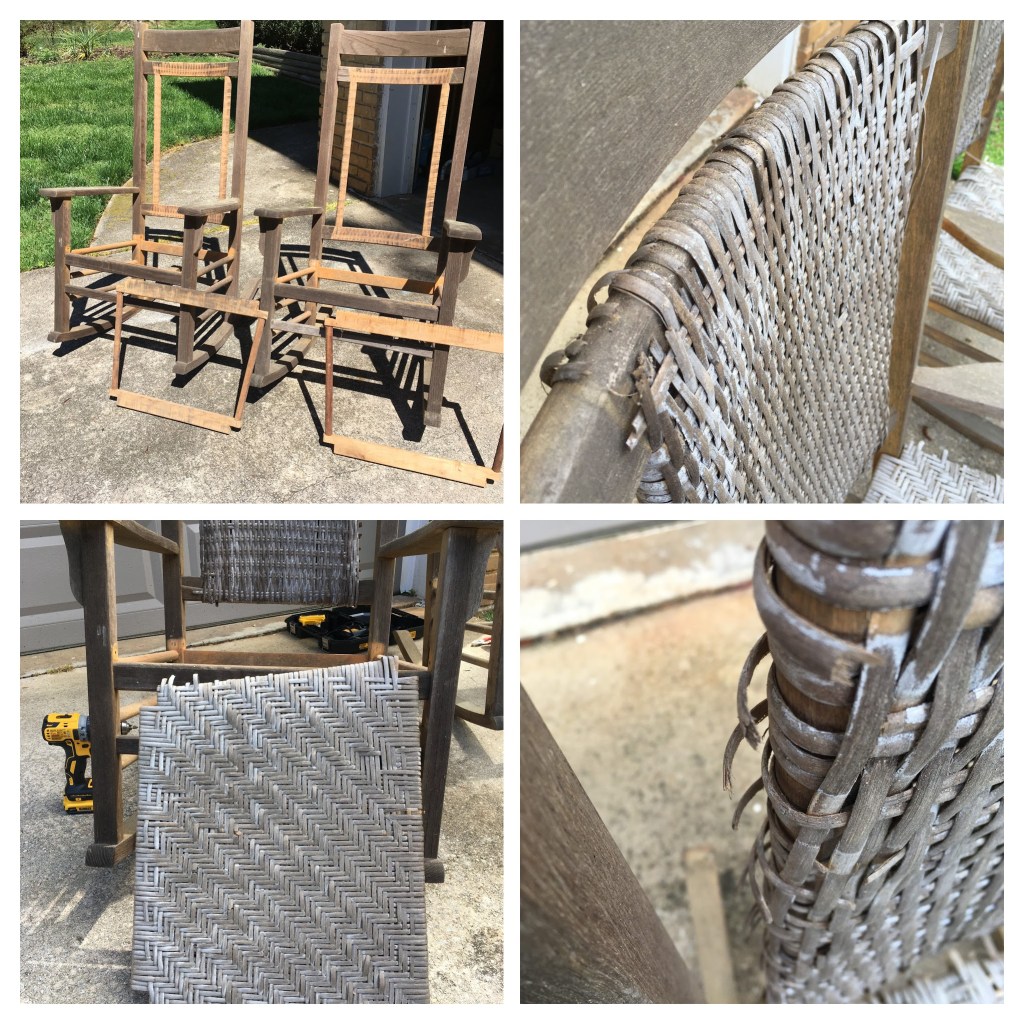
This pair of rocking chairs was no doubt discarded because the herringbone cane was falling apart, and the cost to replace it is prohibitive (around $500 per chair). However it seemed a shame to throw the baby out with the bathwater so I picked them up and contemplated a more economical solution.

The caning in both chairs was damaged beyond repair. There was no choice but to remove it all. Being able to take out the seat pads made the job a lot easier.

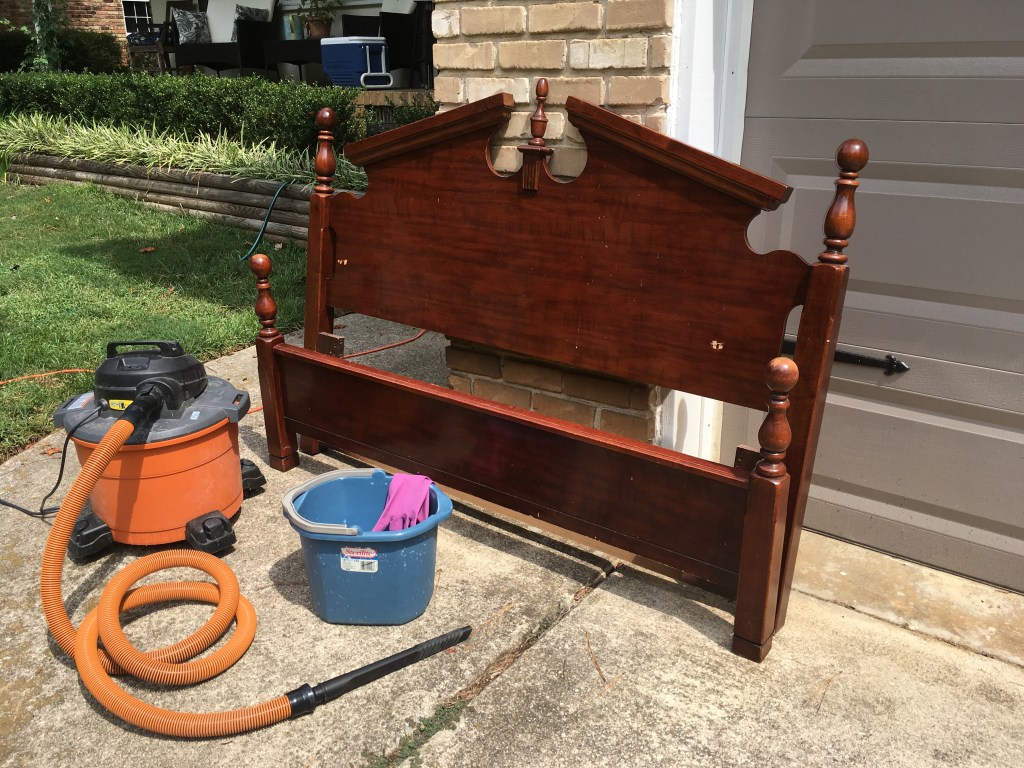
Pressure washing the frames to remove the ingrained dirt was possibly the most fun I’ve had on a project to date. The difference was amazing!

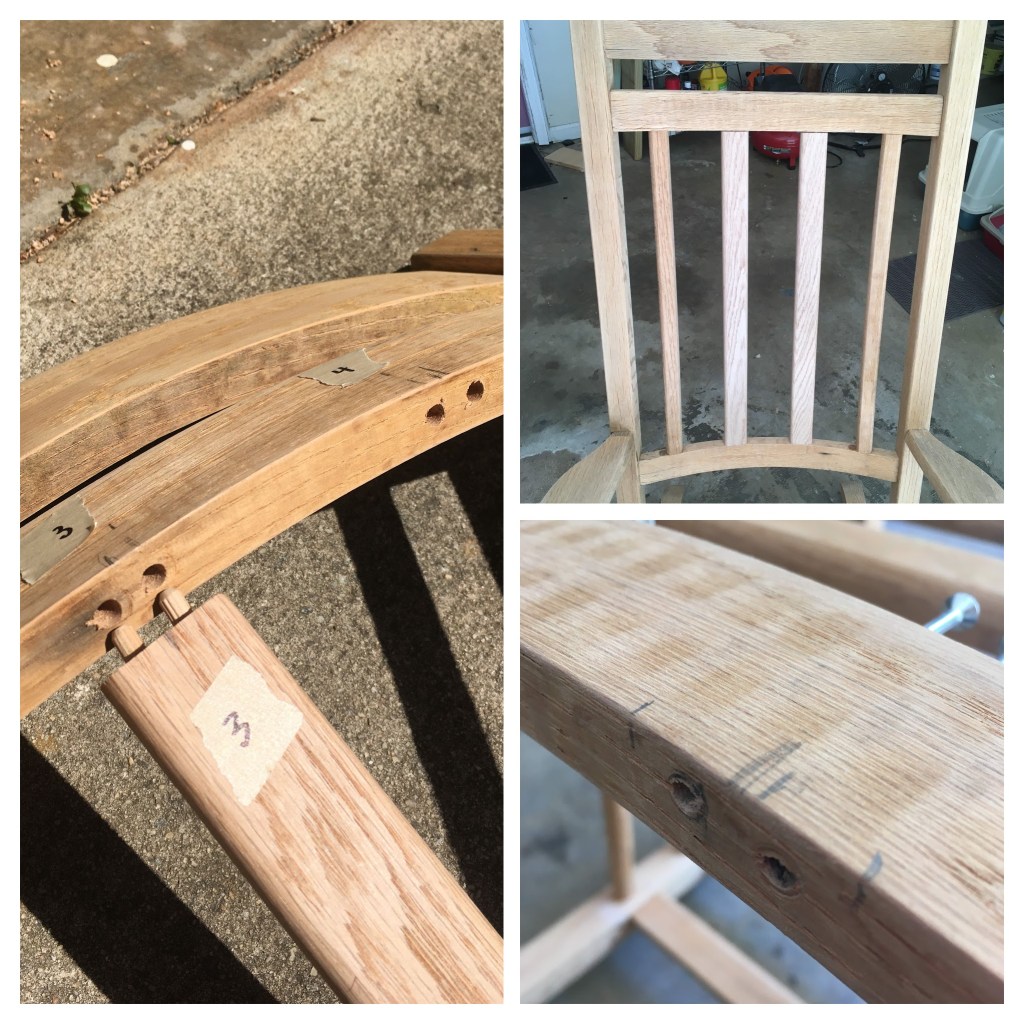
Pressure washing was hard on the wood and patches of the original finish were still there so a good bit of sanding was needed. I used 80 then 150 then 220 grit sandpapers to bare and smooth the wood.

The first of two more economical solutions was to replace the backrest caning on each chair with new spindles. We started with a 9ft long piece of 2″ x 1″ oak. My husband rounded the edges with a palm router then cut four spindles of the right length.

I attached the new spindles using doweling joints at the top rail and 3″ screws through the bottom rail. The frames were now ready for staining.

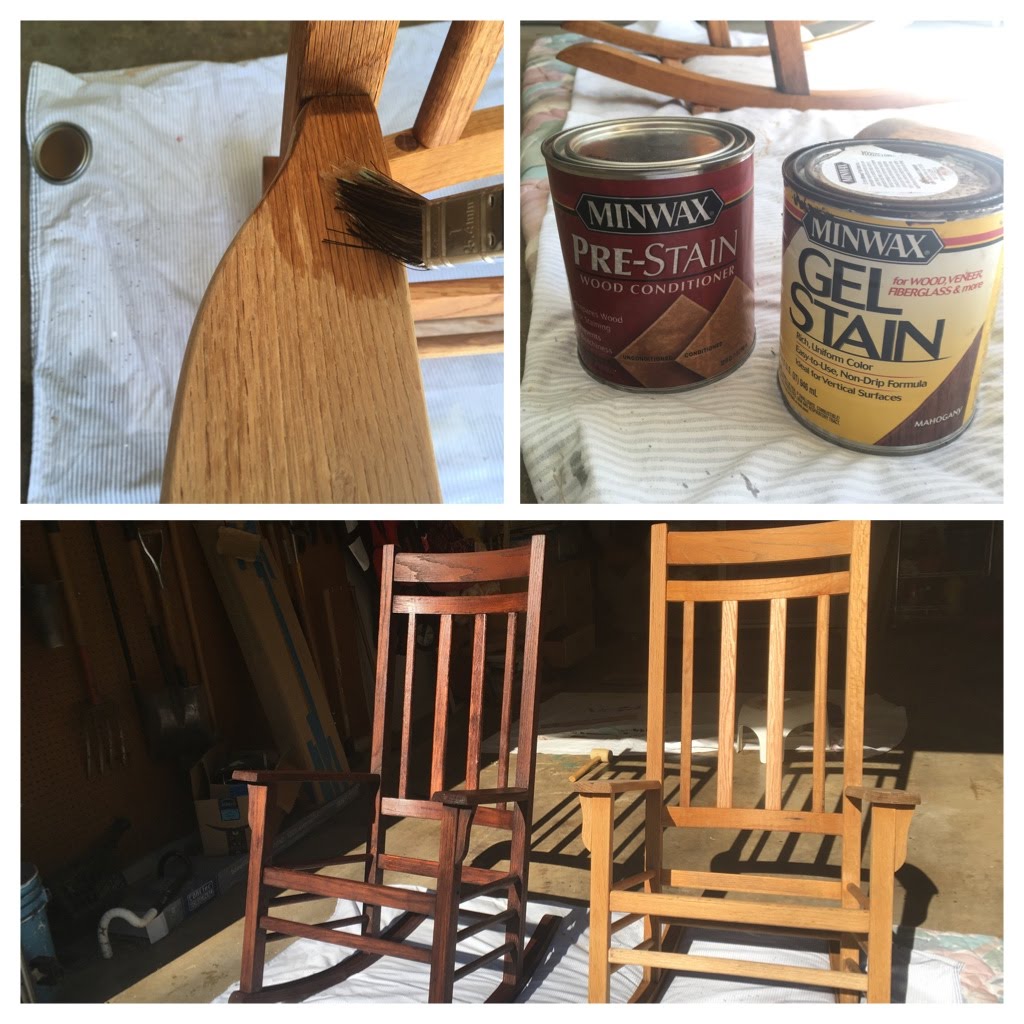
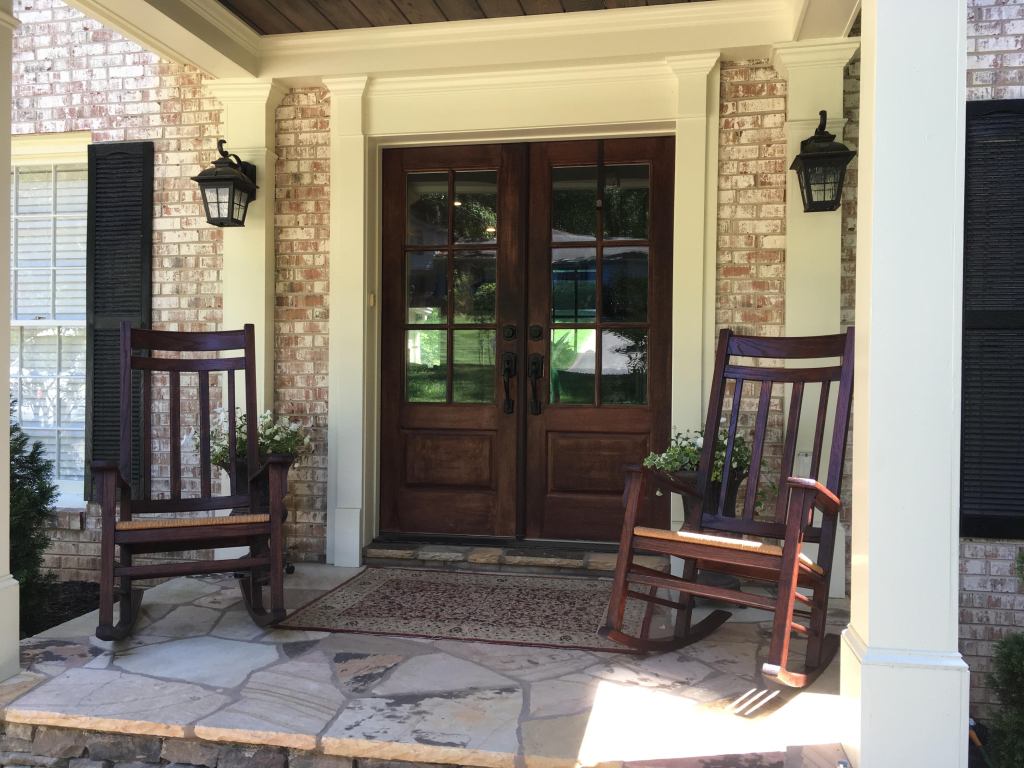
Before staining I treated the chairs with Minwax pre-stain conditioner. I then applied Minwax gel stain in mahogany to match my client’s front door.

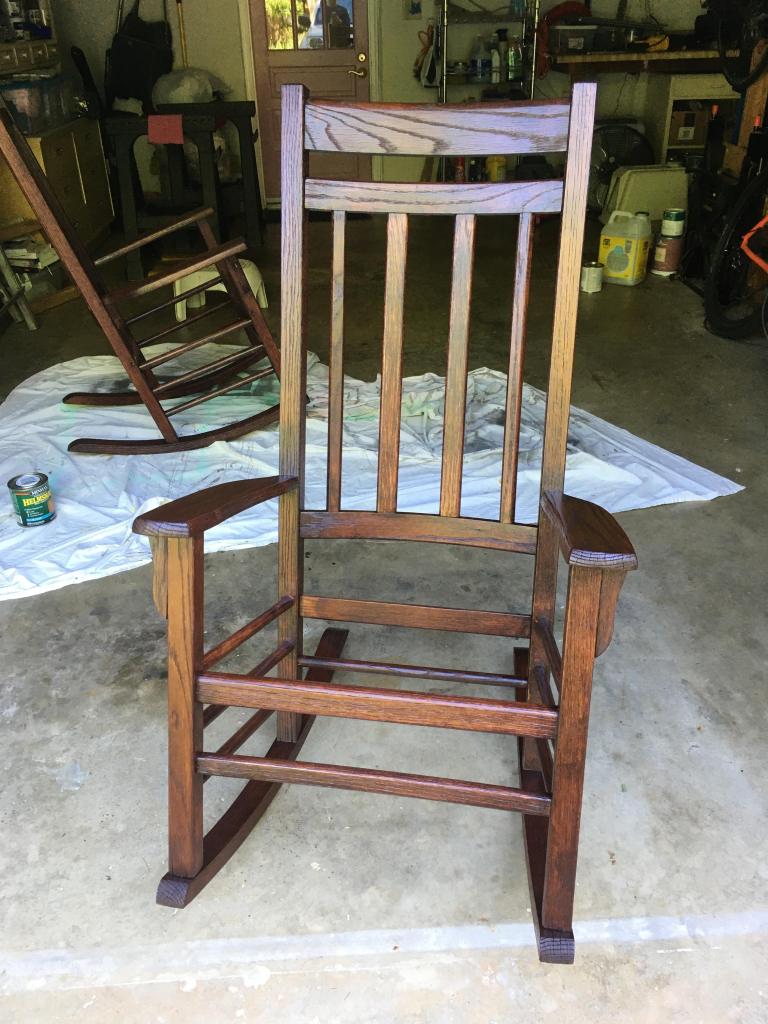
Two coats of Minwax indoor/outdoor Helmsman Spar Urethane in clear satin finished the woodwork.

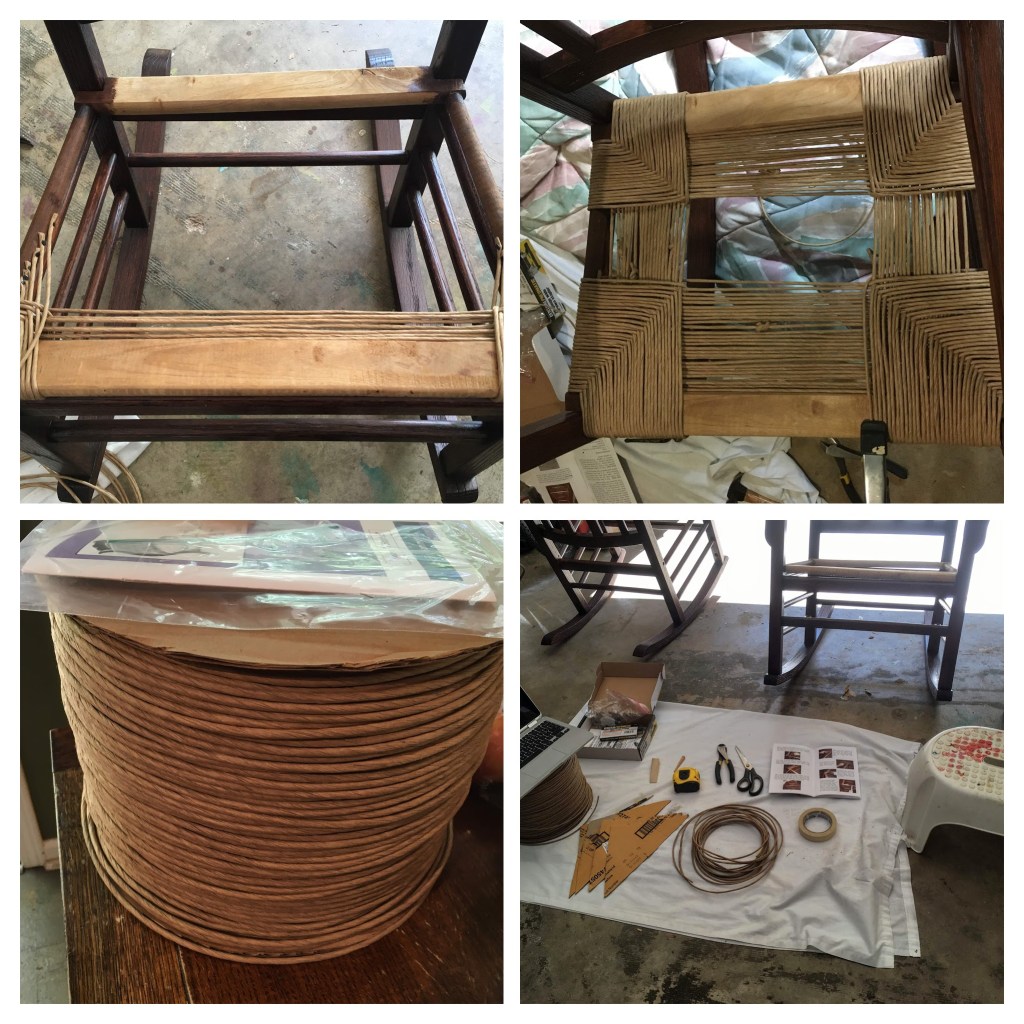
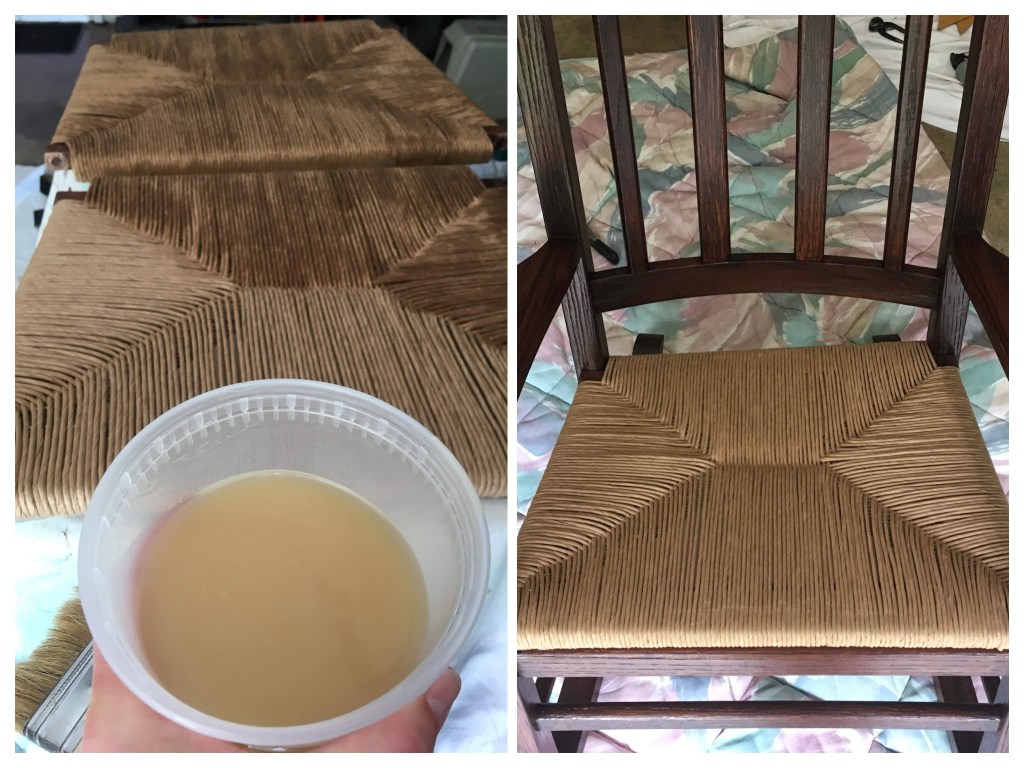
The second solution was to replace the cane seats with woven rush seats. Armed with a 10 lb reel of fiber rush, the necessary tools, and a really good instructional video I took on the challenge. You can find the video here and I am happy to share my learning curve with anyone who wants to attempt this themselves.

The seats turned out great. To finish them off ,and provide as much protection as possible, I applied 3 coats of shellac (50:50 solution in denatured alcohol) top and bottom.

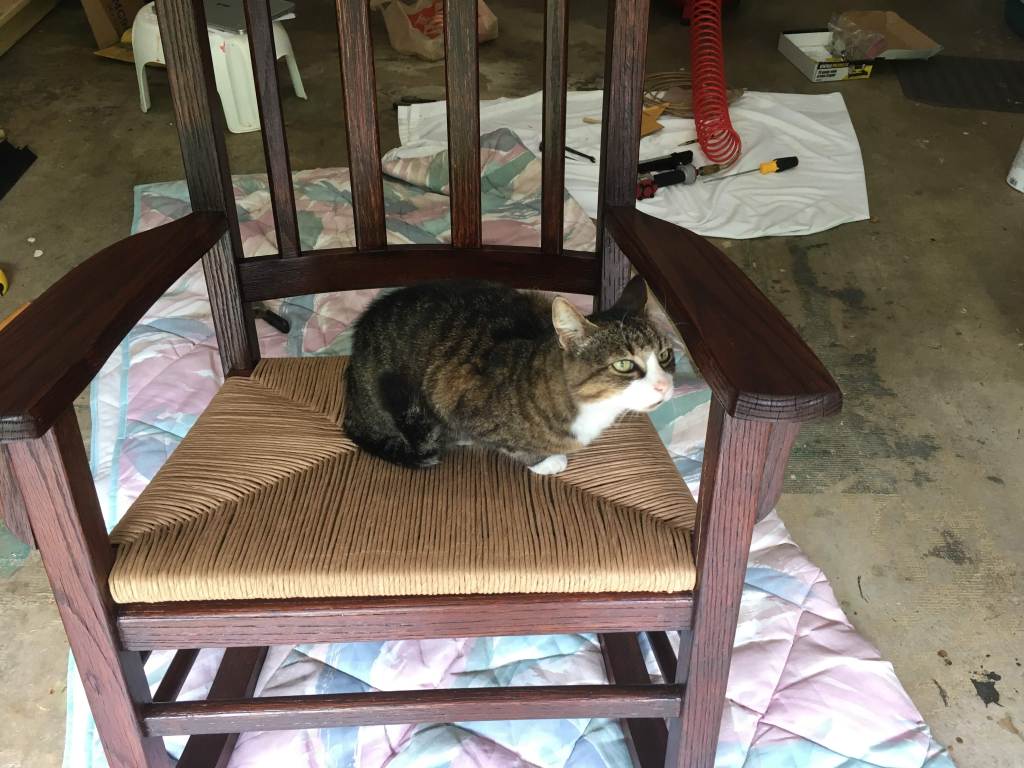
Finally, I applied slip resistant tape to the unfinished bottoms of the rockers, reattached the seats to the frame, and the job was done!

#25 Mini chandelier birdfeeder

Transformation cost: $12.60

I have my constipated dog to thank for this find. We were taking a long walk to get “things” moving and our route took us past this treasure. A chandelier was TT#1 (Chandelier) and I was excited to find another to work on; they make such good garden decor.

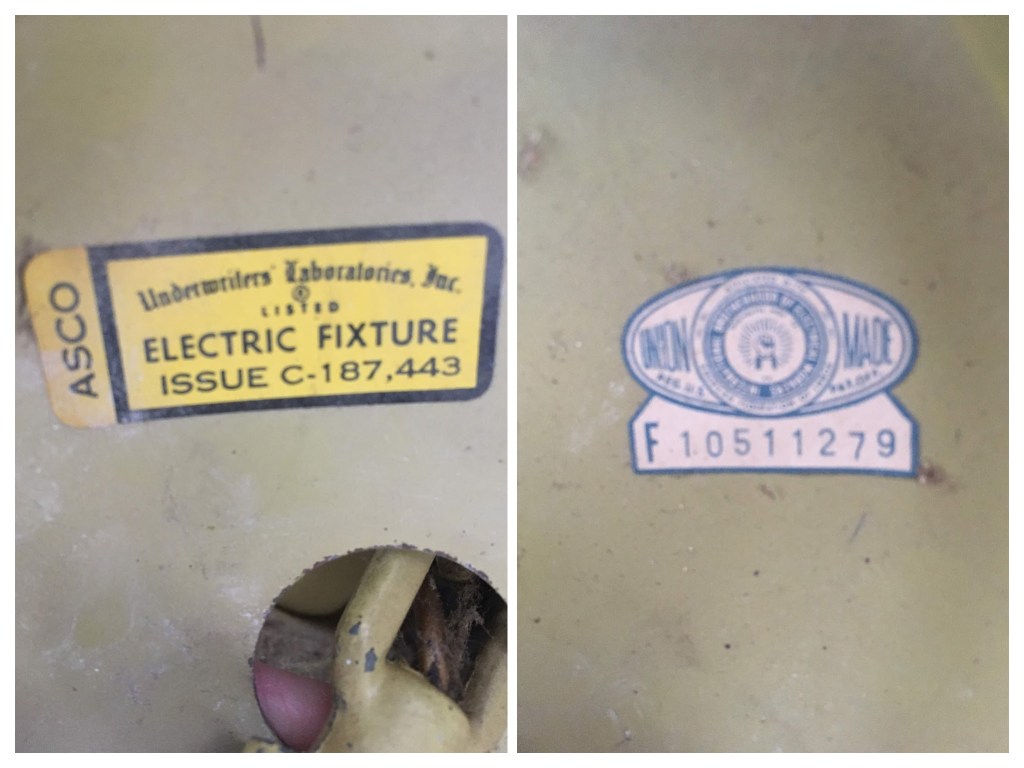
I am convinced this is a vintage piece but I’ve had mixed feedback to my enquiries. The International Brotherhood of Electrical Workers says this fixture was made in Newburgh, New York in October 2013 (according to the serial number). However, Underwriters’ Laboratories Inc. says it must be at least 25 years old because they stopped using that font on their labeling 25 years ago.

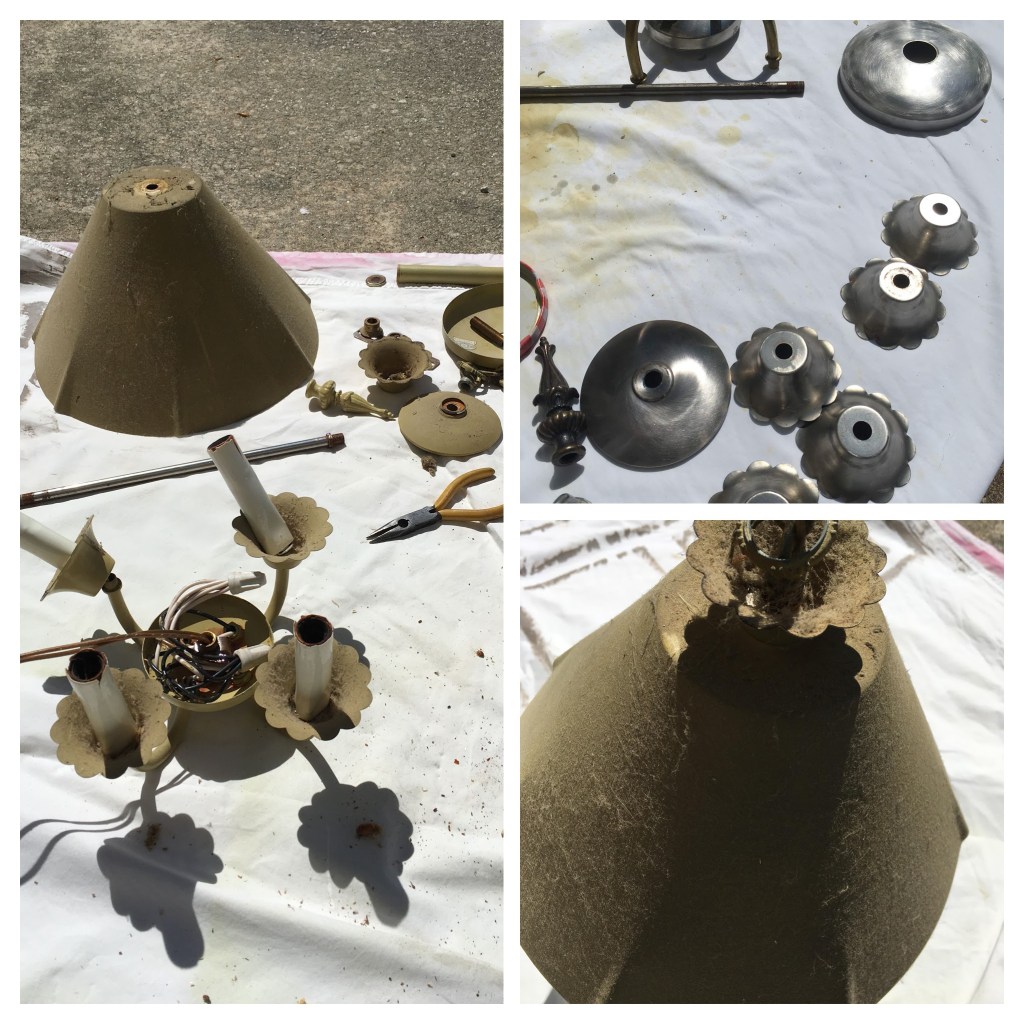
As I began cleaning the dismantled piece some of the paintwork dissolved and what was left peeled and cracked. Using acetone, a rag and a toothbrush I was able to remove all the paint completely.

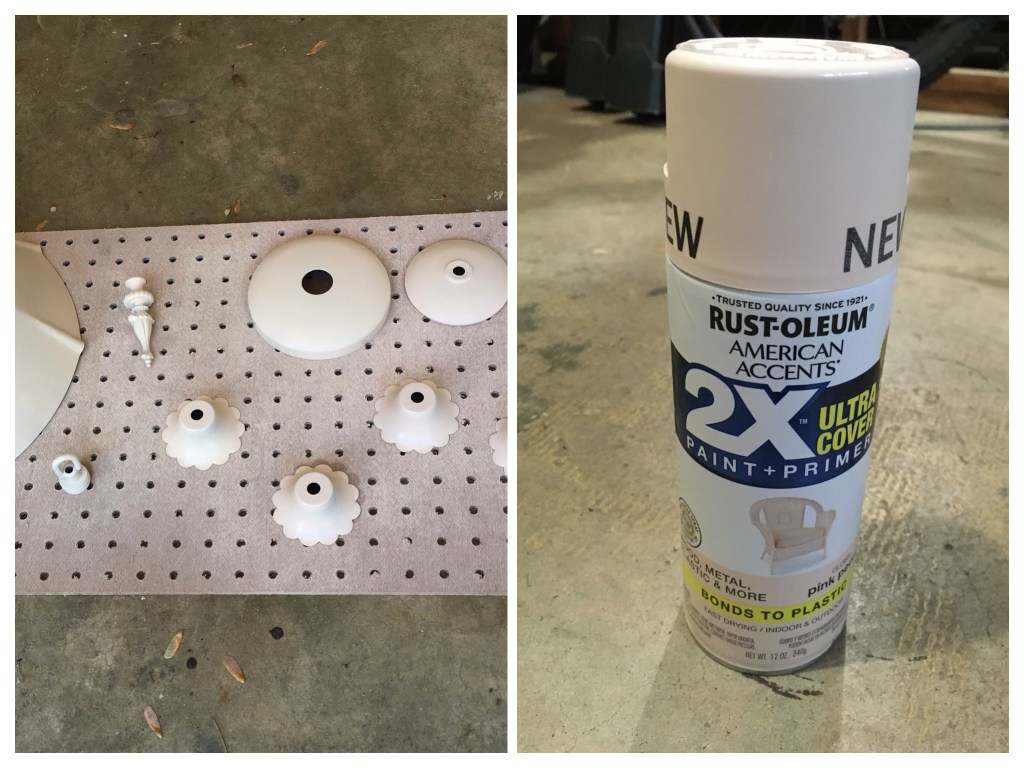
The bare metal parts were now ready for their finish coats of Rust-Oleum 2X Ultra Cover gloss in pink peony. I made sure to reserve some paint for finishing touches after reassembly.

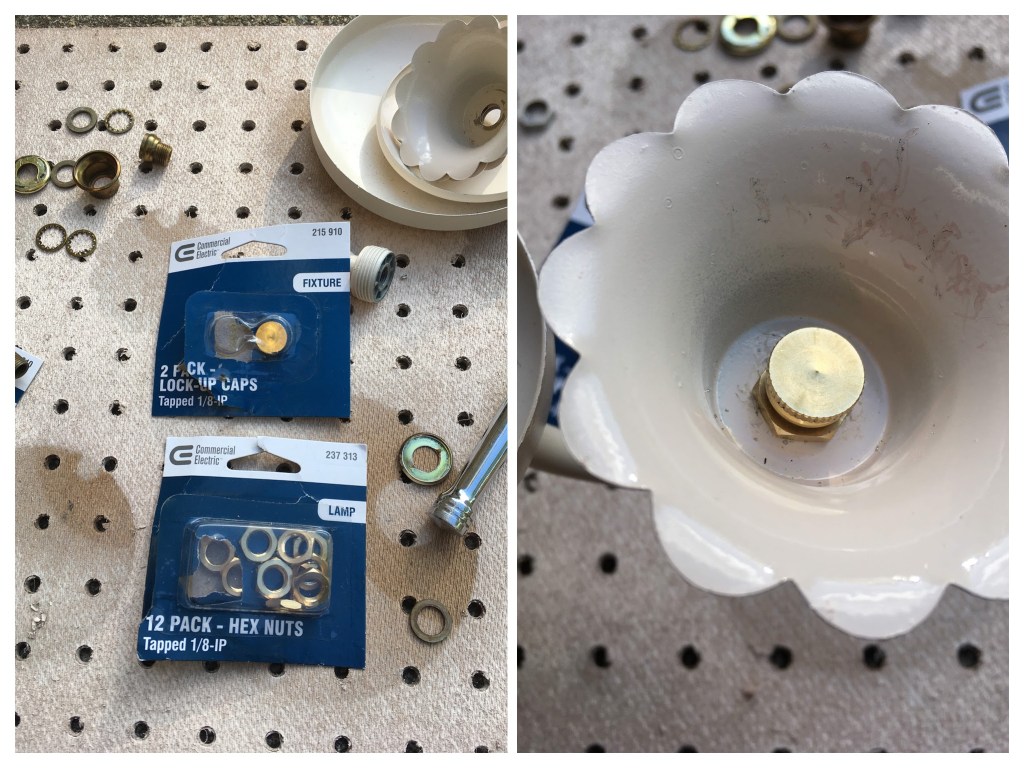
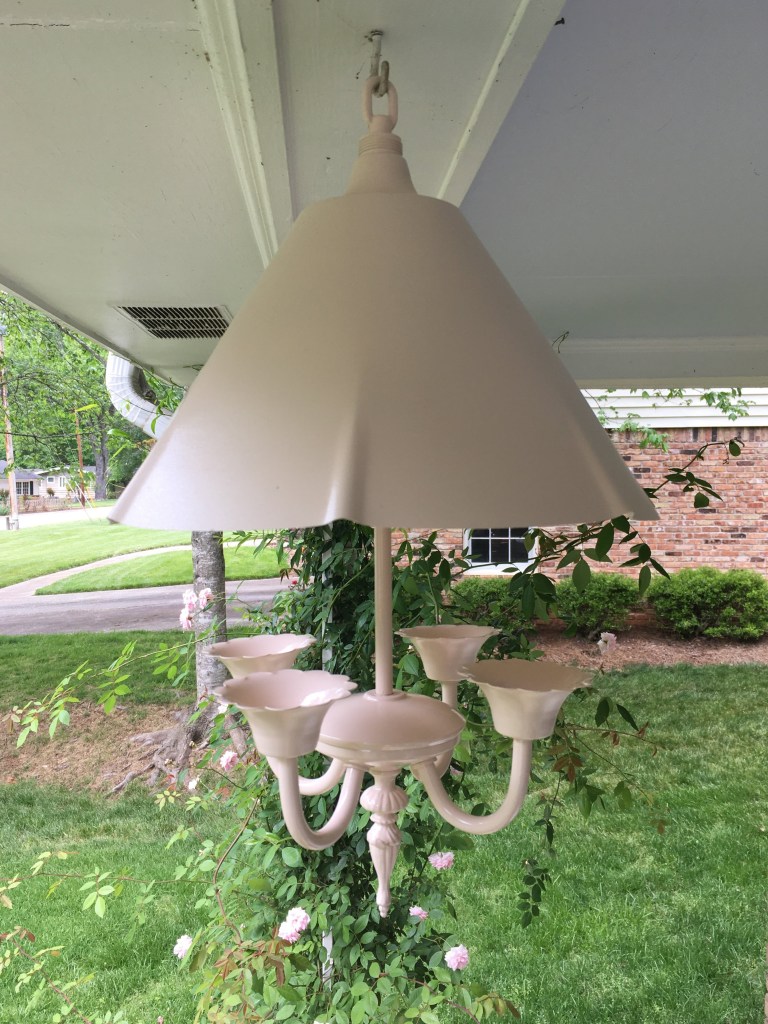
When it came to putting it back together I made a few changes. First I used lock up caps to seal the part of the arm that would have attached to the candle tube. I discarded the canopy and inverted the top bobeche so that rain water wouldn’t pool in it. The hanger loop neatly tops it off. I finished the job by touching up with the remaining paint.

#24 Salzburg mirror

Transformation cost: $24.85

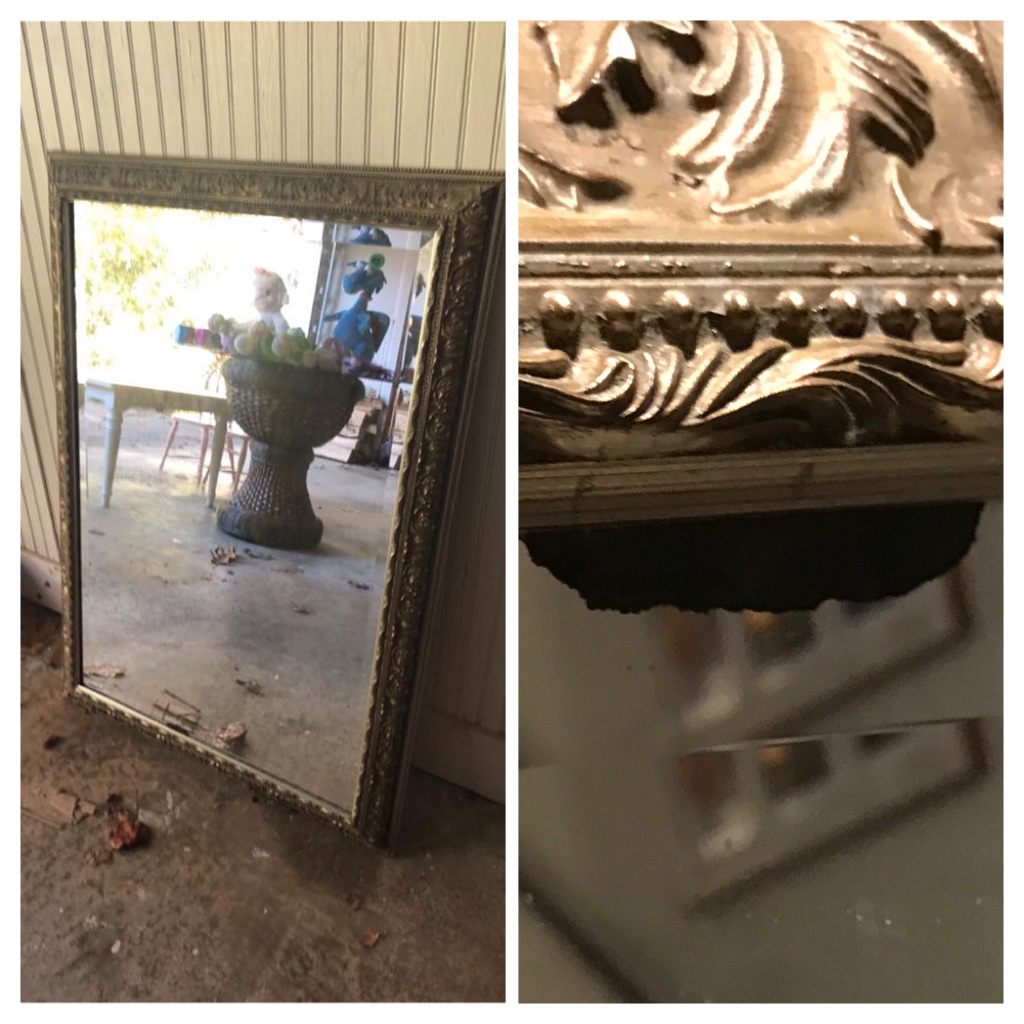
This transformation was made possible by the demise of an earlier one; I was getting ready to give TT#12 (Bevelled mirror with ornate frame) another new look when I accidentally damaged the frame. It was a long shot whether a repair would be possible, so when a neighbor was discarding this piece, I snatched it up. The glass in this piece needed replacing but by a stroke of luck the glass in TT#12 was the exact same size! I was able to use the glass from the damaged frame in the new frame.

In places the mirror coating on this glass was damaged, so I began by removing it from the frame.

I then cleaned the back and front of the frame, including removing the pasted-on backing paper and the black adhesive/caulk that had been used to attach the glass.

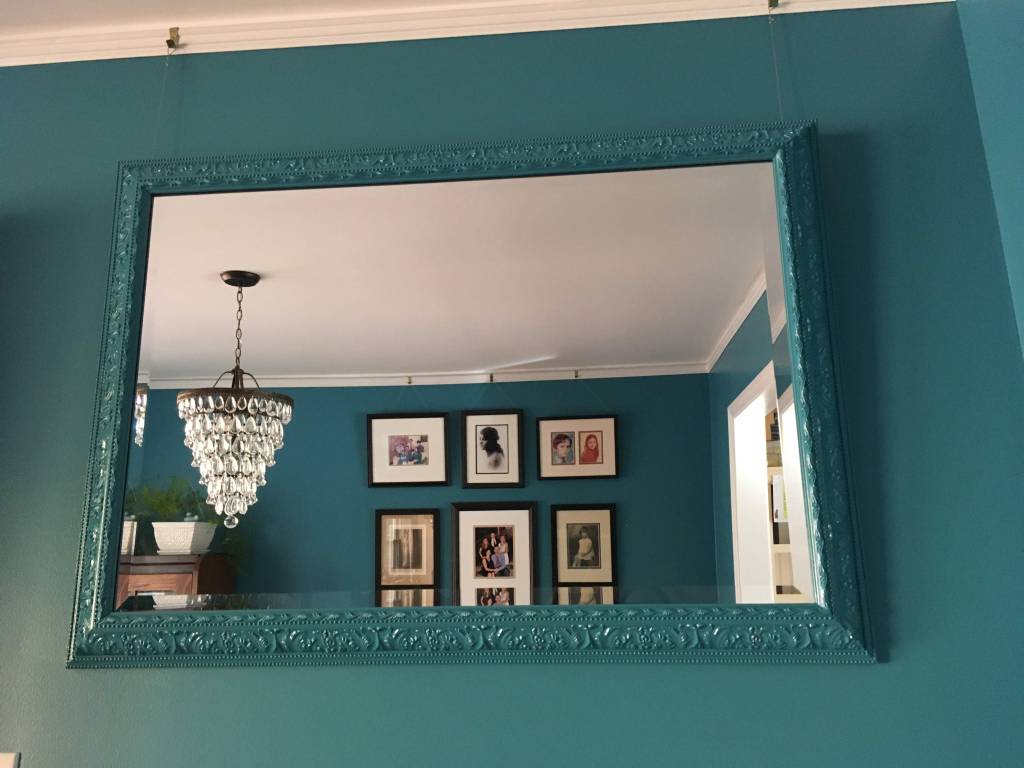
A couple of coats of Kilz primer were followed by two coats of the same Benjamin Moore satin latex paint I used on my dining room walls.

Gloss lacquer over the paint gave the frame the finish I was looking for.

Finally it was time to put glass back into the frame. A thin layer of cardboard and a new piece of hardboard atop the glass are kept in place with glazing points and panel pins; no need for glue or caulk. A second piece of thicker cardboard pads out the rest of the space and is finished off with some craft paper and hangers.

#23 Ocean Mist table

Transformation cost: $19.02

This piece reminded me of TT#8 (The Book Lover’s table), which I completed back in February 2018. They are made of similar materials and are assembled in a similar way. Oddly enough I had the exact same setback with both pieces!

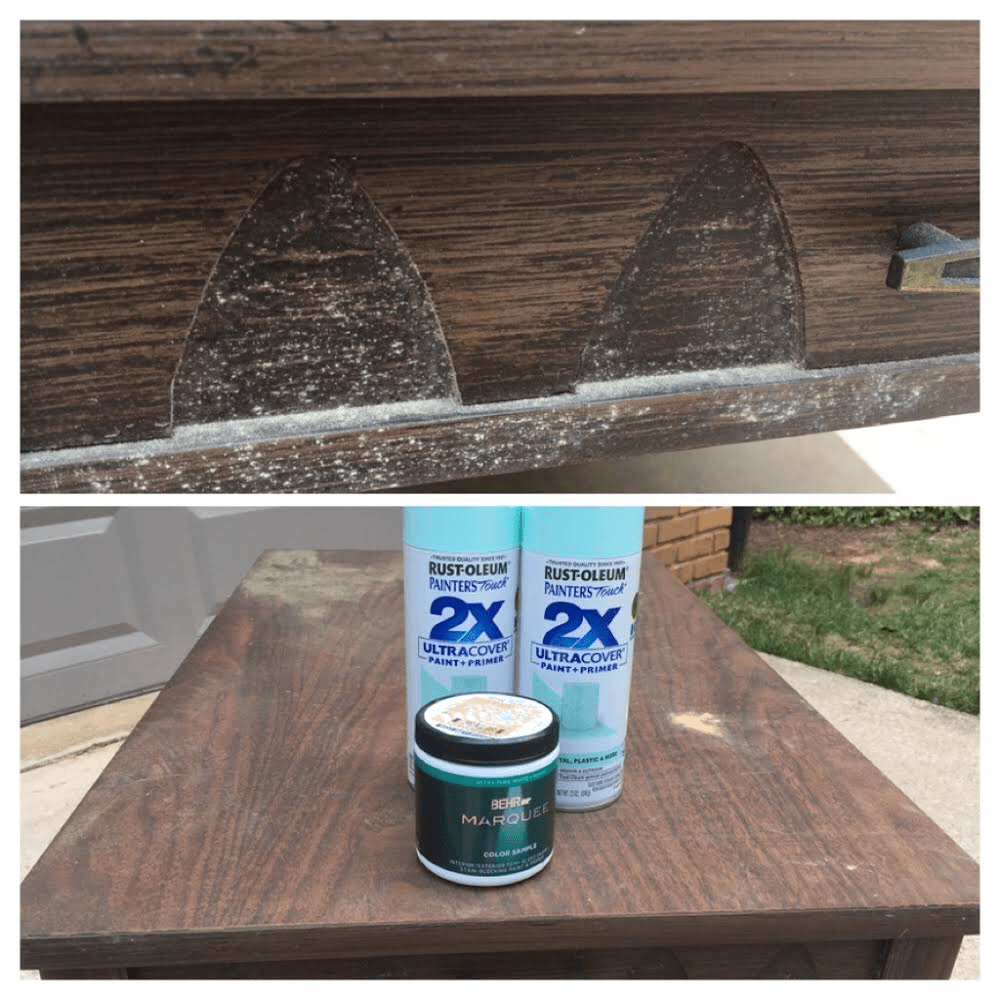
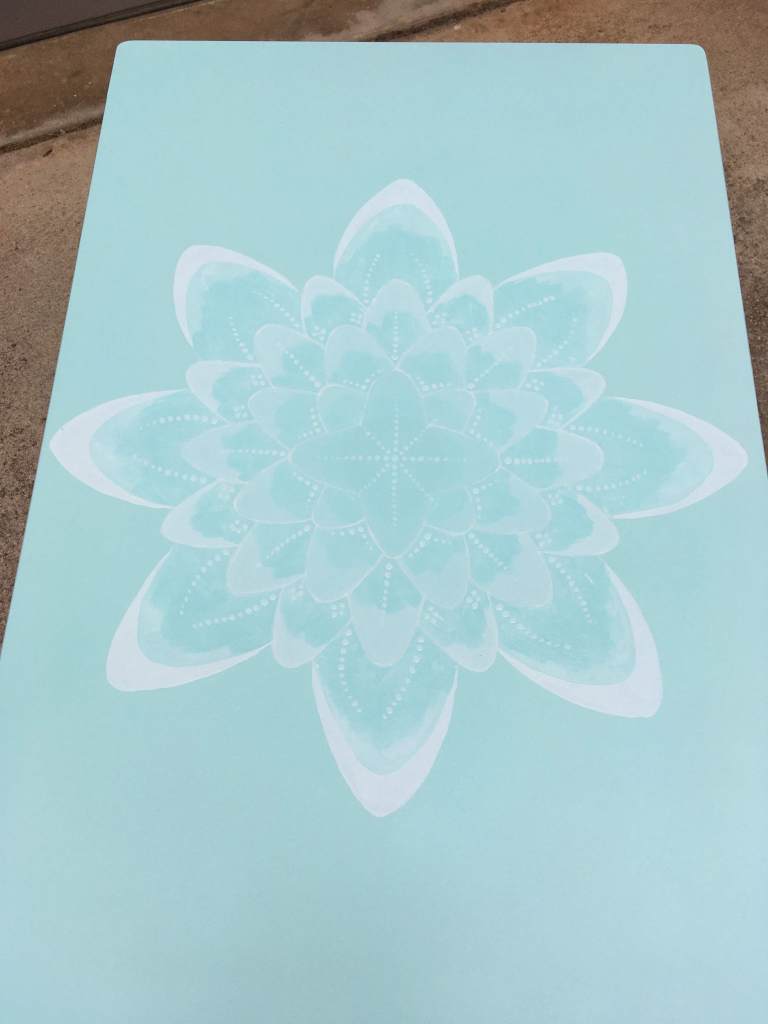
I had no qualms about painting the piece and decided to have a little fun with it. The Gothic arch shaped indentations on the front were my inspiration.

The supplies I needed for my arch inspired design were RustOleum Ultra Cover (Paint + Primer) spray paint in ocean mist gloss finish and a color-matched sample of Behr latex paint.

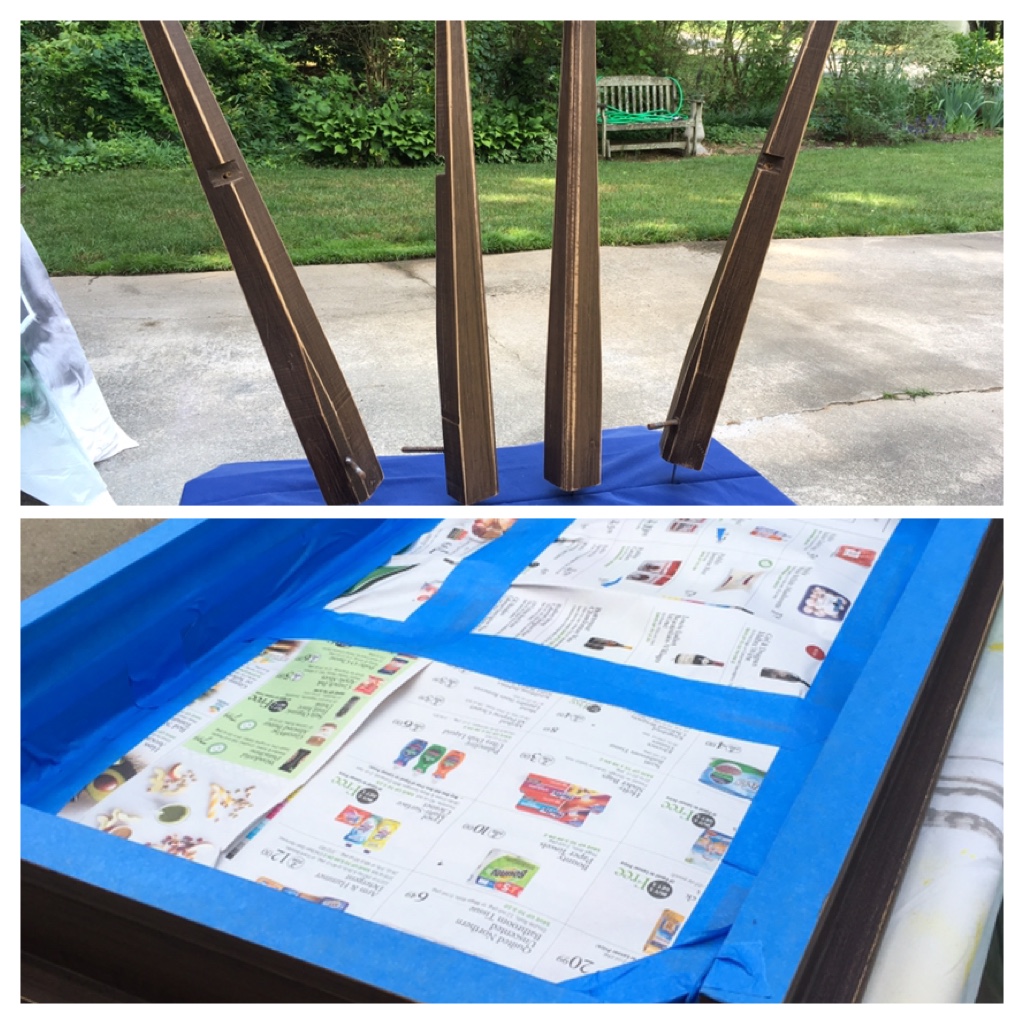
Next, the usual sequence: Disassemble. Clean. Sand. Mask. I put extra effort into the sanding because I would be applying a gloss finish that would highlight every flaw. A nail hammered into the top of each leg made it easier to clamp them for painting.

The paint was going on beautifully until it wasn’t! In certain areas the paint started to wrinkle, just as it had with the Book Lover’s table. Whereas with the Book Lover’s table I made lemonade out of lemons, this piece was destined for a different look. There was nothing for it but to let the paint dry thoroughly, sand away the wrinkles, and try again.
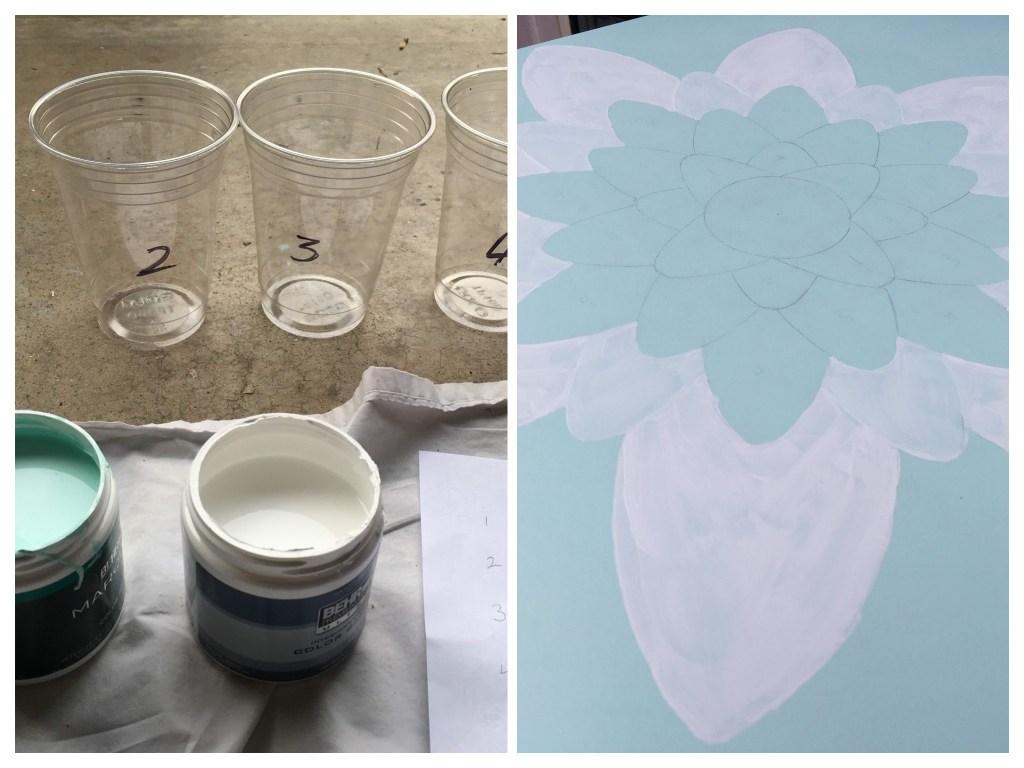
When all the components had been reworked to my satisfaction, I was ready to start on the design. I made a template from the indentations and used it to pencil my design on the table top. It was starting to look like a Paint by Numbers kit.

With the color-matched sample and some white paint I already had, I mixed six different shades of the Ocean Mist color and began hand painting.

Some time later ……. I locked in the finished design by adding a few coats of gloss lacquer over the hand-painted areas.

Finally, I cleaned the original hardware with some Bar Keeper’s Friend and put everything back together.

#22 Queen bed

Transformation cost: $30.07 (disclaimer at bottom of page)

Ordinarily I would not take on a piece this big due to space restraints. However when my son moved into a student apartment, taking his bed with him, we found ourselves with a guest bed void at the same time that a neighbor was discarding this piece. It turns out this bed has a delightful history: Apart from being the owner’s childhood bed it also accompanied her and her husband to England when he was stationed there for a while. It seems fitting for an Englishwoman to be responsible for its make-over.

Step 1: The habitual cleaning.

Step 2: Sanding. Although sanding is not necessary when using chalk paint, this piece had some chips and dents that I wanted to smooth out.

Step 3: Painting. Once the piece was properly prepped I began applying Annie Sloan’s Paris Grey chalk paint.

Step 4: Distressing. After 3 coats of chalk paint I used fine sandpaper (400 grit) and a light touch to GENTLY distress the contoured parts of the bed. I deliberately was not heavy handed because I want this piece to look like it belongs in a chateau not a farmhouse.
Step 5: Waxing. I then applied 2 coats of clear wax, buffing after each coat. The piece now has a lovely waxy sheen instead of a flat finish. Isn’t it amazing how different this grey looks in the morning light?

The very last thing I did was to go back with some dark wax to add a trace more texture. You can barely see the darker wax which was my intention; again I didn’t want it looking too rustic. Applying dark wax so lightly is not as straightforward as you might think. When it first goes on it is very distinct. The way to cut it back is to have some clear wax and a clean, dry cloth on hand. Once the dark wax is on use a different brush to apply clear wax on top and blend. If there is still more distinction than you want take the cloth and simply rub it off until you get the coverage you want.

DISCLAIMER: The cost shown above is the cost to me which (especially on chalk paint projects) is often less than market price. This is because I always have left-over materials from previous projects. For example: On this piece I used a negligible amount of Annie Sloan dark wax that I already had. The cost of a small can of that wax is $17 but I did not factor it into this project.

#21 Hekman coffee table

Transformation cost: $20.50

When a neighbor was discarding this table I almost didn’t take it because it is large and heavy and I was short on storage space. I’m glad I changed my mind because it is going to be perfect for the large living room my son will have in his shared apartment. Also, it’s incredibly robust so will hopefully withstand the wear and tear from four 19-year old boys.

Markings on the underside of the table quickly revealed its distinguished heritage. Despite knowing the manufacturer and serial number, my internet searches for more information have been fruitless. However, I will rest with the knowledge that a similar Hekman coffee table would today cost upwards of $500, and that “Now, almost a century old, Hekman is widely recognized as one of America’s premier furniture suppliers.” (excerpt from http://www.hekman.com/our_history)

Removing the worn and damaged finish on the table top was my first priority. Once I had also cleaned the legs with a mild soap solution, the piece was ready for its new finishes.

First was Annie Sloan “Coco” chalk paint. I applied three coats to the legs.

I then sealed the chalk paint with one coat of clear wax. Once it was dry and buffed, I applied a second coat of clear wax, followed by Annie Sloan dark wax. By working the brush and using more clear wax as needed, I got exactly the look I was going for. Once it was dry, I finished by buffing the legs one more time.

For the table top I began by applying a coat of MinWax stain & polyurethane in honey satin. I had intended to finish the piece with one or two more coats of this product, but changed my mind. I so liked the look of it after just one coat I decided to switch to an oil-based, clear, satin polyurethane to finish the job.

Two coats of clear, satin polyurethane gave the piece the protection and sheen it needed

5 things I’ve learned about chalk painting

Although I’ve been painting walls and furniture almost all my life I’m a beginner when it comes to chalk paint. It turns out that applying chalk paint (as long as it’s not to a glider rocker) is some of the most fun I’ve had in a long time. Here are some top tips I’ve already learned:

Disclaimer: These observations are made humbly in the knowledge that there are about a gazillion people out there with tons more chalk painting expertise. Some, if not all, of this might not apply to larger, more complex projects.

1. Invest in a good brush

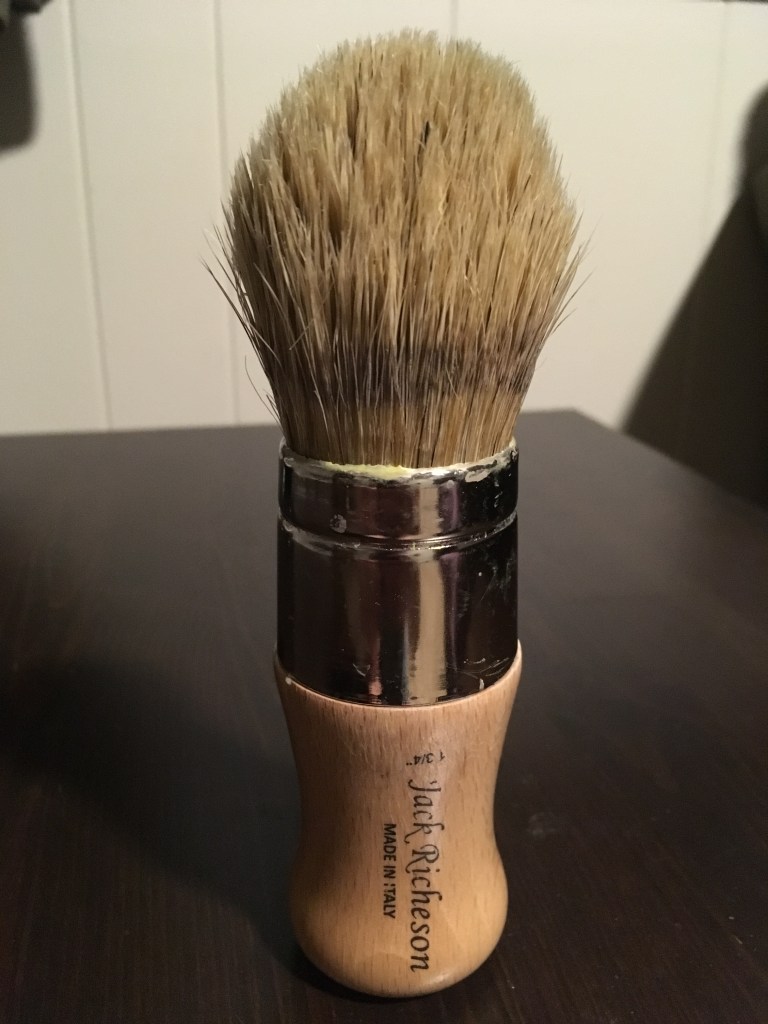
So you won’t be picking bristles out of your paint job every 10 seconds.

2. Use a wax brush

Even though you might read that chalk paint can be applied with any brush just go ahead and use a wax brush. Trust me.

UPDATE: Since this was originally posted nearly 2 years ago I have used both a regular brush and a roller to apply chalk paint. Both worked perfectly well; a roller works particularly well on large, flat surfaces such as the Sophia desk. So now you have to ask yourselves if you can really trust me at all!

3. Work it

Now you’re ready to apply the paint, it’s time to unleash your inner child. Using your lovely rounded wax brush you’re going to want to work that paint into every nook and cranny in a process I can best describe as daubing. Cast your mind back to preschool when you stood in front of an easel, wearing a cute apron and holding a big, fat paintbrush ready to paint your best sunflower. Now daub! About the only thing you can do wrong here is to cause runs by applying too much paint so just don’t overload your brush.

4. Don’t stop at 2

The first coat will look crappy. You will again be reminded of your preschool days. The second coat will look so good in comparison you will think you’ve nailed it. Don’t stop, though; go ahead and apply a third coat. You won’t regret it.

5. Wax on, wax off

Chalk paint needs a protective finish. Although there’s no law written that it must be wax, I like to finish my chalk paint projects with 2 or 3 coats of wax. If you just want to enhance the color then use a clear wax. If you want to add contrast or highlight features in the wood then use a pigmented wax (but still start with a coat of clear wax; it makes the pigmented wax easier to work with) . The more sheen you want, the more you need to buff each coat after it has dried.