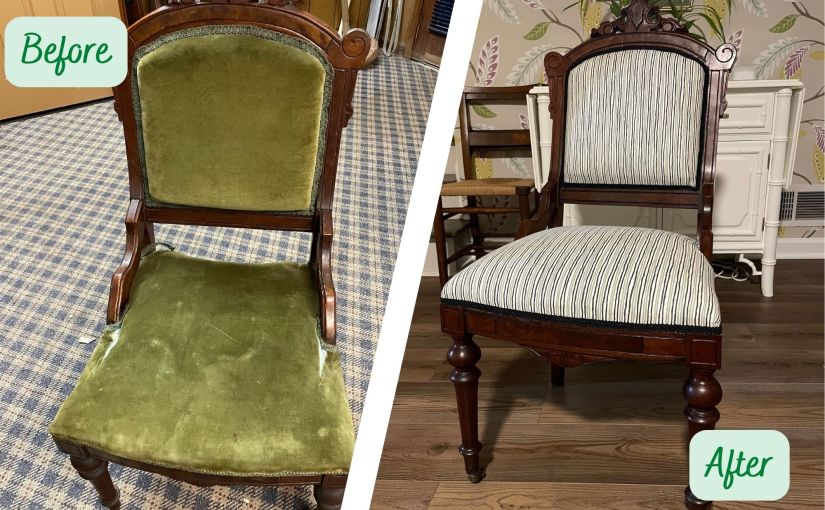
#45 Victorian Eastlake chair

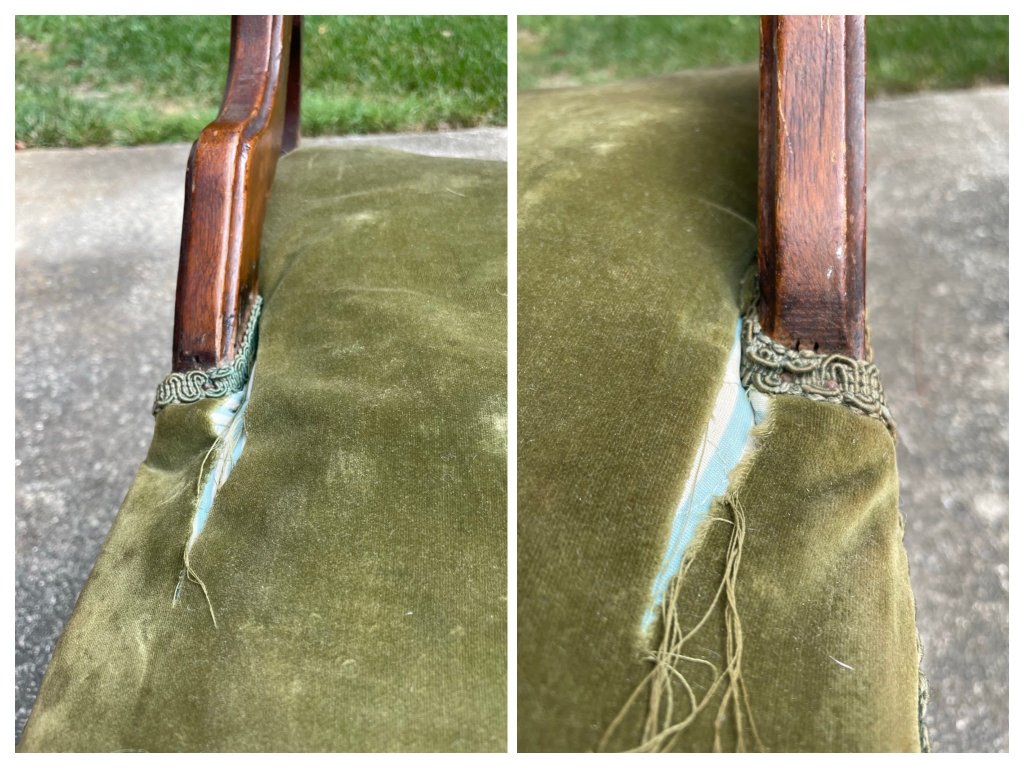
Back in October 2022, a friend of a friend was wanting to clear some antiques from her basement and she decided to give me 1st dibs. Initially I sadly declined everything because I had neither the space to store them nor the time to work on them, but I couldn’t get this chair off my mind. It needed to be professionally reupholstered and, before I would commit, I wanted to find someone willing to invest in it. Fortunately I didn’t have to look far; a Transforming Trash regular stepped up to make this a companion piece to the Victorian sofa that was Transformation #34

Materials used: Howard Restor-A-Finish, Howard Feed ‘N’ Wax

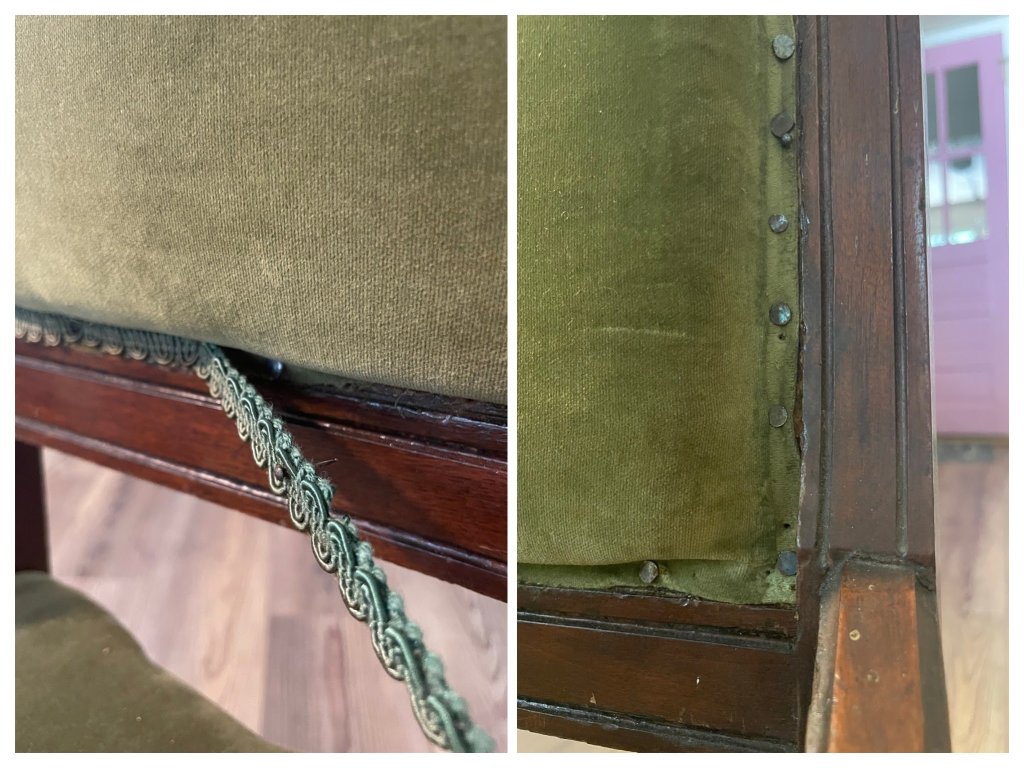
The woodwork on this chair was dull, dirty and a little scratched but generally in good shape; there were no cracks, repairs or missing pieces. The upholstery, however, was very worn and needed to be professionally replaced. Before I started restoring the woodwork I removed the original trim.

To clean, brighten, and restore the wood, I turned to one of my favorite products: Howard Restor-A-Finish (mahogany). No matter how many times I use this product I am always surprised what a difference it makes. This picture compares before (right leg) and after (left leg) using Restor-A-Finish.

Per the instructions I always follow Restor-A-Finish with Howard Feed ‘N’ Wax. The results are spectacular!

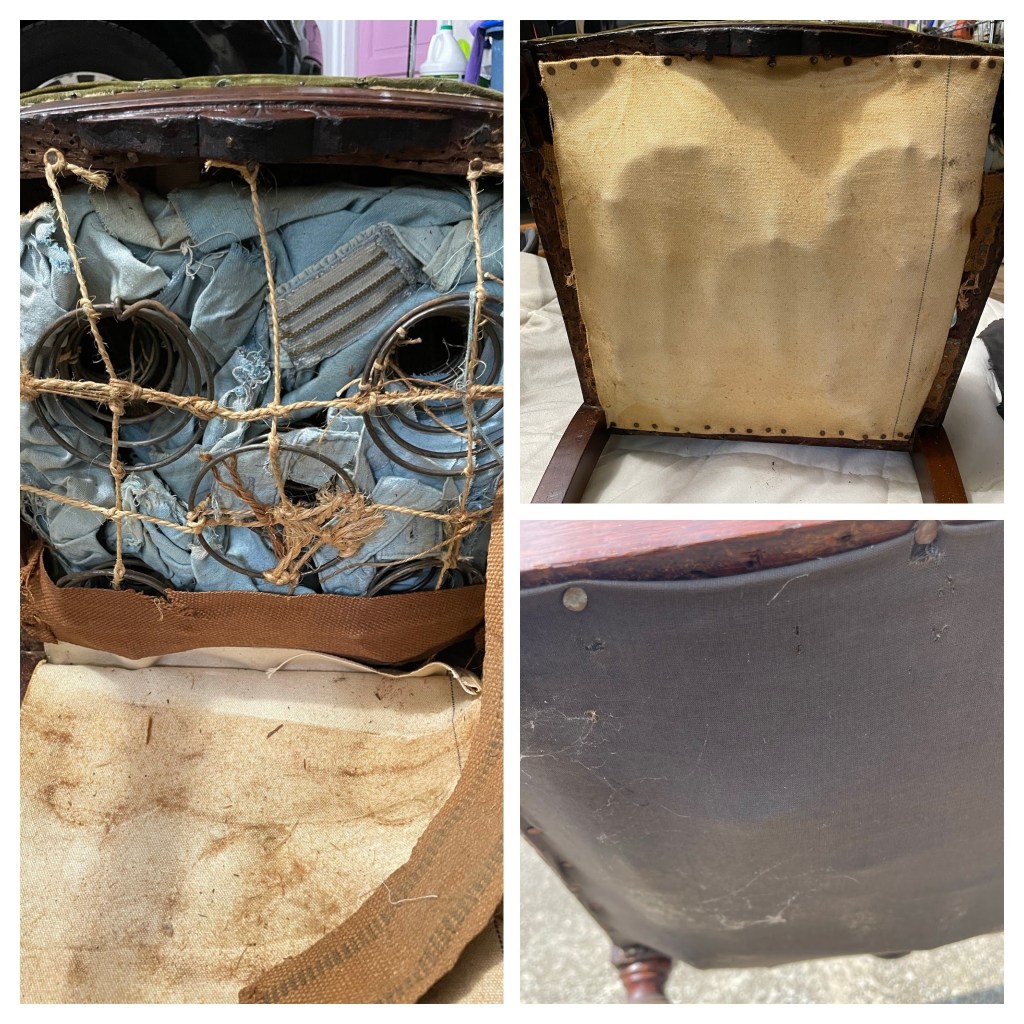
Before going to the upholsterer I decided to snoop under the seat. Check out the old coil springs that were under a layer of cambric, a layer of canvas, and webbing.

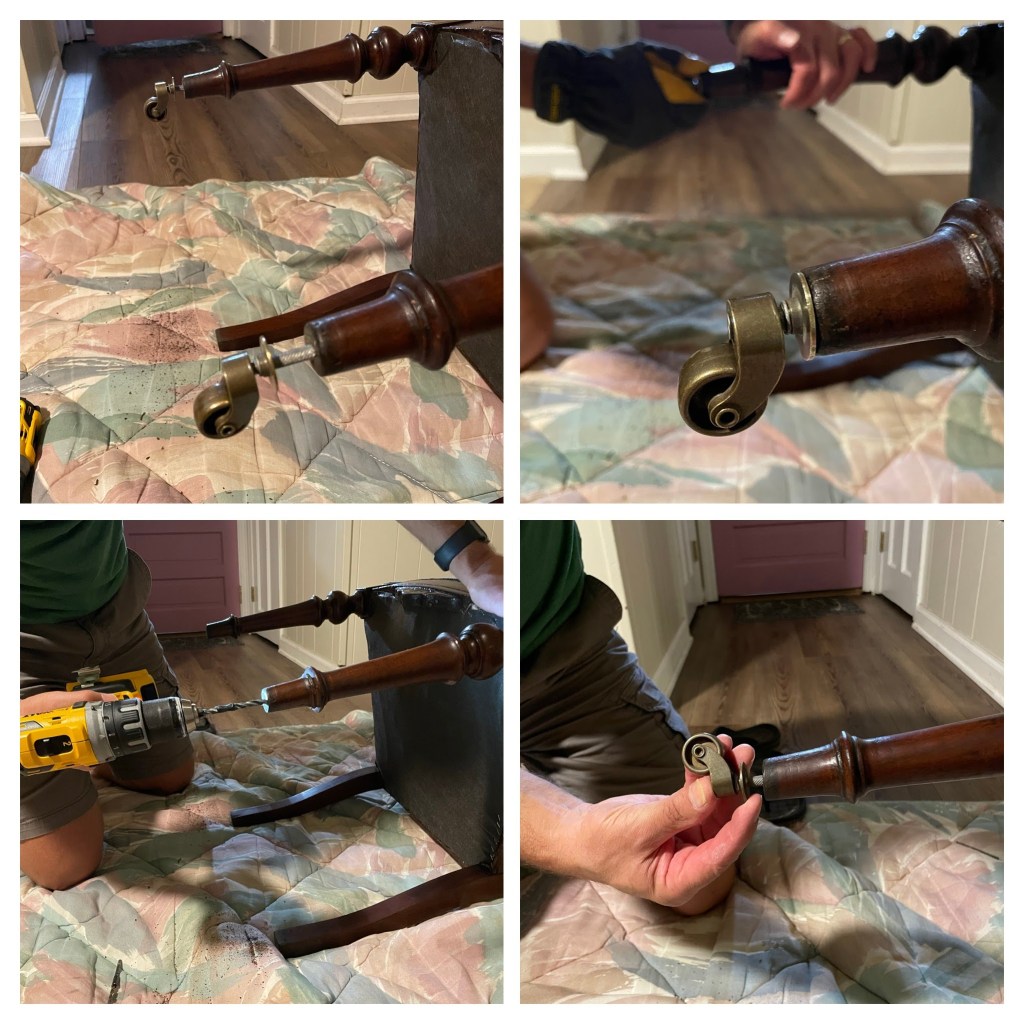
When the chair came back from the upholsterer there was only one thing left to do to finish it: add antique brass stem casters to the front legs. I had my handy husband help because I was too afraid of making a mistake. He did a perfect job!
#40 Windsor chair

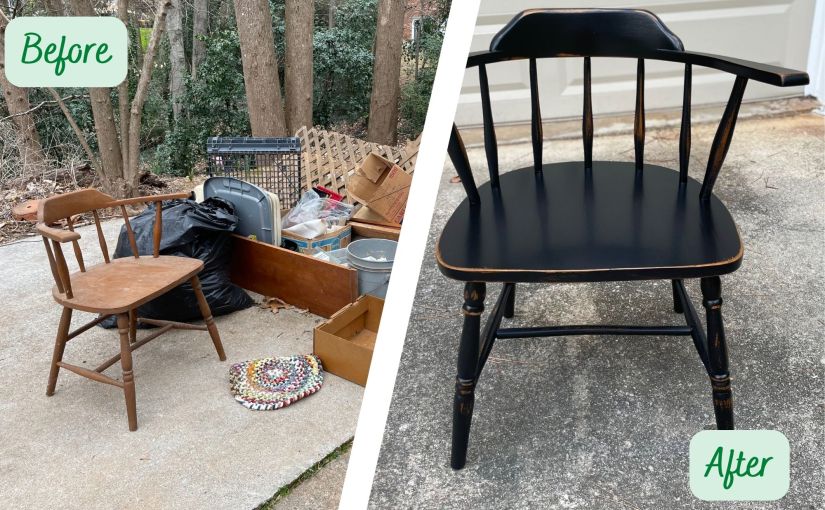
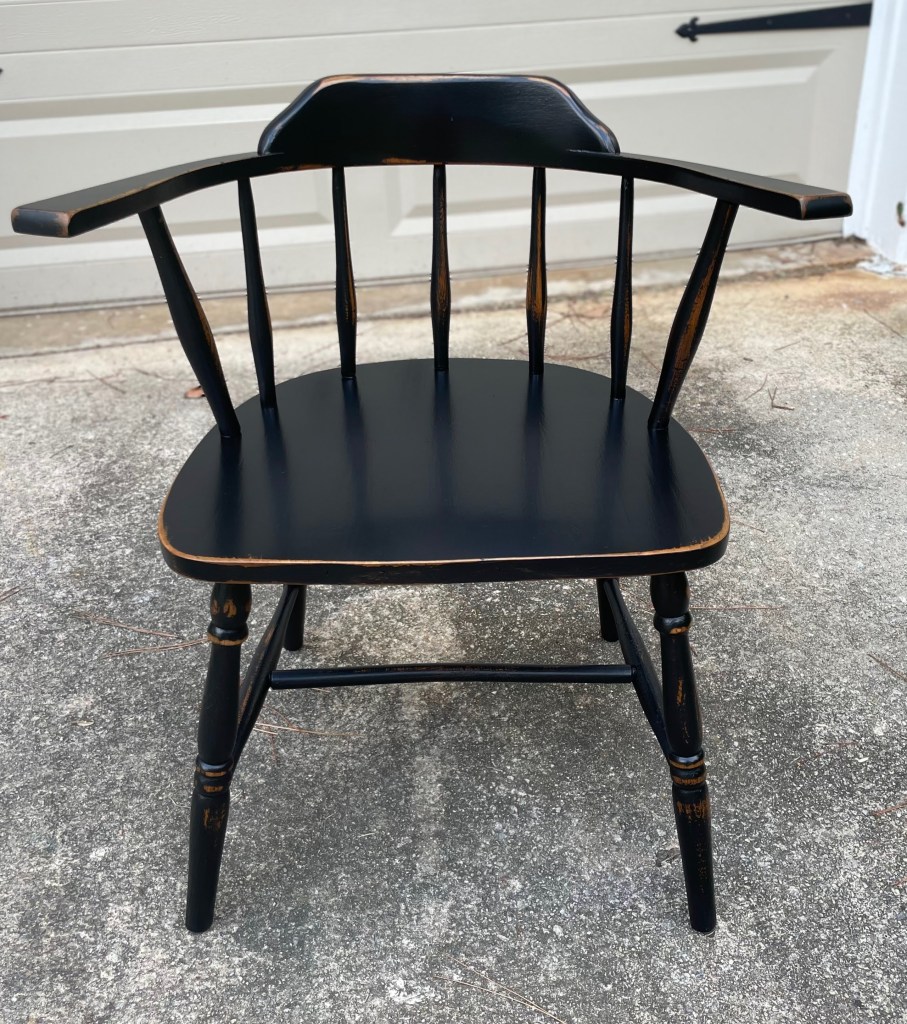
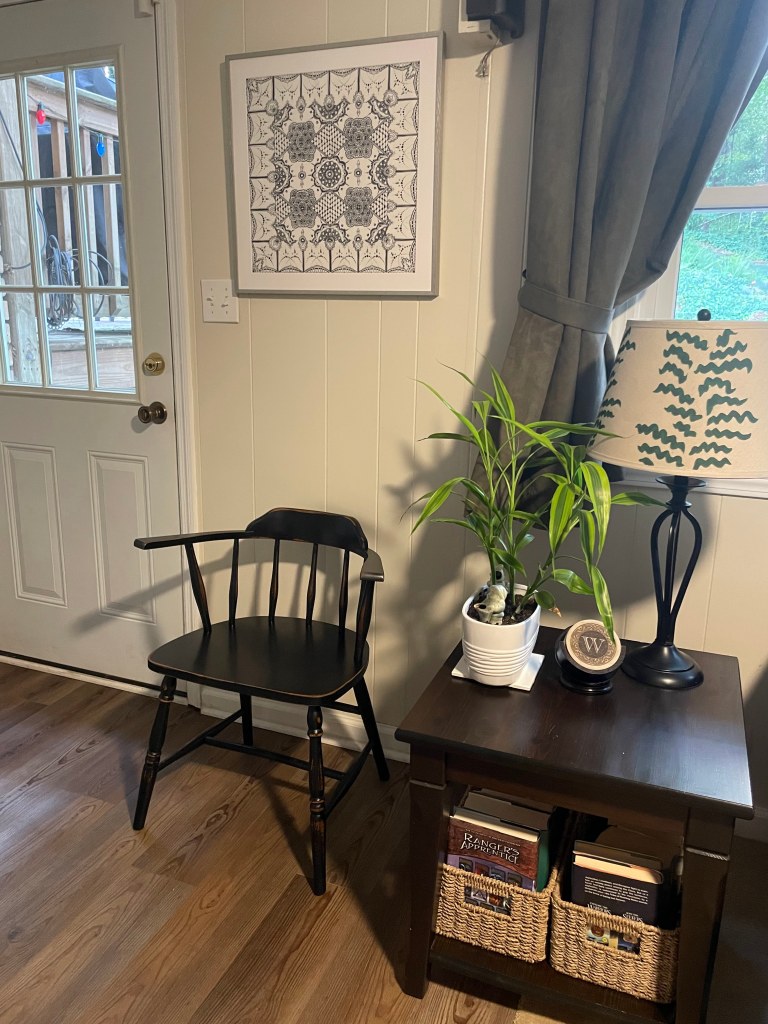
If a chair could look like a hug then I think it would be this chair. As usual I hesitated when I first saw it because I already had a garage full of projects. I just couldn’t resist its charm.

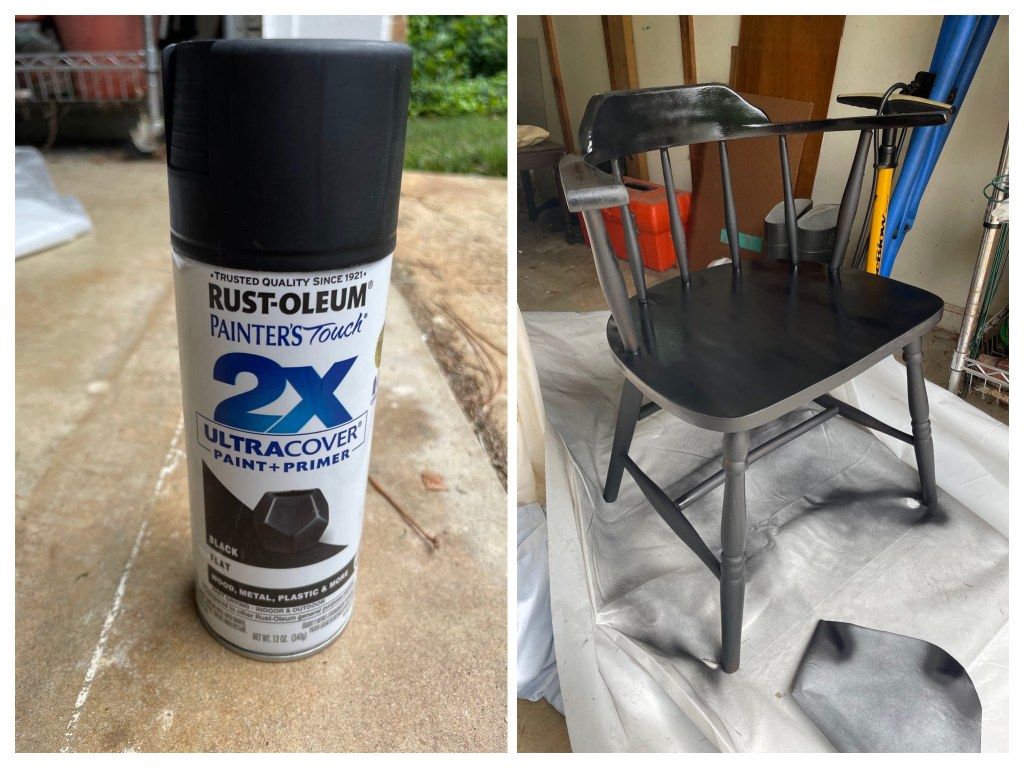
Materials used: Rust-Oleum 2X spray paint (black, flat), Varathane oil-based polyurethane (satin).

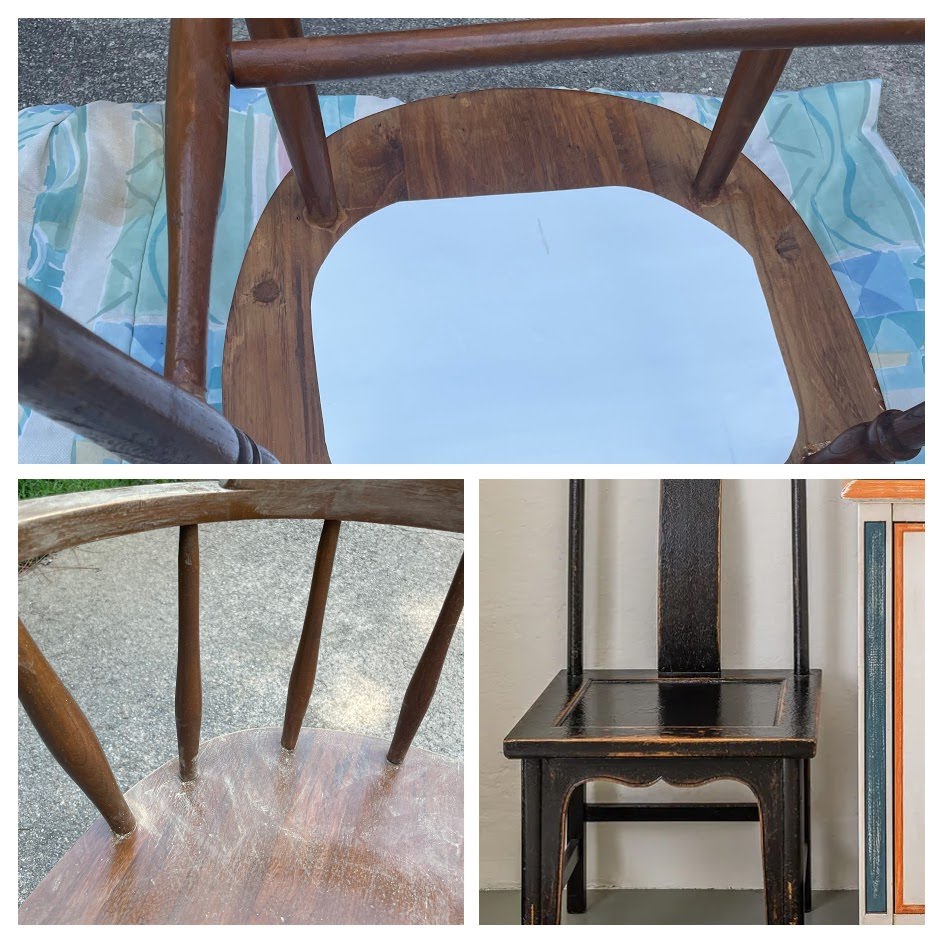
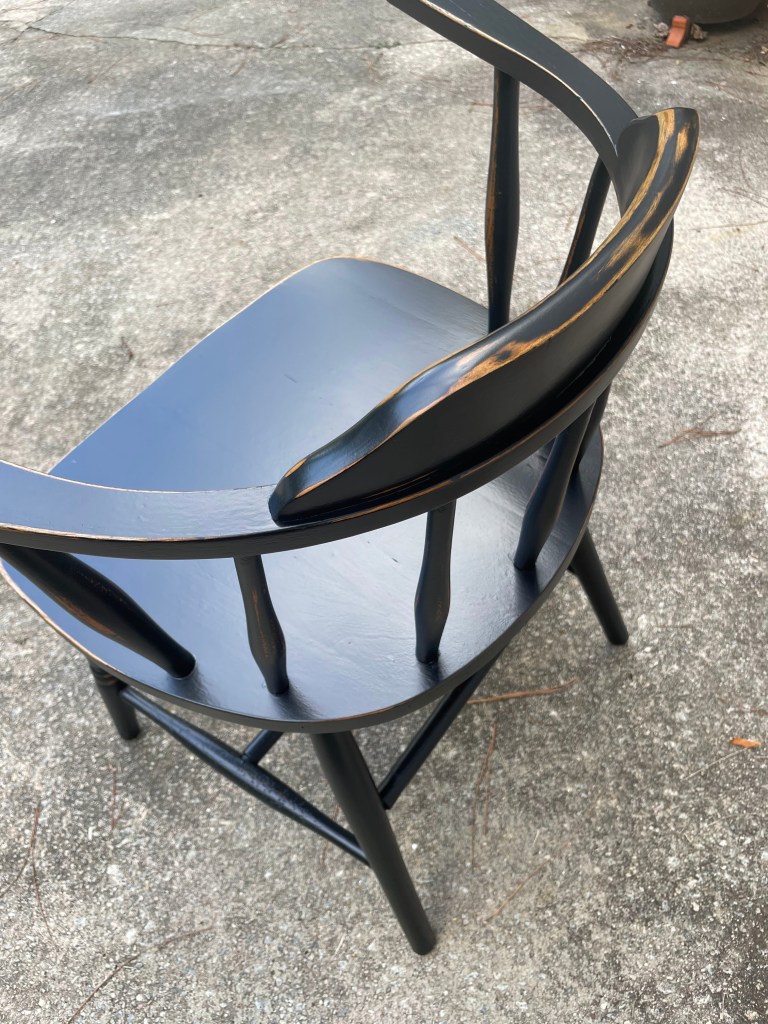
In my research I learned a lot about Windsor chairs, but I never found out the provenance of this particular one. I only know it is a low-back Windsor chair with a shield seat and front legs that are turned and tapered. At the same time as learning that Windsor chairs were often painted dark green, brown, or black (to disguise mixed use of woods) I saw a chair in House & Garden that became my inspiration piece (bottom right). After cleaning, I sanded the chair a little to smooth out a few lumps and bumps. I didn’t want to paint over the markings so I covered them with a piece of contact paper.

One can of Rust-Oleum 2X Ultra Cover in flat black formed the base coat.

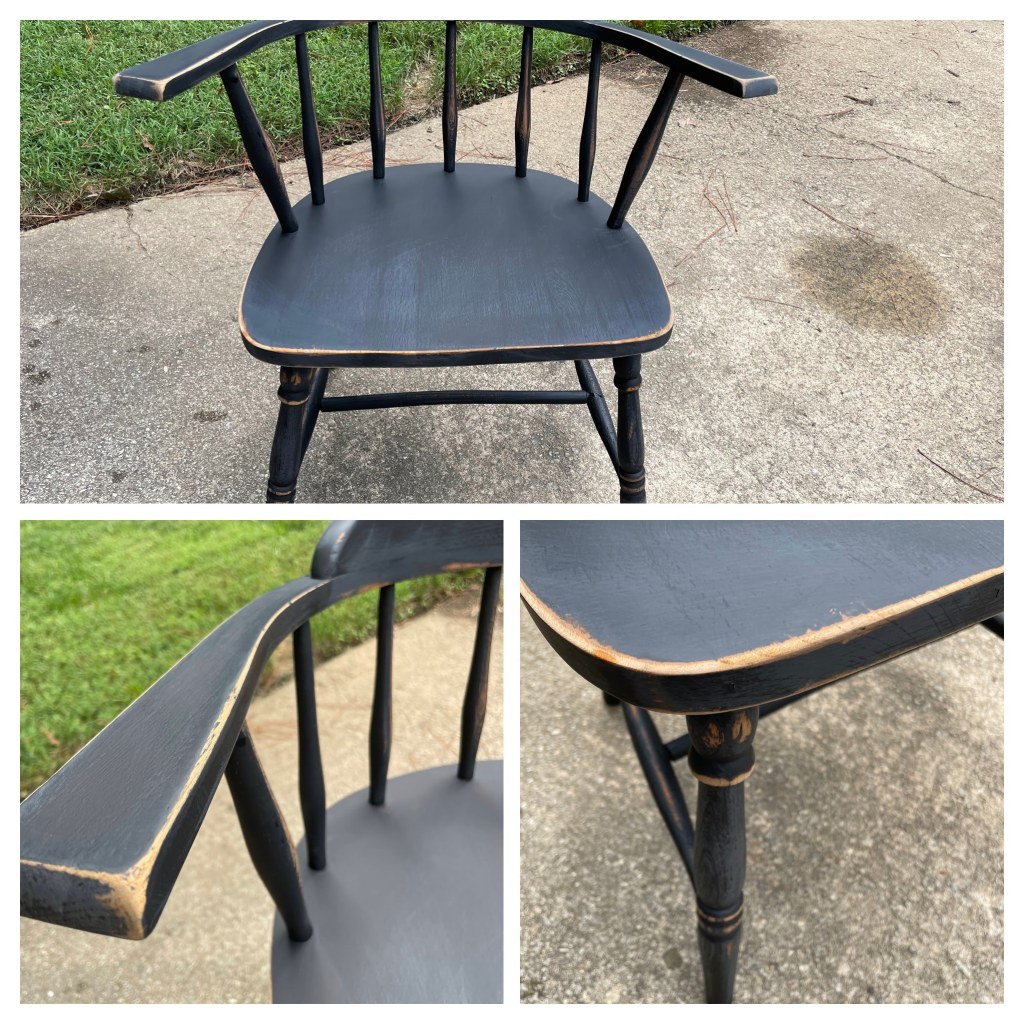
When the base coat was dry I used 220 then 400 grit sandpaper to give it the distressed look I wanted.

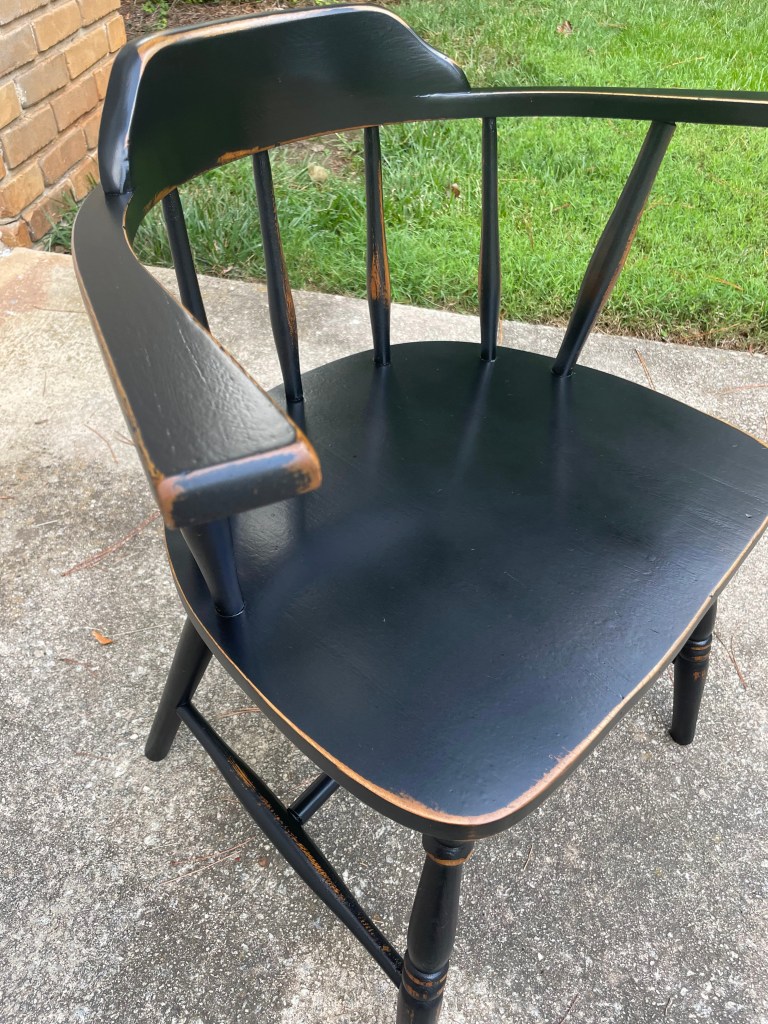
I finished the piece with three coats of Varathane oil-based polyurethane in a satin finish, lightly sanding the whole chair before the third and final coat. I could also have finished it with some clear wax but… spindles! Spraying spindles is a lot easier than brushing them.

#38 Diner chairs

Materials used: Vinyl sparkle red upholstery fabric, hardboard, cardboard.

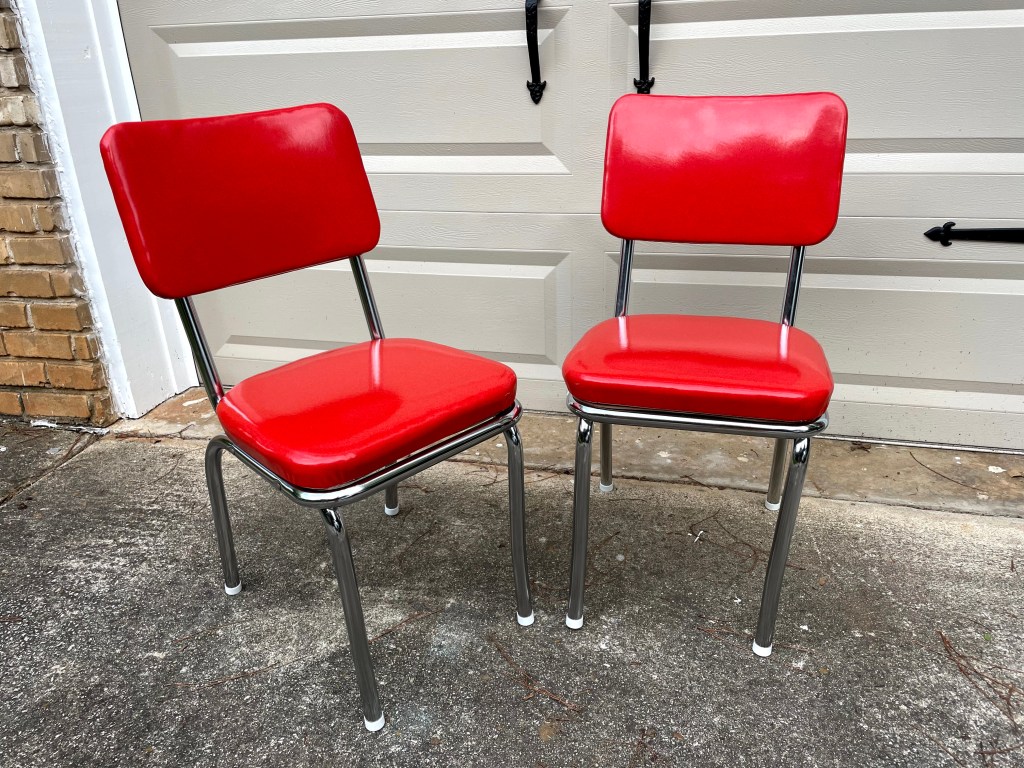
When these diner chairs were offered up on our neighborhood Facebook page, I didn’t hesitate. It looked like an upholstery project I could handle, and it’s not every day you get to work on something so quintessentially American. A friend who also expressed an interest immediately became the bespoke recipient and picked out the new vinyl.

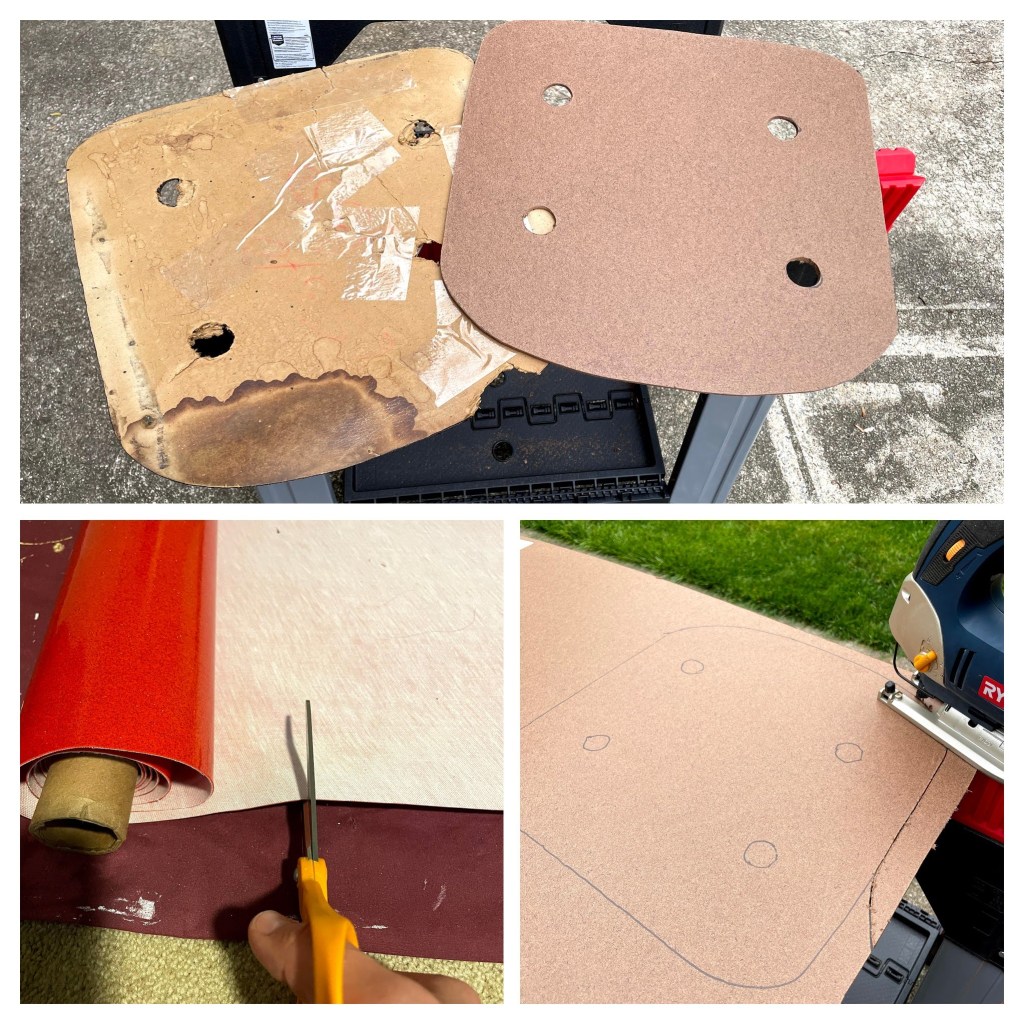
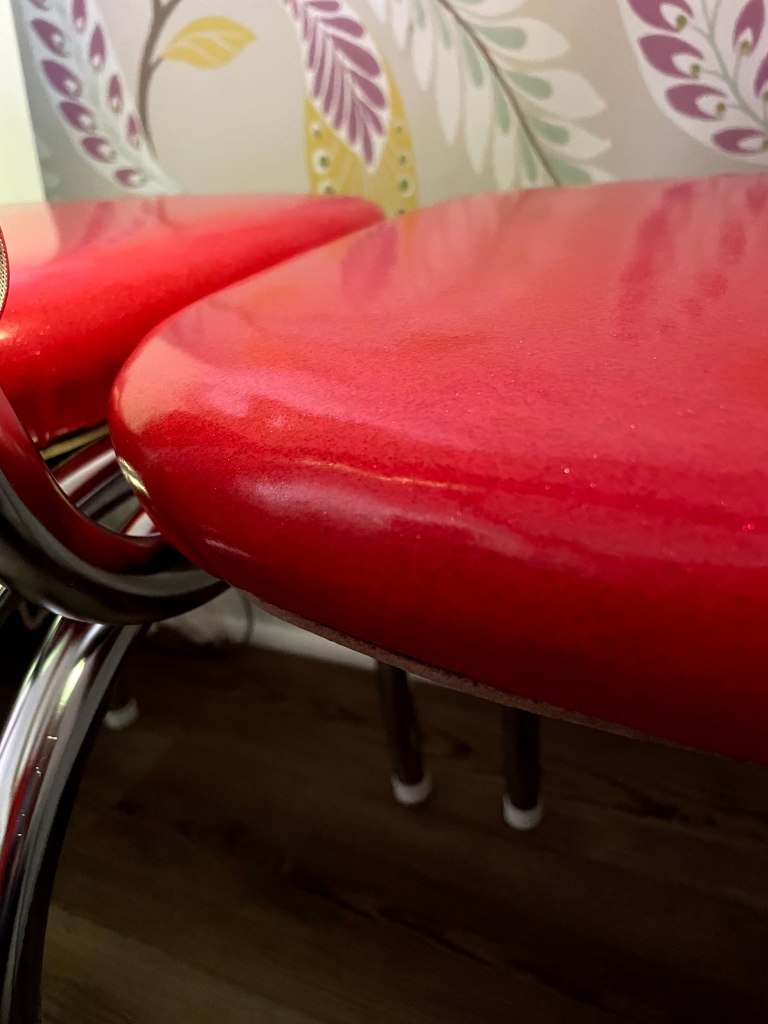
At first glance the finished chairs don’t look that different from the original ones, other than the color of the vinyl. On closer inspection, though, you can see that the old vinyl was scuffed, damaged, and grubby. Also the cardboard under the seats was stained and torn.

I started by removing the upholstered seats and backs from the frame, and taking off all the old vinyl. Thankfully all of the structure beneath the vinyl was in good shape and could be re-used.

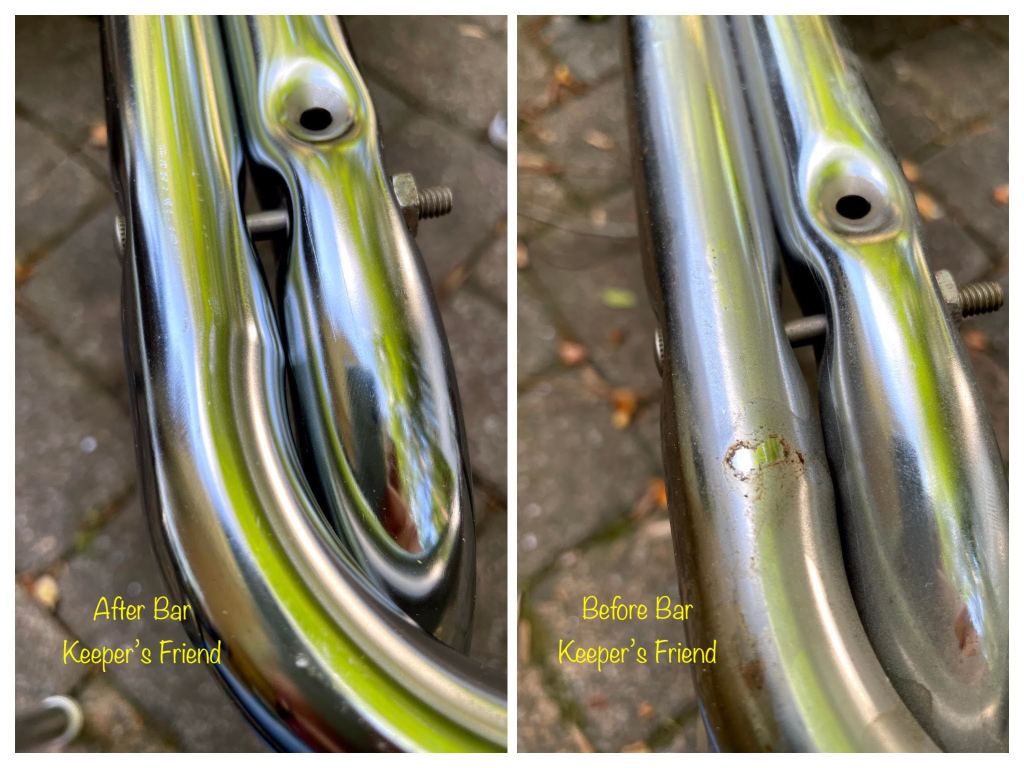
I then took apart the frame, cleaned the chrome with Bar Keeper’s Friend, and re-assembled it.

Using the old card as a template I cut new seat bases out of hardboard. I then began re-upholstering the seats and backs with the gorgeous red sparkle vinyl.

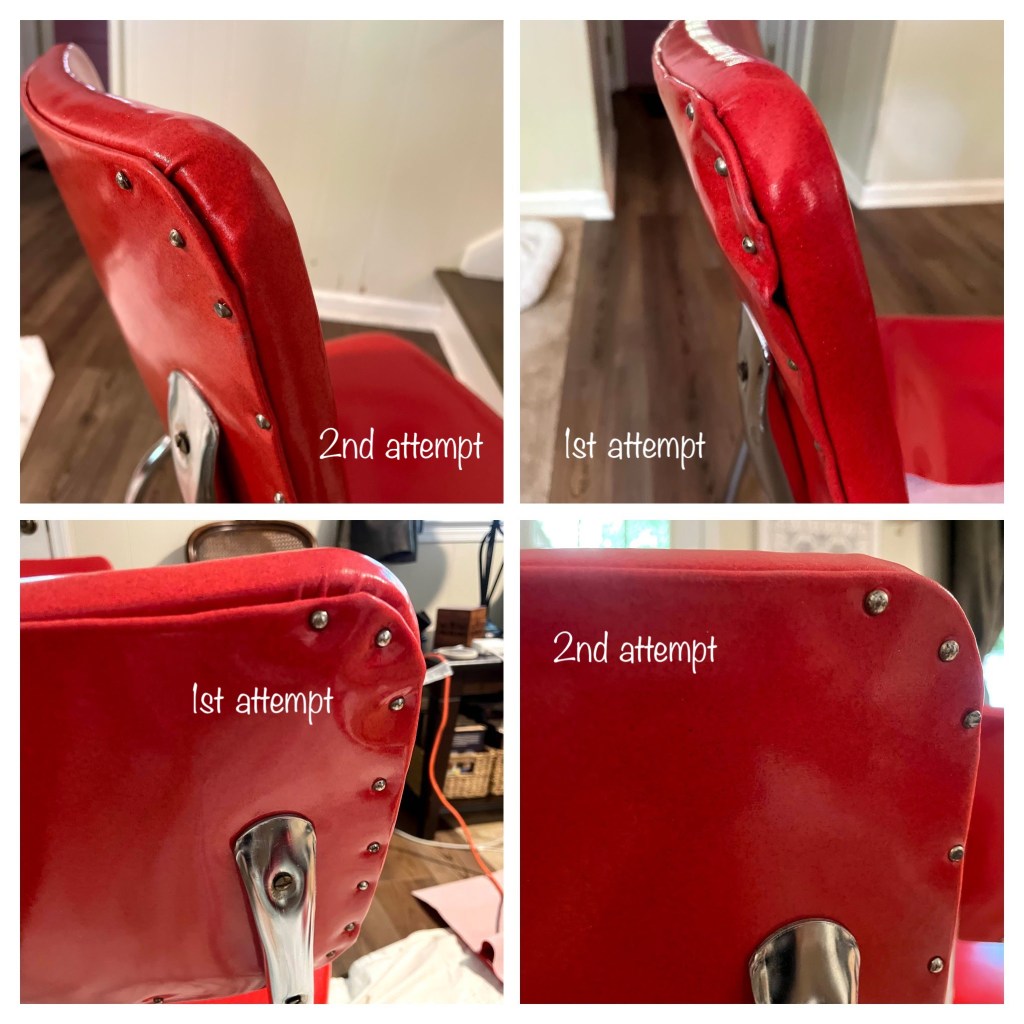
Along the way I learned the technique of using a hairdryer to warm the vinyl so it can be stretched more neatly over the corners. I thought the seats turned out really well, but I was not satisfied with the back pads; where the two pieces joined together it was too lumpy and bumpy.

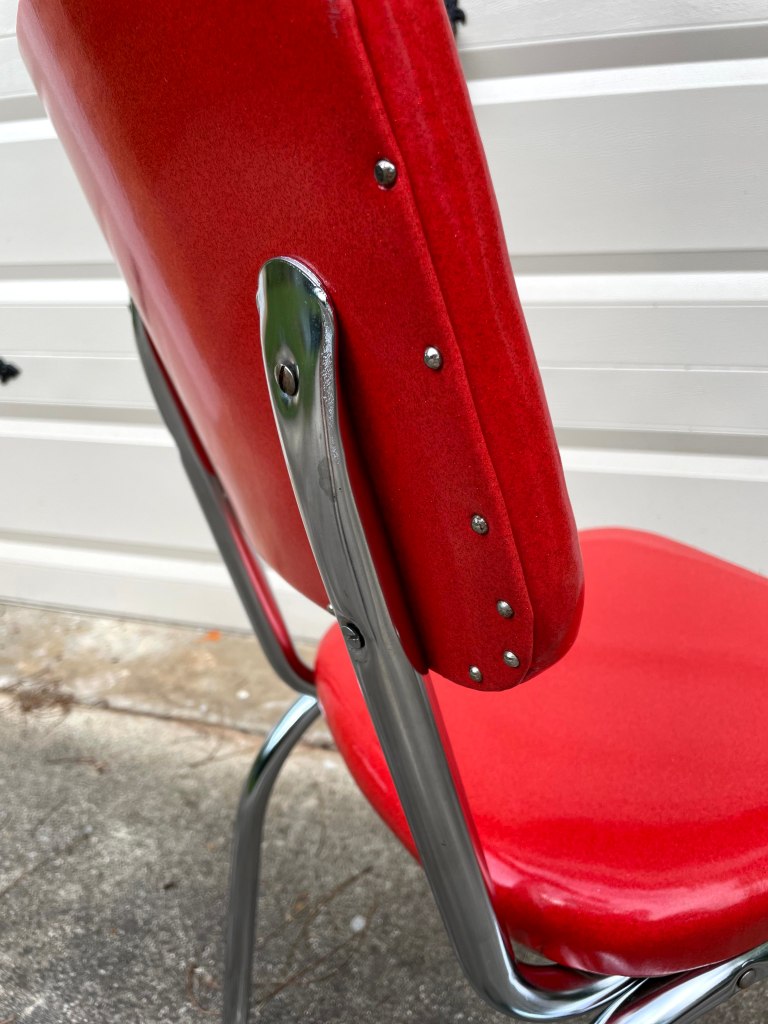
After putting them aside for several months I came back to the drawing board with a new approach. My friends at Daniel’s Southern Decorators gave me some of the upholstery card that I hadn’t been able to find anywhere else. Now I was able to replace the old, crumbling card. Using the dressmaking technique of notching, I cut the vinyl to reduce as much bulk as possible. I then “wrapped” the card with the vinyl, attaching it with hot glue and leaving the top, long edge loose. I attached the loose vinyl to the other back panel by stapling through some cardboard tape to protect the fabric. Finally I could flip the wrapped card into place and secure it with the original upholstery pins.

This new technique yielded much better results.

#36 French country-style chairs

Materials used: Primer, chalk paint, clear wax, hardboard, upholstery fabric.

What attracted me to these chairs was the inlaid panels in the backrests. I knew if I could remove them it was an opportunity to have a little fun with some fabric I wanted to use.

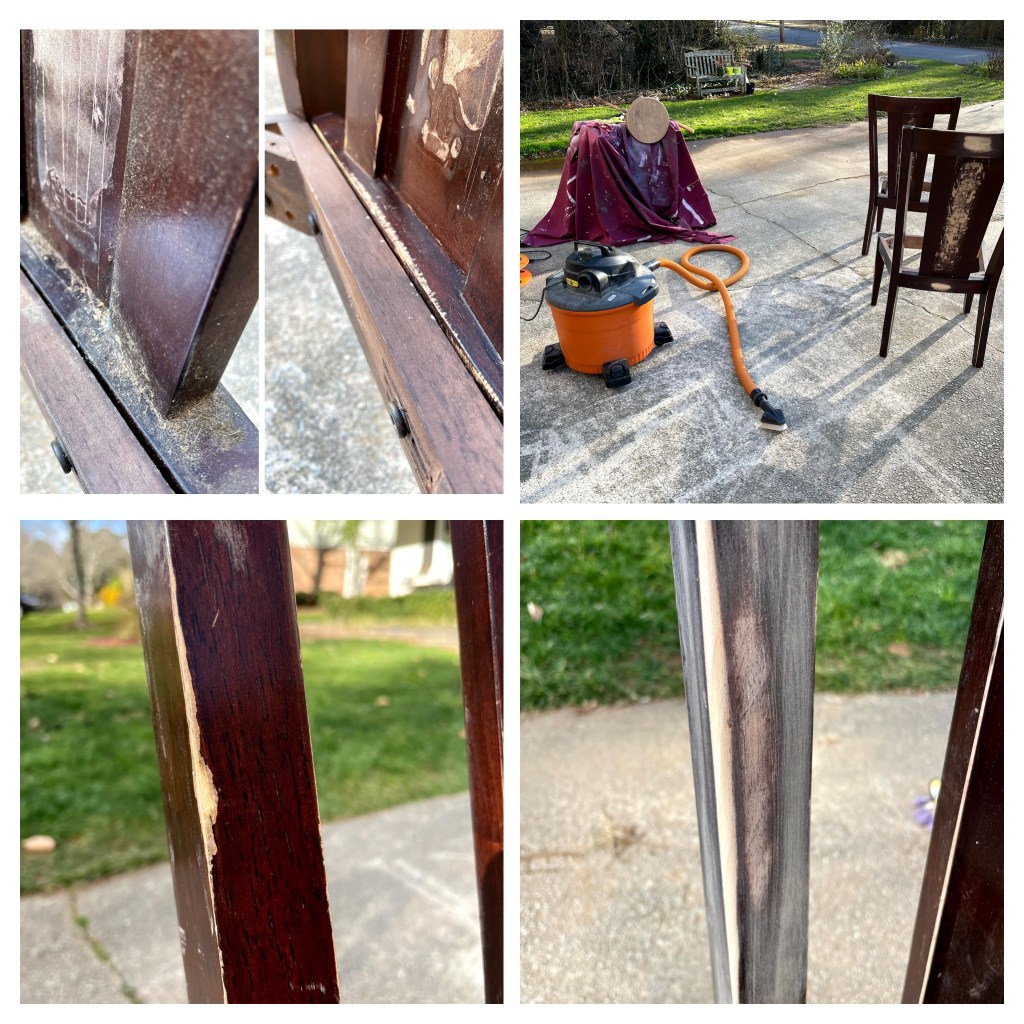
First I had to make sure I could remove the “wooden tile”, inlaid panels. There were four all together: one in the front and back of each chair’s backrest. Sure enough they came out easily, as you can see in this 9-second video.

I then gave the frames a good clean, and sanded out a few dings.

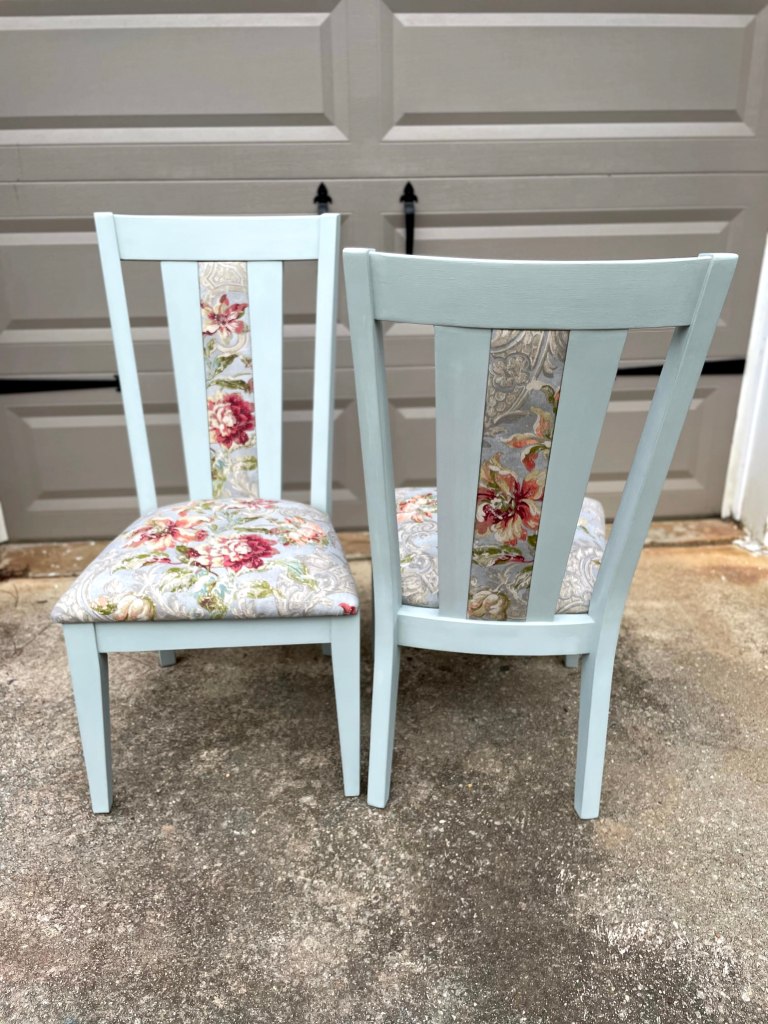
After a couple of coats of primer, I applied three coats of chalk paint. I call this color Vintage Paris Grey; it’s a blend of leftover paints with those names. The paintwork was finished with two coats of Behr clear wax.

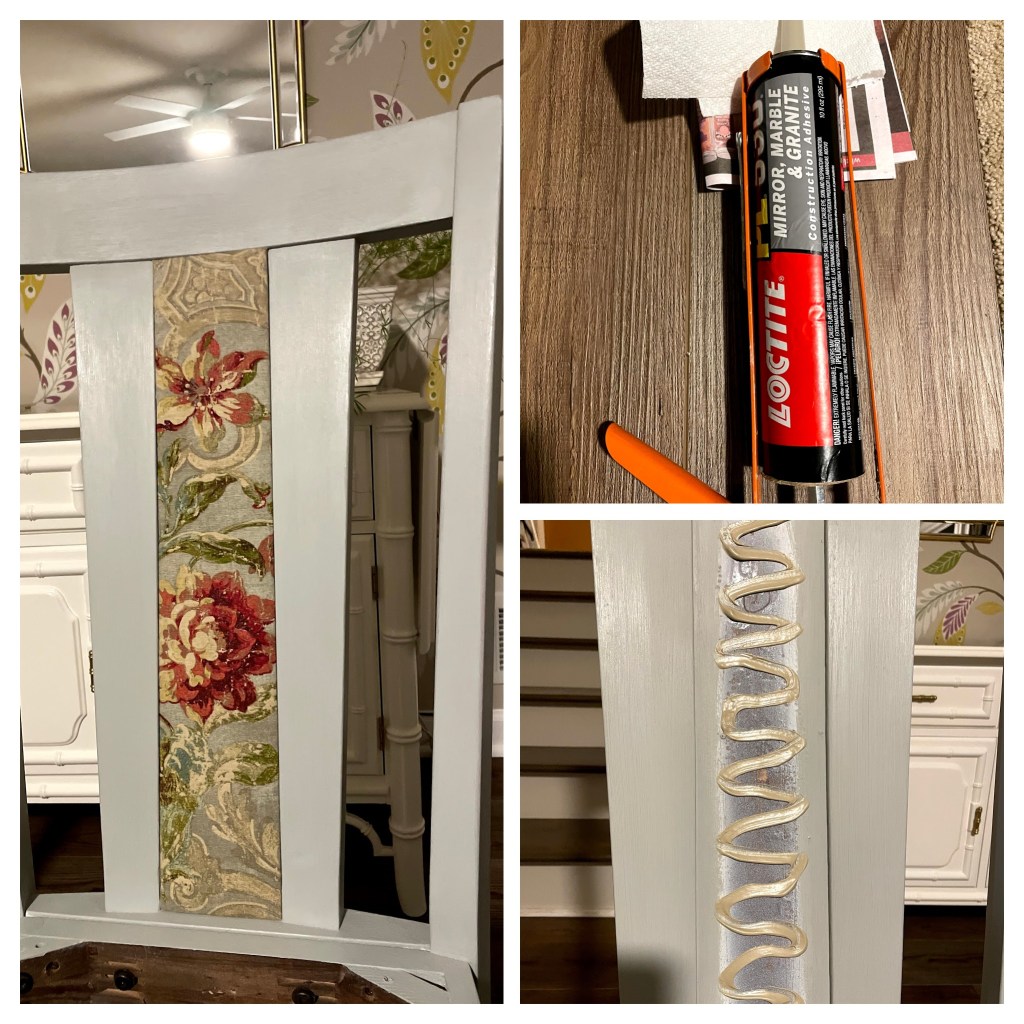
When the frames were done, it was time to tackle the upholstery. I started with the backrest panels. My handy husband cut four pieces of hardboard to fit the spaces. With spray glue I attached a thin piece of batting to each, then wrapped them in the upholstery fabric.

I re-attached the newly upholstered panels to the frames using Loctite mirror, marble and granite adhesive.

Under the old fabric the original seat pads were in such great shape I could re-use the foam and batting. I was even able to recycle the black cambric. With the old fabric as my pattern, I cut the new material, making sure to match the patterns on the two seats. I then covered the seat pads with the new fabric, and re-attached the black cambric. Then it was just a matter of attaching the new seat pads to the frames.

#32 Antique church chairs

Transformation expenses: About $20

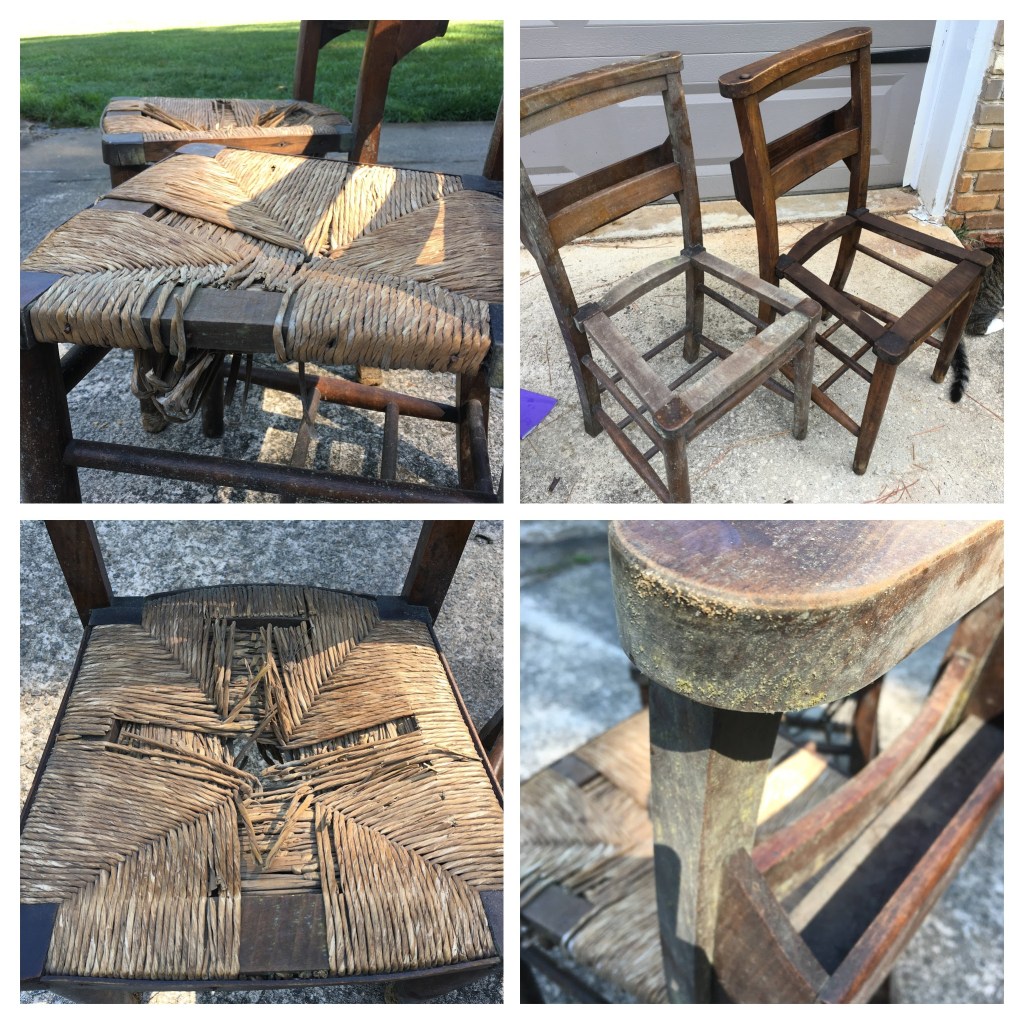
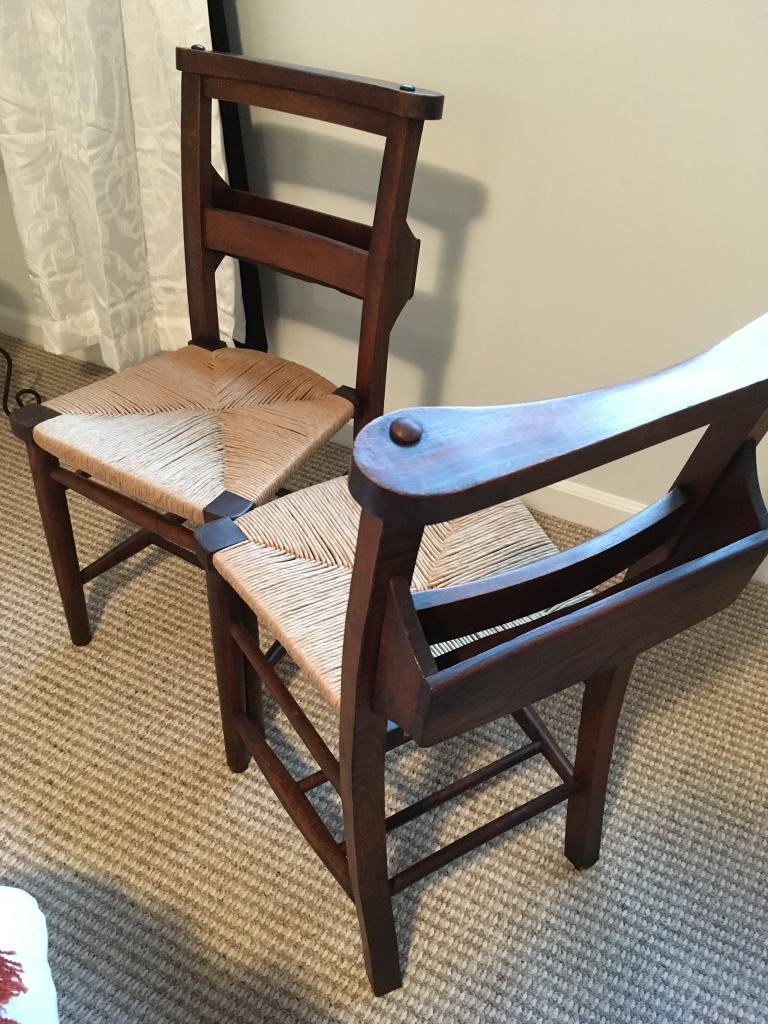
I nearly ignored these chairs thinking they were children’s furniture. Thank God I was sufficiently intrigued by the bible backs to pick them up! I quickly discovered they are antique church chairs, probably made in England in the late 19th century. The frames were dirty but in good condition, and responded beautifully to some simple restoration. A replacement plug and some newly woven rush seats completed their transformation to gorgeous accent chairs with a rich history.

It is likely these chairs were made in England by a company called West & Collier. They look just like chair # 112b from the company’s catalogue of the time. West & Collier was founded in 1869 in a village named Frieth in Buckinghamshire, England. The wood is probably elm and the two extra spindles between the back legs would have been for stowing a gentleman’s top hat during service.

The chair frames were dirty but in good condition, while the rush seats were both damaged beyond repair. I began my restoration by removing the old rush and cleaning the frames with a very dilute solution of Simple Green all purpose cleaner.

After cleaning (bottom right), I applied Howard Restor-A-Finish in walnut (top right), and then Howard Feed-N-Wax (bottom left)

With the frames nicely restored I was ready to weave some new fiber rush seats. This was my second time using a technique I learned from an incredible instruction video by Ed Hammond of Peerless Rattan. I chose to not finish the woven rush with shellac because these seats will be indoors.

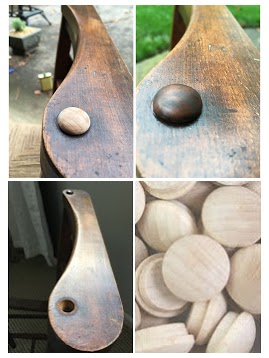
The final step of this restoration was to replace the missing button top wood plug. I got the part I needed from Widget Co. With a little sanding, I was able to make it fit like a glove and have the more rounded-off look of the originals. Once in place I used a mix of Varathane stains (dark walnut and kona) to give it the right color and antiqued look.

#27 Antique Jacobean-style chair

Transformation expenses: Frame restoration – $4.84, professional upholstering in leather – $420

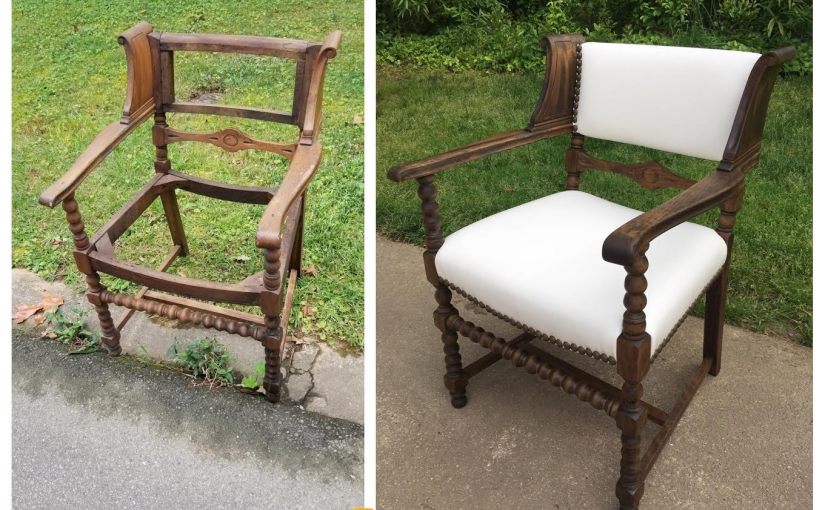
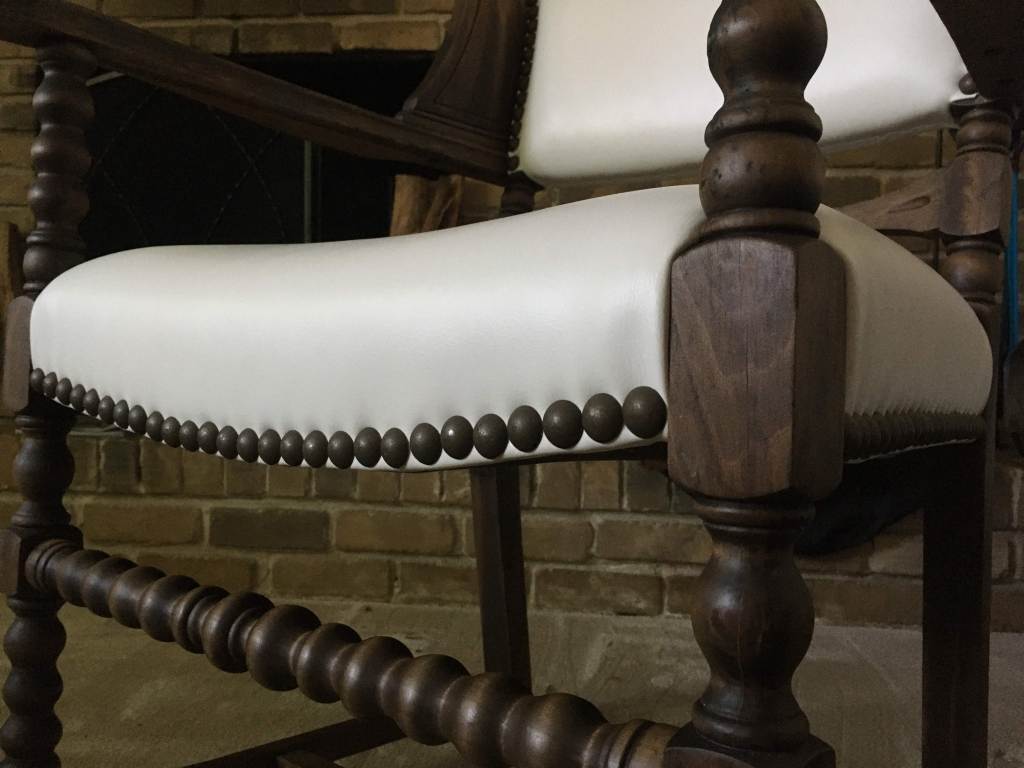
This circa 1890s winged armchair was put to the curb at a property that was being flipped. Its transformation was a labor of love. For the first time ever I employed the help of professionals; the re-upholstering of this chair was beyond my capabilities, so after I had transformed the frame, I took it to Budget Upholstery & Fabrics. I would not ordinarily have gone to such great expense but the antique value of this piece made it worthwhile.

Some people reading this might question me refinishing rather than restoring this chair. We’ve seen antique appraisers lamenting over a piece that has diminished in value by being refinished. This was not that type of piece (see below). I’d like to think the original furniture maker would be pleased to know that 120+ years later someone had put so much time and effort into making it functional and beautiful again. Read on for more on its journey from mildewed neglect to fireside treasure.

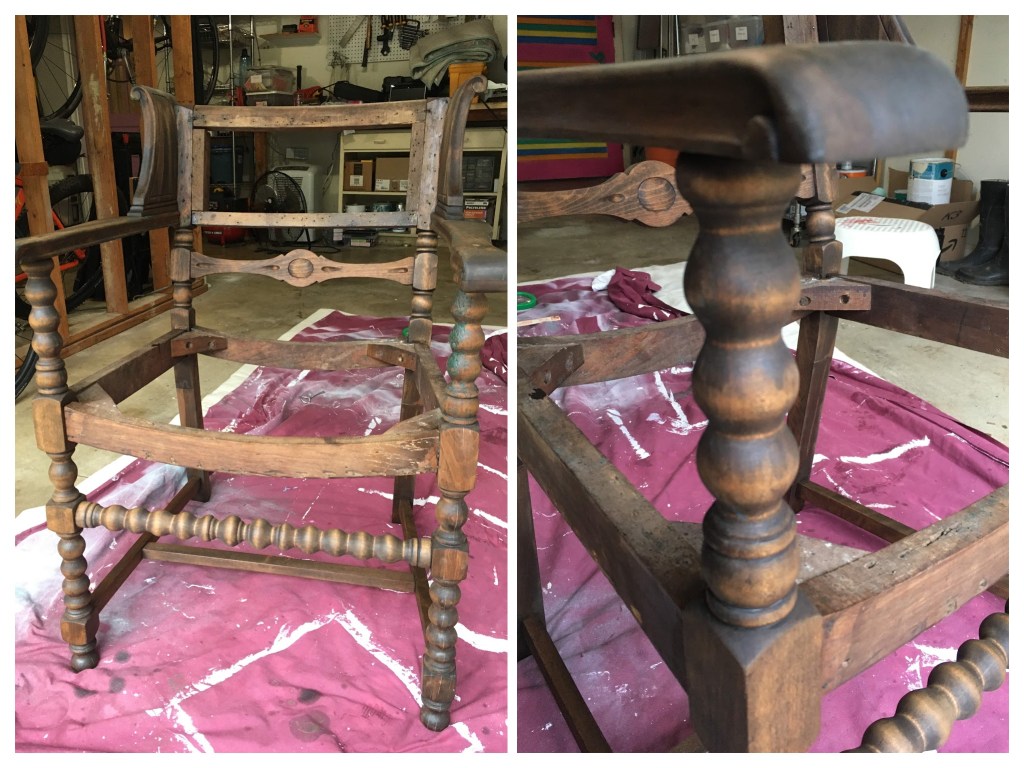
Peter Cook (executive producer of Antiques Roadshow) wrote: ” Understandably, our Americana experts on the Roadshow live for wonderful old pieces of furniture that have somehow survived in terrific condition …. Most old furniture, of course, doesn’t come close to meeting those standards. On the contrary, most furniture has been well used (even abused), scratched, broken, and often repaired many times. How could such furniture not be improved by a good job of refinishing or restoring? A comparison with a friend’s antique left me in no doubt that this piece was beyond simple restoration. On the left is my friend’s chair which is well preserved and still has its original patina. On the right is this chair which was dull and mildewed in places.

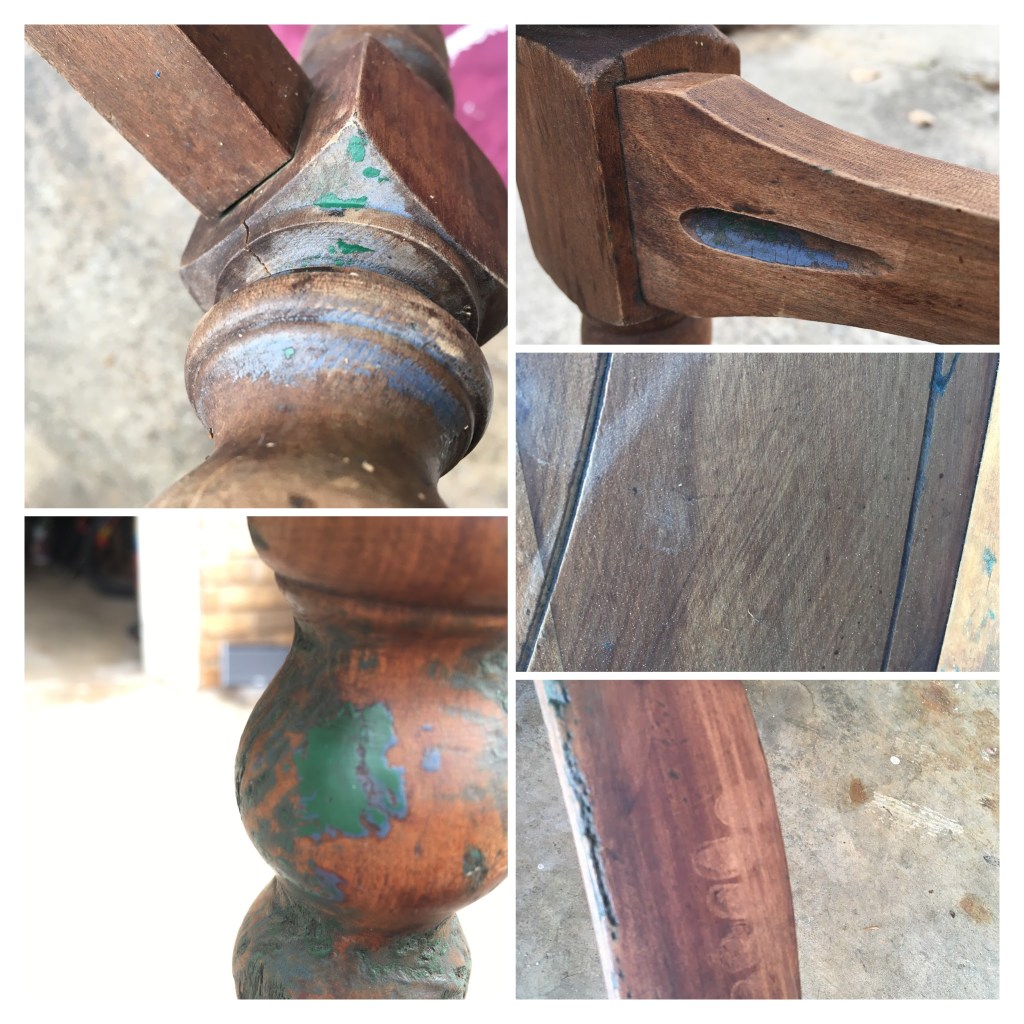
As well as signs of neglect this chair had evidence of poorly applied stain (see brush marks and fingerprints) and at least two different applications of paint (blue & green).

I first cleaned the piece with a mild detergent and then with TSP All Purpose Heavy Duty Cleaner (used by antique restorers). After both cleanings the chair still needed more than just a finish coat. I knew then that I would need to sand it back to the raw wood.

My goal was never to get it looking like new, rather to remove all ingrained dirt/mildew and get it a fairly even color for staining. After many, many hours of painstaking work (using just 220 or 400 grit finishing sandpaper) the sanding was finally complete. The piece still bears a lot of the marks of old age (scratches, dings, traces of old paint) but those all give it character.

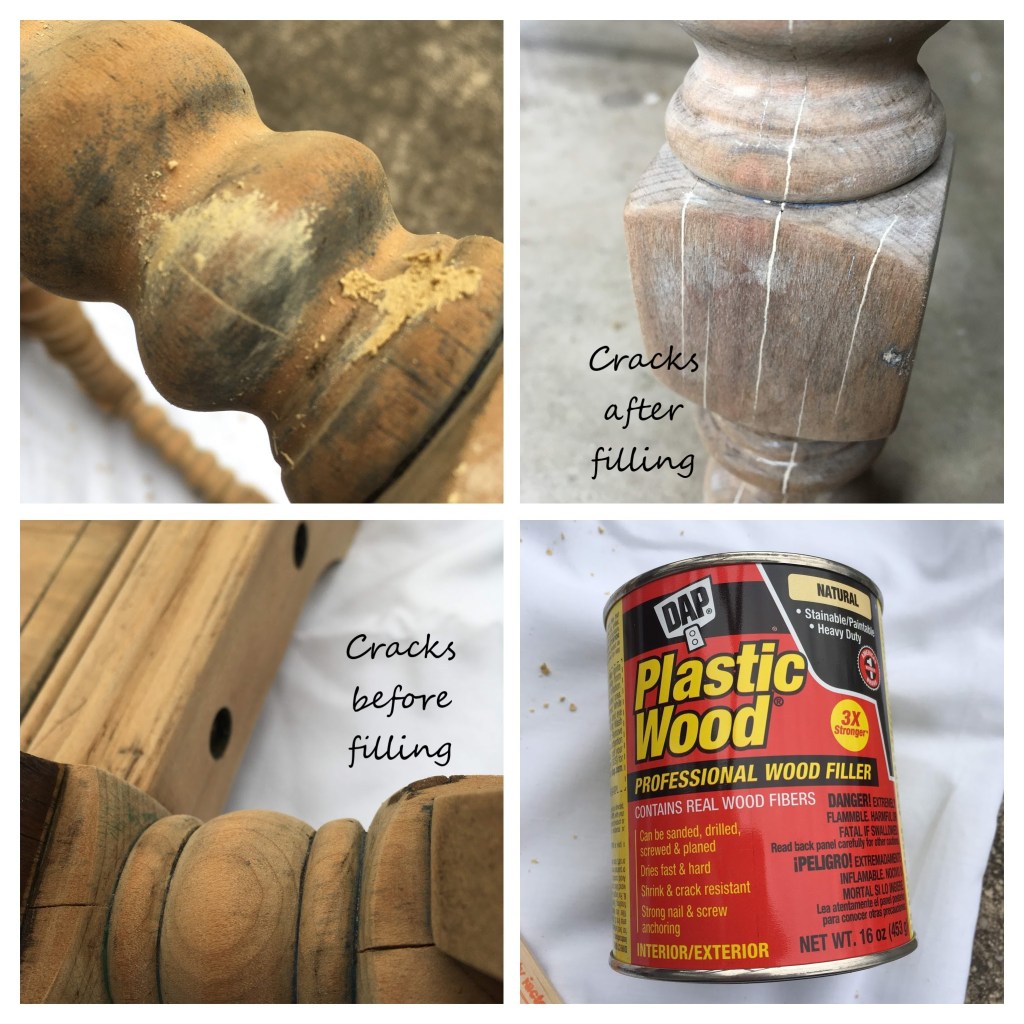
Before staining I filled the hairline cracks (probably from water damage) with Plastic Wood Professional Wood Filler. I simply rubbed it in with a (glove-covered) finger, let it dry, then sanded away the excess.

On recommendation from an online appraiser I chose a dark walnut oil-based stain by MinWax. I applied it with a brush then immediately removed any excess with a clean rag.

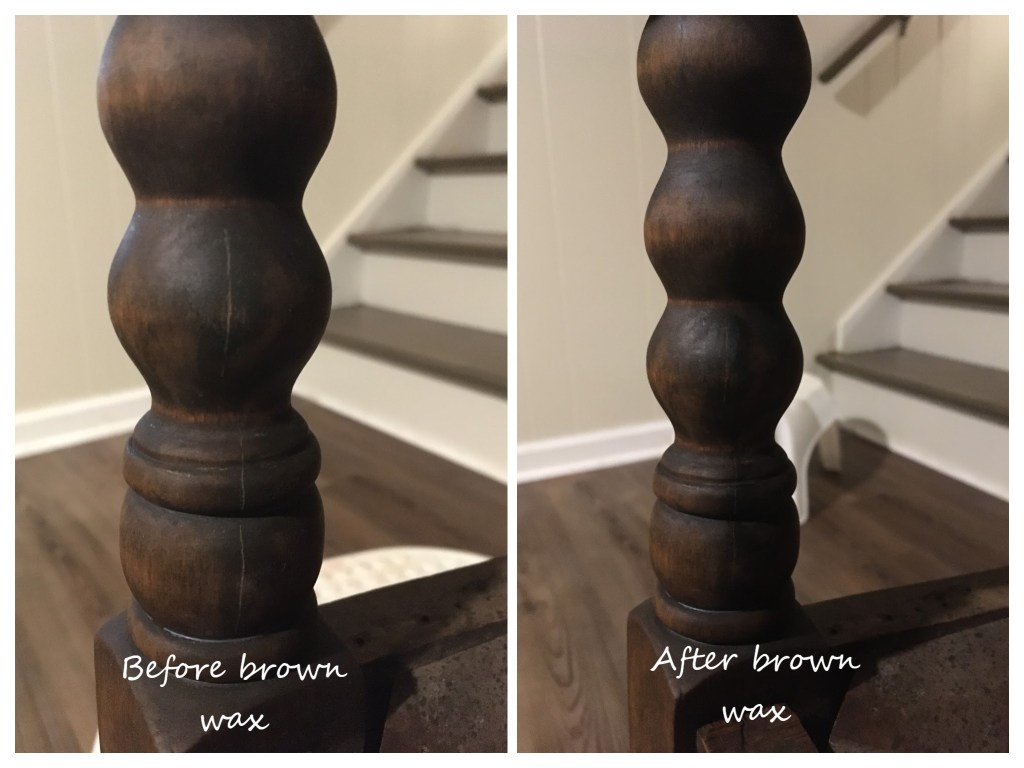
Despite it saying it “May be stained, sealed, or painted immediately after sanding” I was disappointed the wood filler did not pick up enough of the dark walnut color. The filled cracks were still visible, but thankfully I was able to blend them in with a little Annie Sloan dark wax.

As I began applying the finishing coats of Kilz clear sealing wax, some previously unnoticeable smudges of wood filler appeared (left pic). To fix the problem, I removed the wax with some solvent, sanded again, and re-touched the stain. After the whole frame had two coats of buffed wax and cured for 30 days it was ready to go the upholsterer.

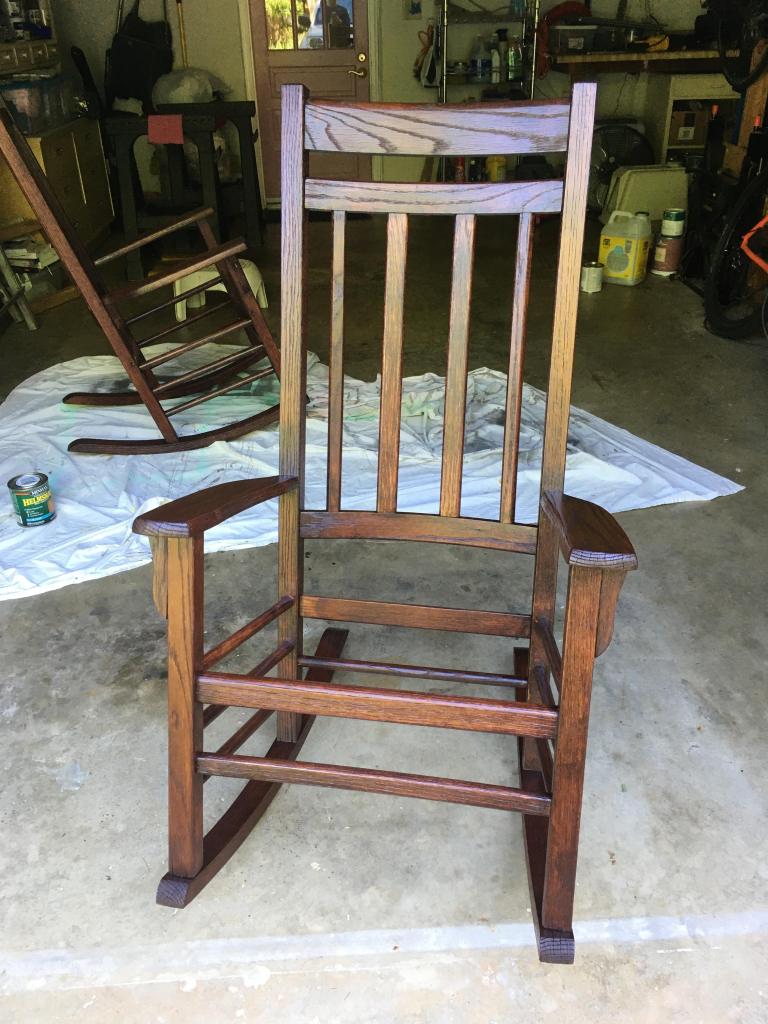
#26 Pair of solid oak rocking chairs

Transformation expenses: $120.16

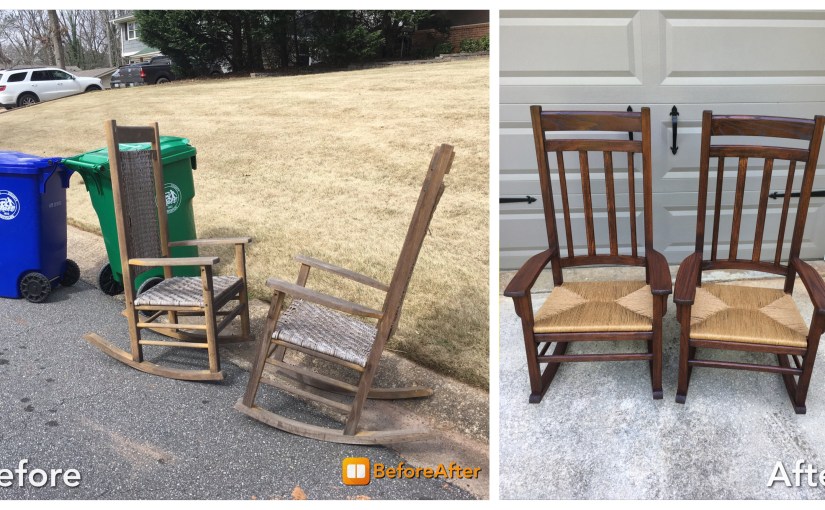
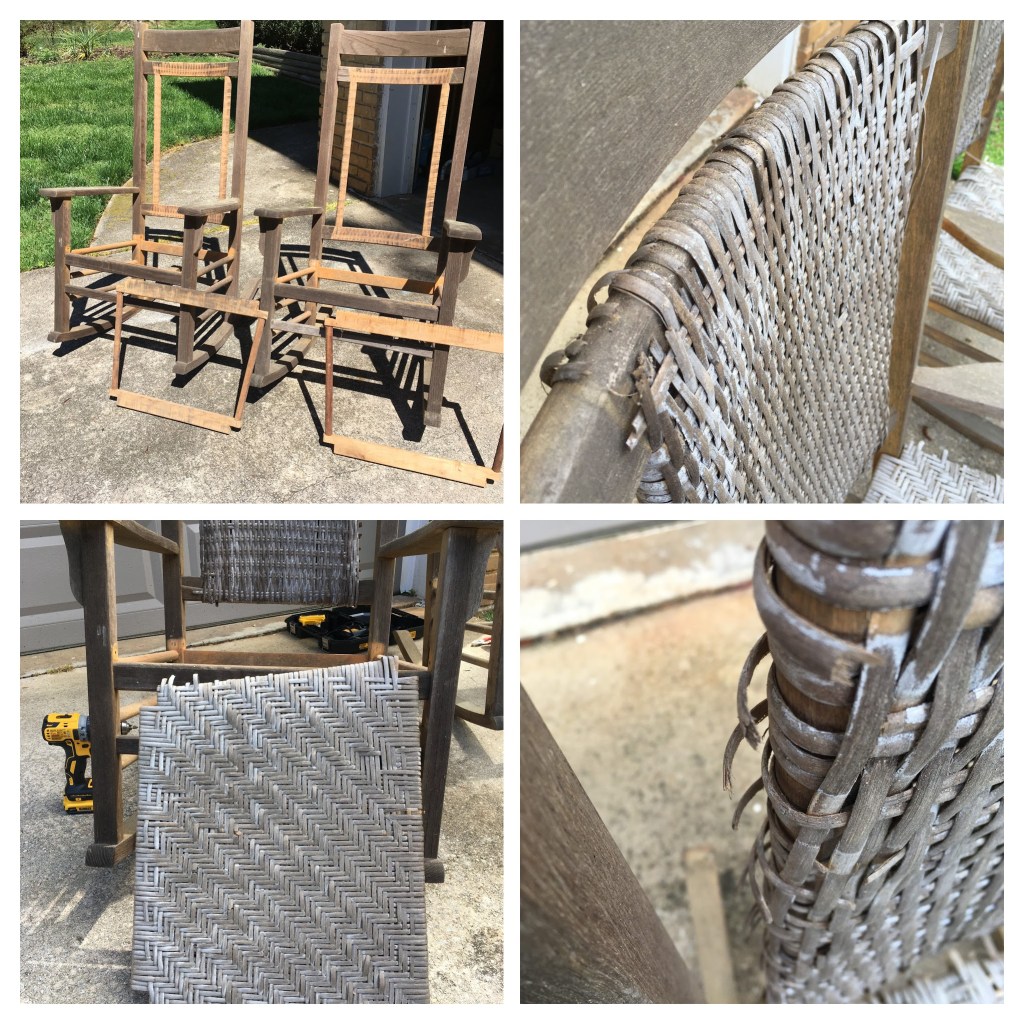
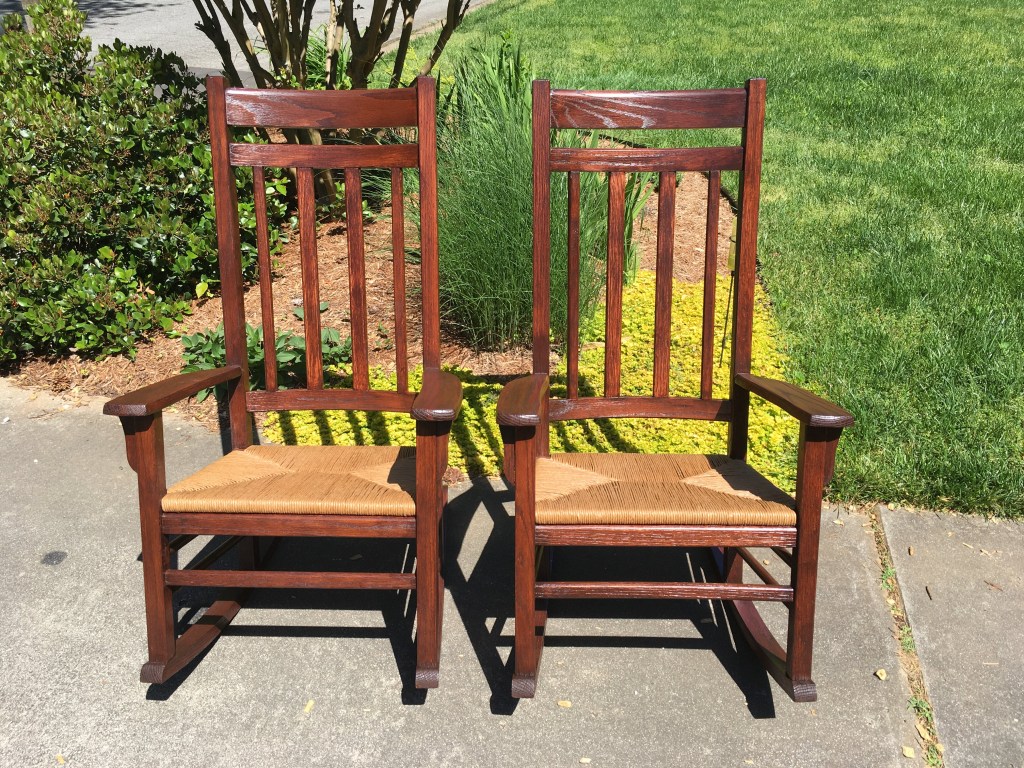
This pair of rocking chairs was no doubt discarded because the herringbone cane was falling apart, and the cost to replace it is prohibitive (around $500 per chair). However it seemed a shame to throw the baby out with the bathwater so I picked them up and contemplated a more economical solution.

The caning in both chairs was damaged beyond repair. There was no choice but to remove it all. Being able to take out the seat pads made the job a lot easier.

Pressure washing the frames to remove the ingrained dirt was possibly the most fun I’ve had on a project to date. The difference was amazing!

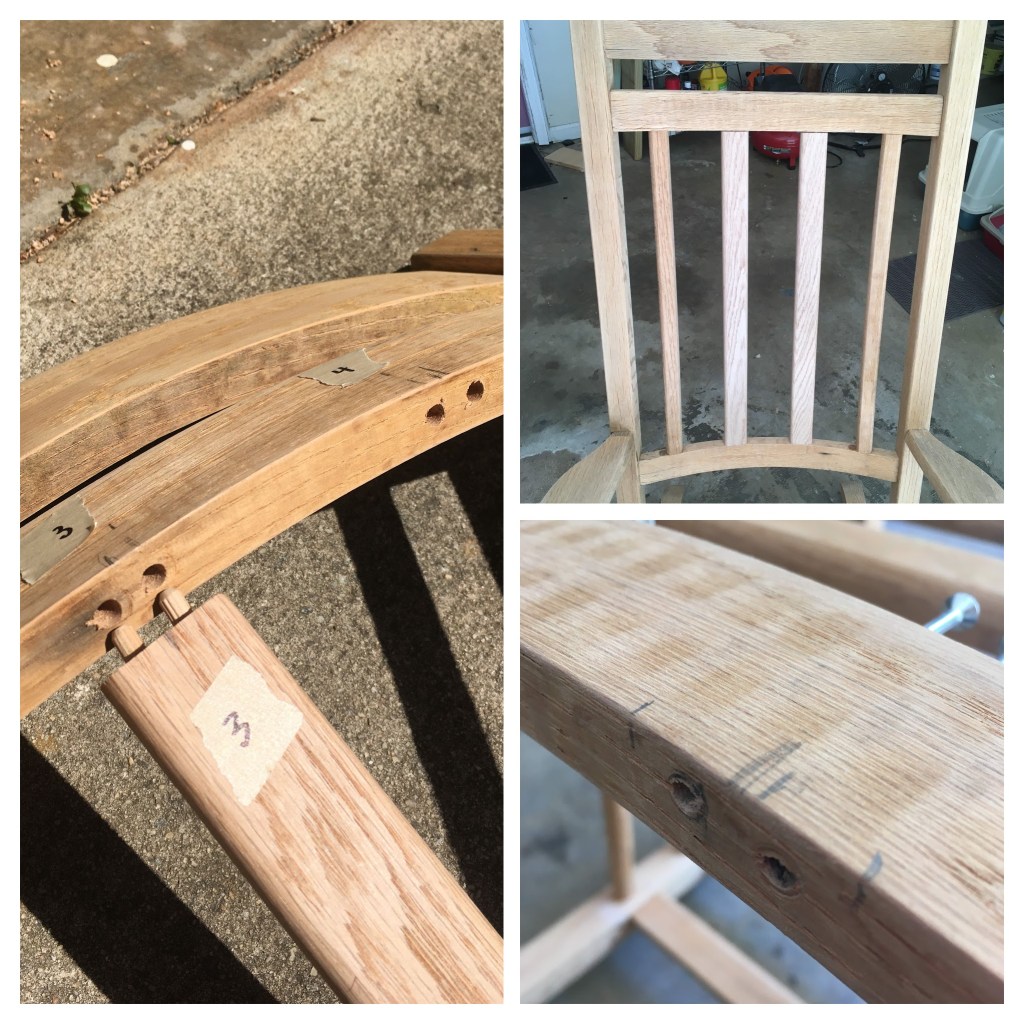
Pressure washing was hard on the wood and patches of the original finish were still there so a good bit of sanding was needed. I used 80 then 150 then 220 grit sandpapers to bare and smooth the wood.

The first of two more economical solutions was to replace the backrest caning on each chair with new spindles. We started with a 9ft long piece of 2″ x 1″ oak. My husband rounded the edges with a palm router then cut four spindles of the right length.

I attached the new spindles using doweling joints at the top rail and 3″ screws through the bottom rail. The frames were now ready for staining.

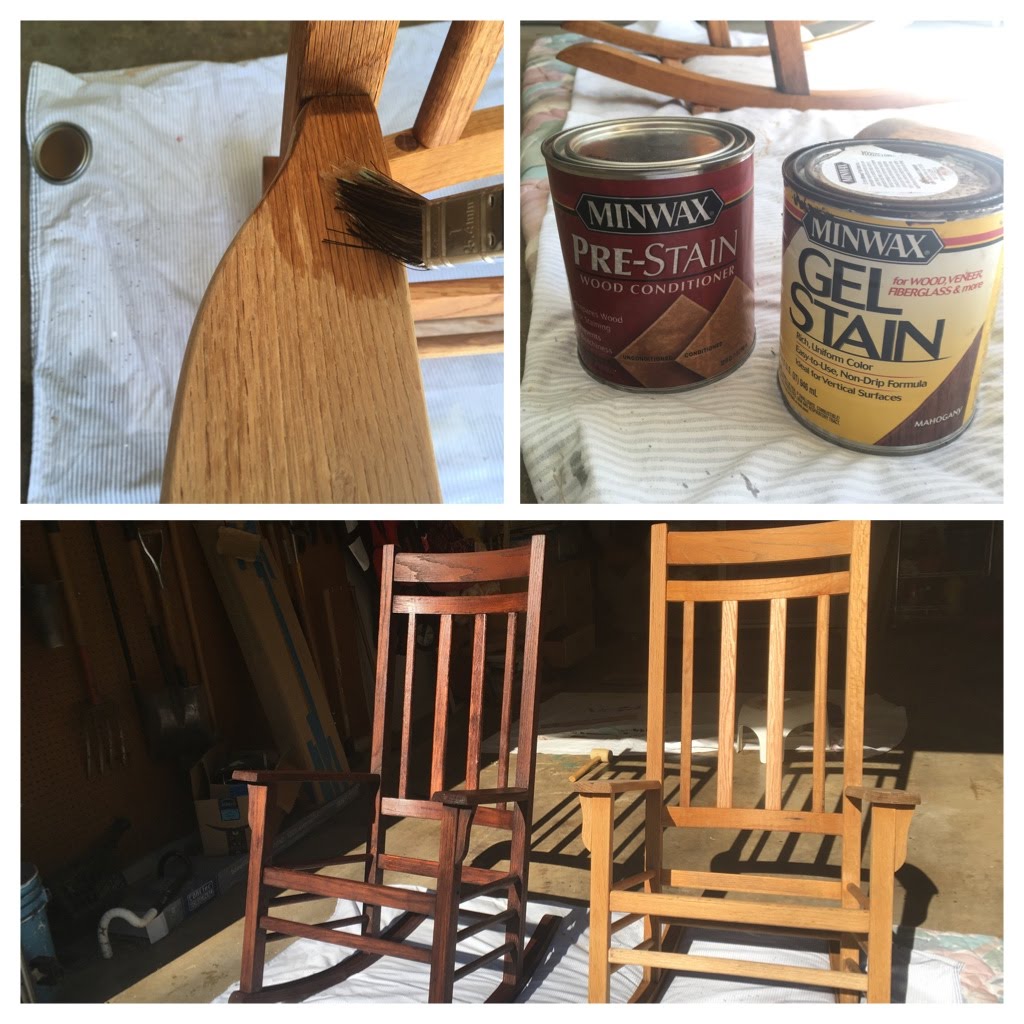
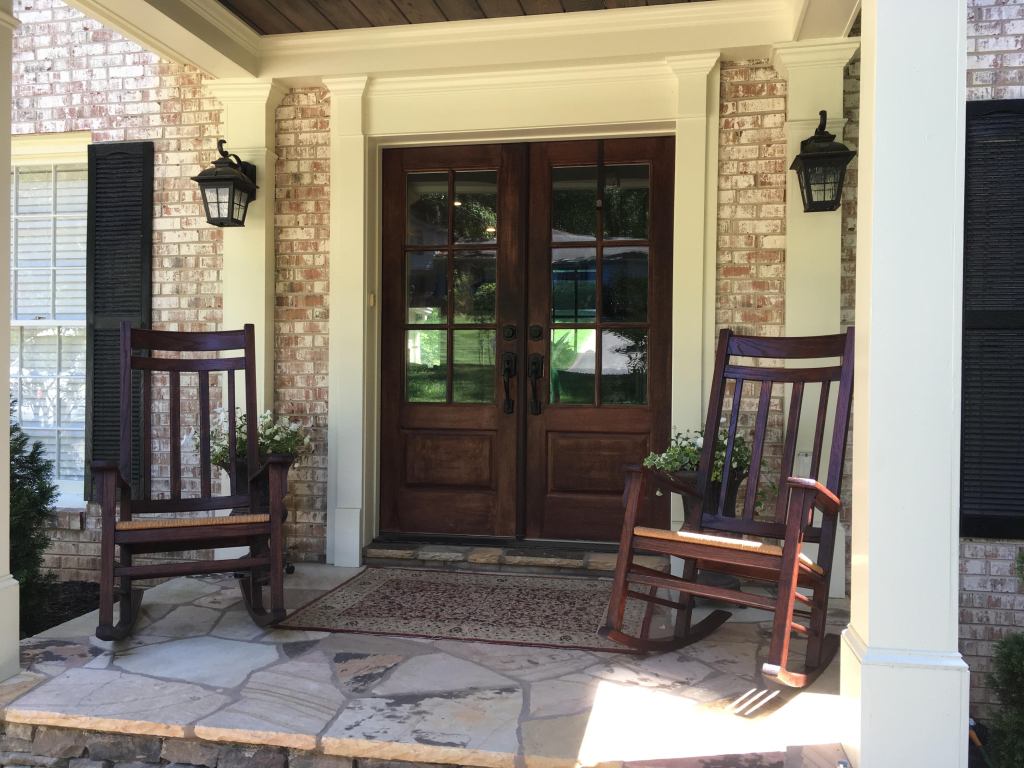
Before staining I treated the chairs with Minwax pre-stain conditioner. I then applied Minwax gel stain in mahogany to match my client’s front door.

Two coats of Minwax indoor/outdoor Helmsman Spar Urethane in clear satin finished the woodwork.

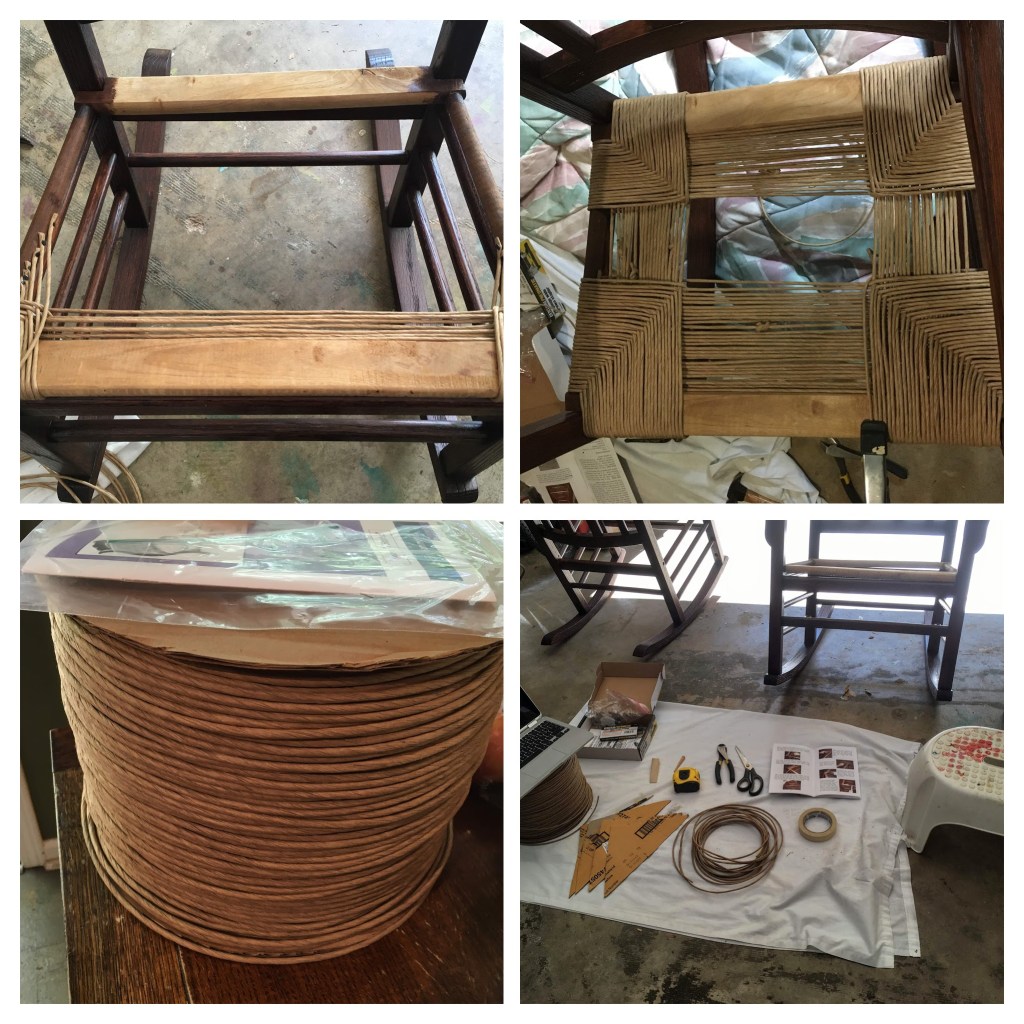
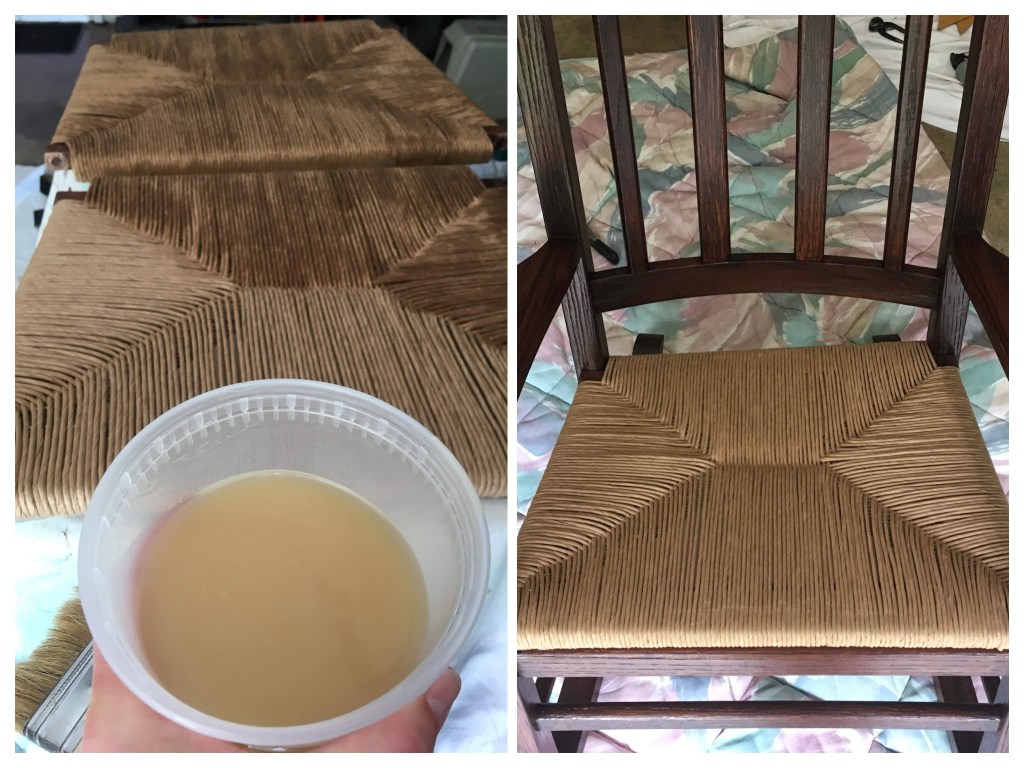
The second solution was to replace the cane seats with woven rush seats. Armed with a 10 lb reel of fiber rush, the necessary tools, and a really good instructional video I took on the challenge. You can find the video here and I am happy to share my learning curve with anyone who wants to attempt this themselves.

The seats turned out great. To finish them off ,and provide as much protection as possible, I applied 3 coats of shellac (50:50 solution in denatured alcohol) top and bottom.

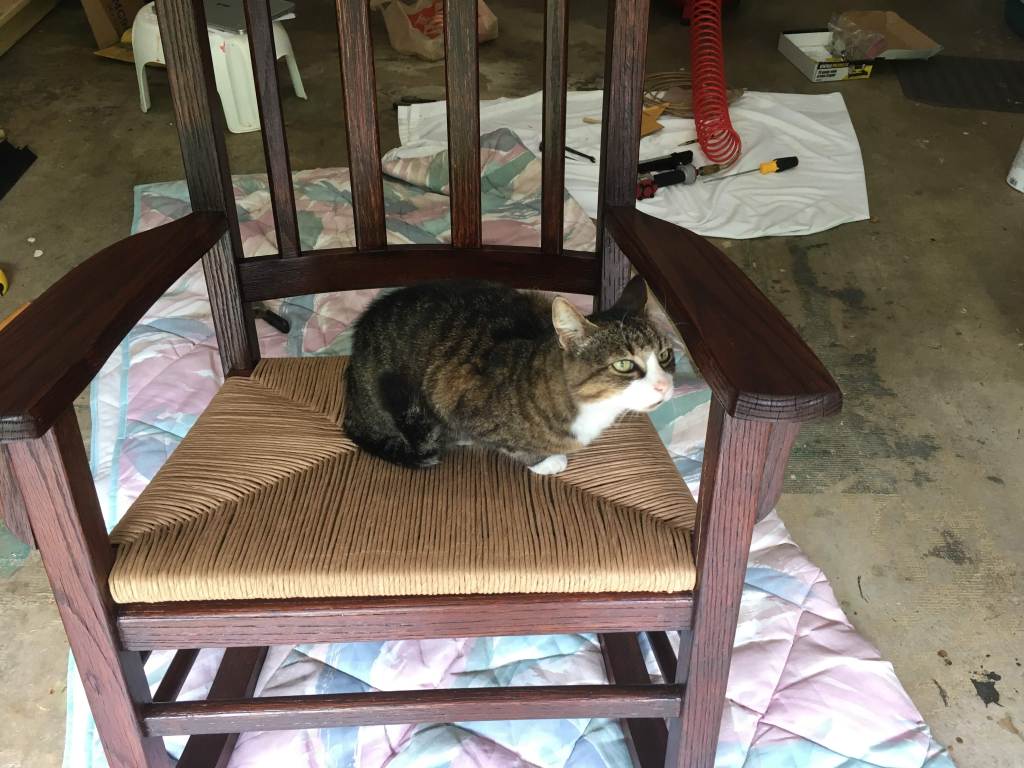
Finally, I applied slip resistant tape to the unfinished bottoms of the rockers, reattached the seats to the frame, and the job was done!

#11 Wrought iron garden chairs & footstools

Transformation cost: $23

These two chairs with footstools were curbside in a friend’s neighborhood when she texted me a photo. The conversation (which she started at 9:00 a.m.) went like this:

I justified my weak willpower by thinking I might keep these chairs for my own patio. However when I looked into buying cushions for them it looked cost prohibitive. Fortunately my dear friend Lori did a better job of finding affordable upholstery and claimed them for herself.

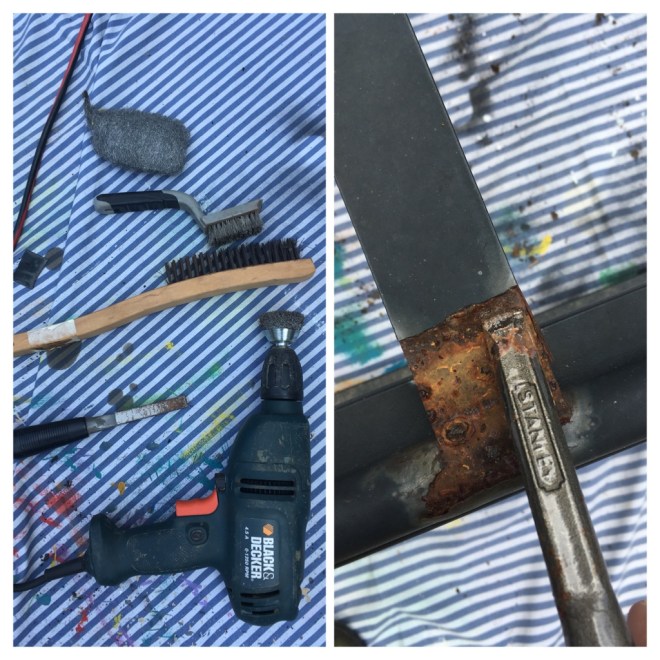
I began by having my husband assess the state of the furniture. A few swift kicks confirmed that, despite the rust spots, it was all still structurally sound. Using a chisel and various wire brushes I removed all the loose coating & rust.

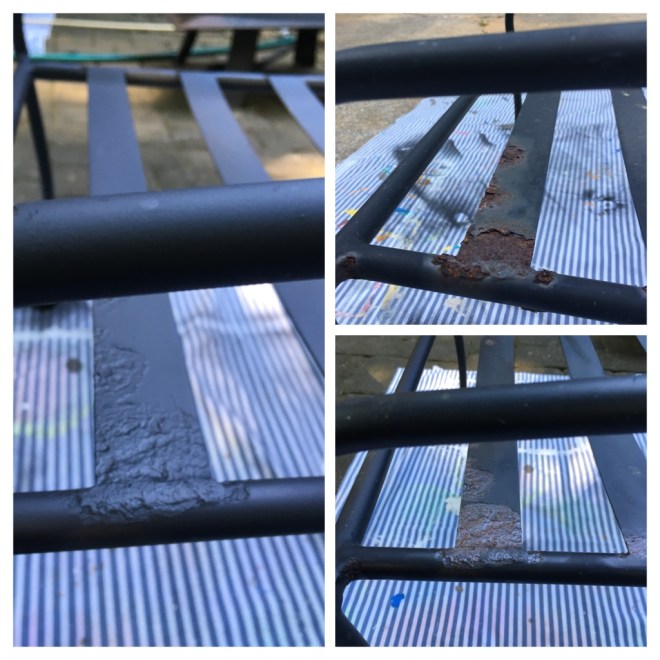
After cleaning everything with a weak solution of soap and water I applied a coat of Rust-Oleum Rust Reformer to the spots where there had been rust.

Already the rust spots were starting to look a lot better. (Top right: original, bottom right: after being scraped and brushed, left: after painting with Rust Reformer).

The finishing touch was to add several coats of Rust-Oleum flat black enamel.

Catching the morning sun on a neighbor’s deck

#9 Bamboo wicker chair with upholstered seat

Transformation cost: $42.64

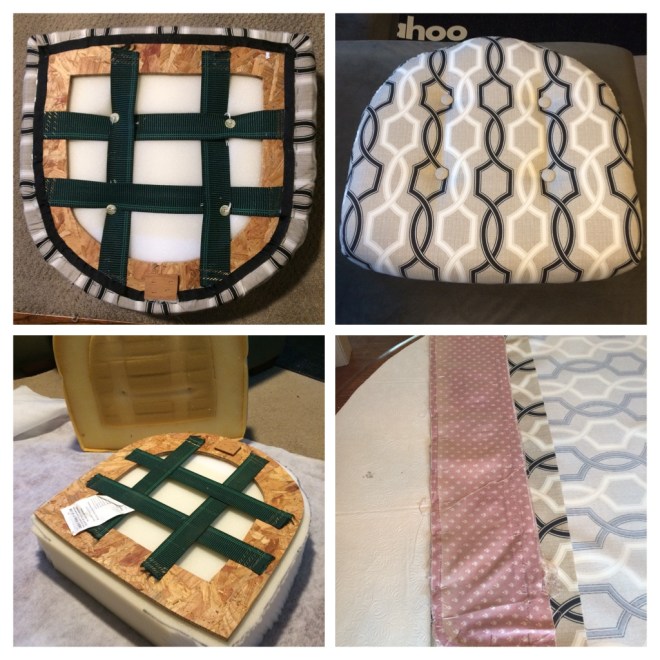
This piece was being discarded by a friend of mine who was helping her parents move and clean house. Other than missing 3 casters and having a small split in one leg it was in great condition and is a good quality piece. At first I envisaged this piece with a pretty damask fabric and pastel paintwork but the price of the fabric sent me back to the drawing board. In the end the geometric pattern I found at my local craft store (where upholstery fabrics are permanently 30% off!) gave me the inspiration I needed to take a completely different tack!

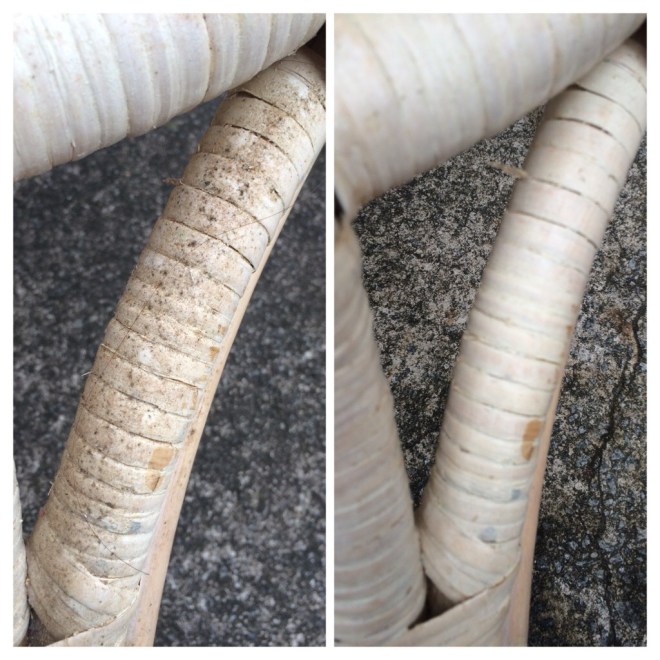
Cleaning a piece before painting is arguably the most important part of any transformation, and this was no easy piece to clean. However, with my trusty toothbrush, some compressed air and patience the dirt disappeared!

Using the old fabric and foam as a guide I cut and sewed the new cover, carved out a new seat pad and covered it with batting followed by the new fabric cover. The final touches were to hot glue some ribbon trim to the edges of the fabric and re-create the original tufting using four fabric-covered buttons.

Meanwhile I treated the framework of the chair to 3 coats of Krylon ColorMaster paint & primer in gloss black .

And the finishing touch was to reunite frame & seatpad

#5 Safari chair

Transformation cost: About $18

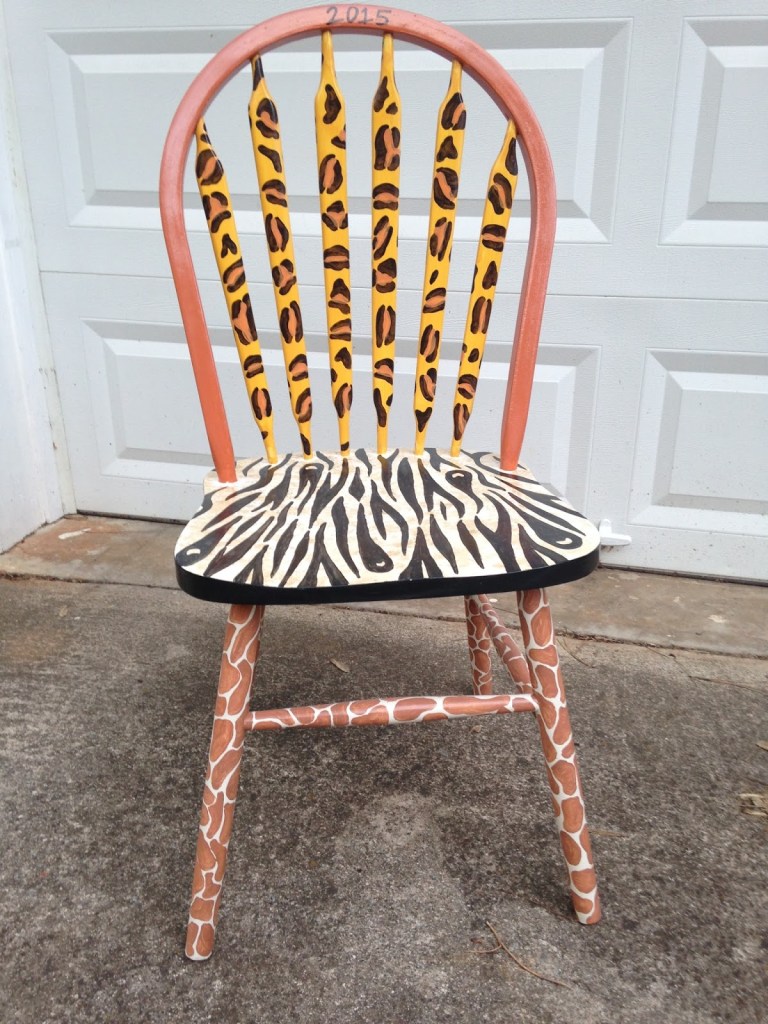
Just a day after my last post it snowed, and some of that snow still has not melted; it hasn’t exactly been ideal weather for painting and there’s been little to no progress on any transformations! Fortunately I have this little ace up my sleeve. I do feel slightly like I’m cheating with this post since this transformation took place in May 2015, more than 2 years before I started this blog. However, it is an old favorite of mine and it does meet all the criteria to count towards my goal. I picked up the chair from a neighbor’s trash and transformed it into an end-of-year teacher gift. My inspiration came from the fact that Africa was part of this teacher’s Social Studies curriculum. 

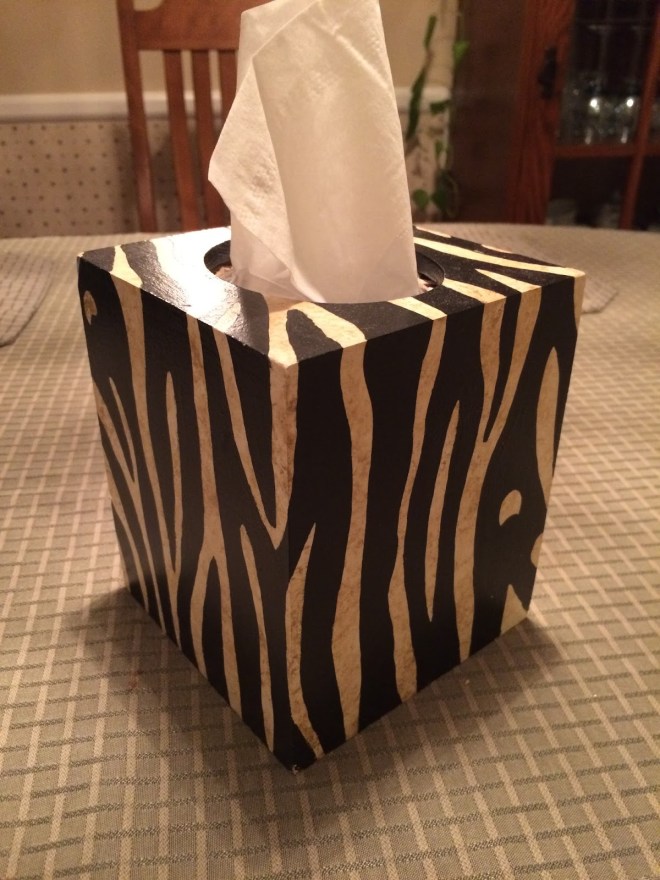
I had recently painted a zebra tissue box cover for my BFF in England
(and then one for myself) so I had some practice painting an animal print.

I started by cleaning the chair then lightly sanding it and applying primer.

The animal prints were painted with 4 or 5 different colors of acrylic craft paint.

Two coats of polyurethane finished the job.