

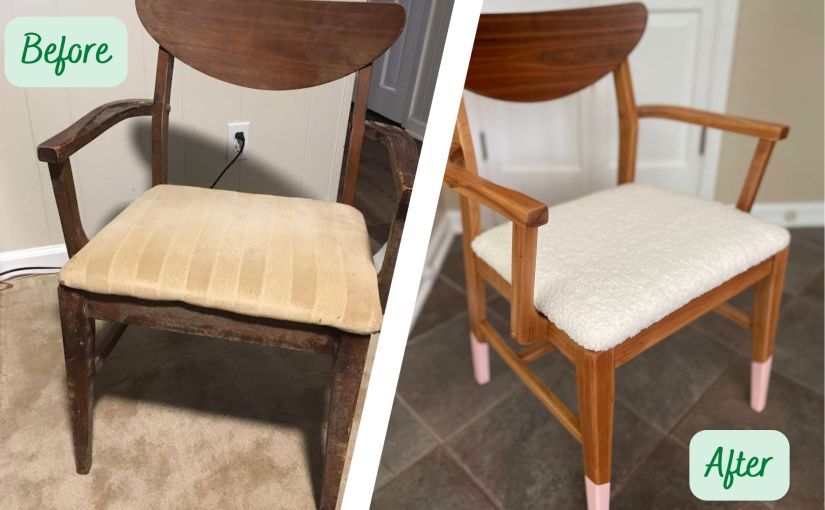
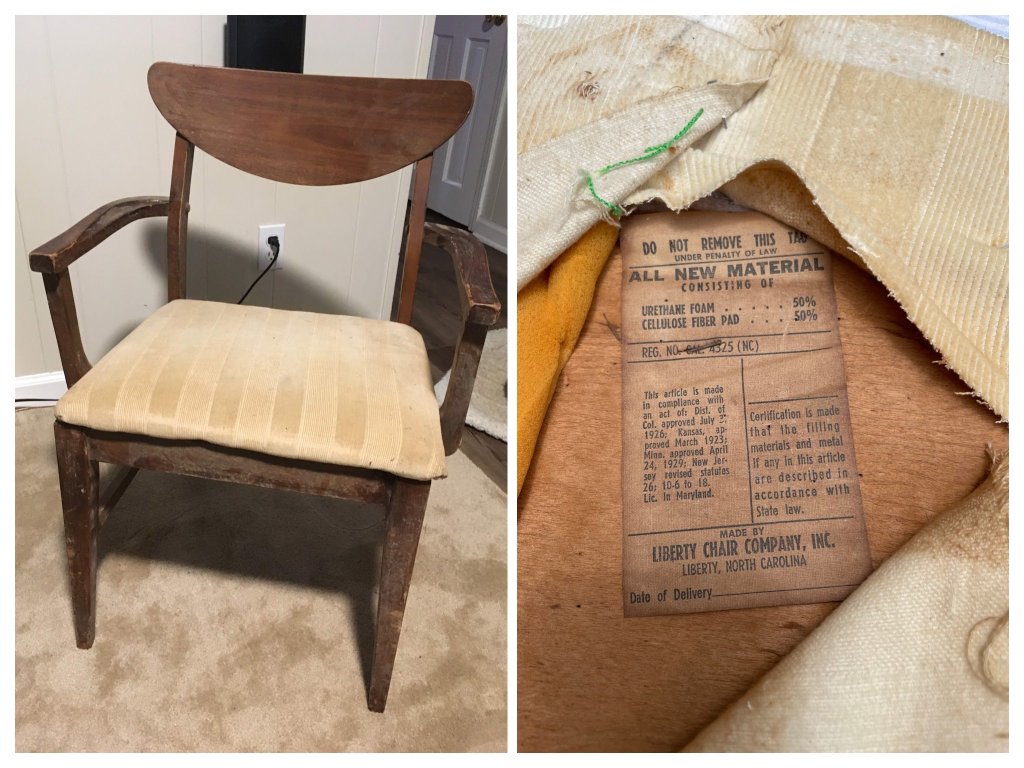
I got this chair off the curb across the street from my house. Something about it drew my attention so I felt very validated when I discovered it is a solid maple, mid-20th-century, Windsor desk chair, possibly made by Ethan Allen; definitely a piece worth rescuing. As usual the design evolved throughout the process and I think the final result is a perfect blend of several influences.
Materials used: Minwax Furniture Refinisher, Peel-Tek masking fluid, Designer Stencils bamboo lattice stencil (c328), Rust-Oleum 2X Ultra Cover in Coastal sage ultra matte, Varathane oil-based polyurethane in semi-gloss finish.

One of the first things that struck me about the chair is the bamboo-style legs, spindles, and stretchers. Since bamboo furniture often has a mid-century vibe to it, and because the existing finish was badly scuffed in places, I decided to first of all remove the dark brown glaze finish. At this point I was thinking I would maybe just restore it to its lighter, natural color.
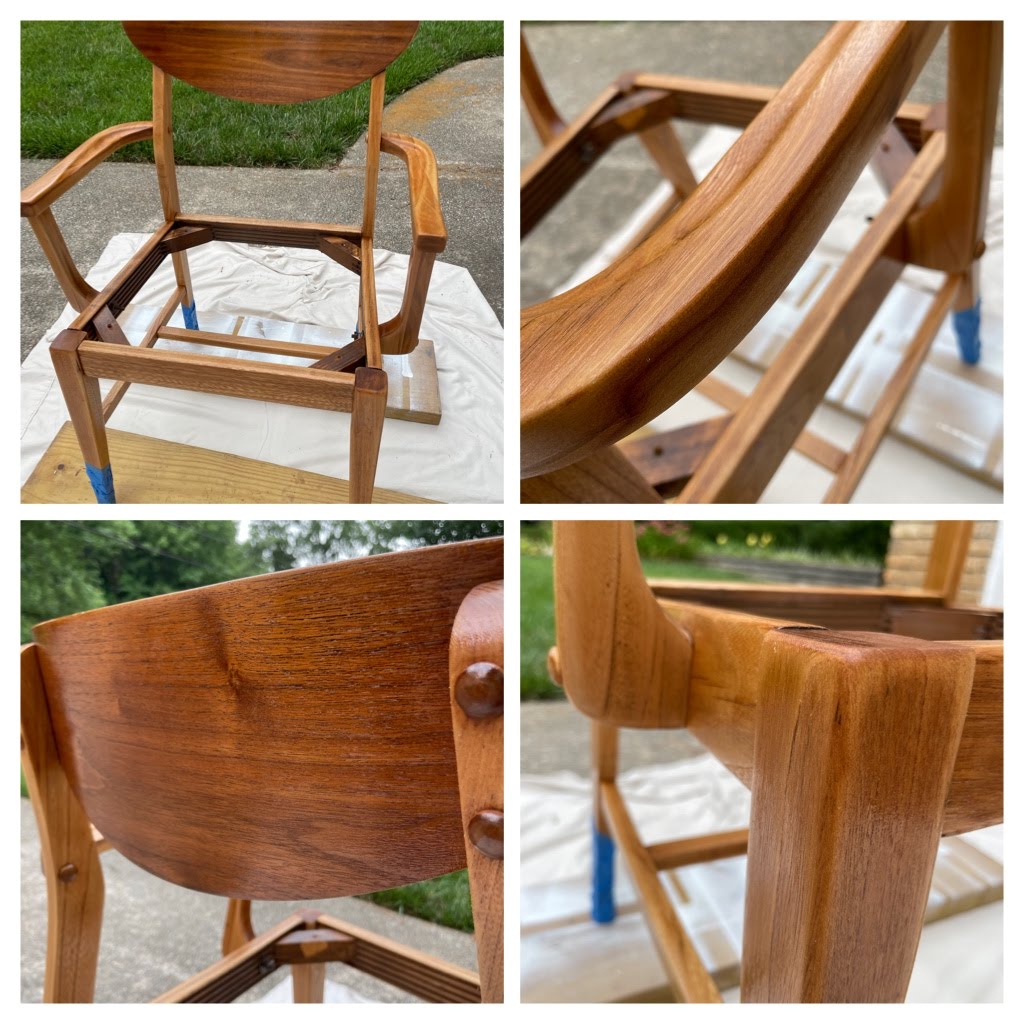
After cleaning the chair with a weak solution of Simple Green, I removed the glaze finish using Minwax Furniture Refinisher. It came off nicely and I was happy to find beautiful maple wood underneath.


When I started sanding I quickly realized I wasn’t going to be able to prep every nook and cranny to a standard that would have merited a clear polyurethane finish. This was when I decided to go with a Hitchcock-inspired design which includes a stenciled top back rail, some paint, and some clear topcoat. When they were sufficiently sanded, I masked off the chair parts that would stay unpainted.
At this point I had decided to use a bamboo stencil and knew that I wanted the pattern to be in the natural, maple color. So I had to find a way for the pattern to be masked off while I painted the rest of the chair parts. I found Peel-Tek masking fluid on-line and applied it to the top back rail using the stencil and a stencil brush.


Now I was ready to apply 2 cans of Rust-Oleum 2X Ultra Cover in Coastal Sage ultra matte finish. I chose this color because it is in the mid-century color palette.
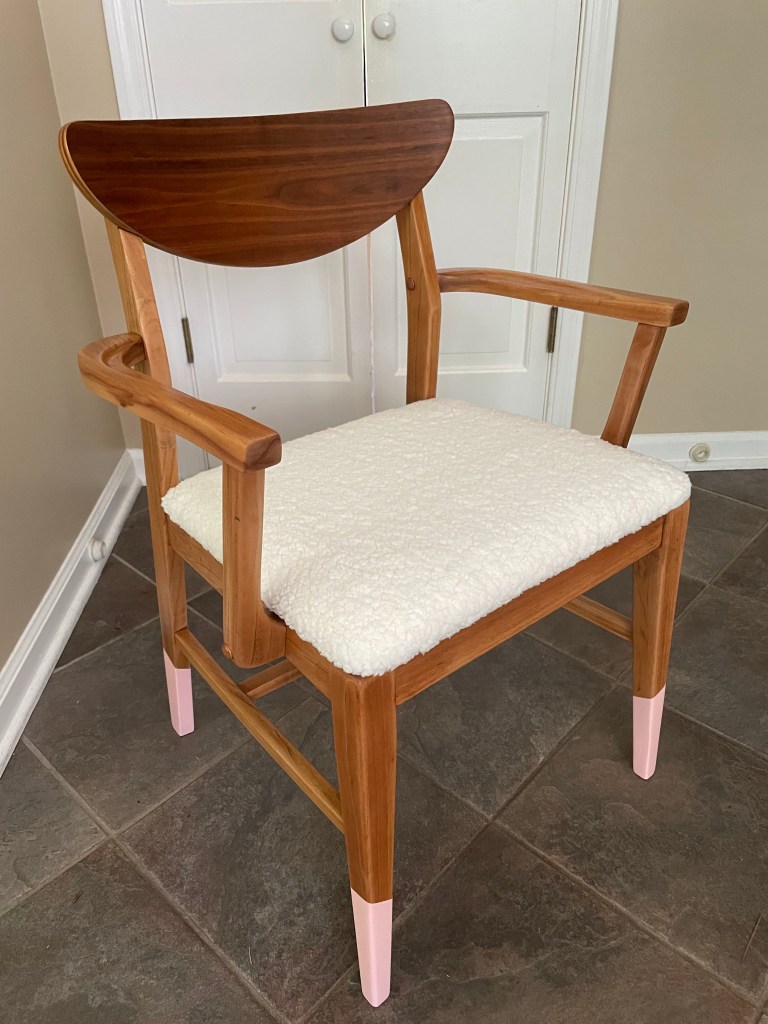
It took a long time to peel off the Peel-Tek masking fluid but it worked perfectly! Once all the masking tape was also removed, the chair just needed its finishing coats of Varathane polyurethane in semi-gloss finish. The semi-gloss finish really brings out the warm glow and the chatoyance of the maple.








 Transforming Trash