#46 Ice Cream Parlor Set

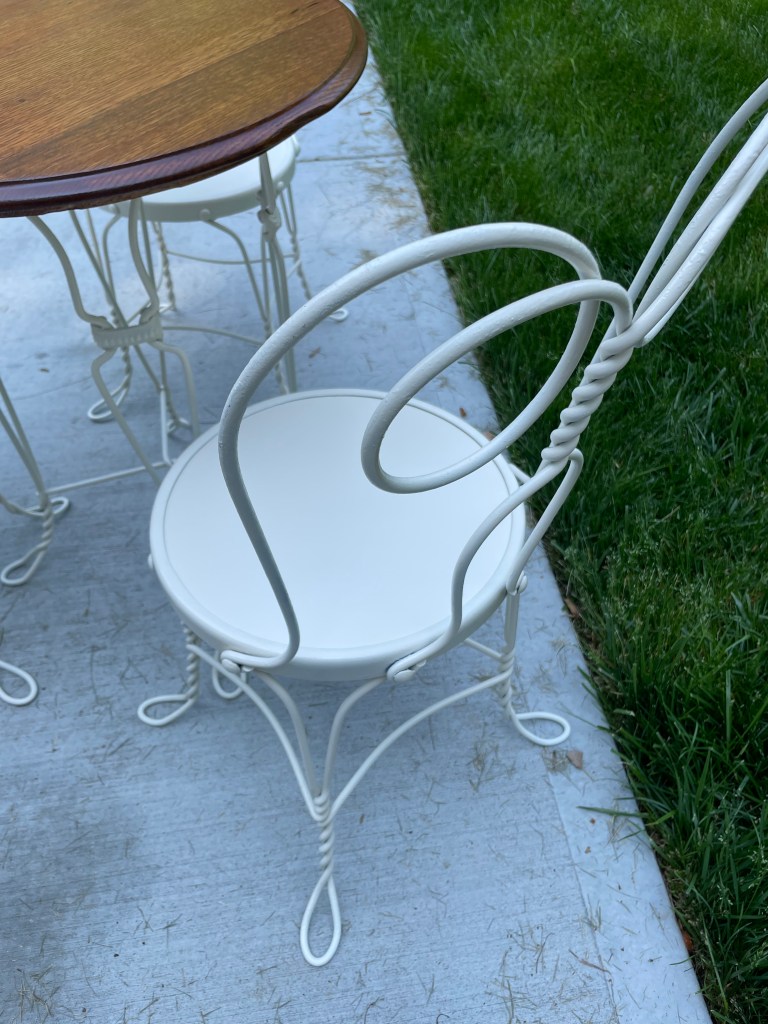
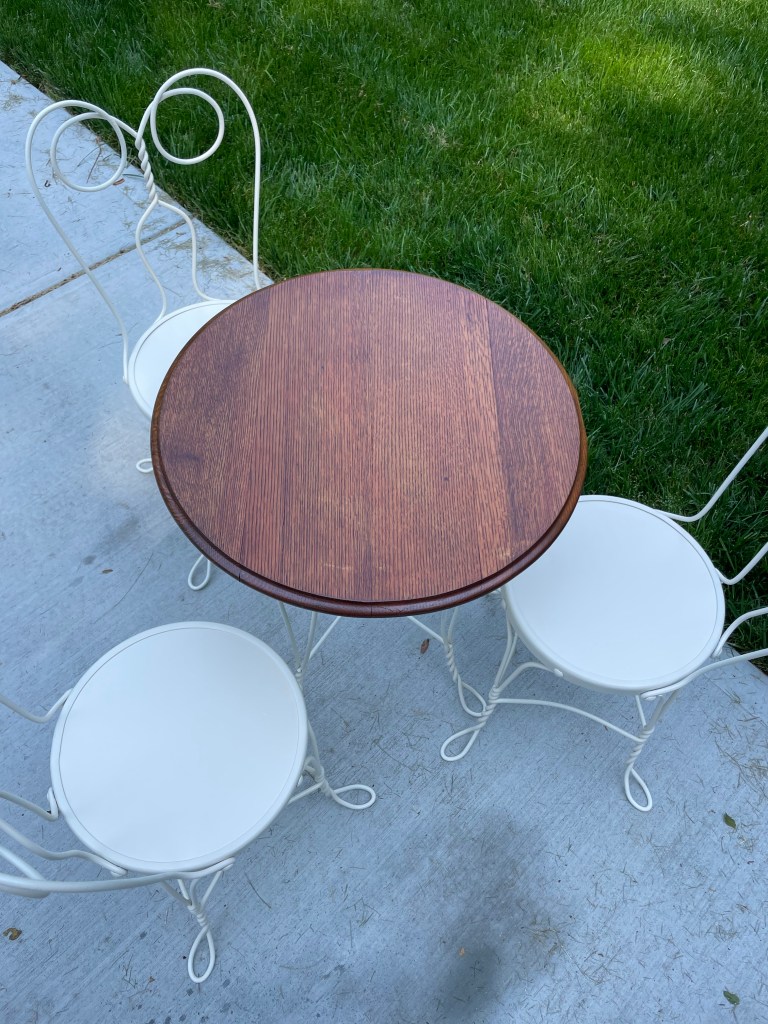
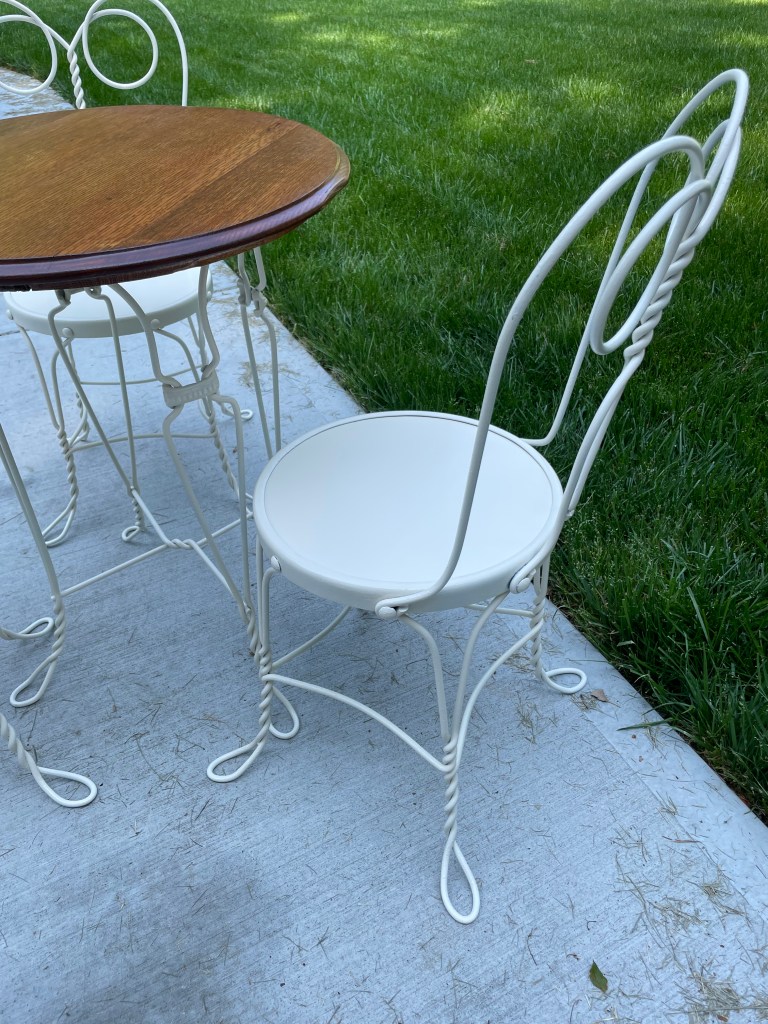
A friend asked if I wanted to transform this table and three chairs she was getting rid of. I didn’t hesitate to accept. Even though they were in a bad way, they have a charm I couldn’t resist. I’ve always loved bistro-type sets; they conjure up visions of outdoor dining in romantic European cities. It was only when I started work on them that I discovered they are 130+ years old and are a true gem.

Materials used: Rust-Oleum American Walnut stain, Varathane Dark Walnut stain, Rust-Oleum Rust Reformer, 1/4″ plywood, 1″ x 6′ red oak board, Rust-Oleum Satin Protective Enamel, Shellac, Varathane oil-based polyurethane.
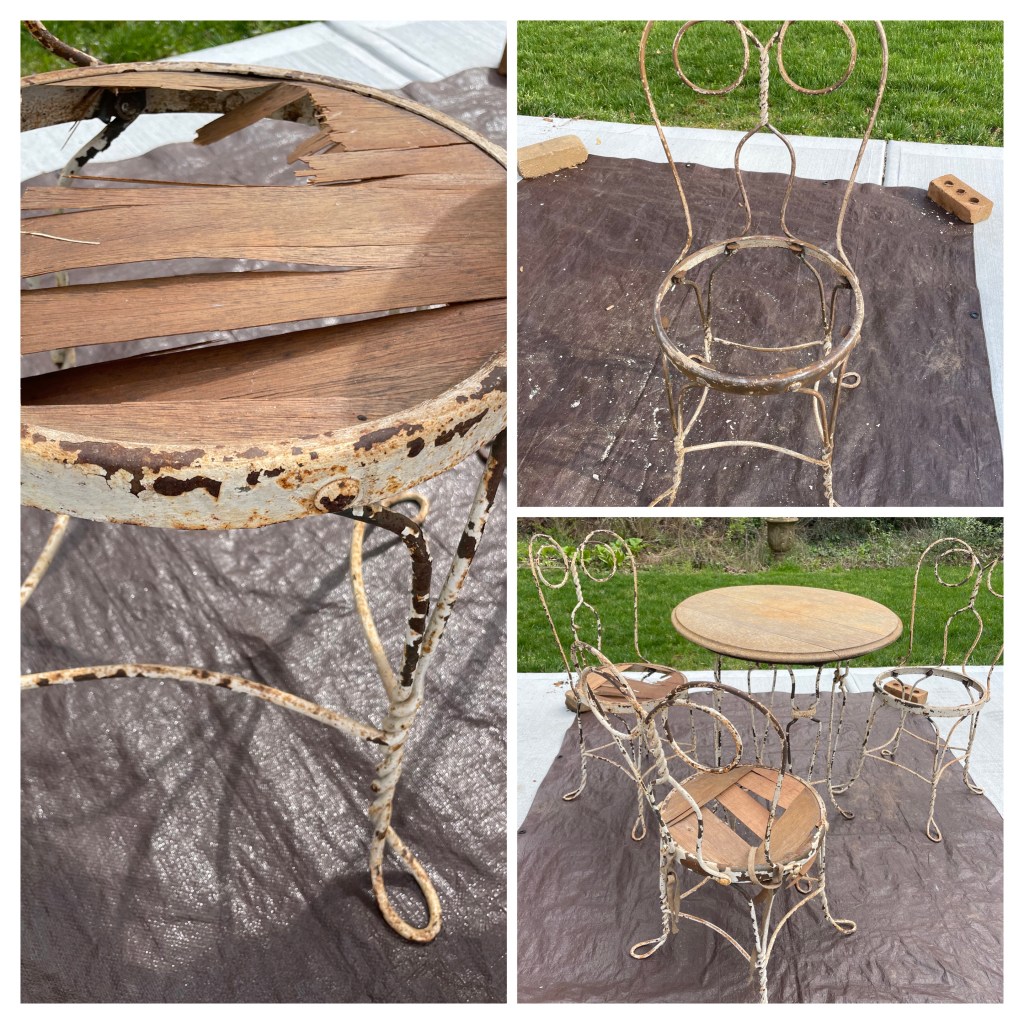
A bit of a mess: The original, laminated plywood seats were either missing completely or damaged beyond repair. The paintwork was flaking and rusted. The table top was only being held together by the leg brackets and a makeshift brace, and the finish had almost completely worn away.

Researching the maker’s mark on the underside of the table revealed that this set was made in the late 19th-century by a company called A H Andrews of Chicago. In their catalog (where I found these images) they state that they made metal furniture for “Drug Stores, Confectioneries, Restaurants, Clubs, Billiard Parlors, Barber Shops, Shoe Stores, Offices and Reception Rooms”. This set is made of Bessemer steel and originally had a Japanese copper finish. The seats were laminated plywood and the table top was mahogany or quarter-sawn oak. When I read that another original finish option was white enamel, I knew I could paint with a clear conscience.
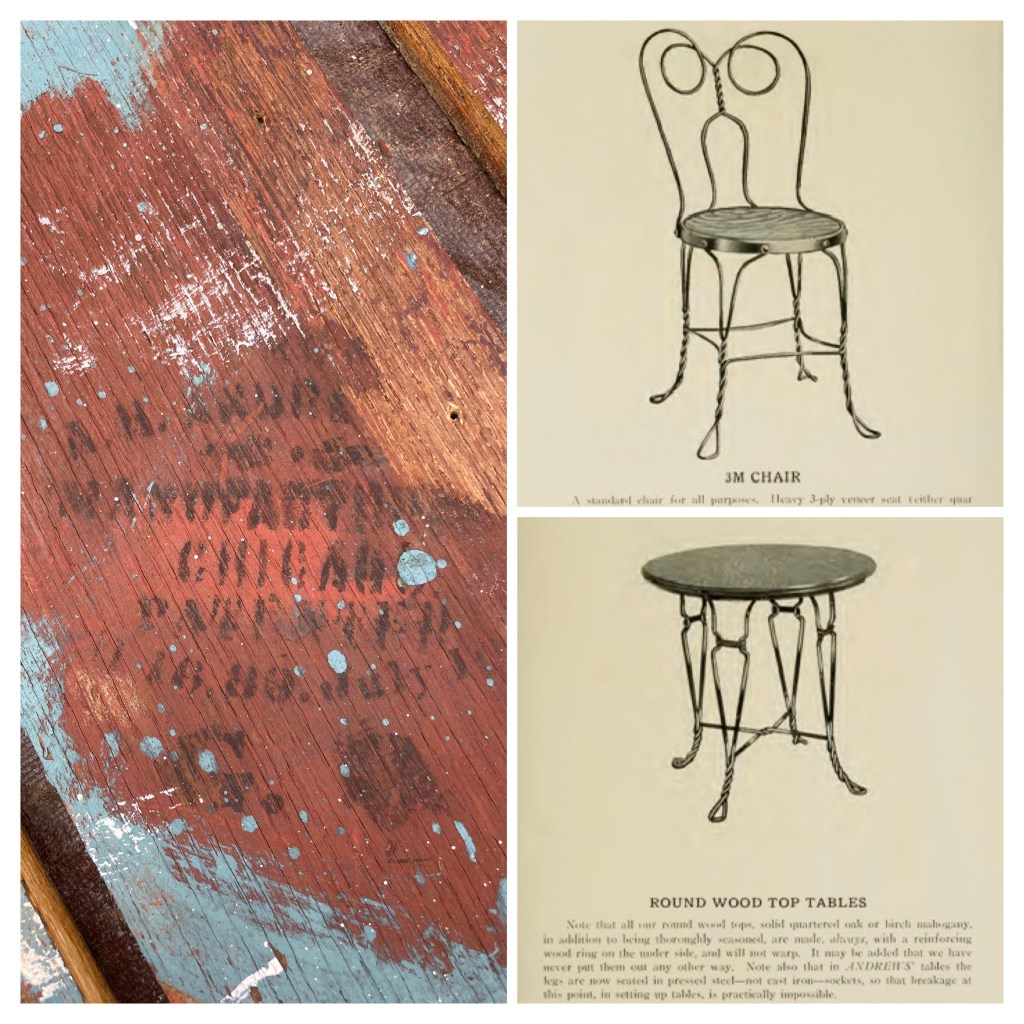
  1. Leg brackets and pine block holding the table top together.
  2. Separated table parts after removing the legs and block.
  3. Replacement reinforcing wood ring parts cut from new red oak.
  4. Glued, clamped and re-assembled table top.

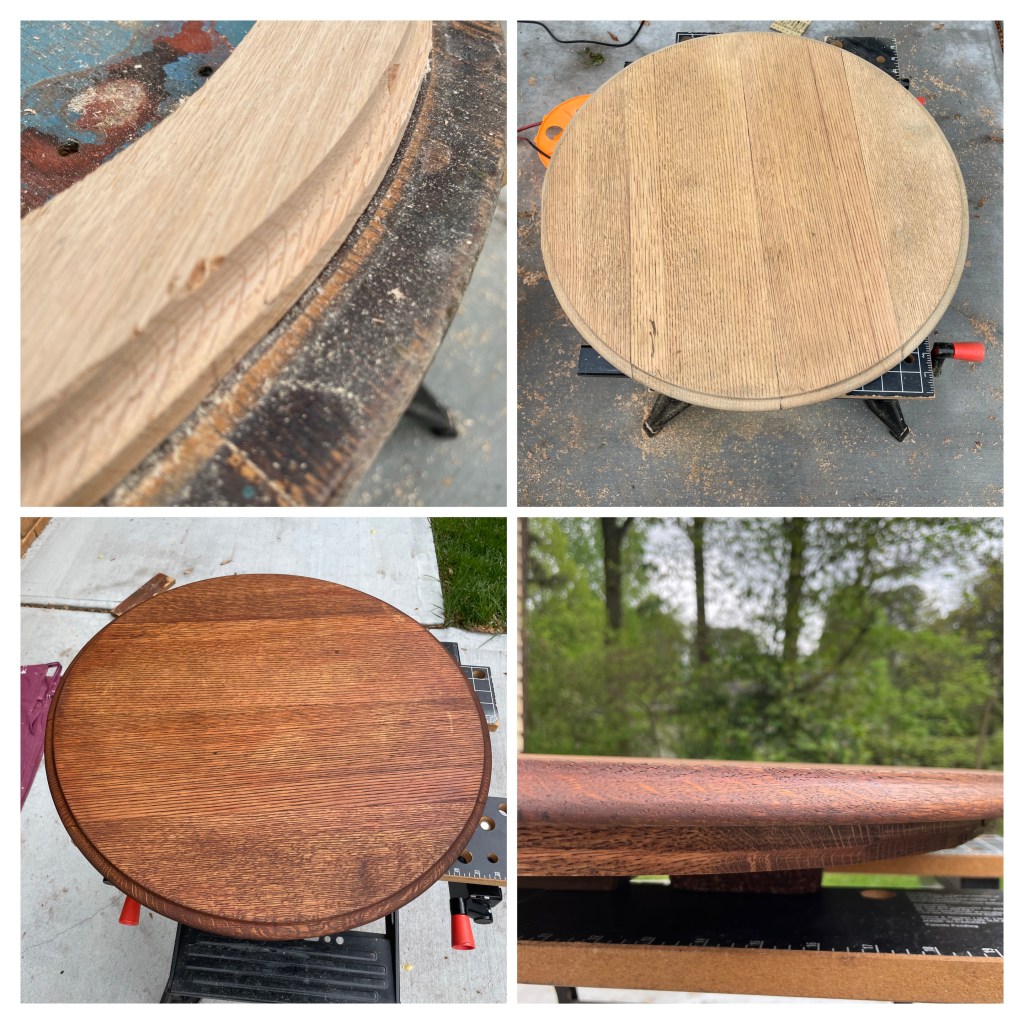
Once the table top had been repaired I routed the edge of the reinforcing wood ring, removed all the old finish and stained both the top and the new wood ring with Rust-Oleum American Walnut stain followed by Varathane Dark Walnut stain.
It was then time to prep the steelwork by first removing any loose paint. What was going to be the most effective way? I looked into sandblasting and chemical dipping but they were expensive. I tried wire brushes, sandpaper, and my Dremel but that was fiddly. Then I remembered our 173cc pressure washer and turbo nozzle which will take the skin off your bones if you’re not careful. It worked wonders.

With a little help from Handy Hubby I took apart the pressure-washed chairs so I could cut, prime and install new plywood seats. Next I used a product I have used before on old metalwork that had signs of rust: Rust-Oleum Rust Reformer “instantly bonds with rust and transforms it to a non-rusting, flat-black paintable surface and prevents future rust.”
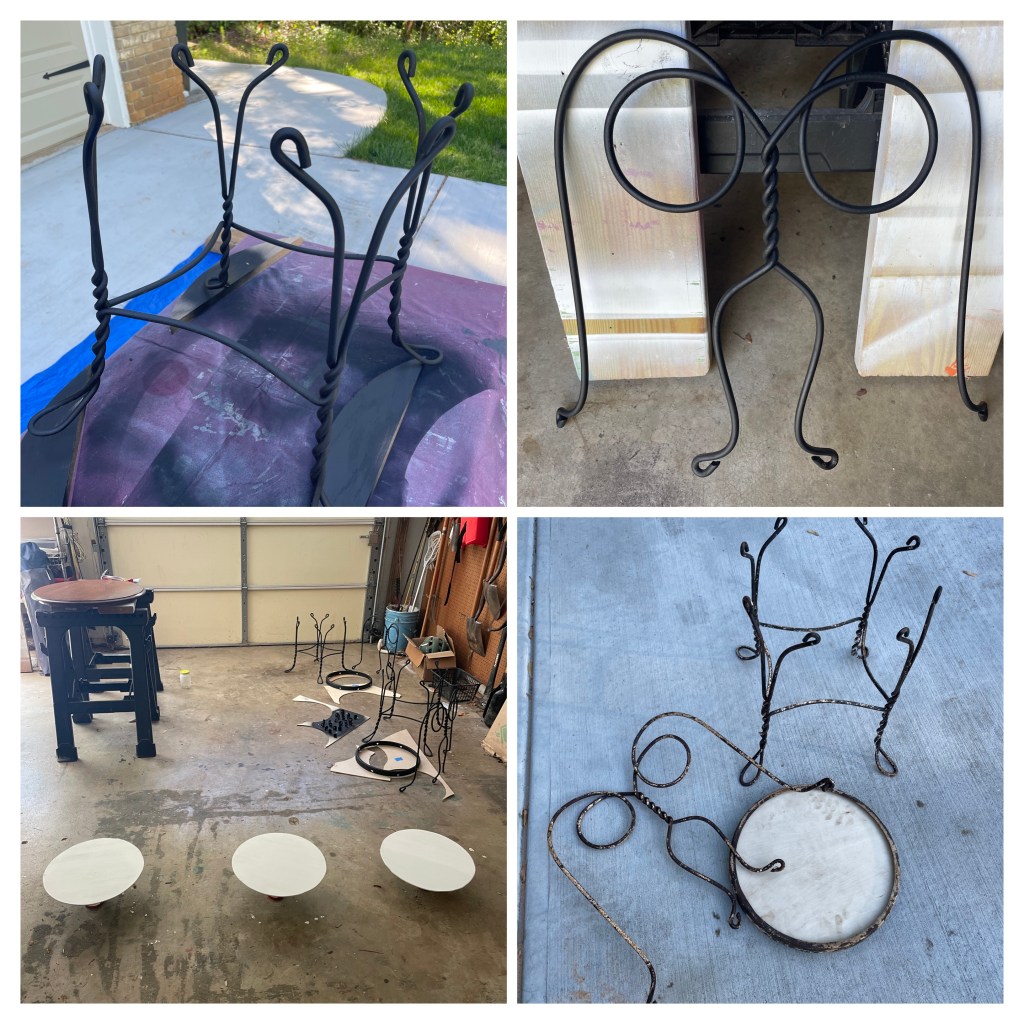
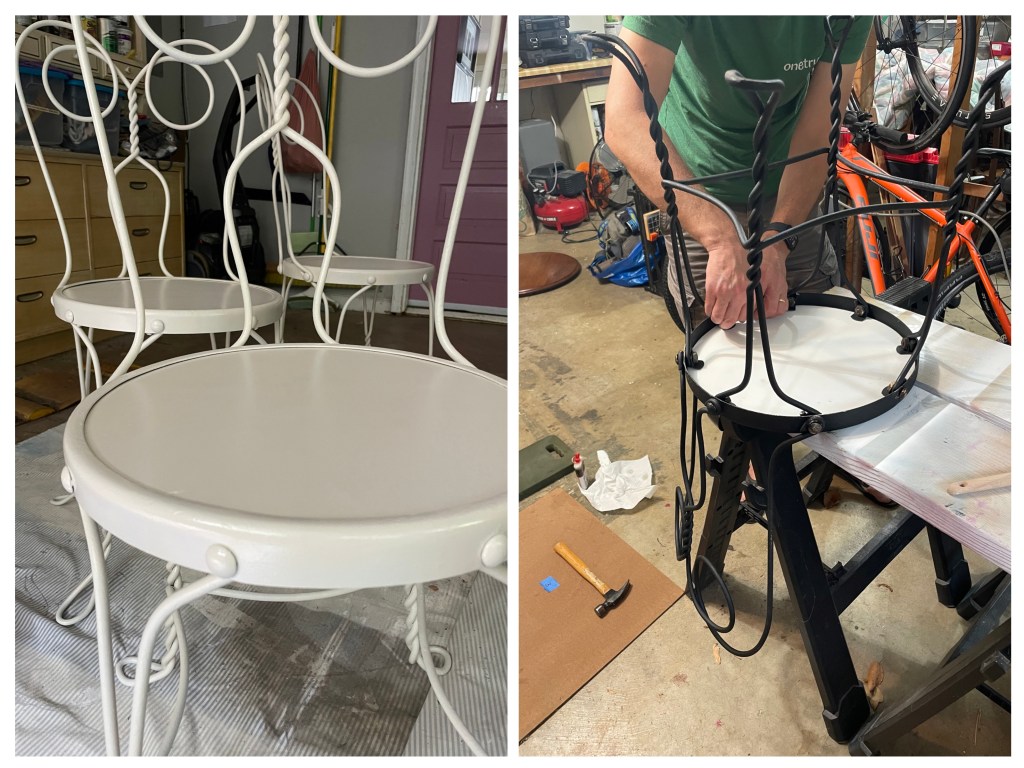
Once the chairs and table were re-assembled I applied 3 coats of Rust-Oleum Protective Enamel in shell white satin finish to all the metalwork.

Finally the stained tabletop was sealed with 2 coats of shellac and then finished with 2 coats of Varathane oil-based polyurethane in satin finish.

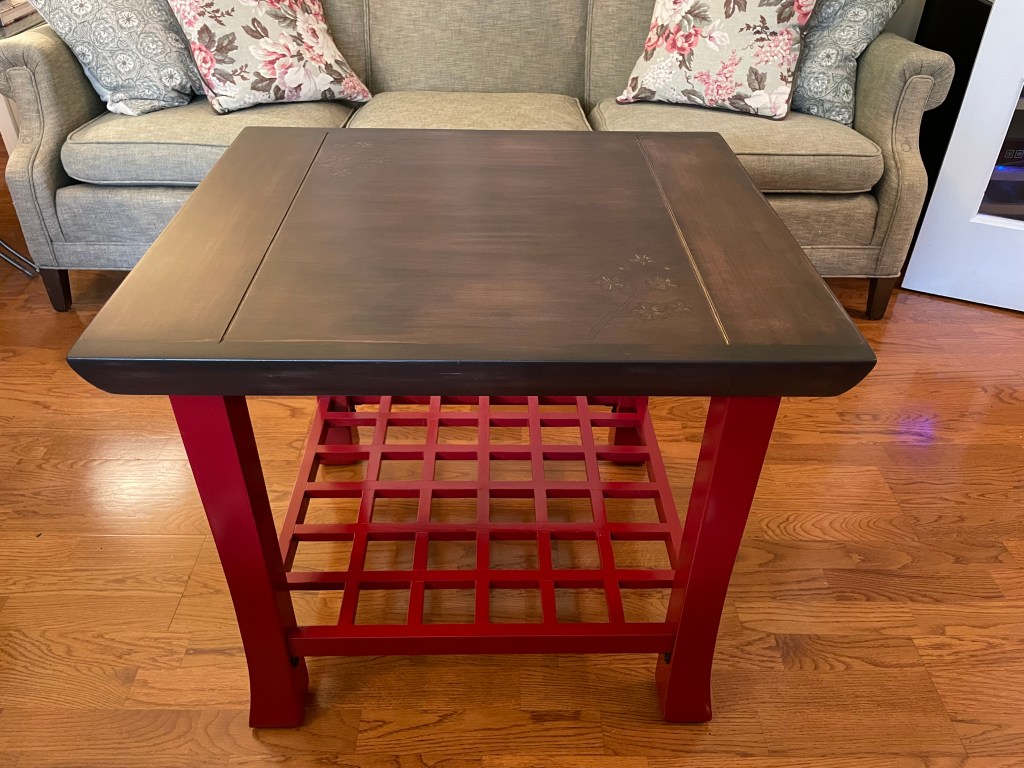
#42 Klaussner end table

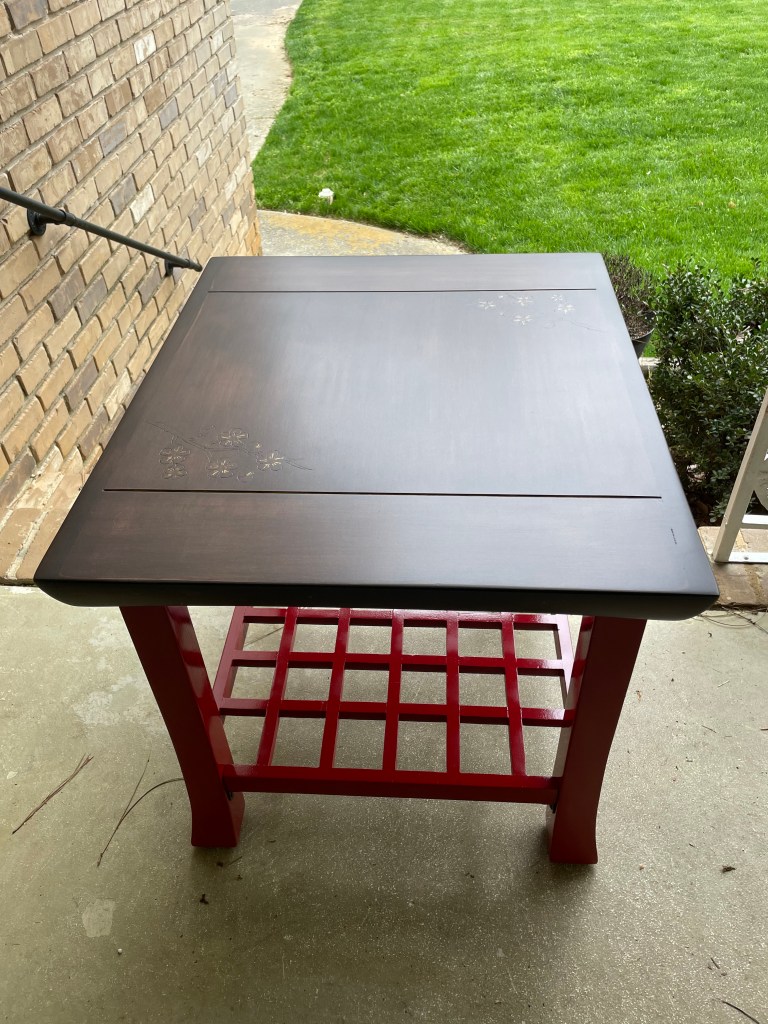
This project nearly made me hang up my paintbrush, and it will not make my top 10 list when I eventually reach my goal! It still fights me by refusing to be photogenic. Trust me when I tell you that the table top looks better in person than it does in any pics.

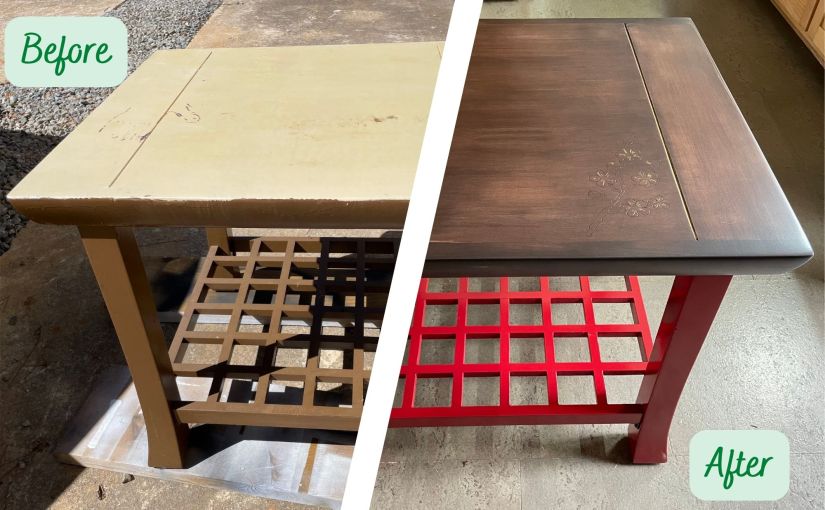
A friend of mine originally bought this end table as part of a living room set in the early 2000s. The matching coffee table had not withstood the rigors of raising four children; this table showed the scars, and had been put to the curb. It is a good quality Klaussner table that needed a complete makeover. The flare of the legs, the grid pattern of the lower shelf, and the upward curved edges of the top were what inspired the Japanese-style makeover.

Materials used: Rust-Oleum 2X Ultracover primer, Rust-Oleum 2X Ultracover gloss Colonial red, Varathane wood stain (Kona), Folk Art Treasure Gold 5535, Varathane oil-based polyurethane in satin.

A previous paint job desperately needed fixing.

After I dismantled the table, I used paint stripper to remove most of the finish on the top.

I then sanded the top down to bare wood and painted it matte black.

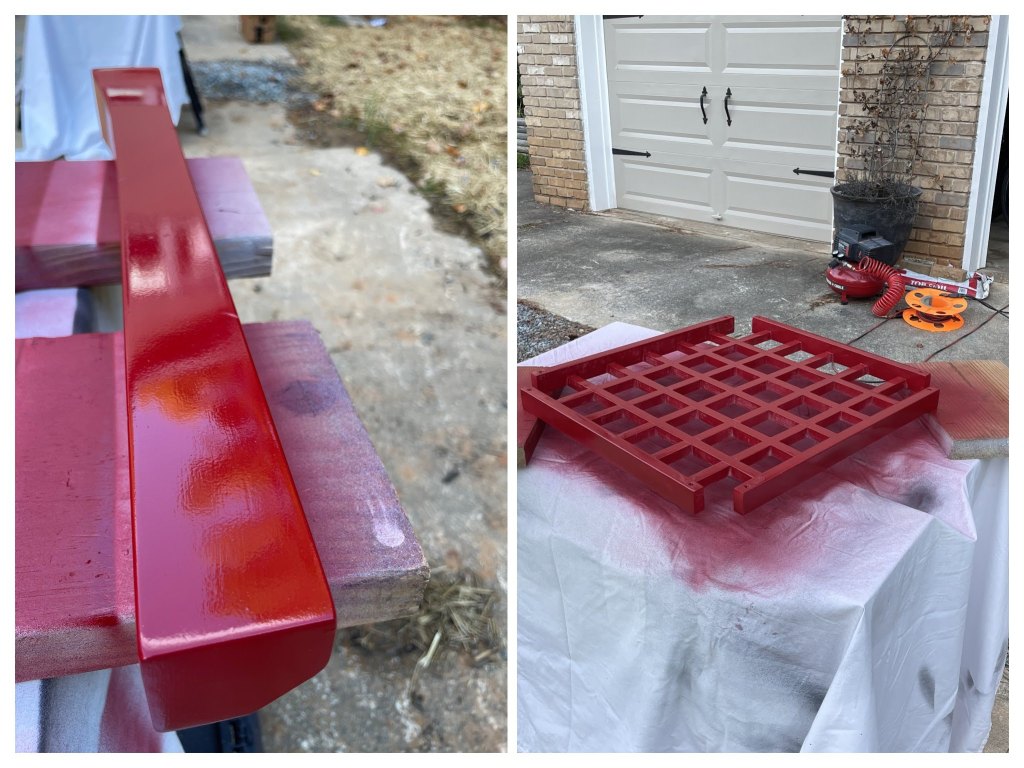
Meanwhile I sanded and primed the legs and lattice shelf (which was no mean feat). My Dremel 3000 with a sanding attachment was invaluable on the lattice work.

My vision really started to take form when I painted the legs and lattice with Rust-Oleum Colonial Red in a gloss finish.

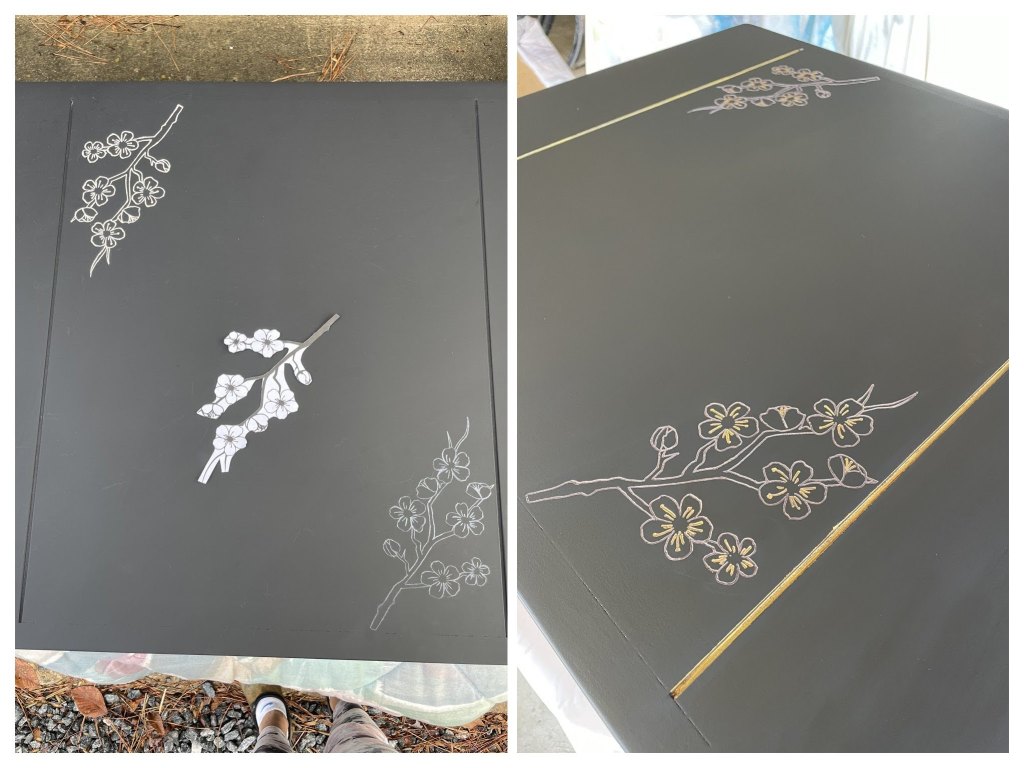
Turning my attention back to the table top, I printed and cut out some cherry blossom clip art. I transferred the image to the matte black surface using a chalk pencil (part tracing the outline and part freehand). Next I used my Dremel Diamond Wheel Point engraving attachment to carve the image into the wood. A coat of Varathane wood stain in Kona darkened the carved wood, and then I picked out some details with Folk Art Treasure Gold 5535.

Everything was going perfectly (top right pic), until I applied the final coats of lacquer and it turned blotchy and cloudy.

The only way to remove the blotchy lacquer was to sand back to the bare wood again. Since I didn’t want to paint over the engraving, this time I decided to stain the surface. After three applications of Varathane wood stain in Kona, the top was a lovely rich brown color.

I liked the soft sheen so much I decided to apply wax instead of polyurethane at this point. However, the final coats of wax also looked blotchy, no matter how much I buffed it. It was back to the drawing board again as I removed the wax finish with mineral spirits and re-sanded the surface.

After removing the wax, I needed to stain the surface again and touch up the gold details. When I was satisfied with how it looked, I went with finish #3: Varathane oil-based polyurethane in a satin finish. Finally I had success.

#41 The Nuria cabinet

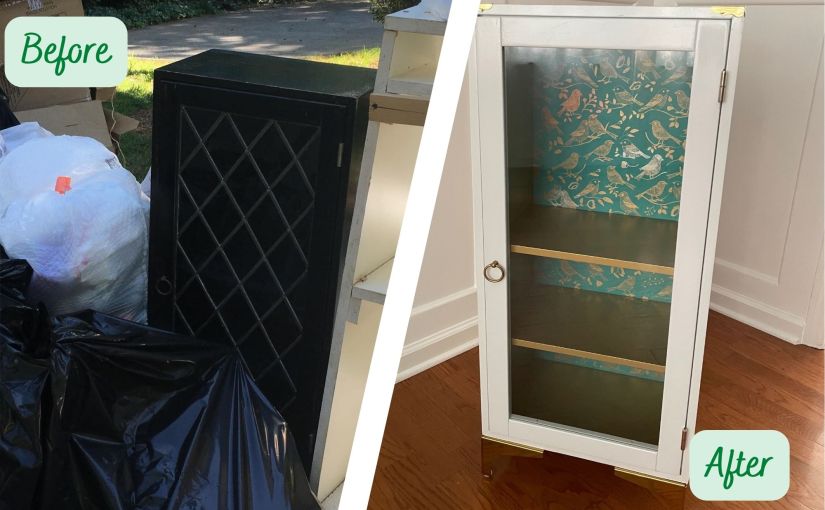
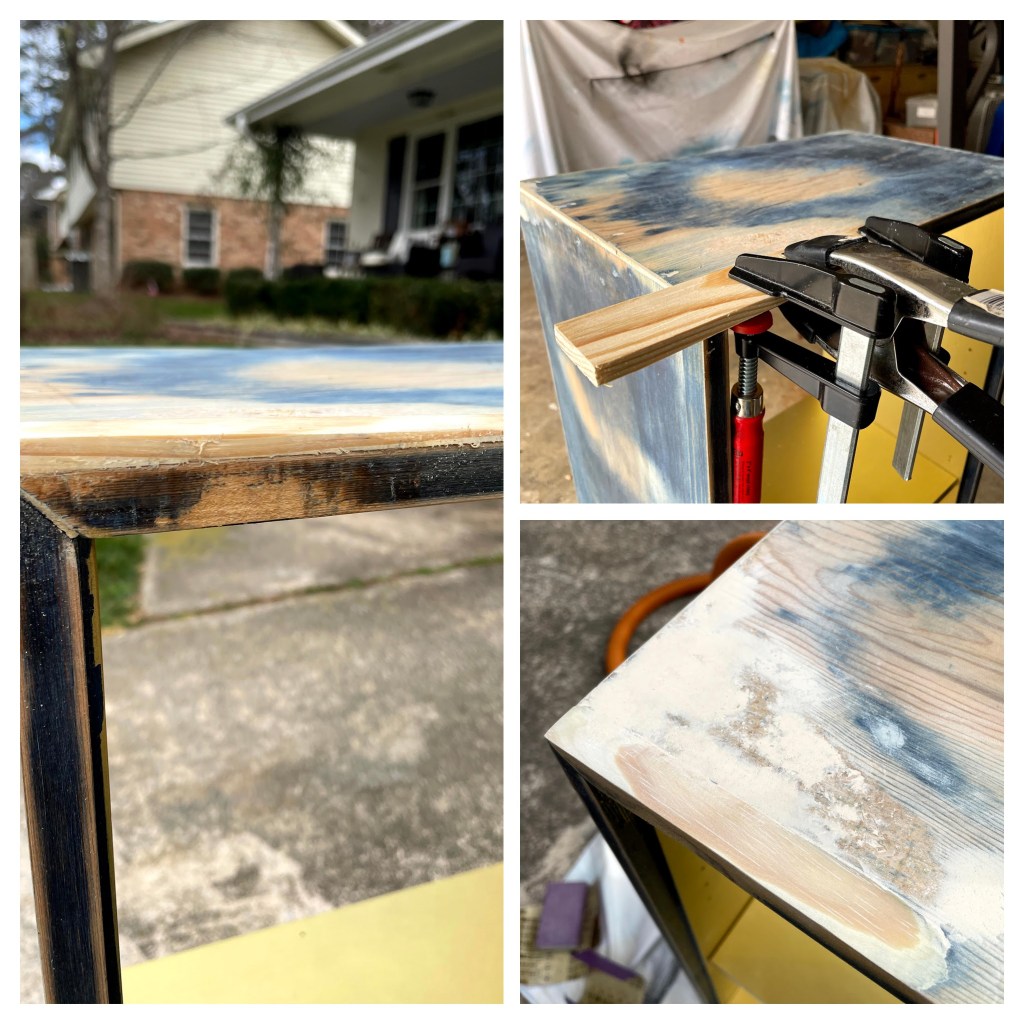
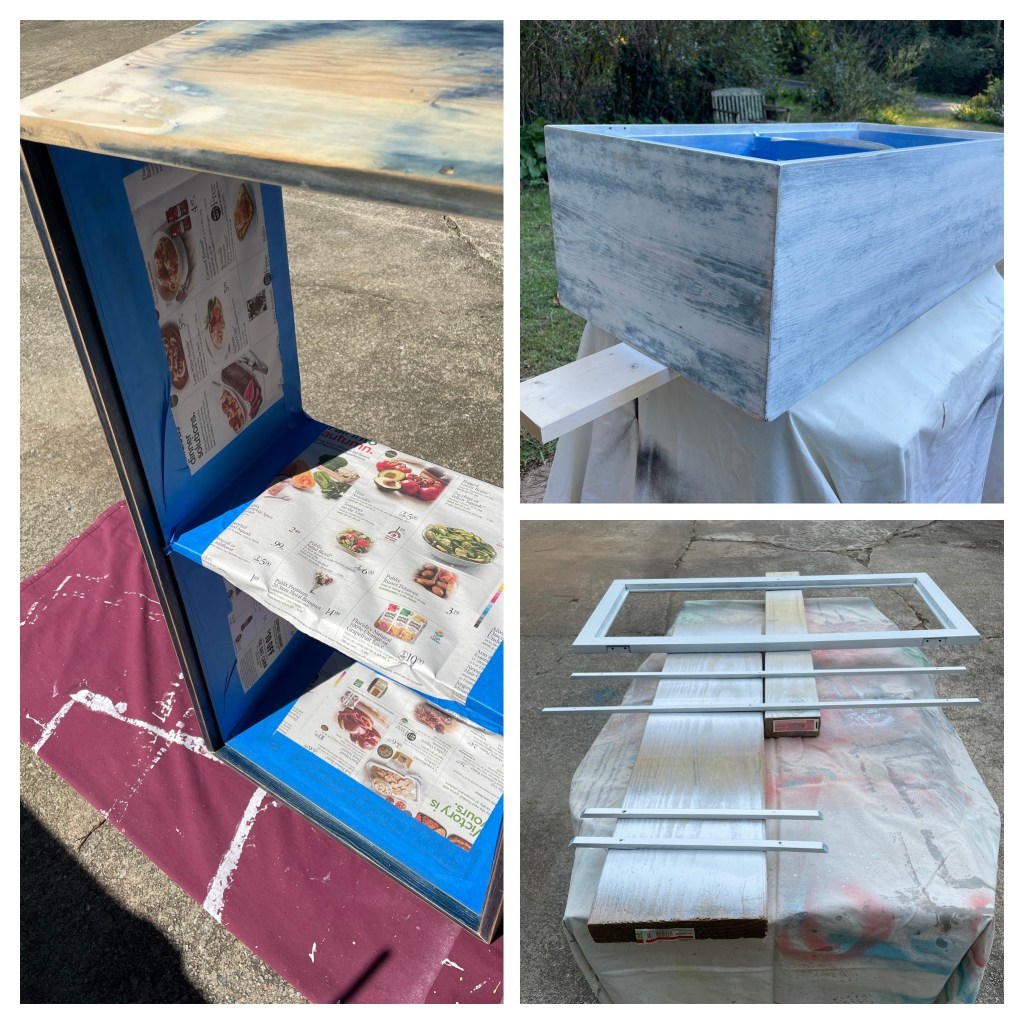
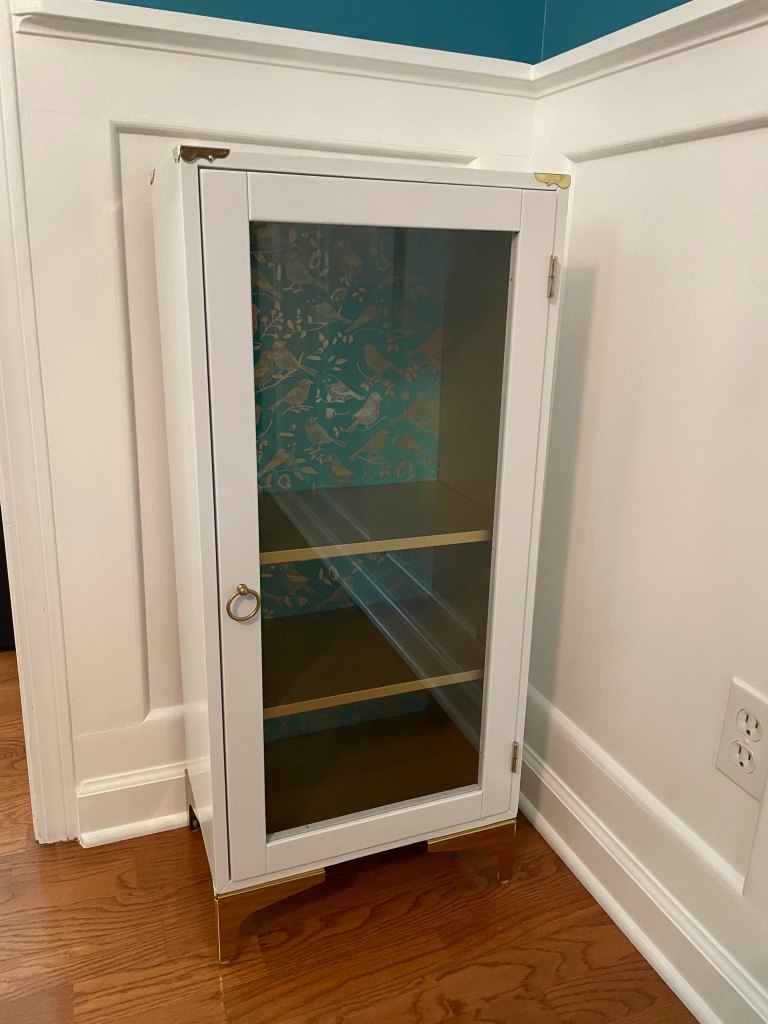
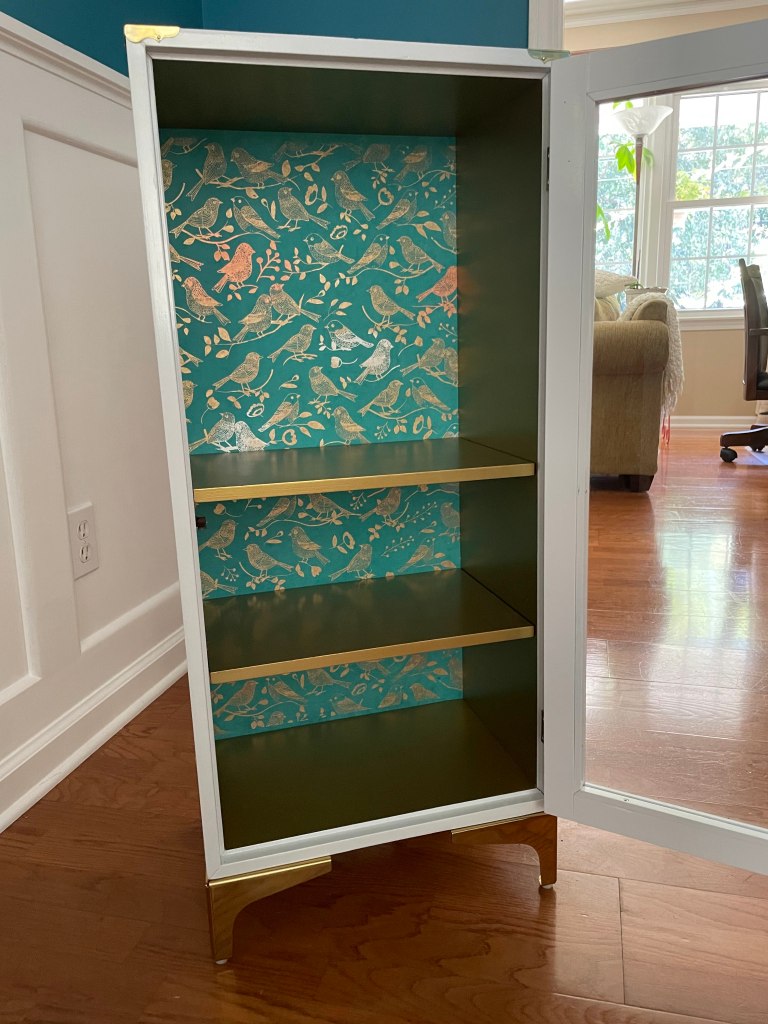
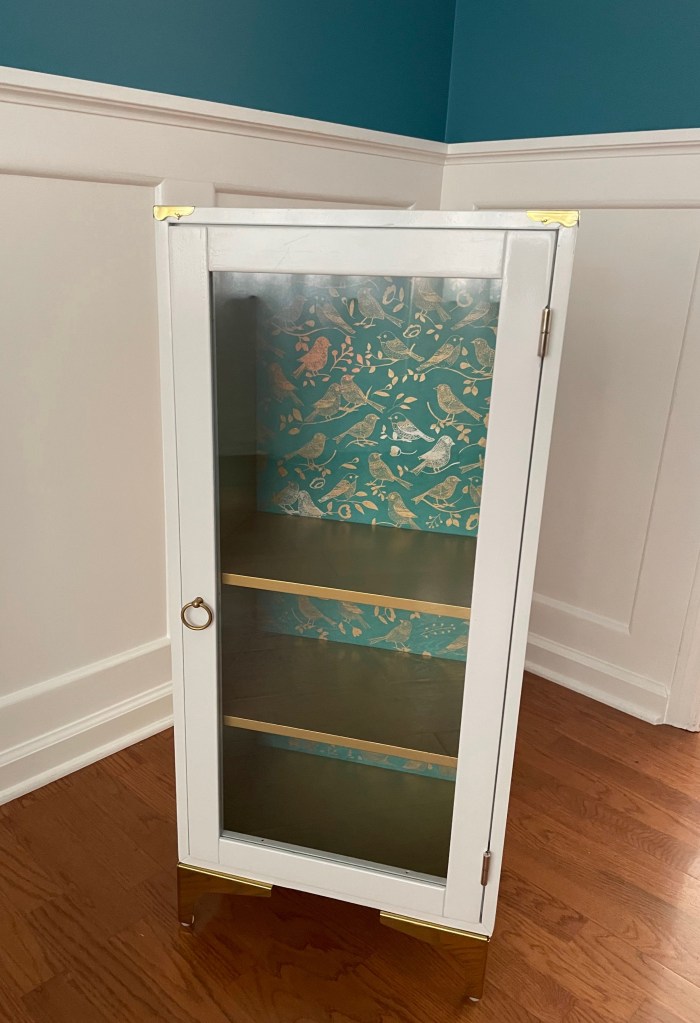
This was my second collaborative transformation, and the longest of any. I trash-picked this piece in May 2019, Nuria came on board the following year, and we started work in September 2020. It was finished on October 1, 2022! My coworker, Nuria, is a friend whose style has been honed by years of working for one of the most refined hotel chains in the world. Our combined skills were put to the test on this piece that needed a lot of TLC. The result is charming: a one-of-a-kind piece, loaded with designer touches.

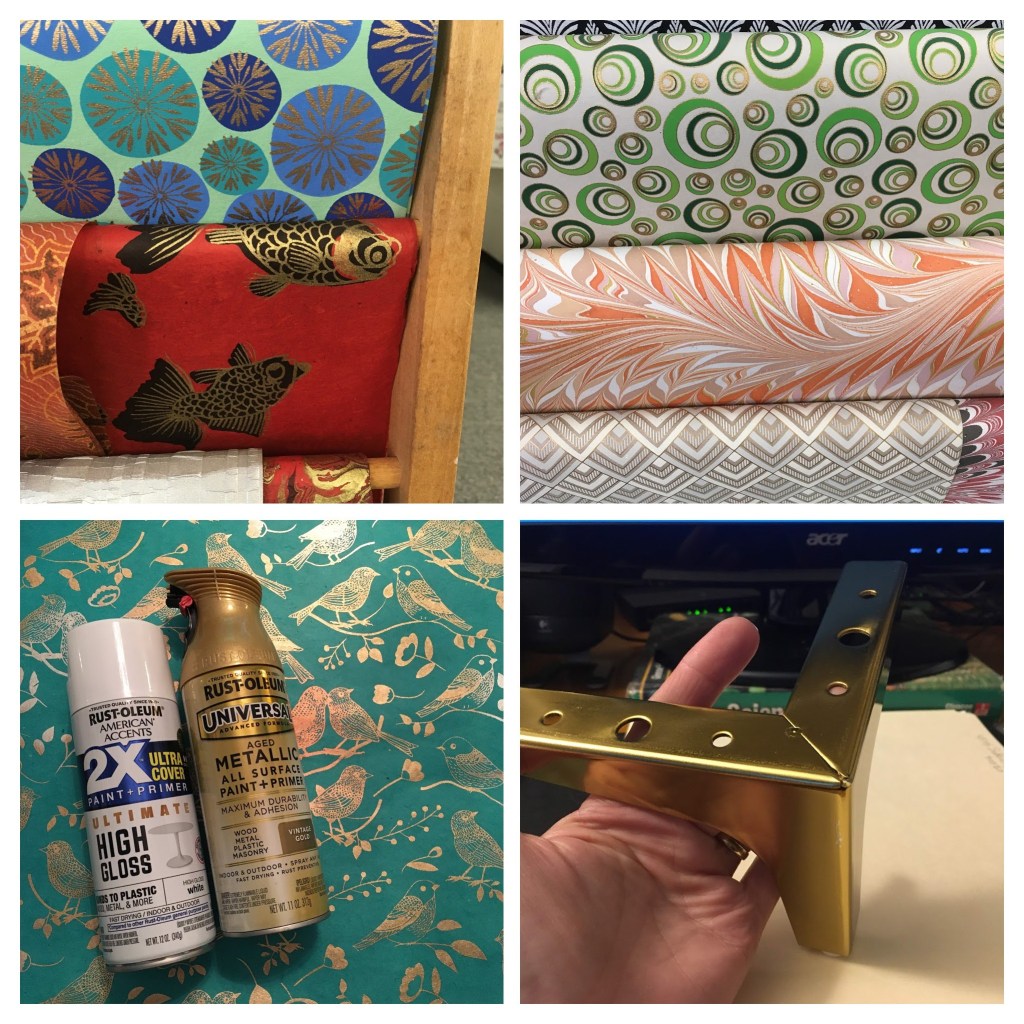
Materials used: Rust-Oleum 2X spray primer, Rust-Oleum 2X hight gloss white spray paint, Rust-Oleum Universal Aged Metallic Vintage Gold spray paint, decorative paper, gold finish furniture legs, glass, hardboard, bright brass decorative corners.

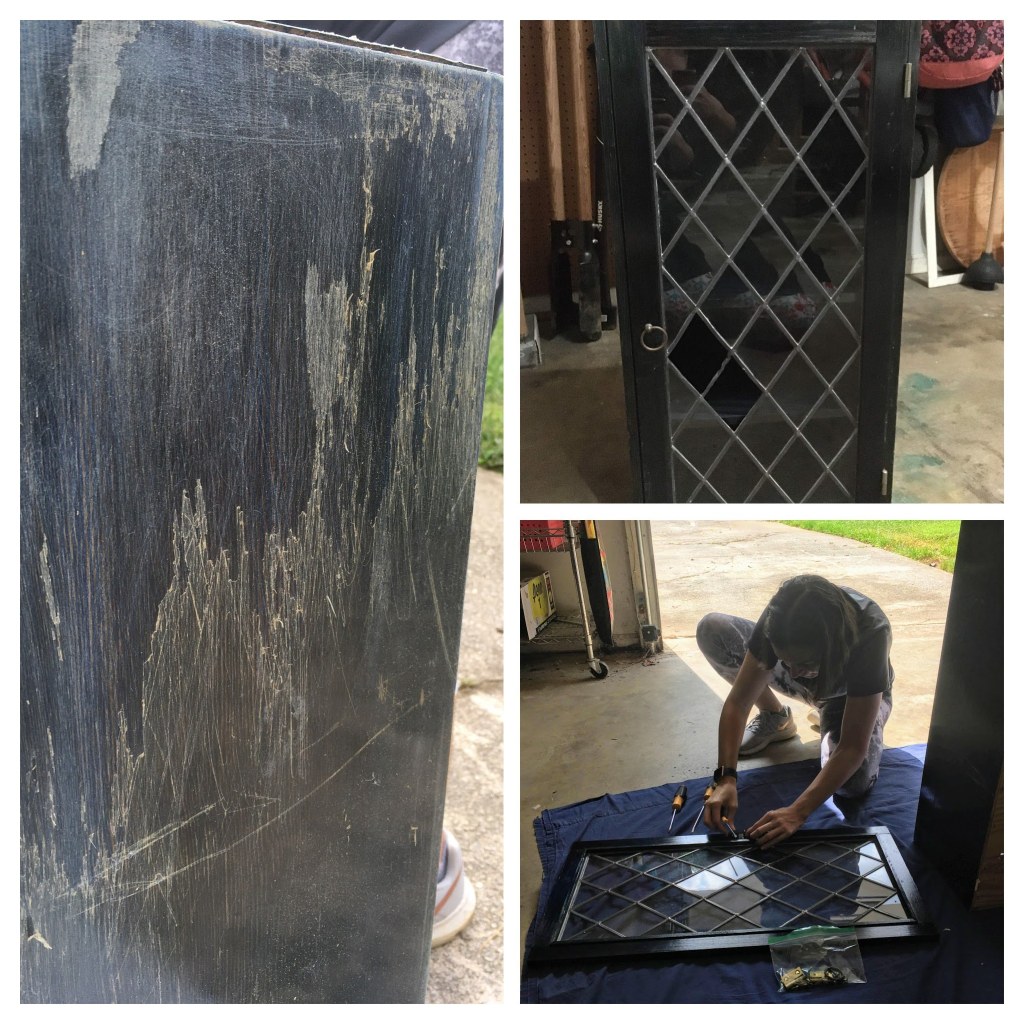
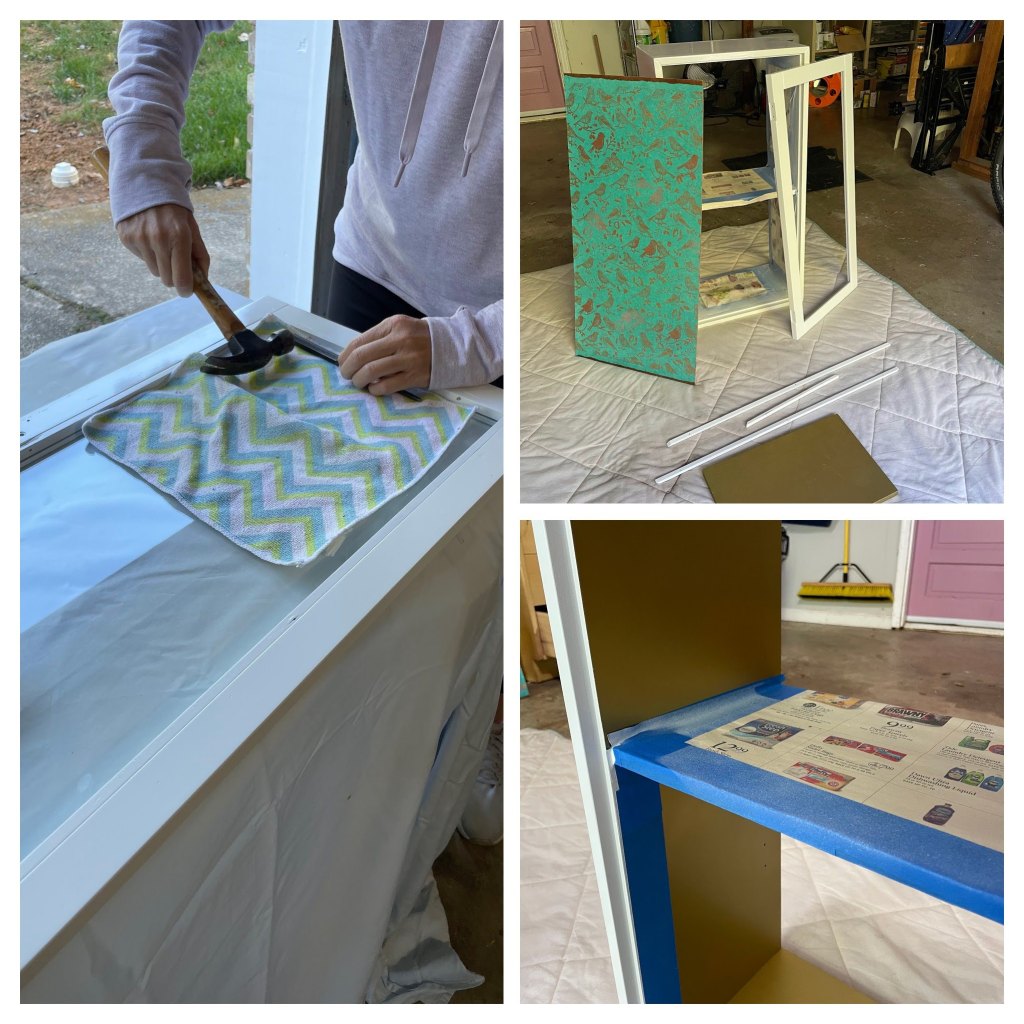
What first attracted me to this small cupboard was the leaded lattice glass. Sadly, a pane was missing and the leading was damaged so we ended up discarding it. We knew we also needed to replace the back panel and remove the peeling top coat. We got to work dismantling and sanding.

My two favorite parts of every transformation are the bookends—the initial design process, and the final coming-together of the vision. We started the design process with a trip to a scrap-booking store, where we found a beautiful turquoise paper printed with metallic birds. Replacement glass, some hardboard, gold finish furniture legs, and two different spray paints completed our supplies list.

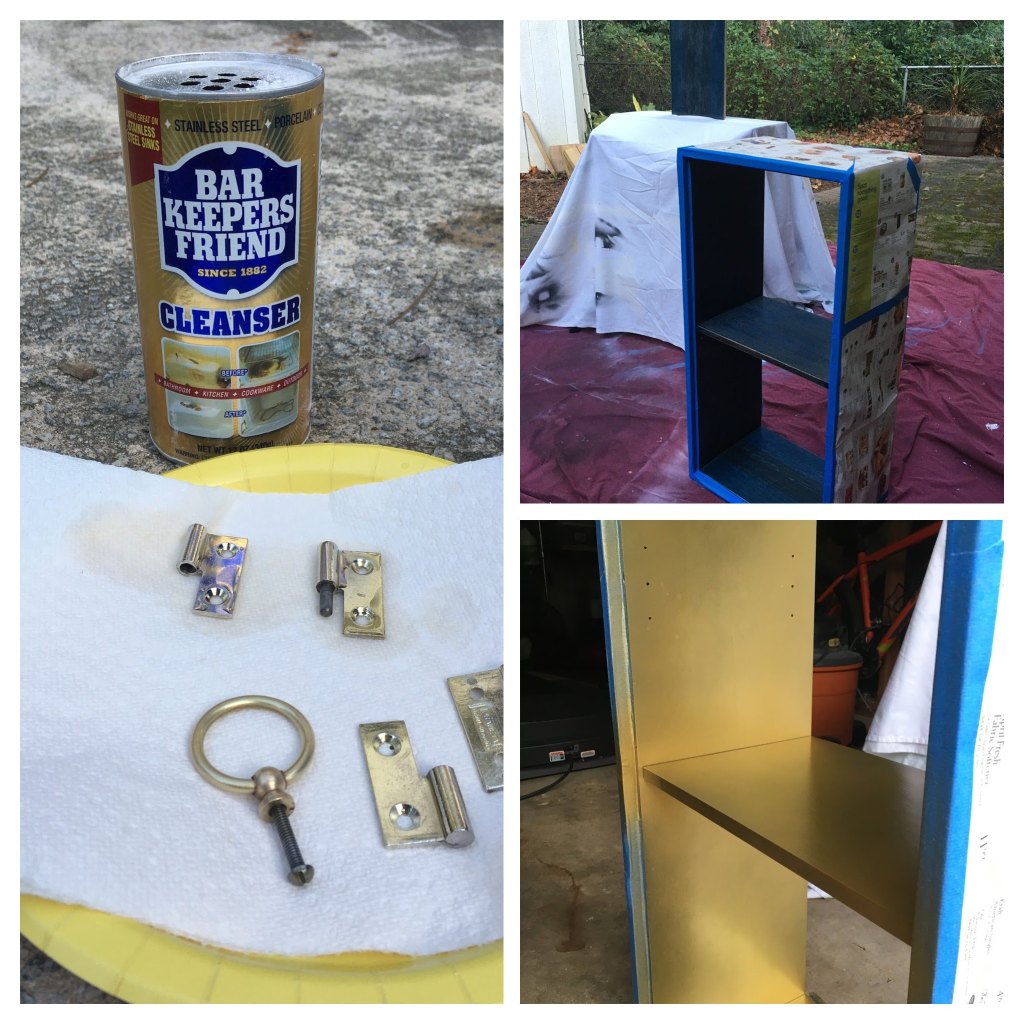
Painting started on the interior with 2 cans of Rust-Oleum metallic paint in Vintage Gold. The original hardware was cleaned with Bar Keepers Friend.

Next, we needed to level out the uneven base. Simply sanding it meant going through the veneer to chipboard so instead we glued a shim to the corner then trimmed and sanded it.

With the gold-painted interior carefully masked, it was time to start painting the outside and the door with Rust-Oleum 2X white gloss paint.

As has happened on two previous projects, certain areas of the paintwork “wrinkled”. I still don’t understand why this sometimes happens but I can say it is a pain when it does. The only solution was to go back and sand the problem areas, apply primer, and then paint again.

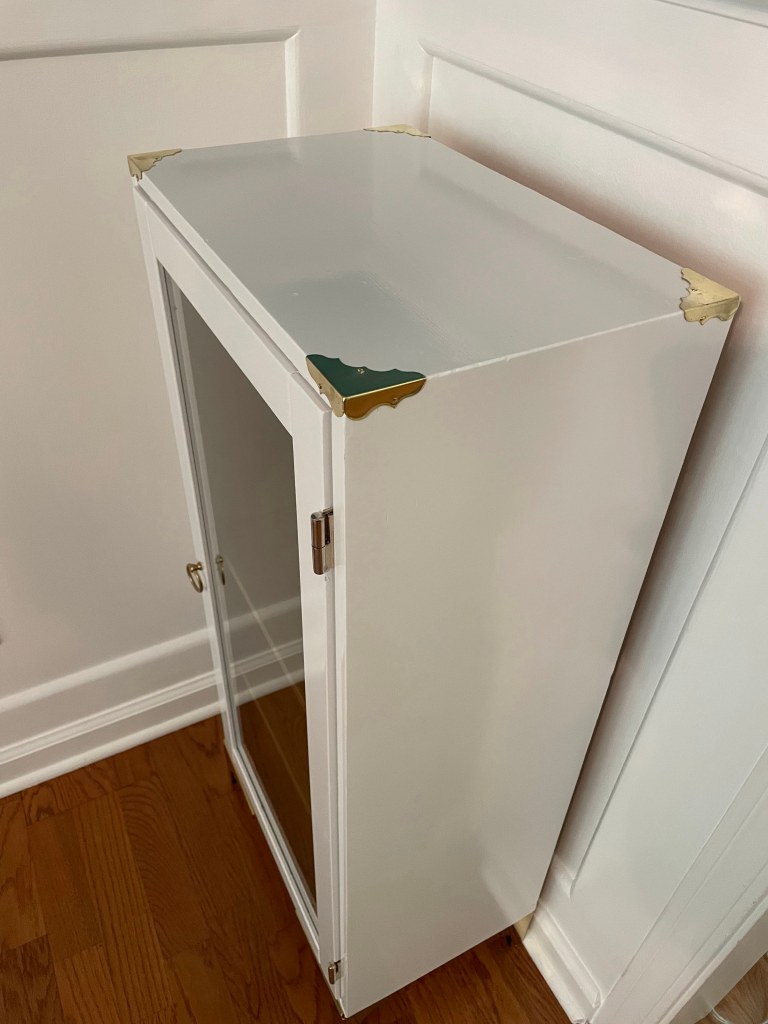
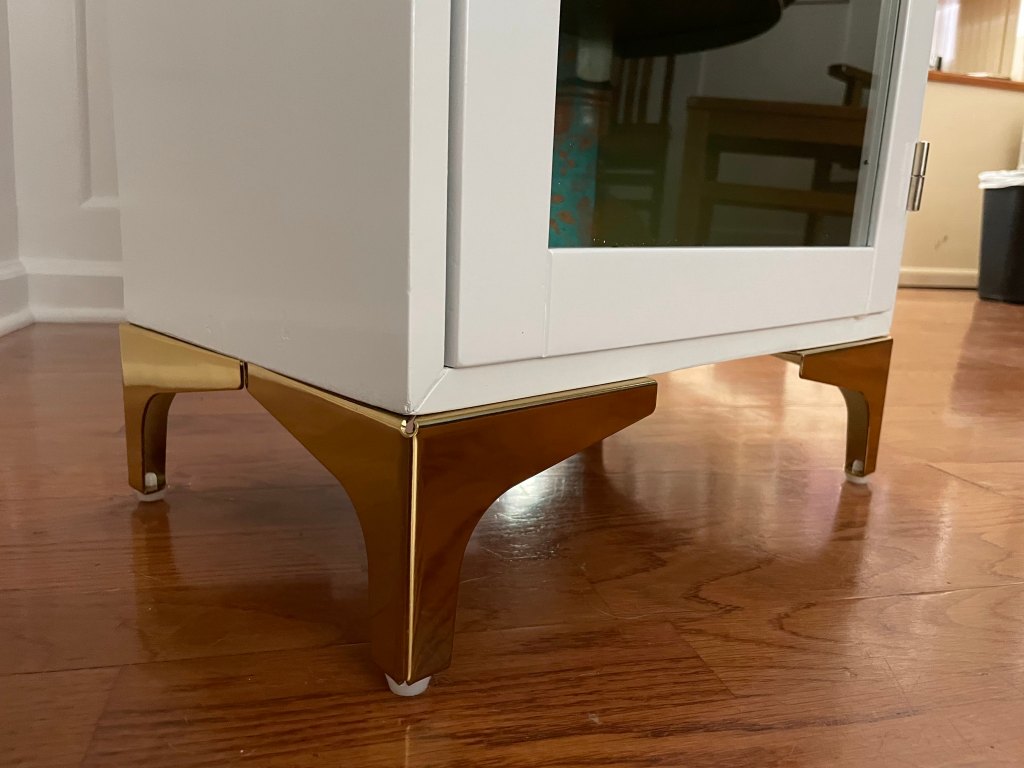
Many weeks later…when all the paint flaws had been ironed out, all that remained was to put the pieces together. We installed a new pane of glass in the door, attached the new, papered hardboard back panel, re-installed the original hardware, added bright brass decorative corners to the top, and attached the new feet.

#40 Windsor chair

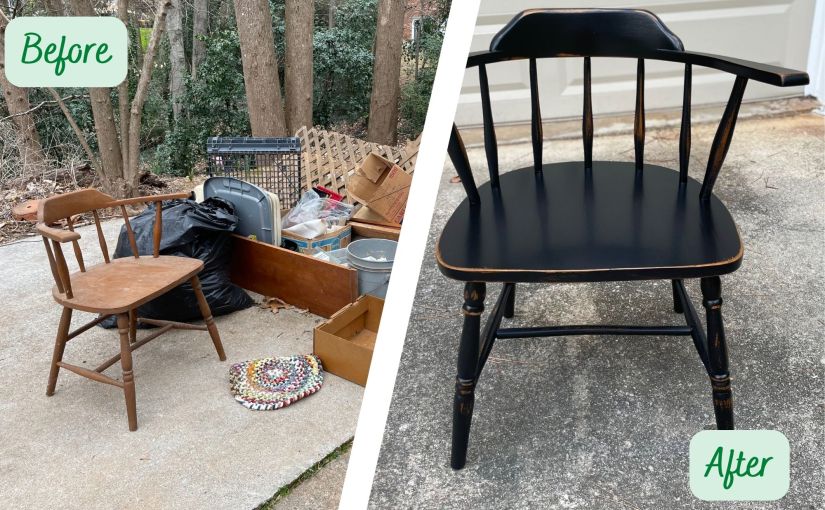
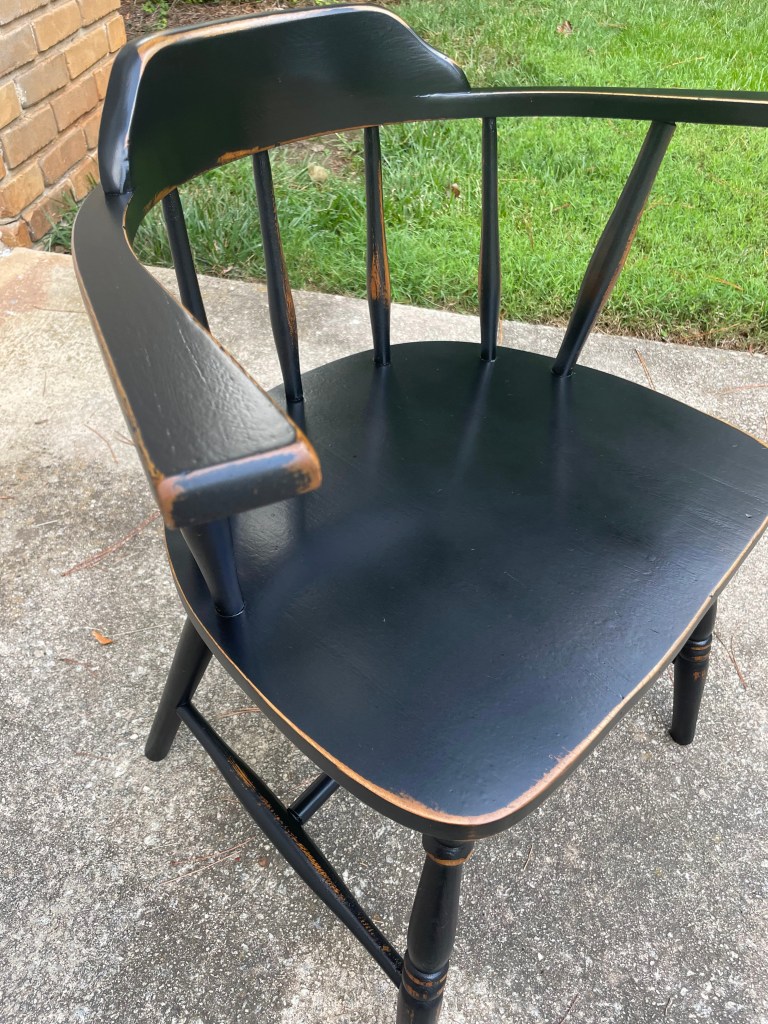
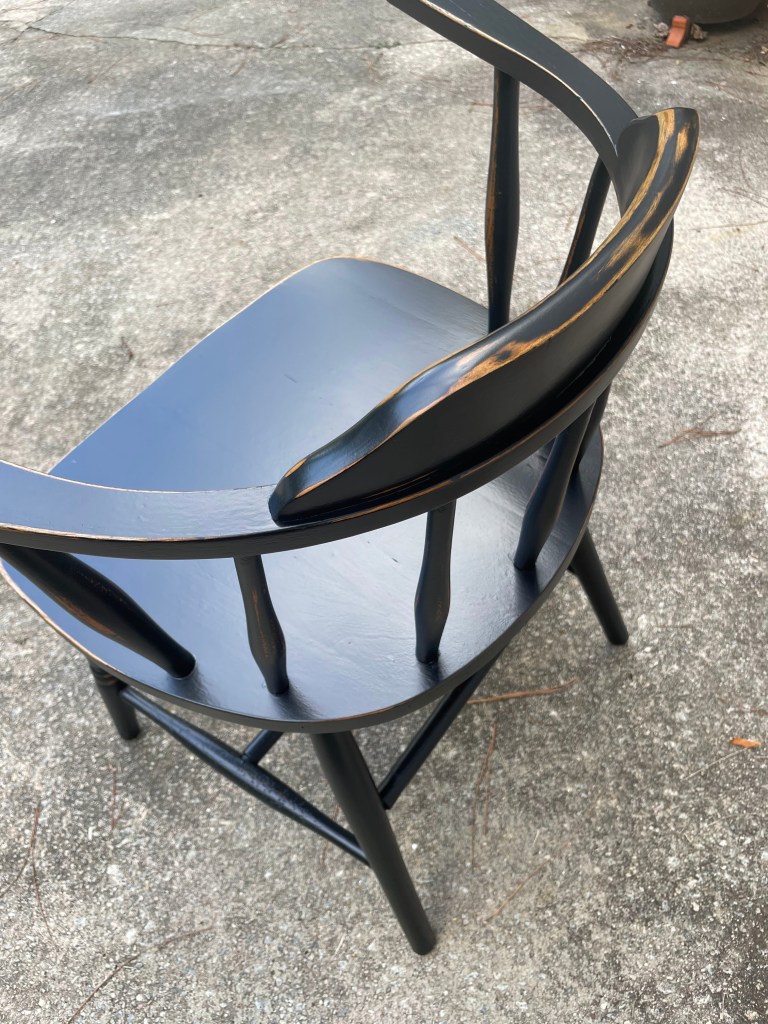
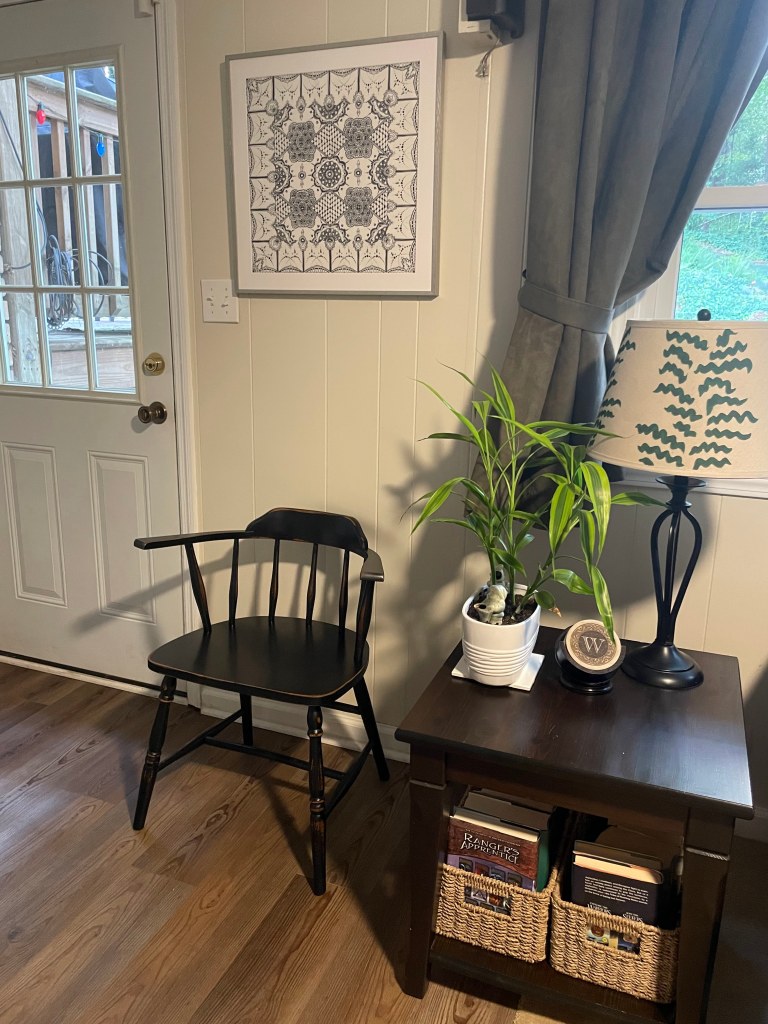
If a chair could look like a hug then I think it would be this chair. As usual I hesitated when I first saw it because I already had a garage full of projects. I just couldn’t resist its charm.

Materials used: Rust-Oleum 2X spray paint (black, flat), Varathane oil-based polyurethane (satin).

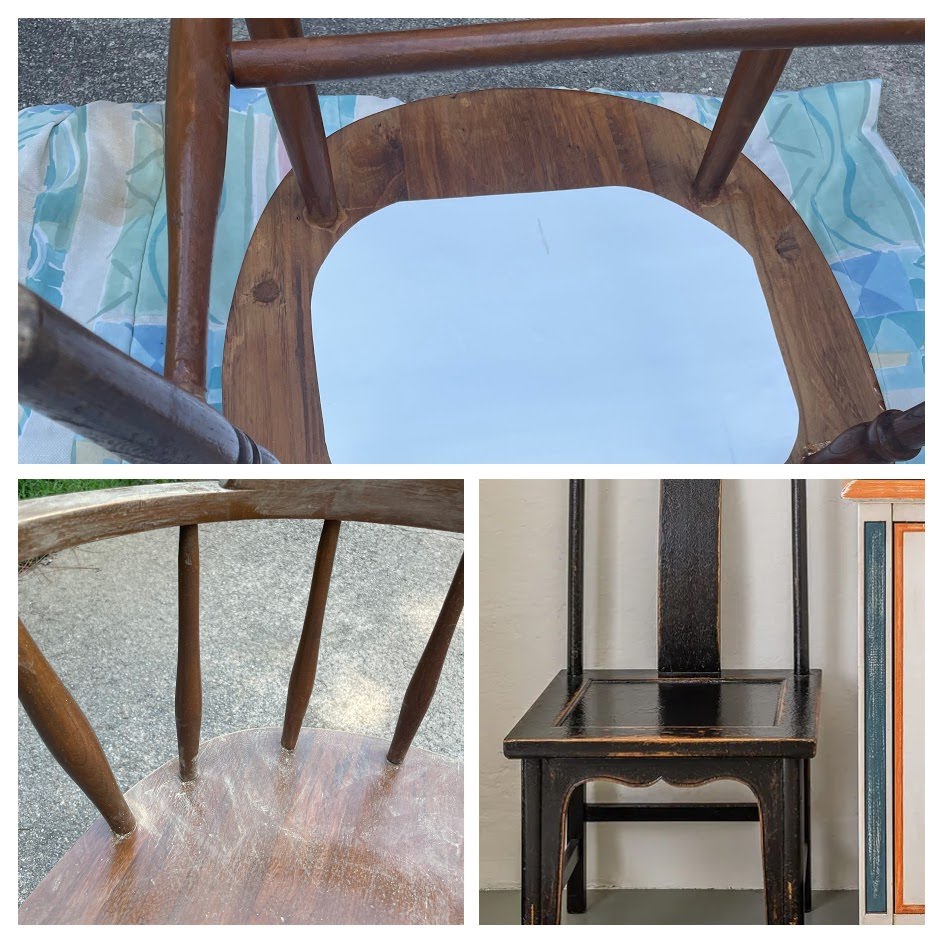
In my research I learned a lot about Windsor chairs, but I never found out the provenance of this particular one. I only know it is a low-back Windsor chair with a shield seat and front legs that are turned and tapered. At the same time as learning that Windsor chairs were often painted dark green, brown, or black (to disguise mixed use of woods) I saw a chair in House & Garden that became my inspiration piece (bottom right). After cleaning, I sanded the chair a little to smooth out a few lumps and bumps. I didn’t want to paint over the markings so I covered them with a piece of contact paper.

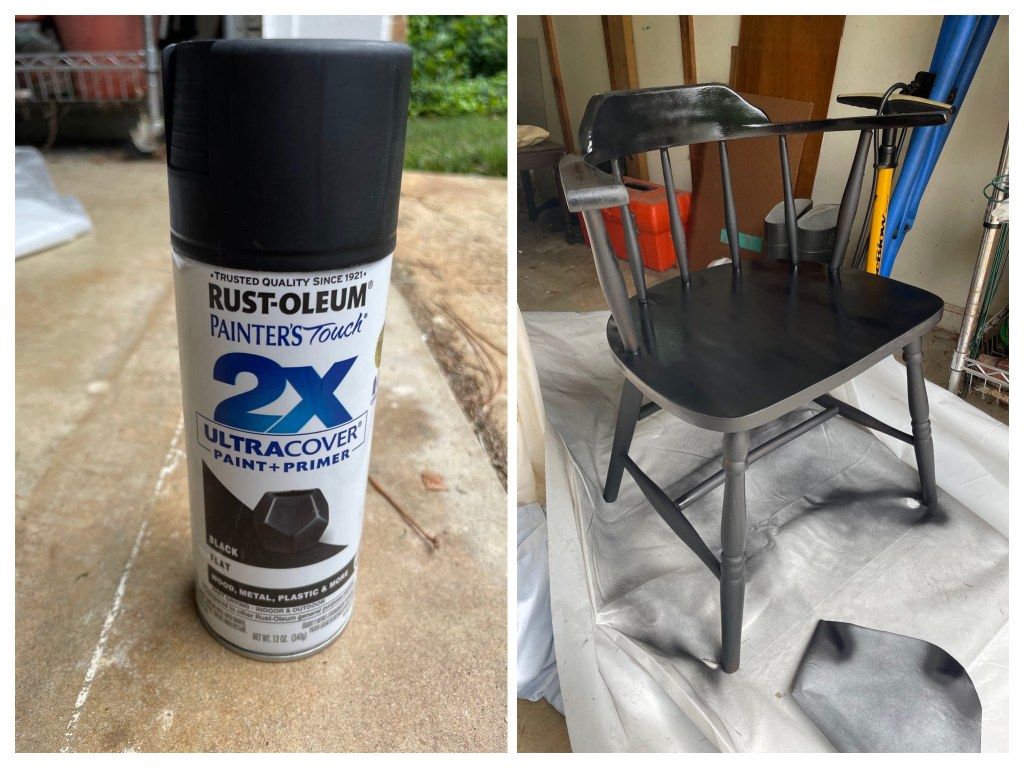
One can of Rust-Oleum 2X Ultra Cover in flat black formed the base coat.

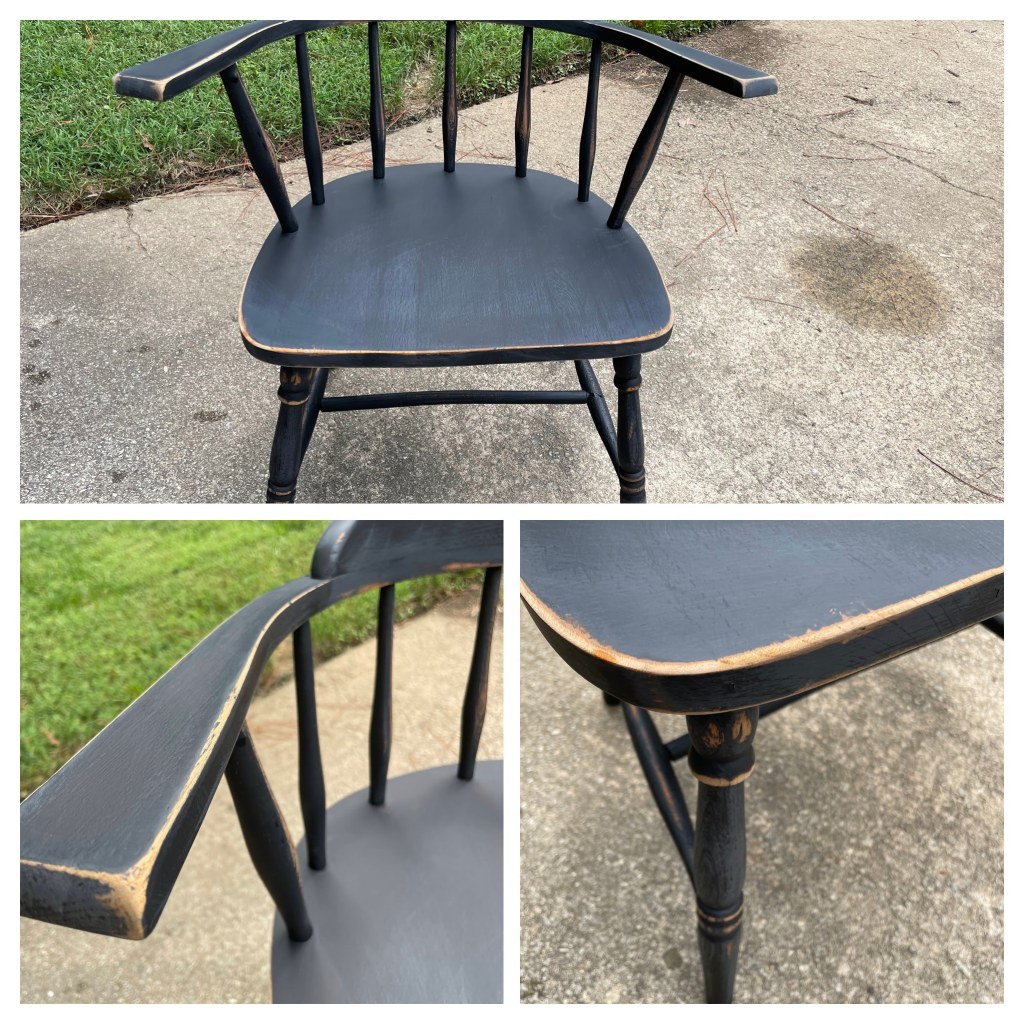
When the base coat was dry I used 220 then 400 grit sandpaper to give it the distressed look I wanted.

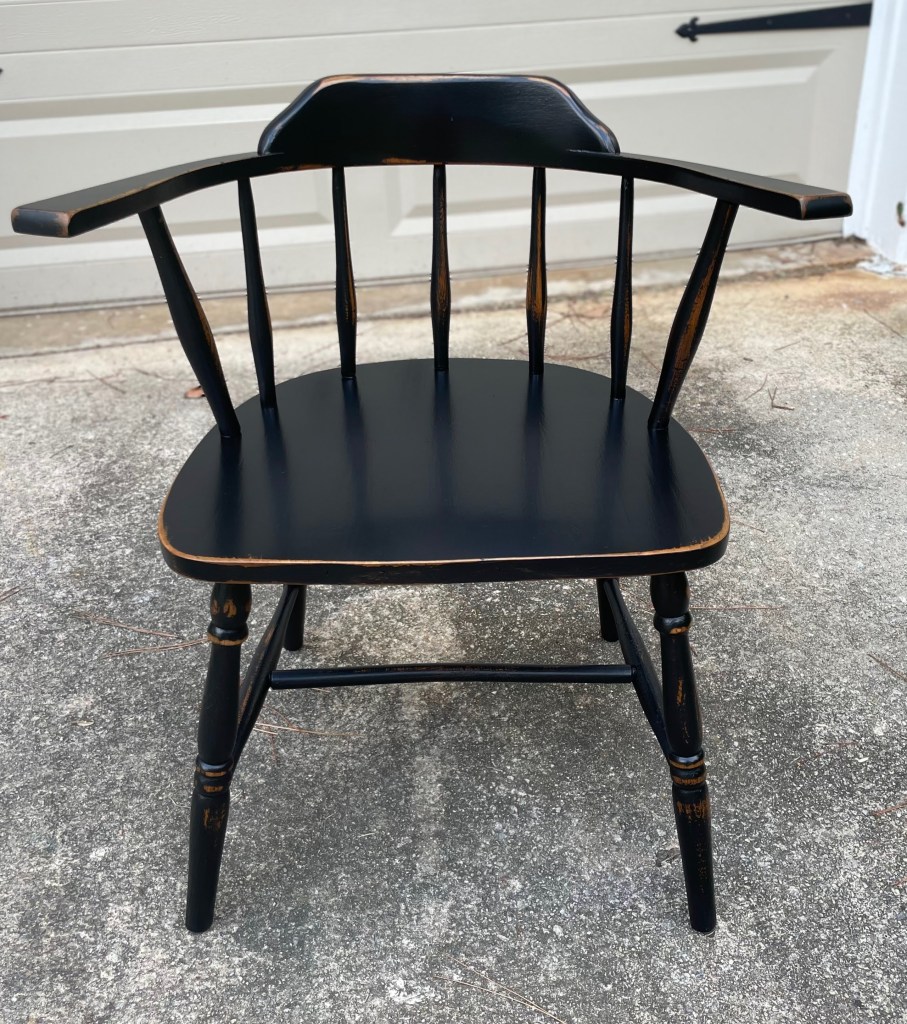
I finished the piece with three coats of Varathane oil-based polyurethane in a satin finish, lightly sanding the whole chair before the third and final coat. I could also have finished it with some clear wax but… spindles! Spraying spindles is a lot easier than brushing them.

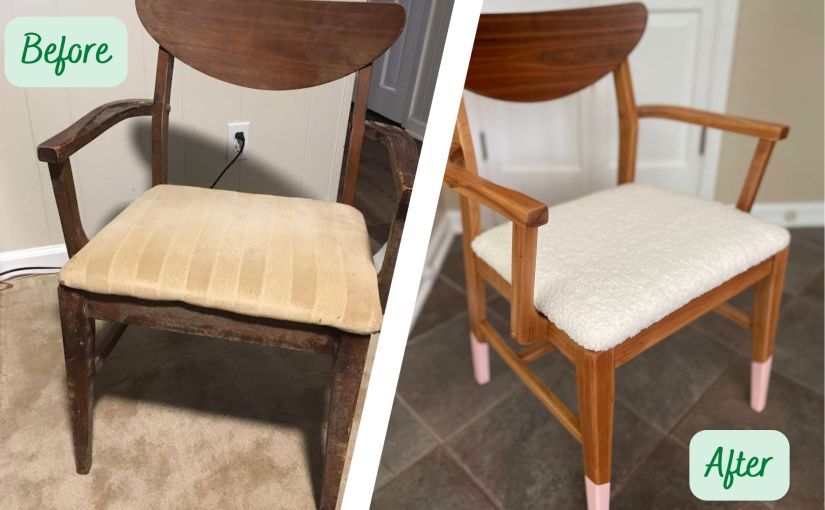
#39 MCM bentwood armchair a.k.a. “The Ballerina”

Materials used: Minwax Antique Furniture Refinisher, shellac, polyurethane, Krylon spray paint, foam, batting, upholstery fabric, weed barrier.

On May 28, 2020 I got a surprise call. My friend’s father, Jim, knew about my mission and was calling to see if I would make this chair one of my transformations. It had been his son-in-law’s work chair and Jim had saved it from being thrown away years before. How lucky am I to have friends and followers who bring me gifts like these?! I’m ashamed to say it then spent two years in my garage—a victim of other projects and life’s distractions, but never forgotten. It’s had to wait a long time for its moment in the spotlight, but I hope you will agree it was worth the wait.

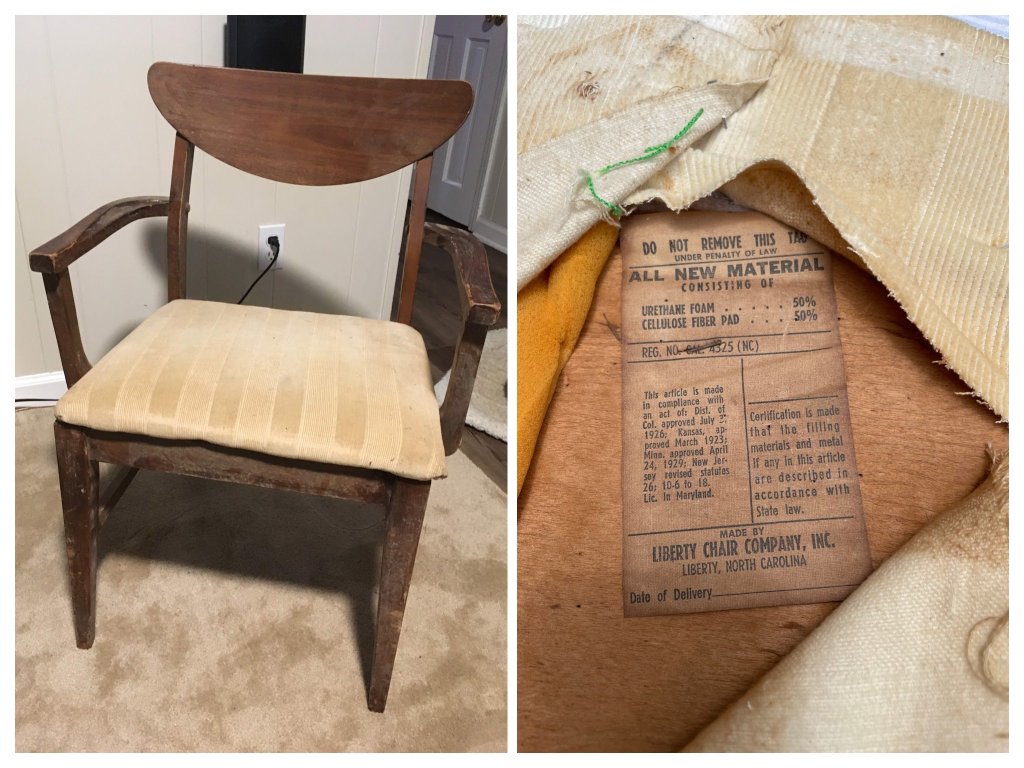
Jim Wright knew good workmanship when he saw it, so I was not surprised to find a Liberty Chair Company tag under the seat. Several messages, emails, and phone calls later I found out it had been made in Liberty, NC in the late 60s/early 70s. At that time it was model 700 and was named “Contemporary Chair”. Members of an online woodworking community think the wood is cherry, and in 1969 its wholesale price was $10.45.

Although the bones of this chair were sound, it was dirty and had been stained and upholstered badly. It was not a difficult decision to strip it down to the bare wood and refinish.

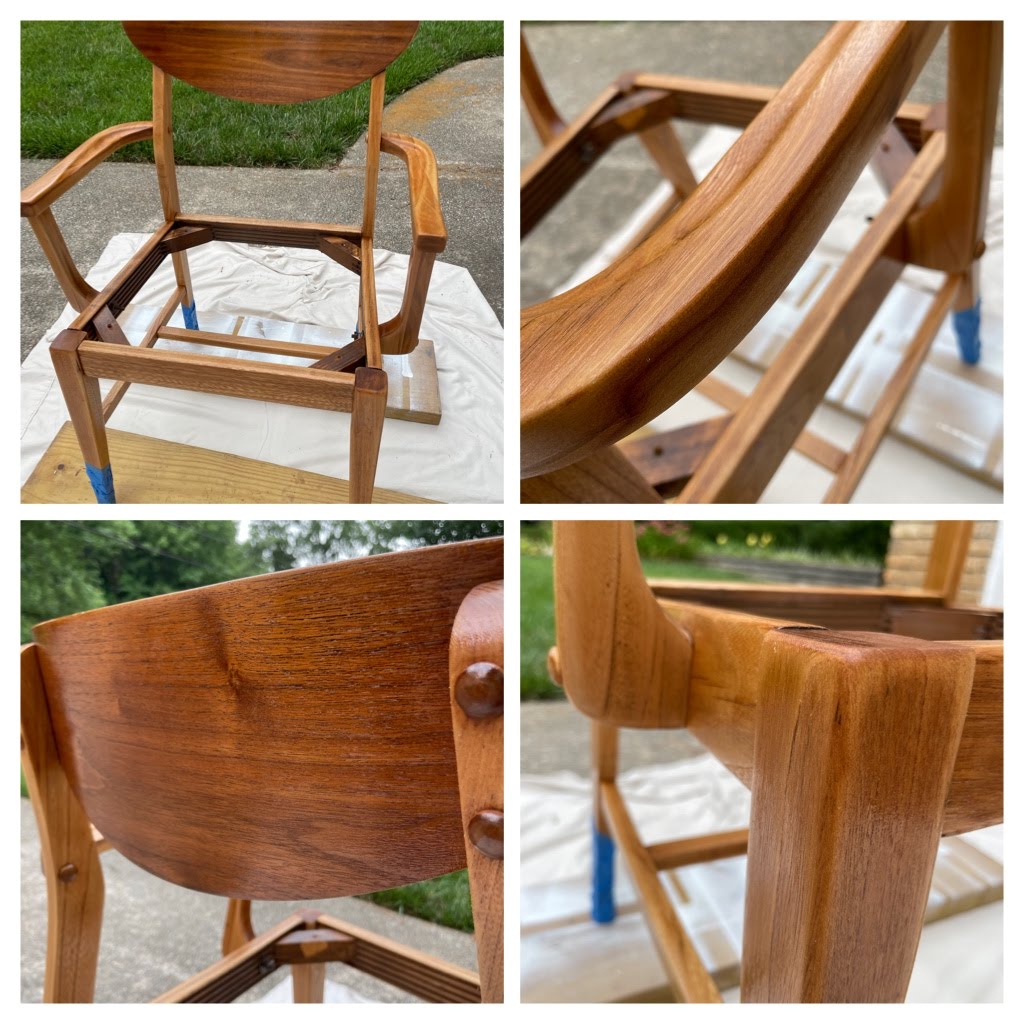
I removed the existing finish using Minwax Antique Furniture Refinisher, then sanded the frame with 150, 220, and finally 400 grit sandpaper. The final prep step was to remove all dust with an air compressor and wipe with a slightly damp cloth.

Refinishing began with a full aerosol can of shellac to seal the wood, accentuate the grain, and give it a lovely honey color.

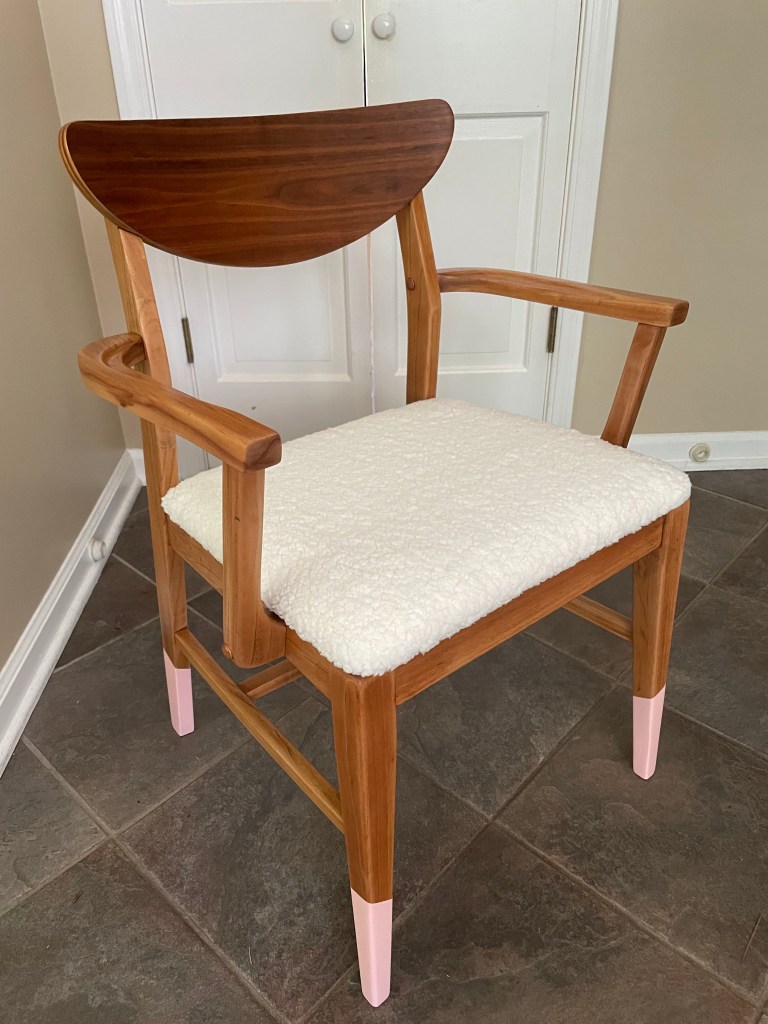
Now it was time to elevate this chair from the ordinary. After some minor repairs I slippered the feet in Krylon “Ballet Slipper” gloss spray paint. Hence the chair’s nickname “The Ballerina”, because now it looks like it’s on points.

To finish the framework I applied 3 coats of clear, Varathane, oil-based polyurethane in a satin finish. As always I lightly sanded everything before the final coats.

Finally I re-upholstered the seat with a boucle-style fabric. It was a little stretchy in one direction so, to prevent over-stretch, I first attached it to some cotton lining fabric. Fully re-assembled this chair deserves to be in the spotlight.

#35 Pedestal table

Materials used: Wood filler, spray paint, transfer, ceiling paint, wood stain, polyurethane.

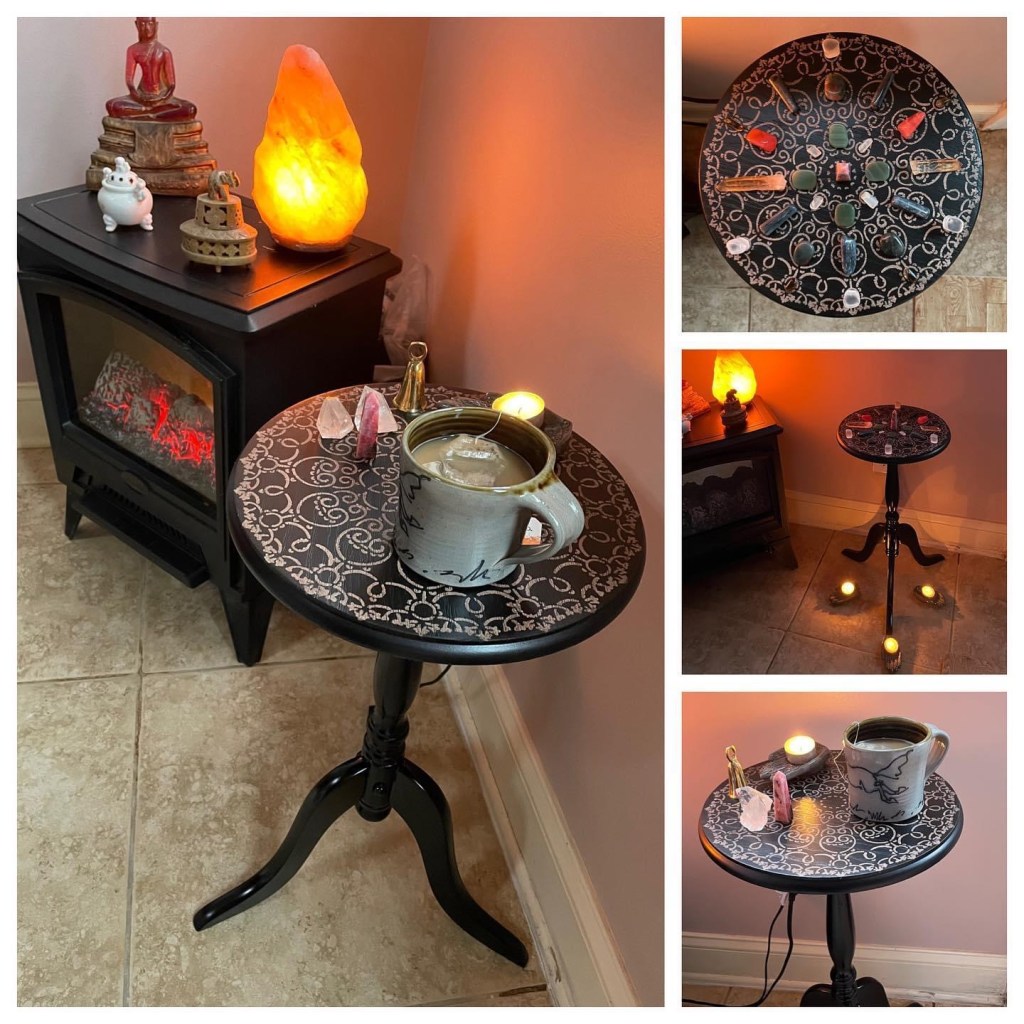
This pedestal table was one of several abandoned furniture pieces in a fixer-upper homestead my friend bought. Rather than discard it, she offered it to me to transform. Now that it’s finished, I find myself in need of a table about this size and shape, but with a different look. I’m hoping something similar comes my way soon so I can try out another design.

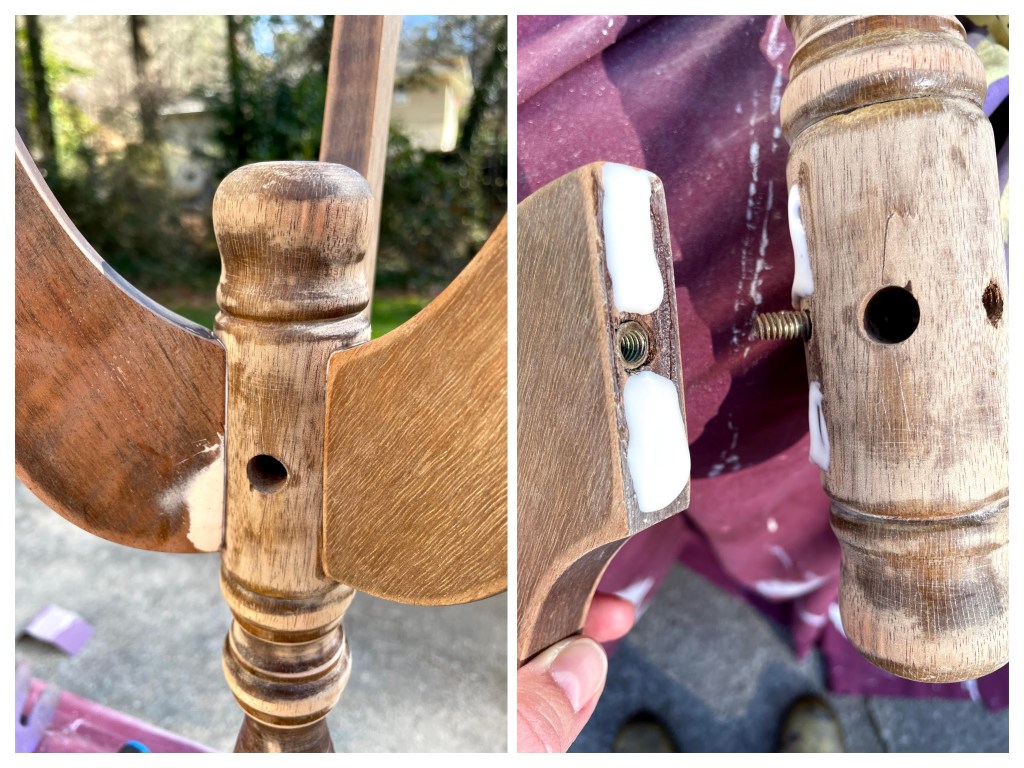
Before I could do anything with this table I needed to be able to fix a wobbly foot that was preventing it from standing stably. It turns out that removing the feet from the pedestal was a lot easier than I thought. You can see a how-to video here.

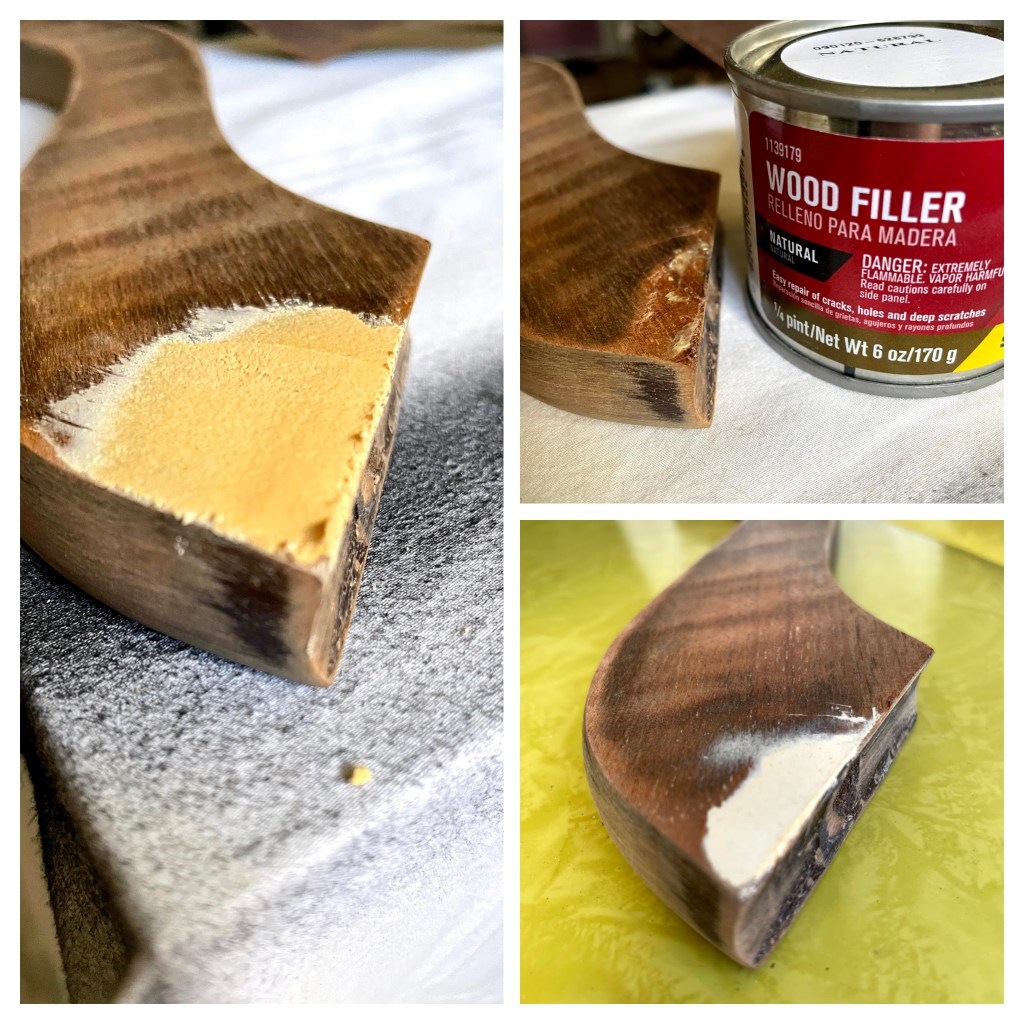
Once the feet were removed from the pedestal I cleaned and sanded all the woodwork and repaired the damaged foot with wood filler.

I then reassembled the base using plenty of wood glue to make sure the feet are now really secure.

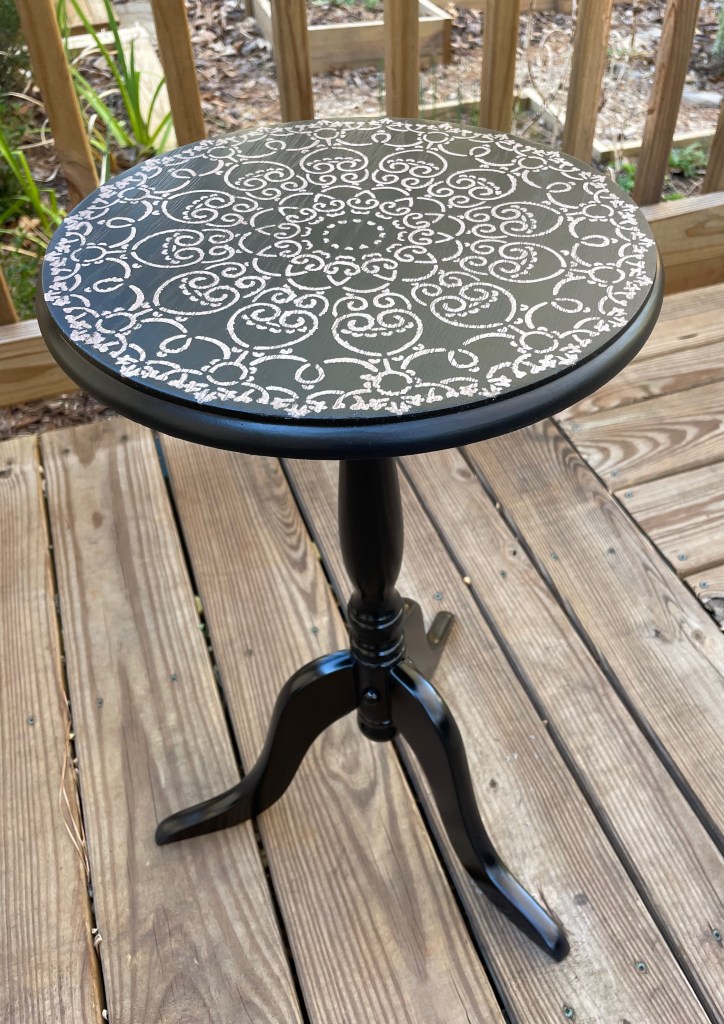
I had planned to leave the tabletop bare, but when I sanded it I found that the veneer was too thin. Plan B was to paint the entire table with several coats of Rust-Oleum 2X Ultra Cover in Canyon Black satin finish.

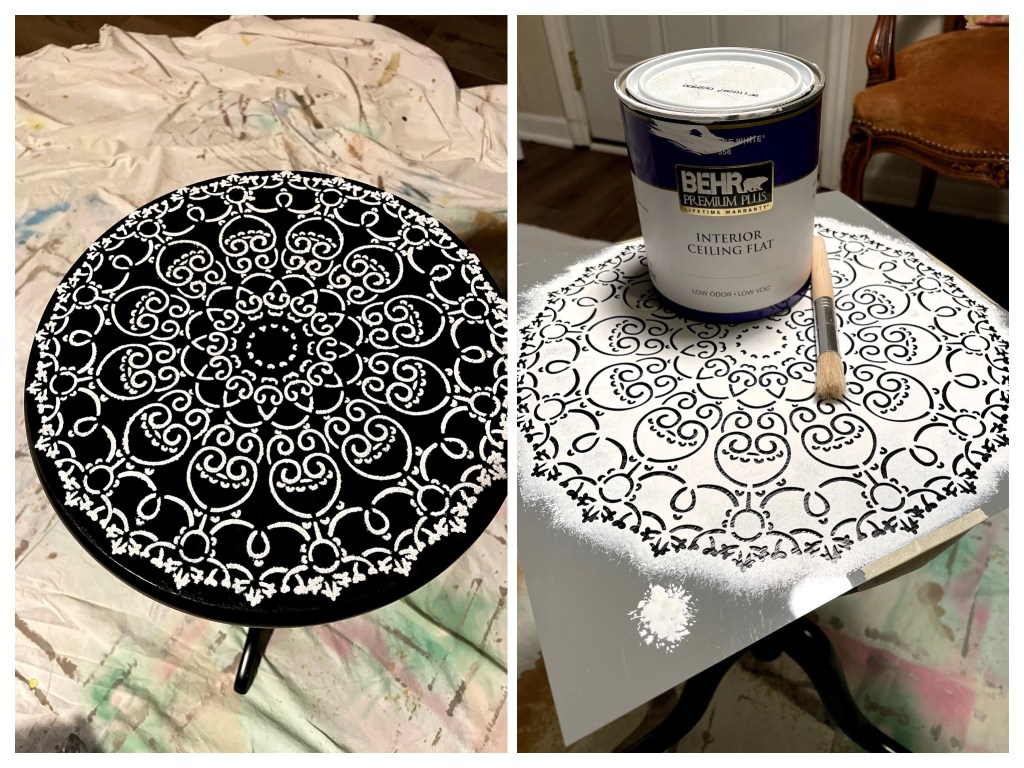
I used the same stencil I used on the Sophia desk to apply a perfectly sized pattern to the tabletop. I used ceiling paint because its flat finish would take up color from a stain.

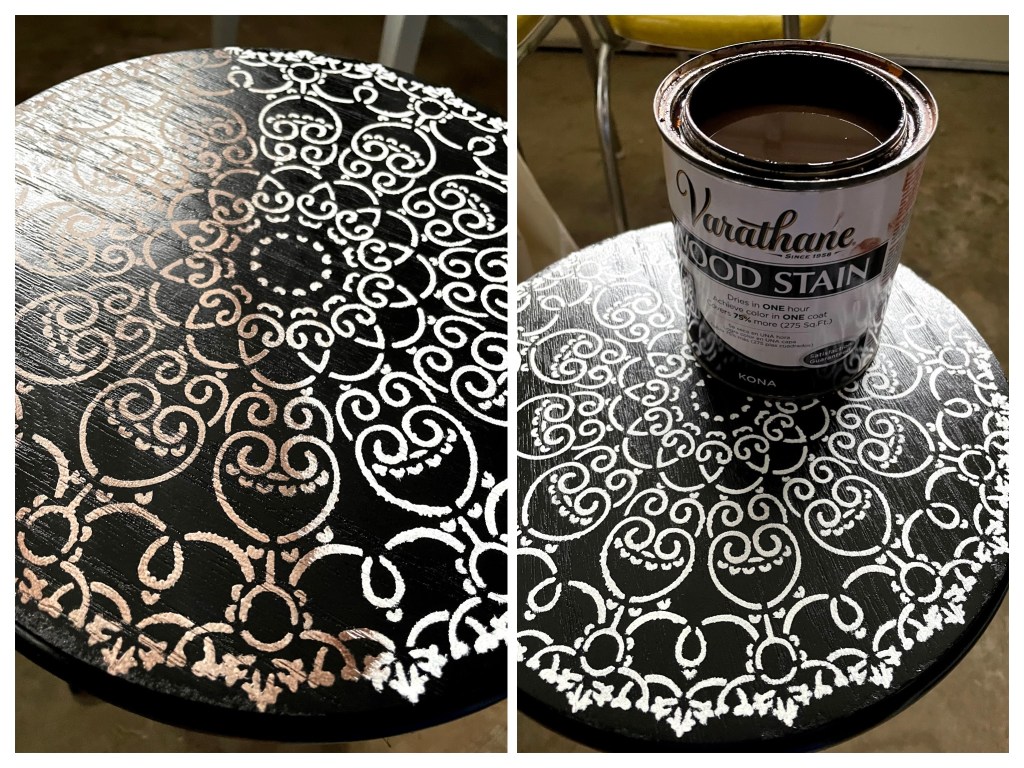
A quick application of some Varathane wood stain in Kona took the edge off the brightness of the white ceiling paint. And a few coats of Varathane oil-based polyurethane in a satin finish give the tabletop the protection it needs.

#30 Picture frame jewelry board

Transformation expenses: $35.74

A while ago we hired a dumpster during a landscape project. When neighbors threw in a perfectly good picture frame I grabbed it knowing it would be good for something. Months later some friends and I were browsing quaint shops after a lovely afternoon tea. One friend saw a jewelry board that she particularly liked and I offered to create something similar with this frame.

Keeping costs to a minimum was the biggest challenge on this project. For my design I needed:

  • 5/8″ dowel rod & plywood
  • Leather cord & 1 yd fabric
  • Decorative tacks & cup hooks
  • Wooden decorative appliques

Fortunately I already had these things left over from previous projects:

  • Spray paint
  • Clear, dark & metallic wax
  • Thin batting
  • Beads & craft paper

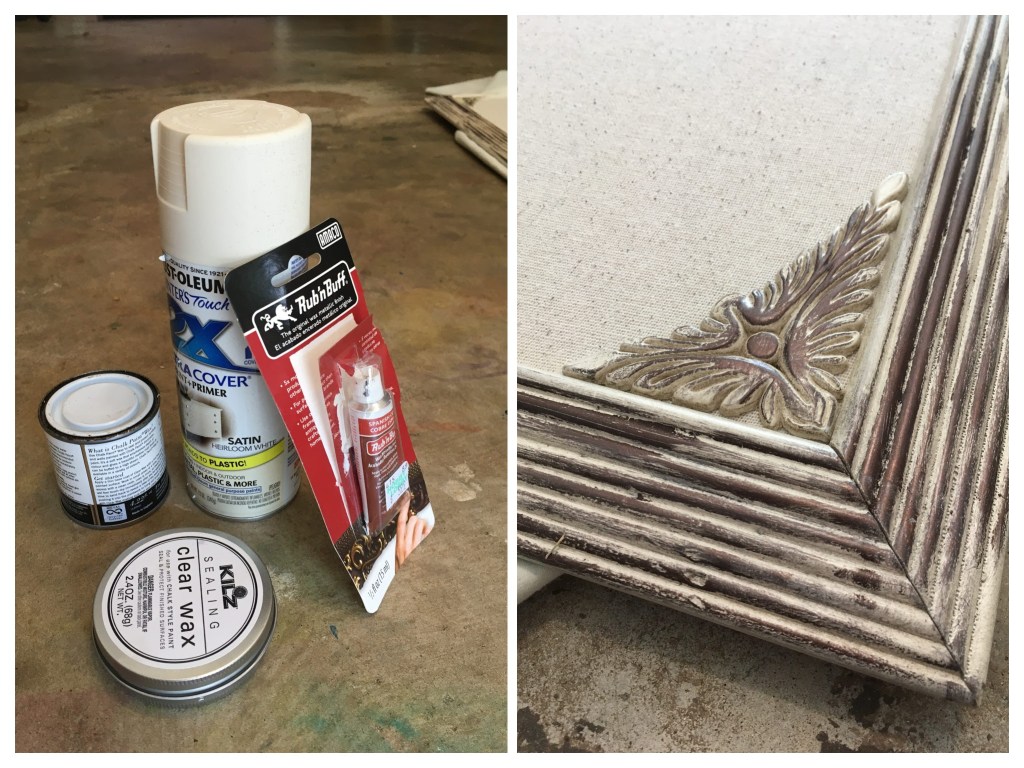
The frame was rather uninteresting so I embellished it with wooden appliques and a layering of paints and waxes. The frame, appliques and doweling were first painted with Rust-Oleum 2X Ultra Cover in Antique White. I also painted the brass cup hooks with Rust-Oleum Hammered spray paint in dark bronze.

I then applied clear wax, followed by dark wax, followed by Amaco Rub ‘n Buff metallic wax in Spanish Copper.

Meanwhile I wrapped the plywood with thin batting followed by a neutral fabric.

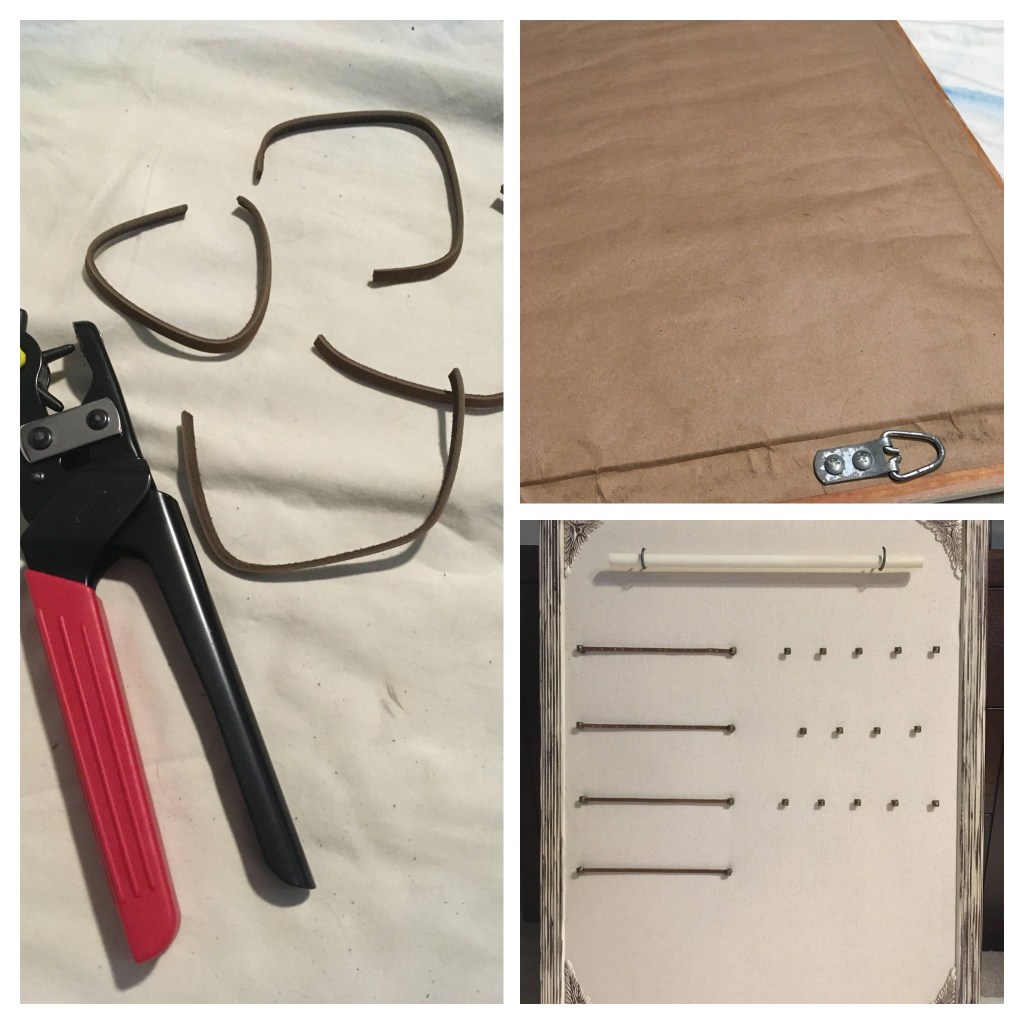
I secured the prepared plywood into the frame using panel pins. I then cut four equal strips of leather cord for hanging earrings. I punched holes in each end of them all and pairs of holes at intervals along two of the strips (for earrings with posts). These were then nailed to the board using decorative tacks and a bead as a spacer. For bracelet storage I attached a length of the painted doweling using the two painted cup hooks. Finally, more decorative tacks function as hangers for necklaces. The back of the frame is finished with craft paper and a pair of D-hooks for hanging.

#29 Antique Queen Anne-style dressing table

Transformation expenses – $55.46

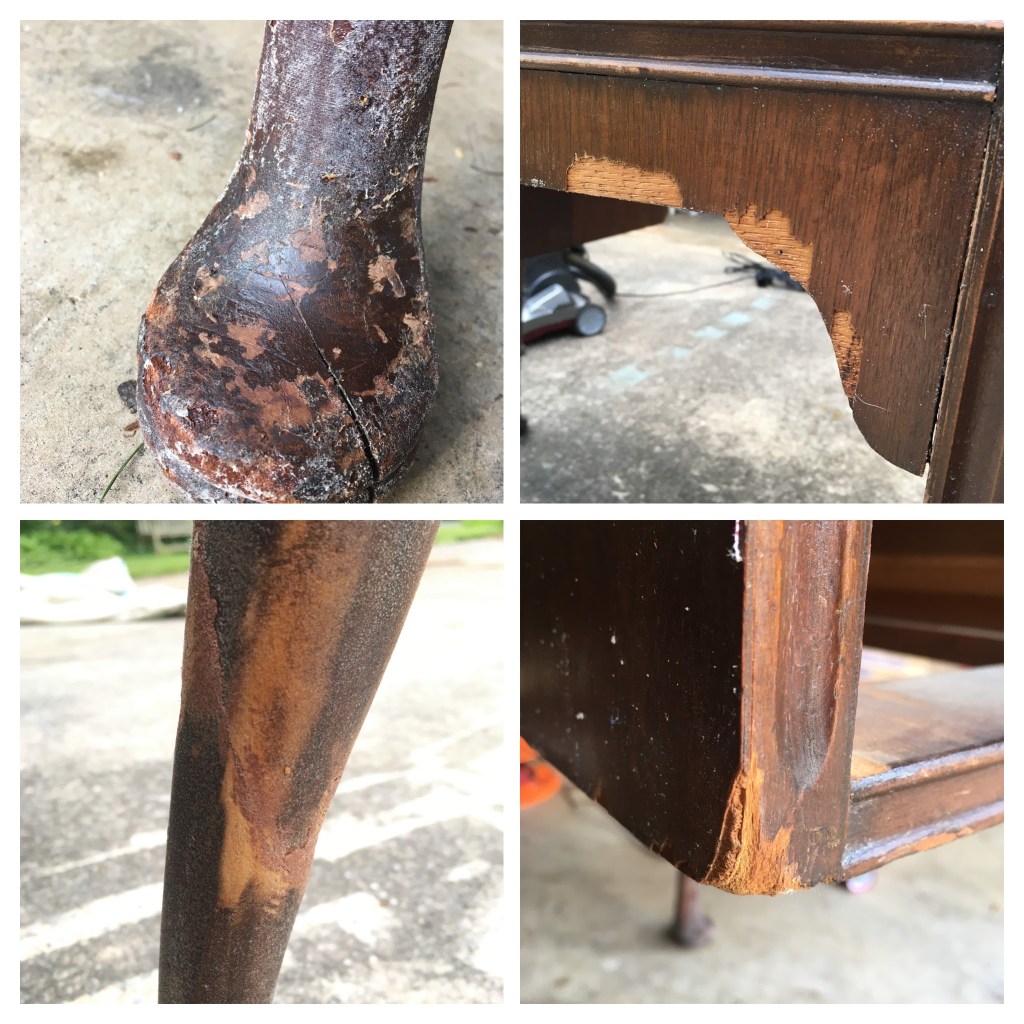
This circa 1910 dressing table was put to the curb just yards from my house! Its beautiful, long legs drew my attention immediately. Despite being disguised in paisley fabric I knew it could look amazing just because of its fine lines.

I secretly liked the fabric-covered look but it had been very badly done and was falling off in places. A lot of it just peeled away and the rest came off after a little dampening.

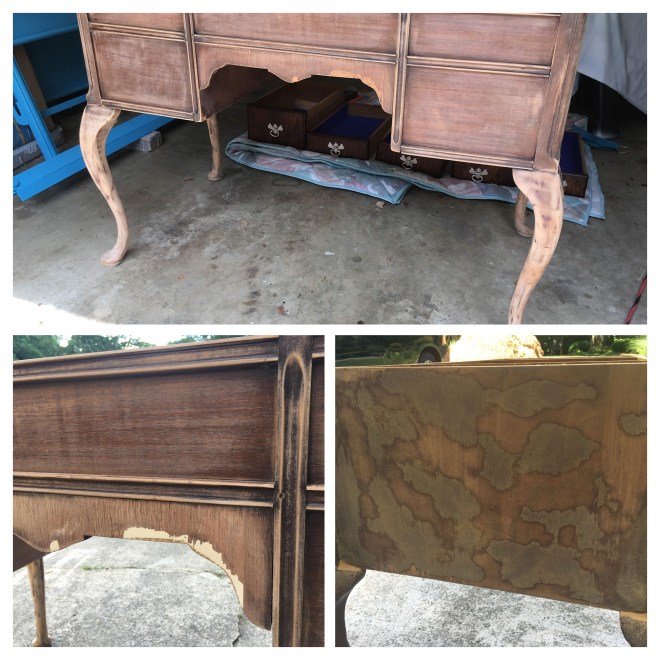
I was delighted to find the top and drawer fronts in pretty good condition, but other parts of the piece were seriously damaged, including a leg that had obviously been broken and shoddily repaired.

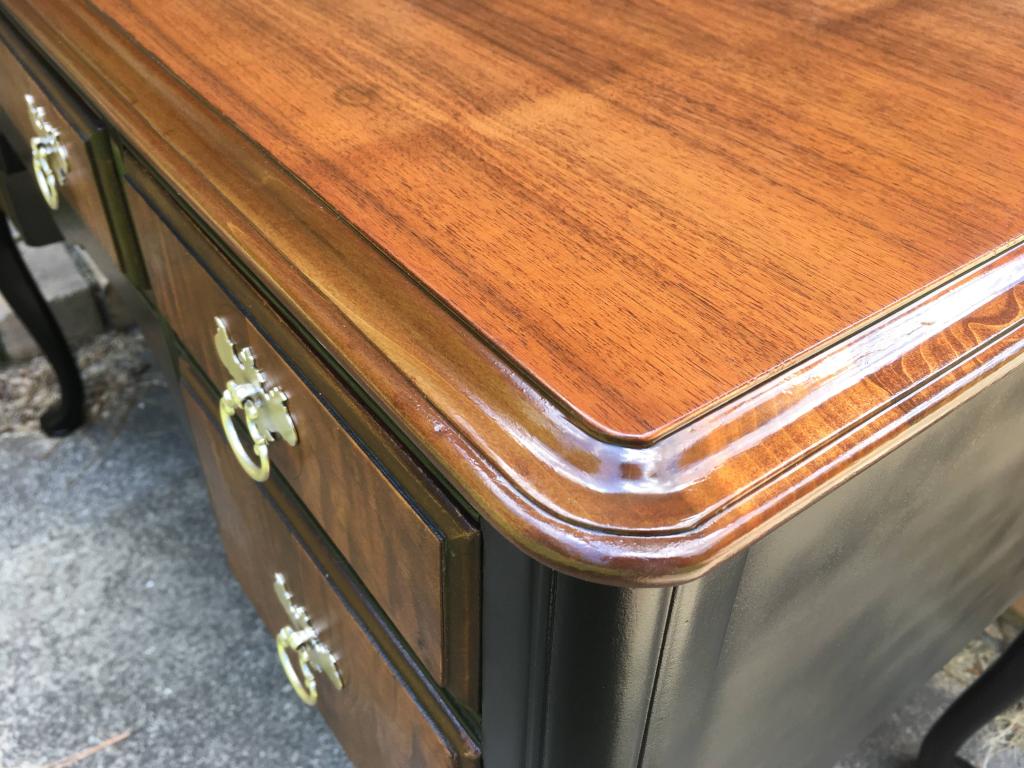
After much research and deliberation I realized it would not be worth attempting a full restoration so I decided on a combined restore & refinish approach. I started by restoring the drawer fronts, which have a beautiful tiger maple veneer. Fortunately the fabric adhesive came off with a dilute soap solution and did not require any solvent. Once they were cleaned, I used Howard Restor-A-Finish in walnut followed by Howard Feed-n-Wax oil-based wood conditioner.

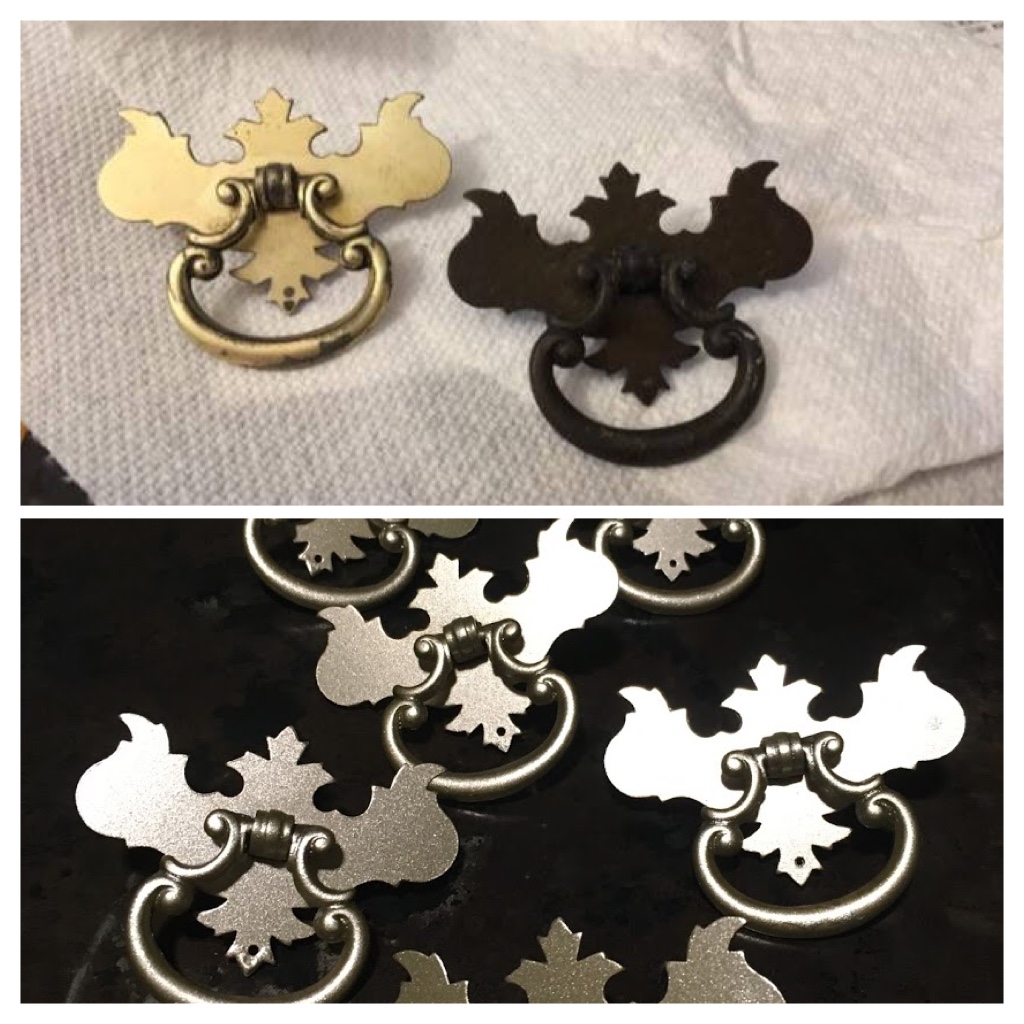
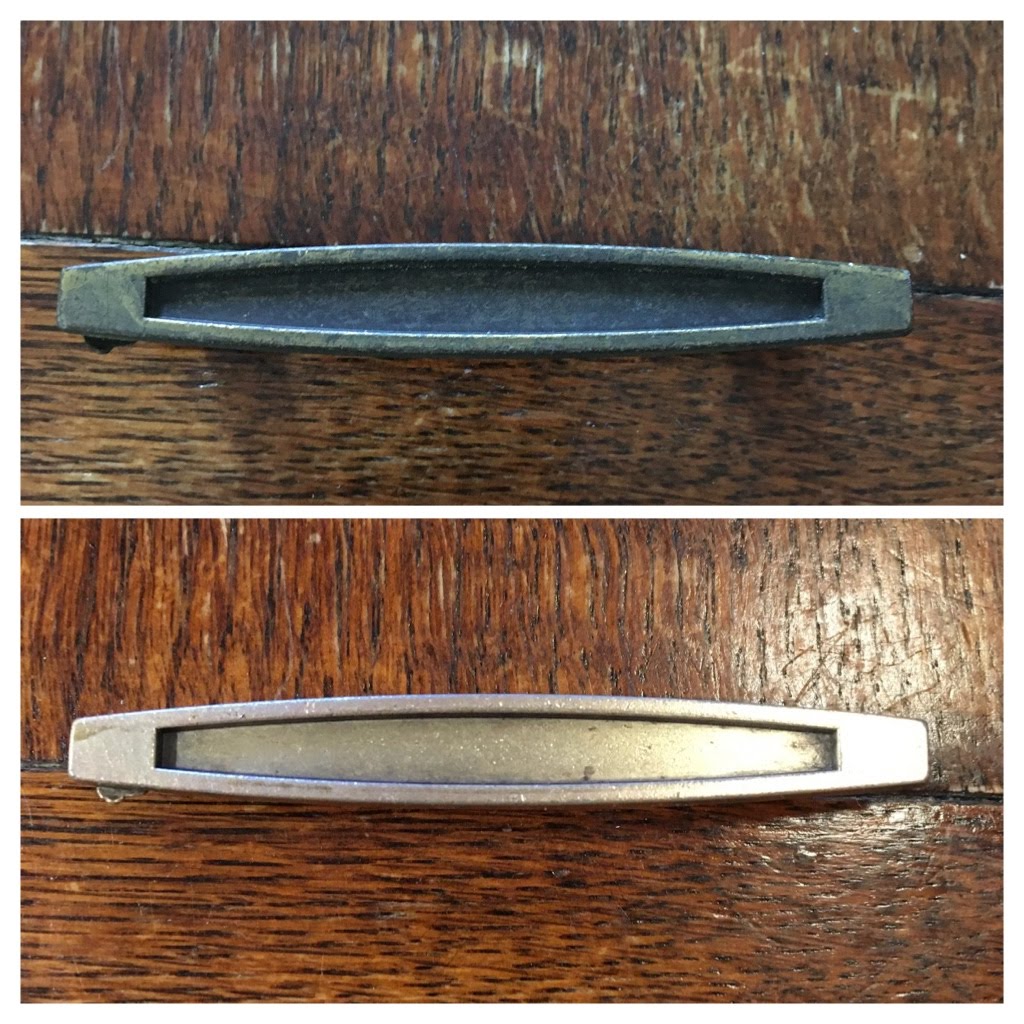
The Chippendale-style drawer pulls were so tarnished they were nearly black (top right). I considered leaving them that way but realized they would complement the restored drawer fronts more if they were refreshed. I set about polishing them, only to find they are brass plated, not solid brass. The Bar Keeper’s Friend I was using removed some of the brass plating (top left) but all other gentler approaches I tried were ineffective. I decided to go ahead and polish them all then touch them up with Rust-Oleum’s Metallic in gilded brass (bottom).

When it came to the table top, allowing myself to refinish rather than restore had a couple of advantages: For one thing it would have been impossible to remove the adhesive without damaging the old finish and for another I could now use a more modern, durable ,and practical polyurethane. I got back to the bare wood using stripper and sandpaper. I then applied Rust-Oleum wood stain in American Walnut, followed by 3 coats of Varathane polyurethane in semi-gloss. The color perfectly complements the drawer fronts.

Finally it was time to tackle the frame and legs. The biggest challenge of this piece was the adhesive used to attach the old fabric covering. It behaved differently on every different surface. Some mineral spirits thinned it out in places but would not remove it completely. In the end there was nothing for it but to sand it off. Using 150, then 220, then 400 grit sandpaper I eventually removed all traces of adhesive. I used professional wood filler to repair some dings, cracks, and damaged veneer.

Once all the cavities were masked off ,I applied primer followed by two coats of Rust-Oleum Canyon Black in satin finish. The piece was then ready to reassemble.
#25 Mini chandelier birdfeeder

Transformation cost: $12.60

I have my constipated dog to thank for this find. We were taking a long walk to get “things” moving and our route took us past this treasure. A chandelier was TT#1 (Chandelier) and I was excited to find another to work on; they make such good garden decor.
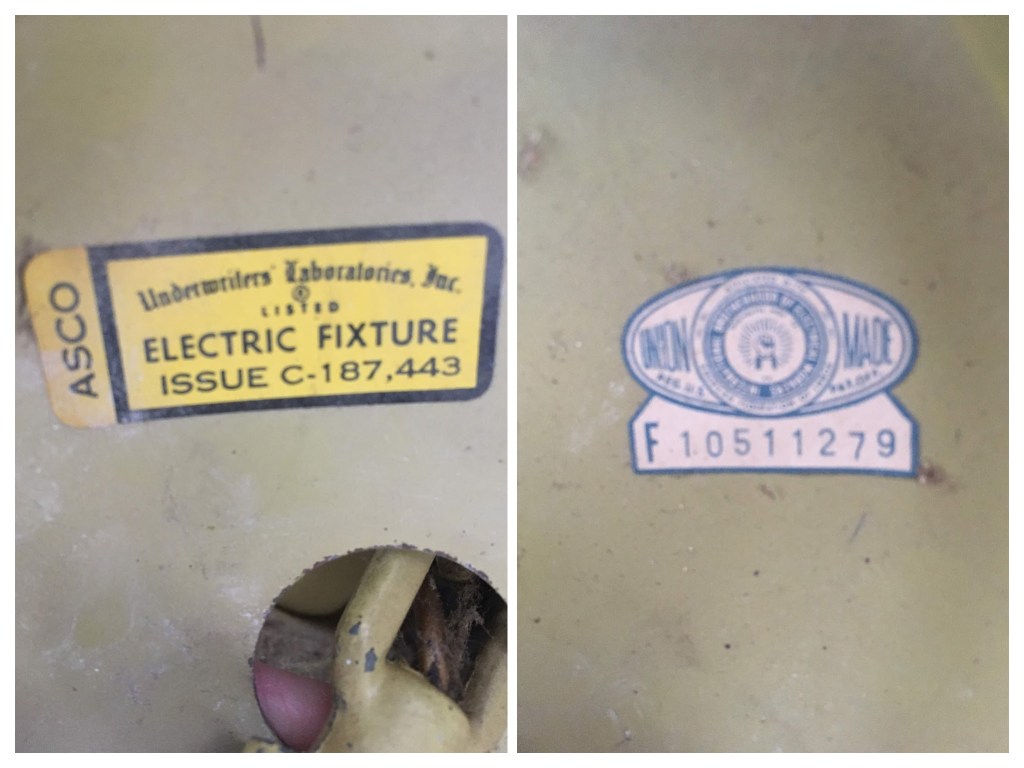
I am convinced this is a vintage piece but I’ve had mixed feedback to my enquiries. The International Brotherhood of Electrical Workers says this fixture was made in Newburgh, New York in October 2013 (according to the serial number). However, Underwriters’ Laboratories Inc. says it must be at least 25 years old because they stopped using that font on their labeling 25 years ago.

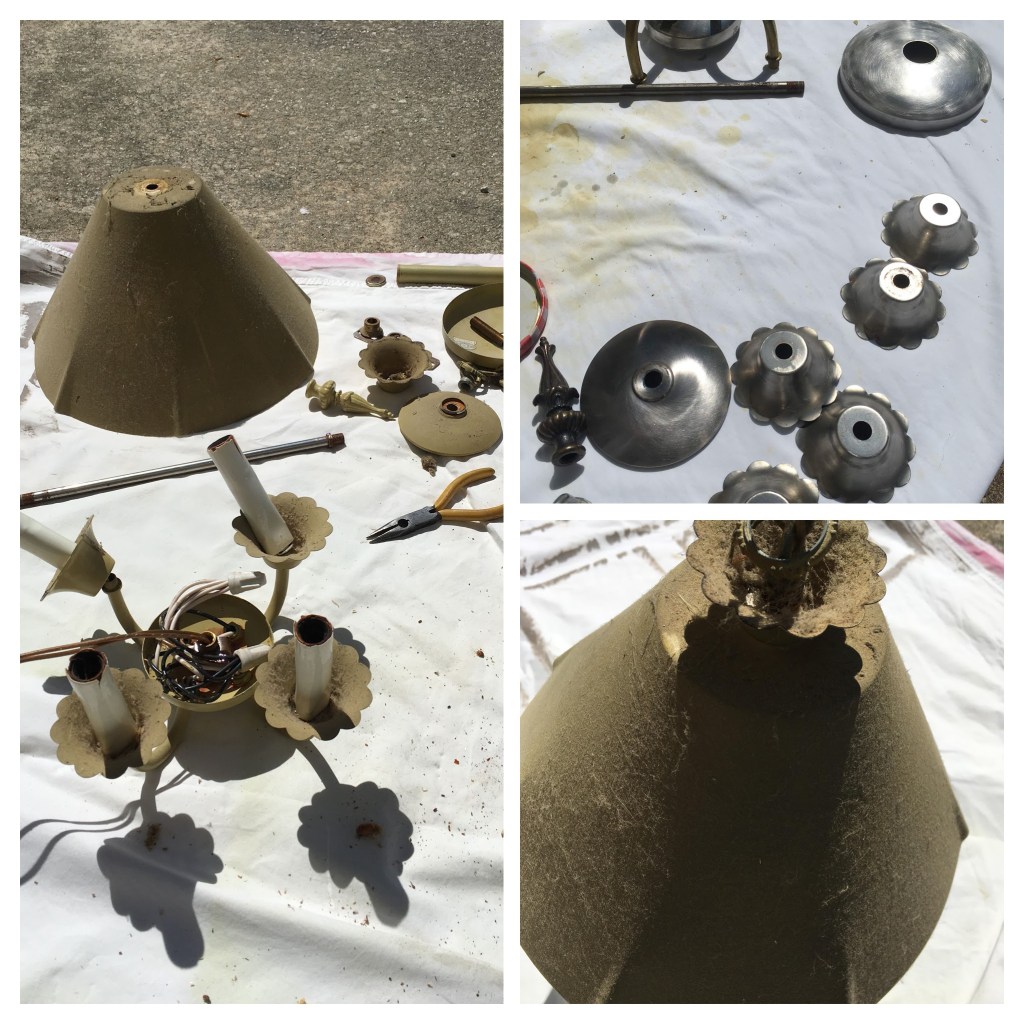
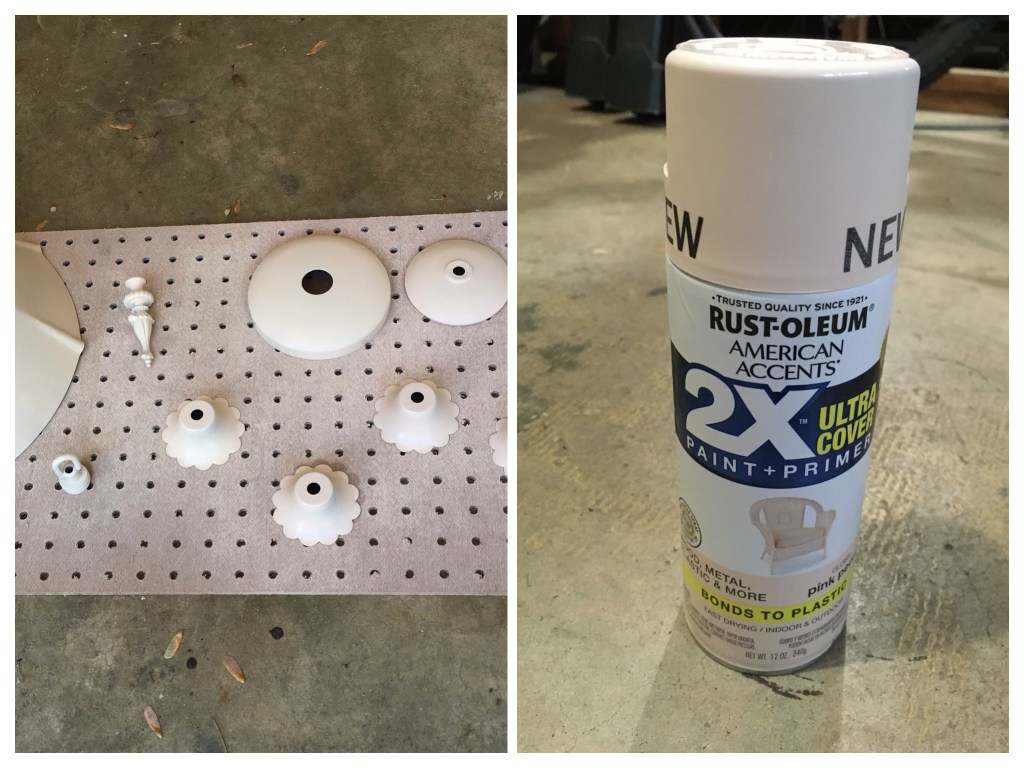
As I began cleaning the dismantled piece some of the paintwork dissolved and what was left peeled and cracked. Using acetone, a rag and a toothbrush I was able to remove all the paint completely.

The bare metal parts were now ready for their finish coats of Rust-Oleum 2X Ultra Cover gloss in pink peony. I made sure to reserve some paint for finishing touches after reassembly.

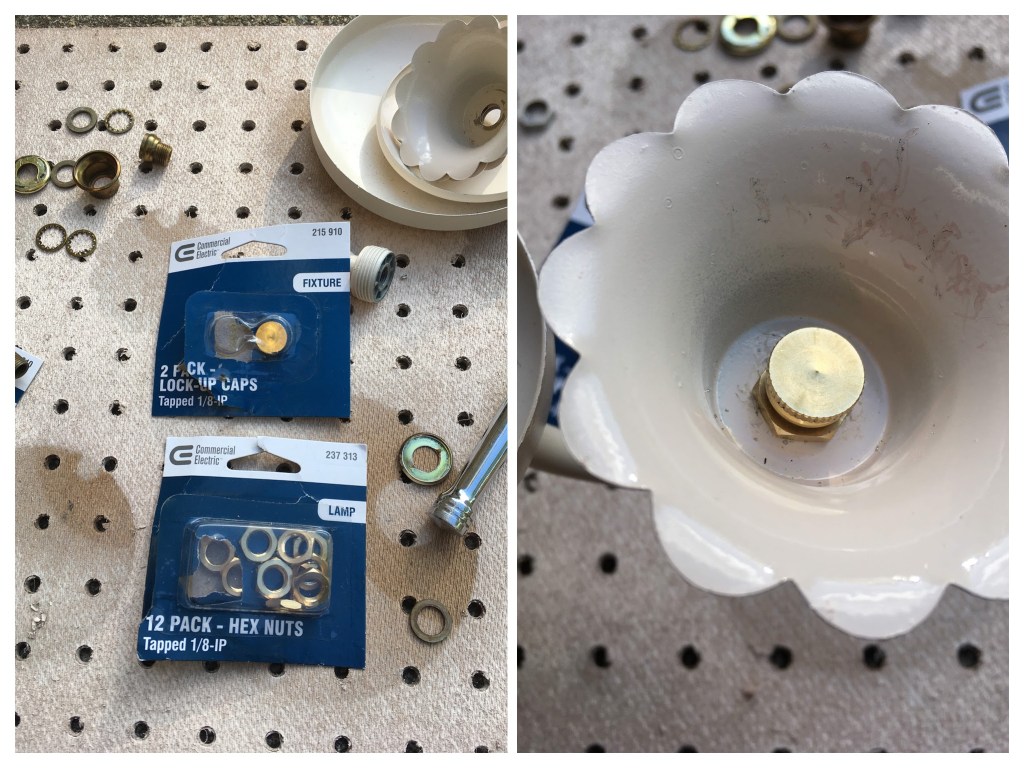
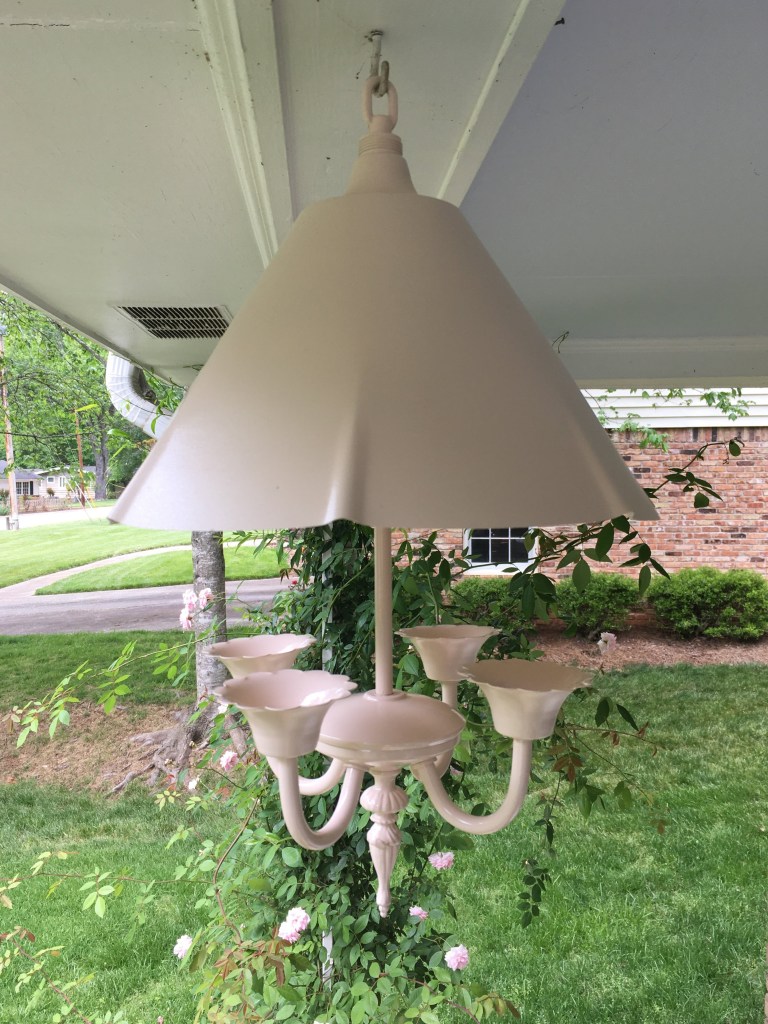
When it came to putting it back together I made a few changes. First I used lock up caps to seal the part of the arm that would have attached to the candle tube. I discarded the canopy and inverted the top bobeche so that rain water wouldn’t pool in it. The hanger loop neatly tops it off. I finished the job by touching up with the remaining paint.

#23 Ocean Mist table

Transformation cost: $19.02

This piece reminded me of TT#8 (The Book Lover’s table), which I completed back in February 2018. They are made of similar materials and are assembled in a similar way. Oddly enough I had the exact same setback with both pieces!

I had no qualms about painting the piece and decided to have a little fun with it. The Gothic arch shaped indentations on the front were my inspiration.

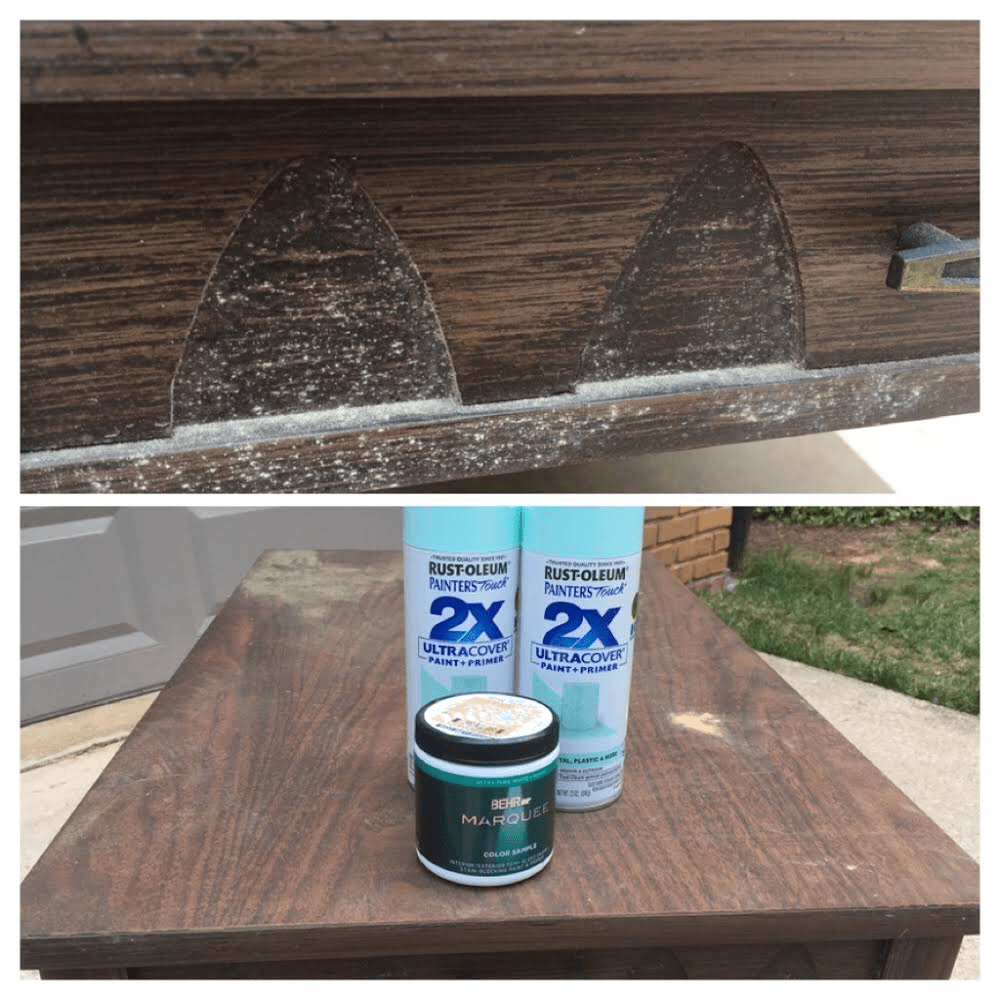
The supplies I needed for my arch inspired design were RustOleum Ultra Cover (Paint + Primer) spray paint in ocean mist gloss finish and a color-matched sample of Behr latex paint.

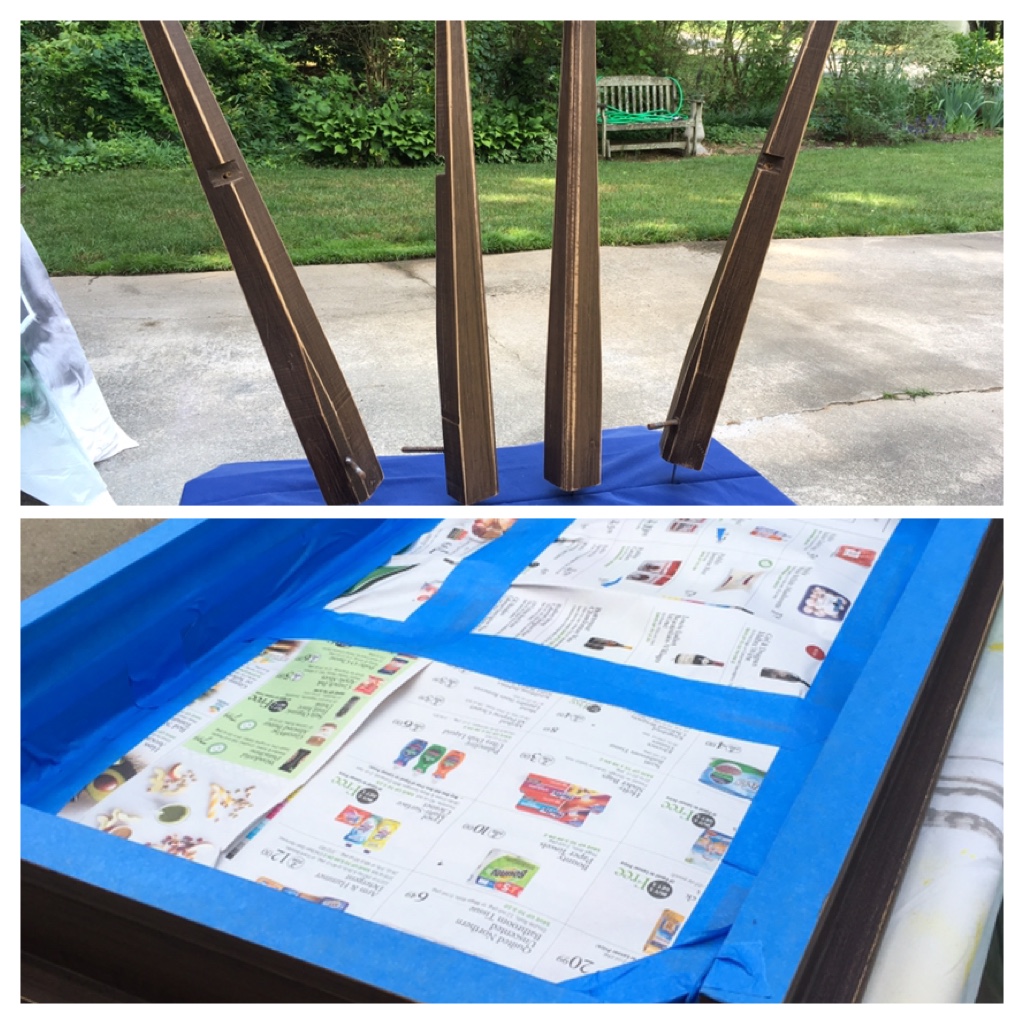
Next, the usual sequence: Disassemble. Clean. Sand. Mask. I put extra effort into the sanding because I would be applying a gloss finish that would highlight every flaw. A nail hammered into the top of each leg made it easier to clamp them for painting.

The paint was going on beautifully until it wasn’t! In certain areas the paint started to wrinkle, just as it had with the Book Lover’s table. Whereas with the Book Lover’s table I made lemonade out of lemons, this piece was destined for a different look. There was nothing for it but to let the paint dry thoroughly, sand away the wrinkles, and try again.

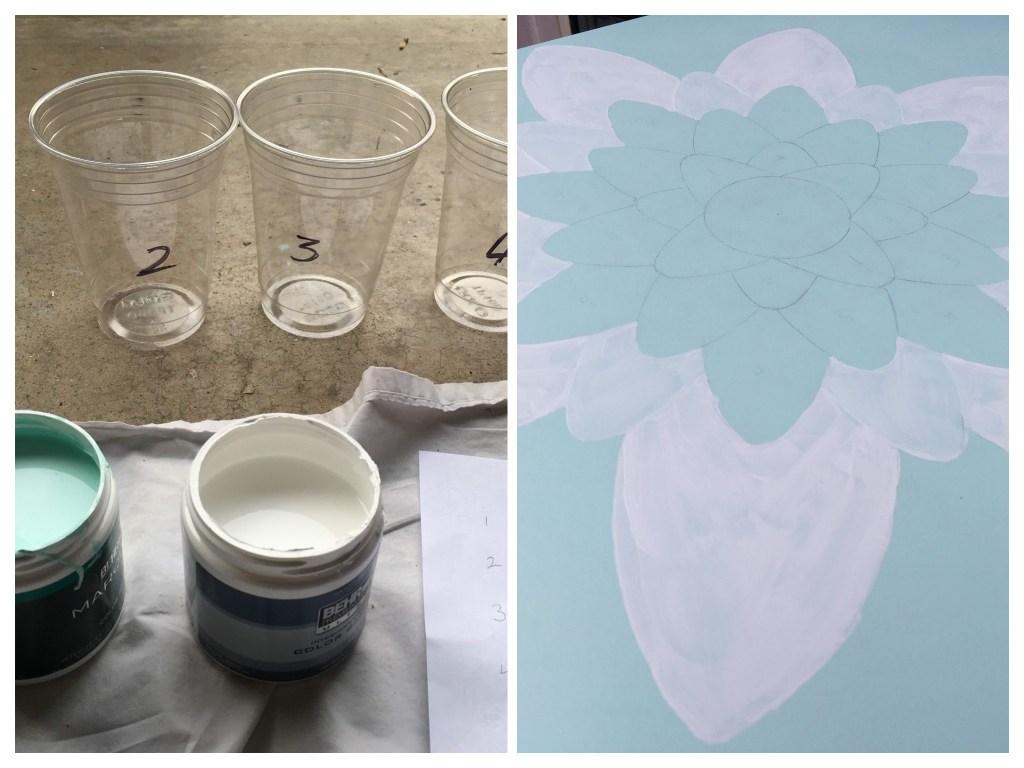
When all the components had been reworked to my satisfaction, I was ready to start on the design. I made a template from the indentations and used it to pencil my design on the table top. It was starting to look like a Paint by Numbers kit.

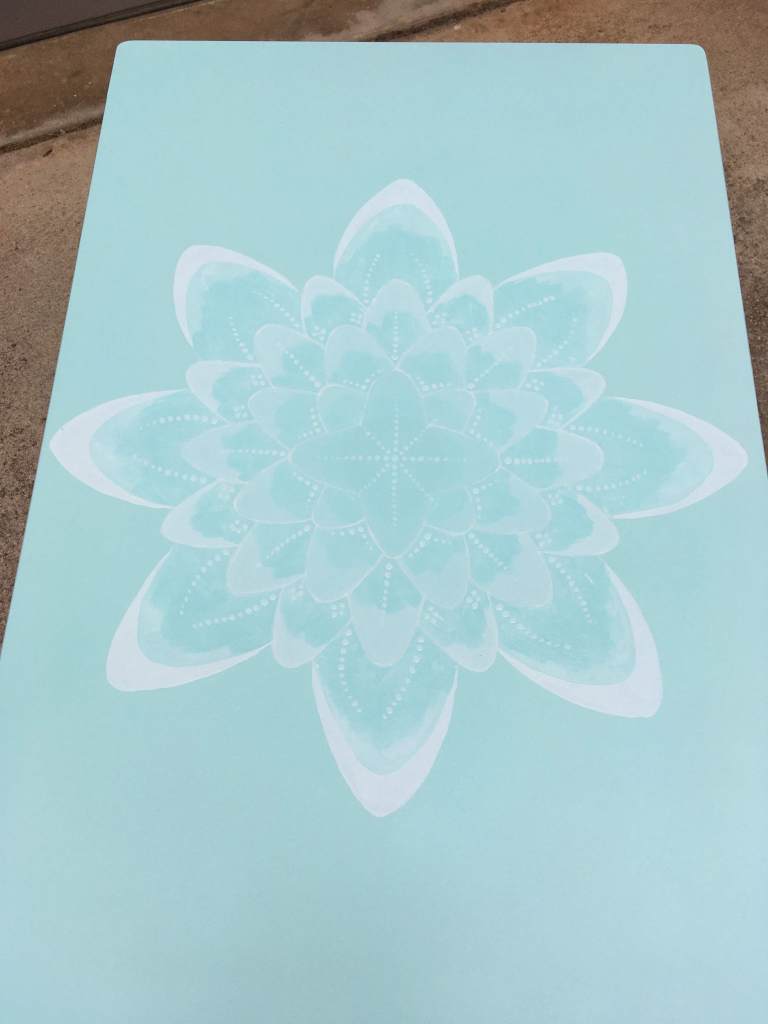
With the color-matched sample and some white paint I already had, I mixed six different shades of the Ocean Mist color and began hand painting.

Some time later ……. I locked in the finished design by adding a few coats of gloss lacquer over the hand-painted areas.

Finally, I cleaned the original hardware with some Bar Keeper’s Friend and put everything back together.