#45 Victorian Eastlake chair

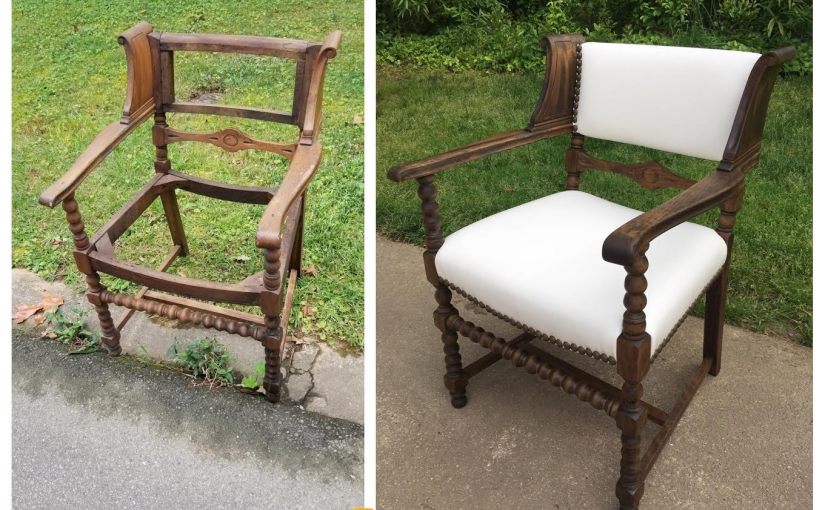
Back in October 2022, a friend of a friend was wanting to clear some antiques from her basement and she decided to give me 1st dibs. Initially I sadly declined everything because I had neither the space to store them nor the time to work on them, but I couldn’t get this chair off my mind. It needed to be professionally reupholstered and, before I would commit, I wanted to find someone willing to invest in it. Fortunately I didn’t have to look far; a Transforming Trash regular stepped up to make this a companion piece to the Victorian sofa that was Transformation #34

Materials used: Howard Restor-A-Finish, Howard Feed ‘N’ Wax

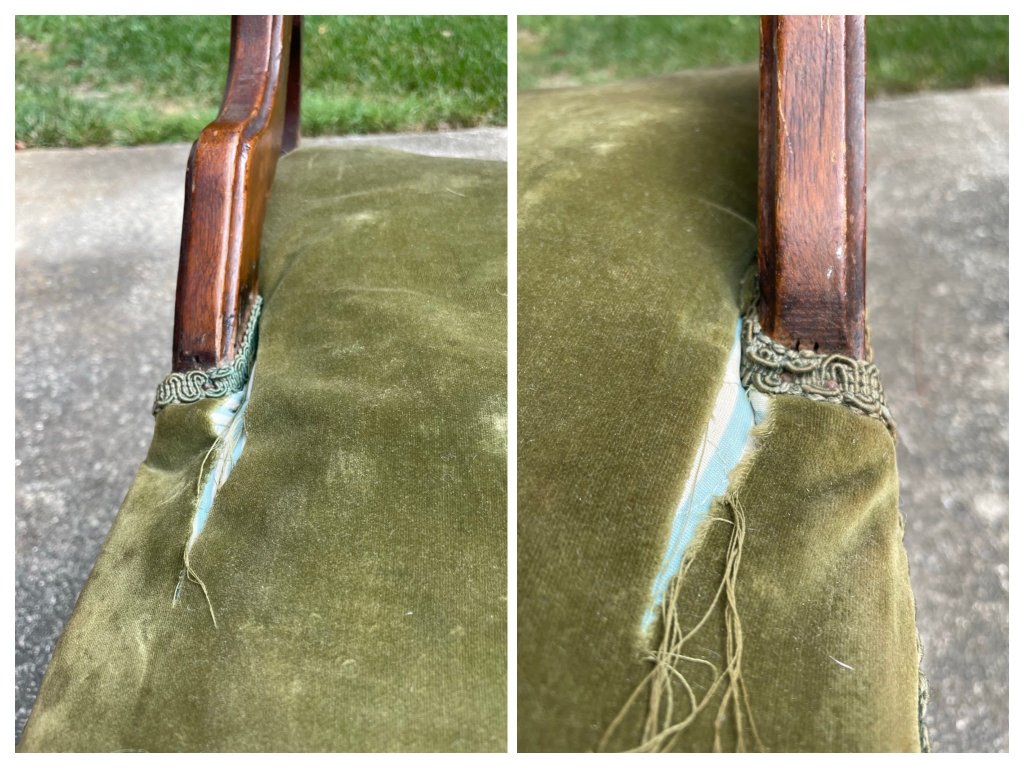
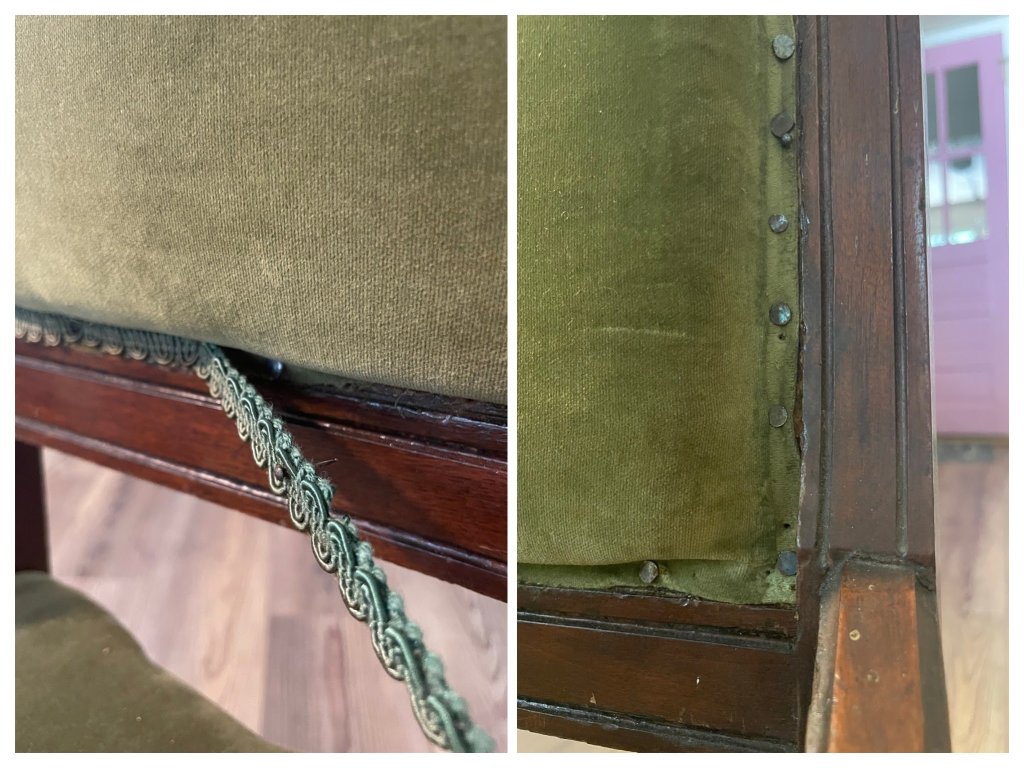
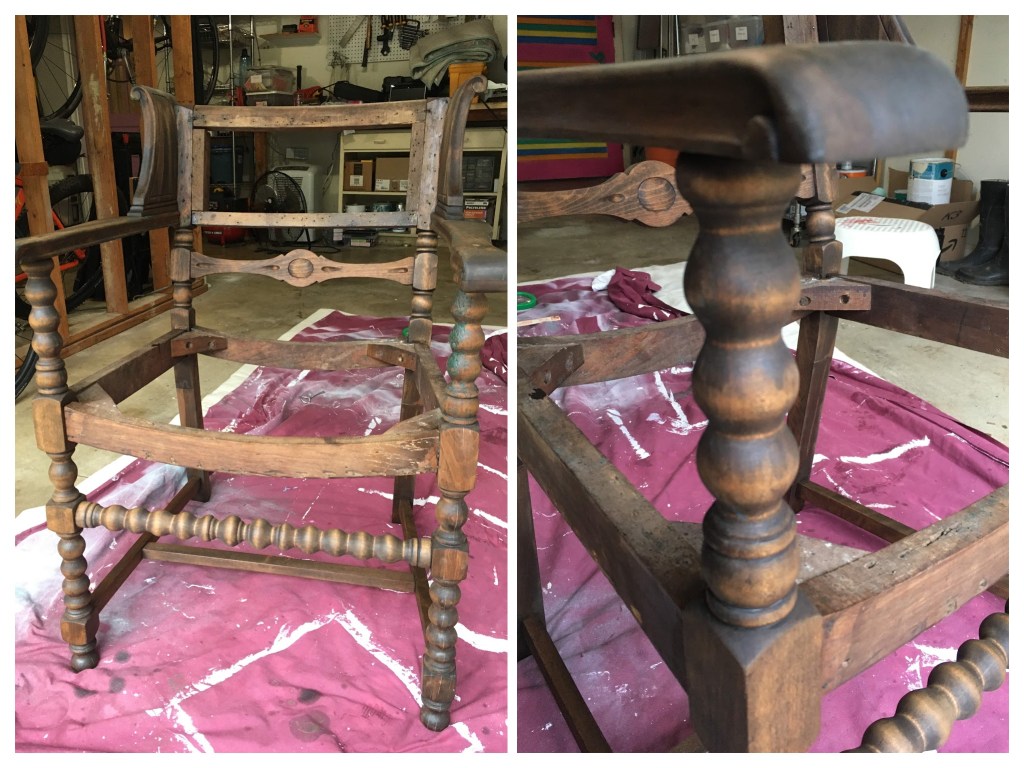
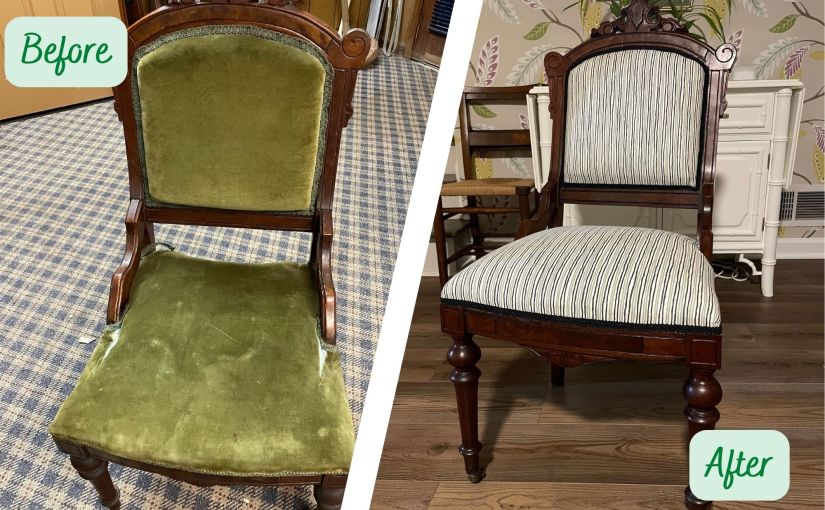
The woodwork on this chair was dull, dirty and a little scratched but generally in good shape; there were no cracks, repairs or missing pieces. The upholstery, however, was very worn and needed to be professionally replaced. Before I started restoring the woodwork I removed the original trim.

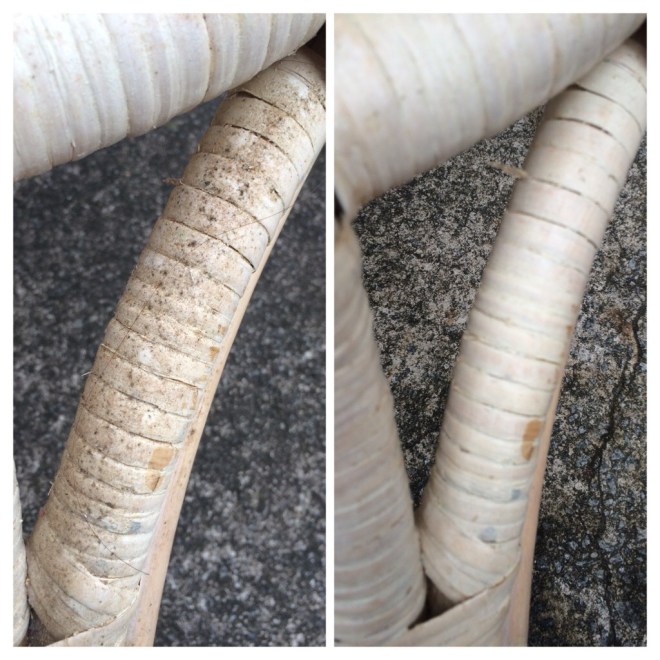
To clean, brighten, and restore the wood, I turned to one of my favorite products: Howard Restor-A-Finish (mahogany). No matter how many times I use this product I am always surprised what a difference it makes. This picture compares before (right leg) and after (left leg) using Restor-A-Finish.

Per the instructions I always follow Restor-A-Finish with Howard Feed ‘N’ Wax. The results are spectacular!

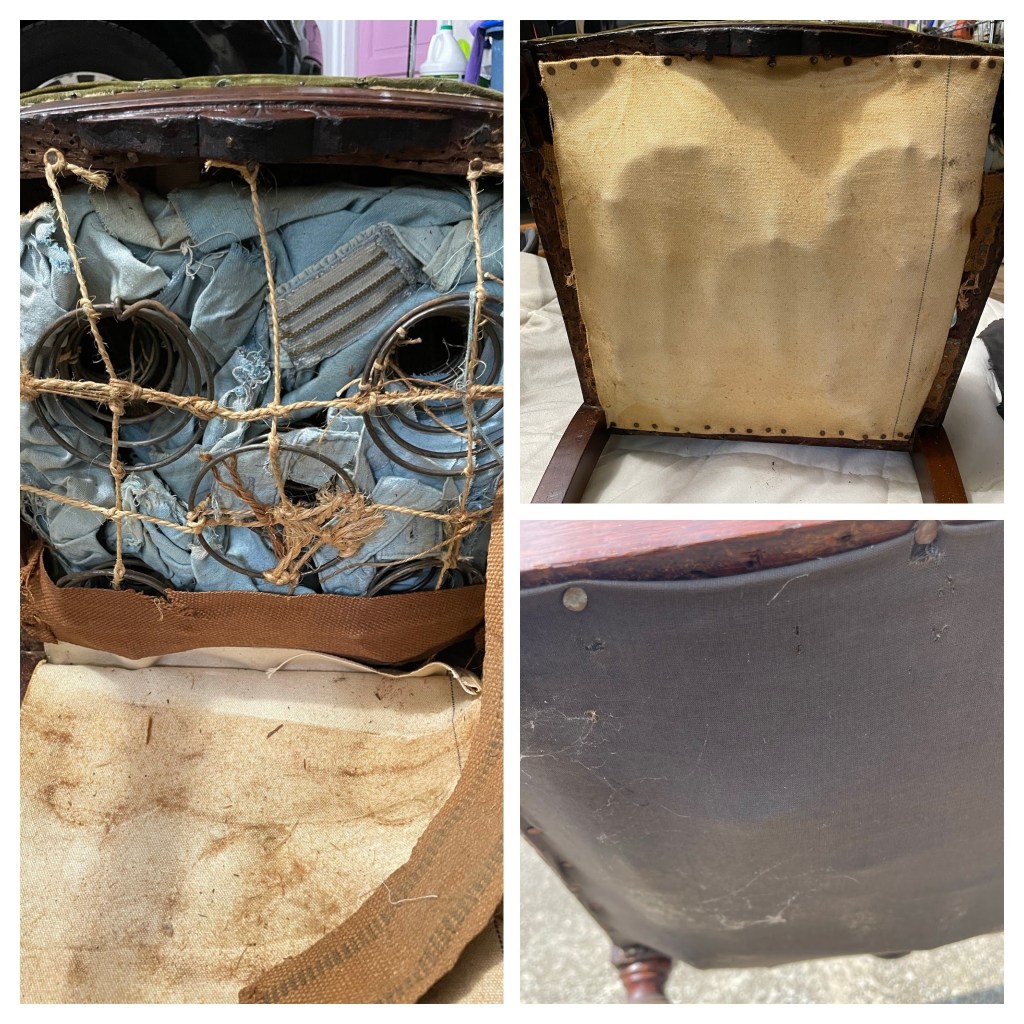
Before going to the upholsterer I decided to snoop under the seat. Check out the old coil springs that were under a layer of cambric, a layer of canvas, and webbing.

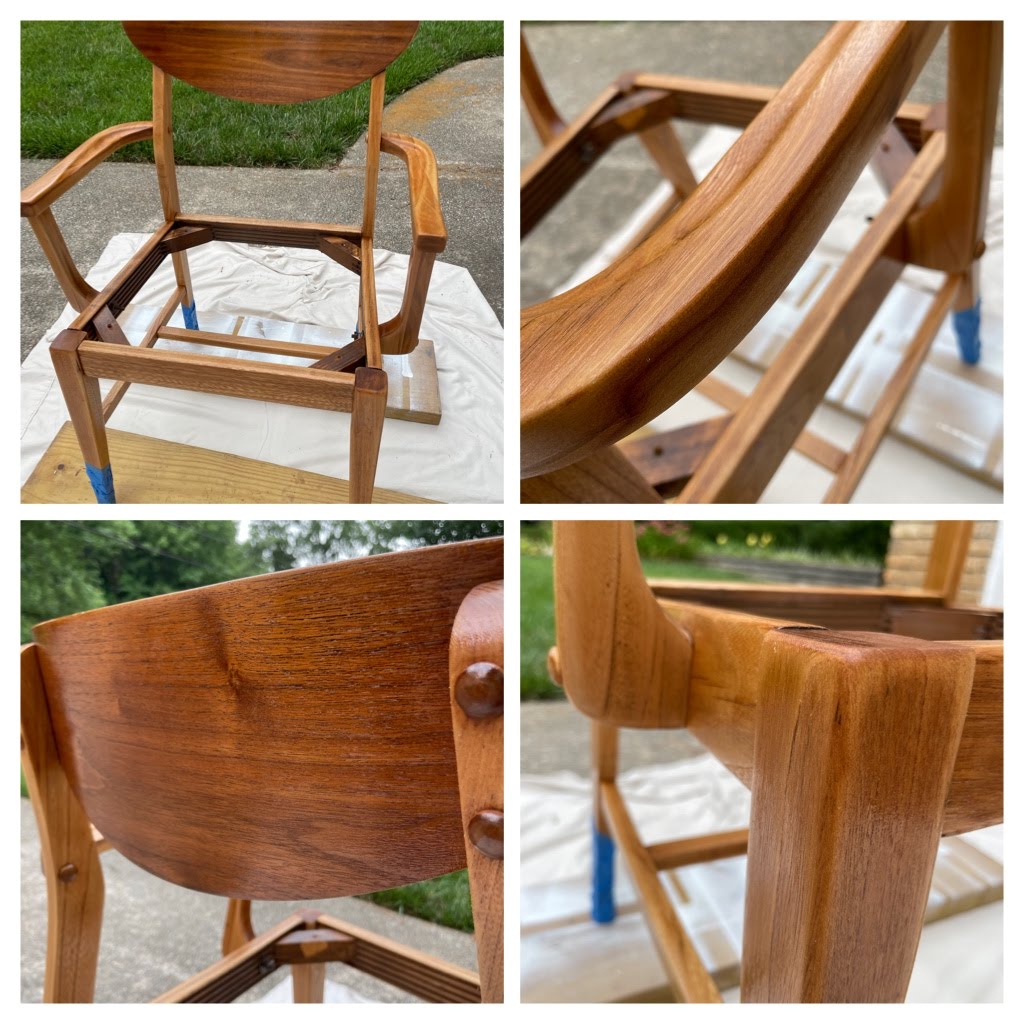
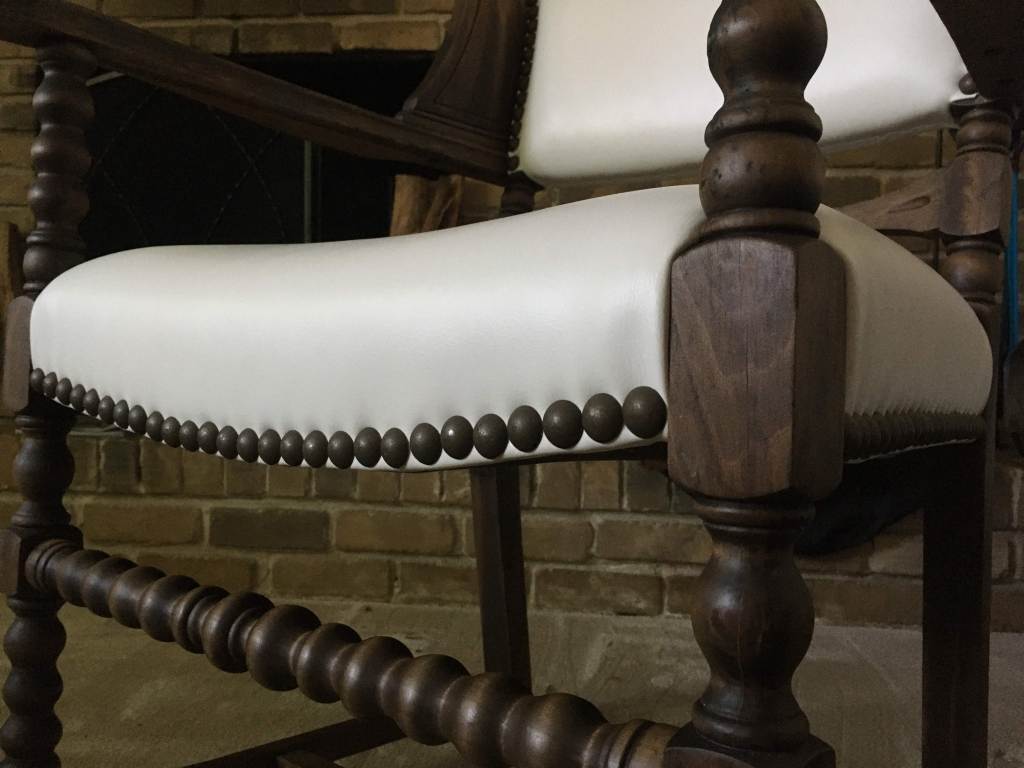
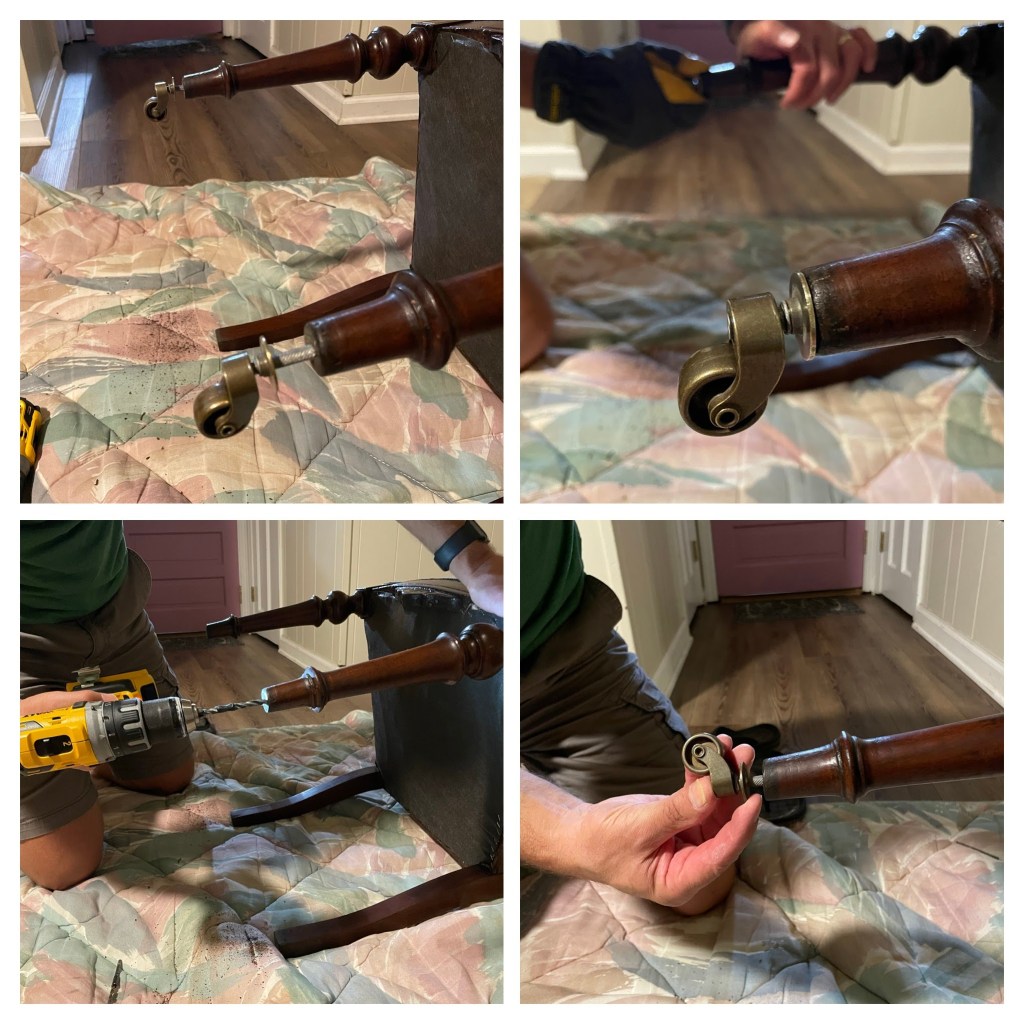
When the chair came back from the upholsterer there was only one thing left to do to finish it: add antique brass stem casters to the front legs. I had my handy husband help because I was too afraid of making a mistake. He did a perfect job!
#39 MCM bentwood armchair a.k.a. “The Ballerina”

Materials used: Minwax Antique Furniture Refinisher, shellac, polyurethane, Krylon spray paint, foam, batting, upholstery fabric, weed barrier.

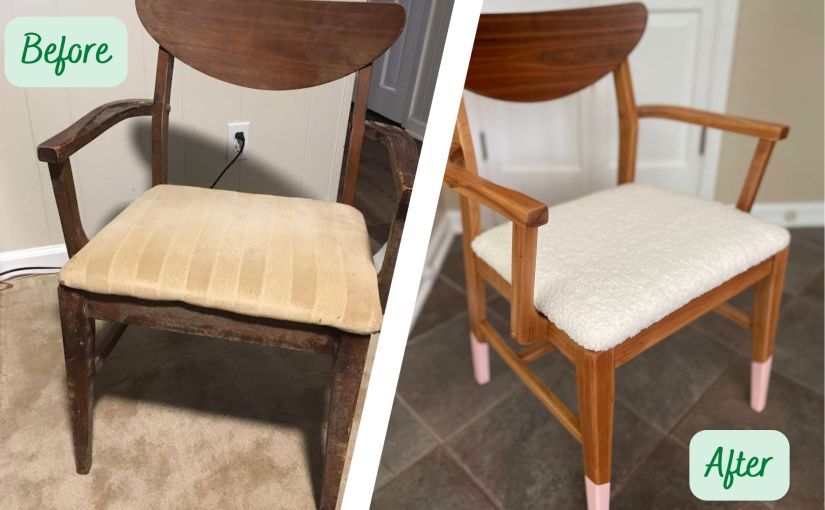
On May 28, 2020 I got a surprise call. My friend’s father, Jim, knew about my mission and was calling to see if I would make this chair one of my transformations. It had been his son-in-law’s work chair and Jim had saved it from being thrown away years before. How lucky am I to have friends and followers who bring me gifts like these?! I’m ashamed to say it then spent two years in my garage—a victim of other projects and life’s distractions, but never forgotten. It’s had to wait a long time for its moment in the spotlight, but I hope you will agree it was worth the wait.

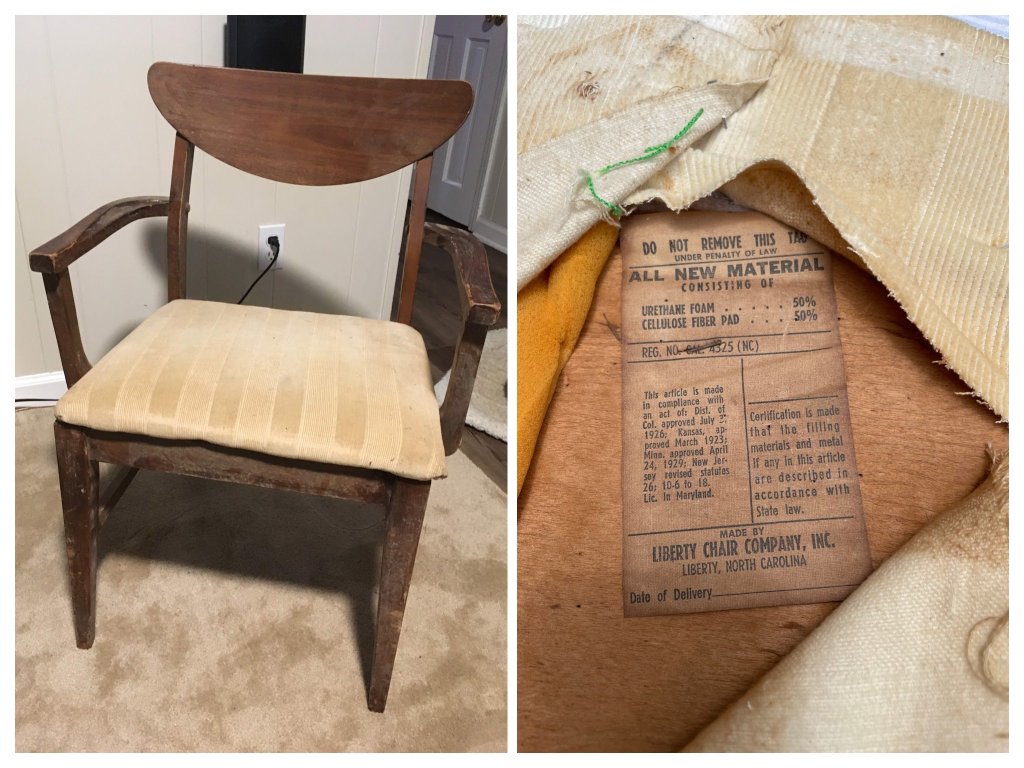
Jim Wright knew good workmanship when he saw it, so I was not surprised to find a Liberty Chair Company tag under the seat. Several messages, emails, and phone calls later I found out it had been made in Liberty, NC in the late 60s/early 70s. At that time it was model 700 and was named “Contemporary Chair”. Members of an online woodworking community think the wood is cherry, and in 1969 its wholesale price was $10.45.

Although the bones of this chair were sound, it was dirty and had been stained and upholstered badly. It was not a difficult decision to strip it down to the bare wood and refinish.

I removed the existing finish using Minwax Antique Furniture Refinisher, then sanded the frame with 150, 220, and finally 400 grit sandpaper. The final prep step was to remove all dust with an air compressor and wipe with a slightly damp cloth.

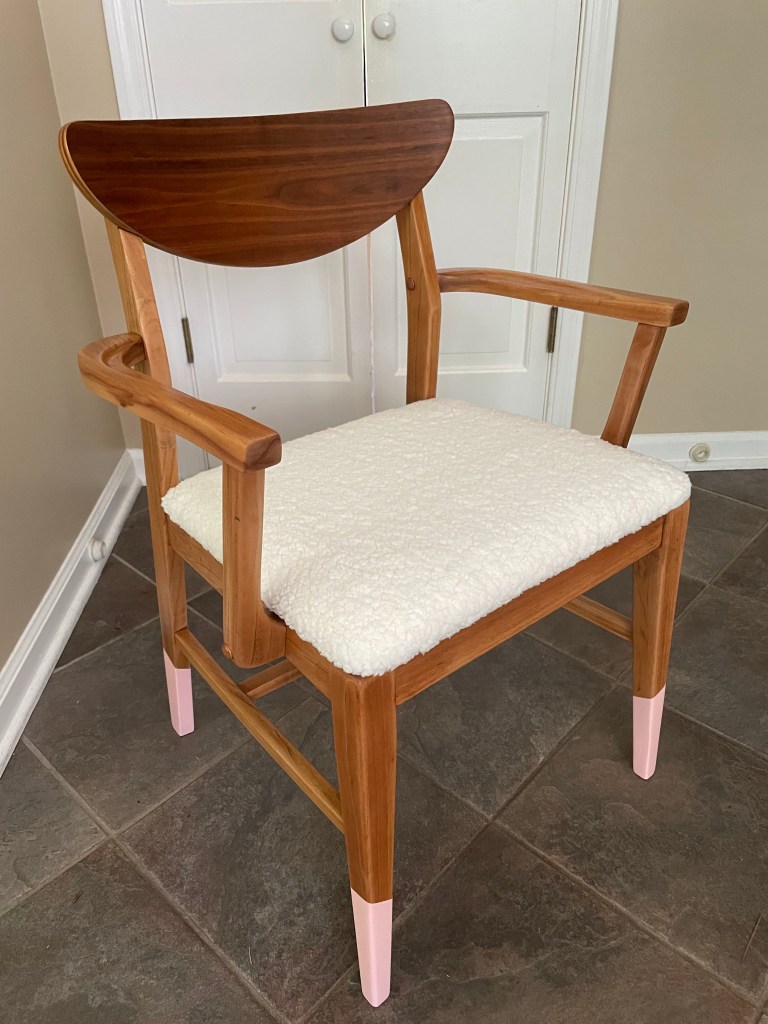
Refinishing began with a full aerosol can of shellac to seal the wood, accentuate the grain, and give it a lovely honey color.

Now it was time to elevate this chair from the ordinary. After some minor repairs I slippered the feet in Krylon “Ballet Slipper” gloss spray paint. Hence the chair’s nickname “The Ballerina”, because now it looks like it’s on points.

To finish the framework I applied 3 coats of clear, Varathane, oil-based polyurethane in a satin finish. As always I lightly sanded everything before the final coats.

Finally I re-upholstered the seat with a boucle-style fabric. It was a little stretchy in one direction so, to prevent over-stretch, I first attached it to some cotton lining fabric. Fully re-assembled this chair deserves to be in the spotlight.

#37 Tufted cow print ottoman/stool

Materials used: Upholstery fabric, fabric-covered buttons, weed barrier, stuffing, 8″ furniture legs.

Back in February 2019 I picked up a second-rate occasional table made of a plywood top on what looked like a bar stool. I separated the top from the bottom and, in April 2019, transformed the bar stool bottom into a Bistro Table. More than two years later the second part of this 2-part transformation is finally complete! Initially I envisaged transforming this plywood circle into a large, framed mirror but I love it as an ottoman/stool instead.

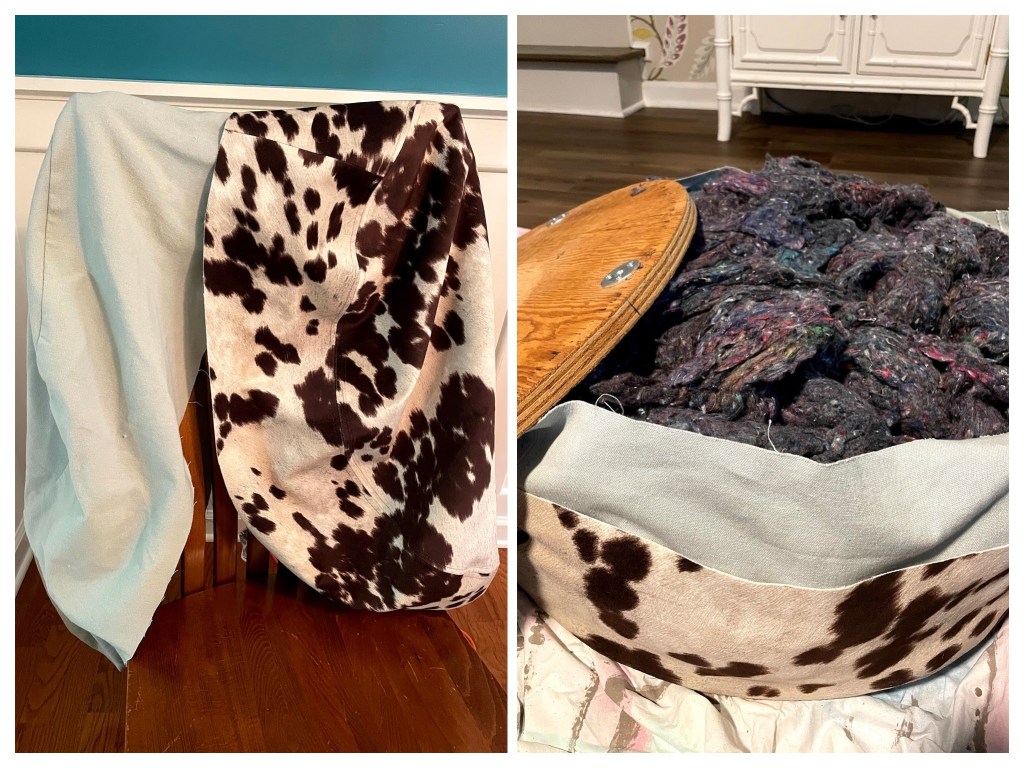
I began by re-purposing another freebie found on our local Buy Nothing Facebook page: A very large Urban Outfitters floor pillow which yielded four trash bags of upholstery stuffing and enough heavy duty fabric to make a liner.

To get the legs and tufting buttons in the right places, I made a newspaper template.

Once I had cut and sewn the liner and outer cover I inverted them both and stuffed them with the upholstery filling.

I compacted the stuffing by sitting on the plywood while pulling the fabric taut and stapling it. When everything was secured in place I set about doing the tufting armed with some very large upholstery needles and band-aids. The fabric-covered buttons are secured on the back side by tying the thread through a regular button.

The finishing touches were felt pads on the legs and a fitted piece of weed barrier to cover the upholstering and the leg hardware. Who knew that stretchable weed barrier would be as good an alternative to cambric, if not better?

#36 French country-style chairs

Materials used: Primer, chalk paint, clear wax, hardboard, upholstery fabric.

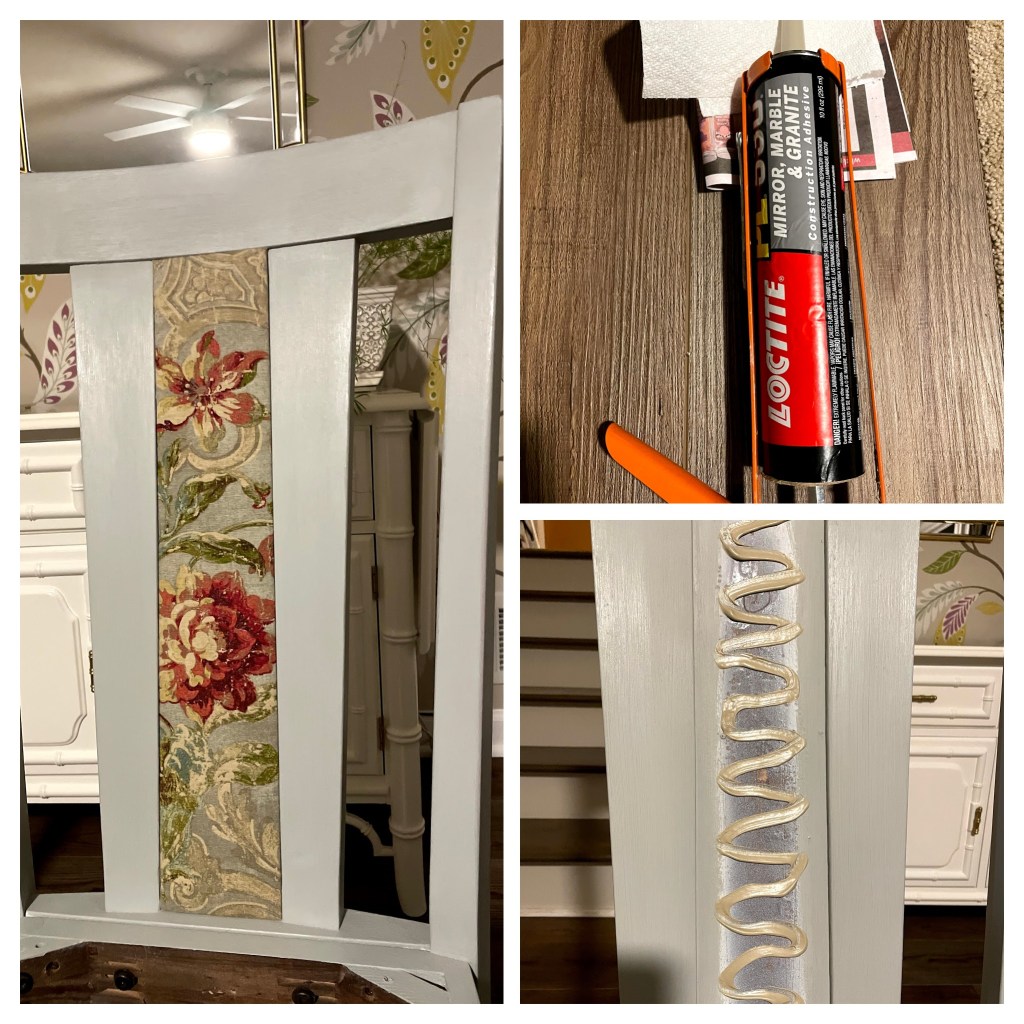
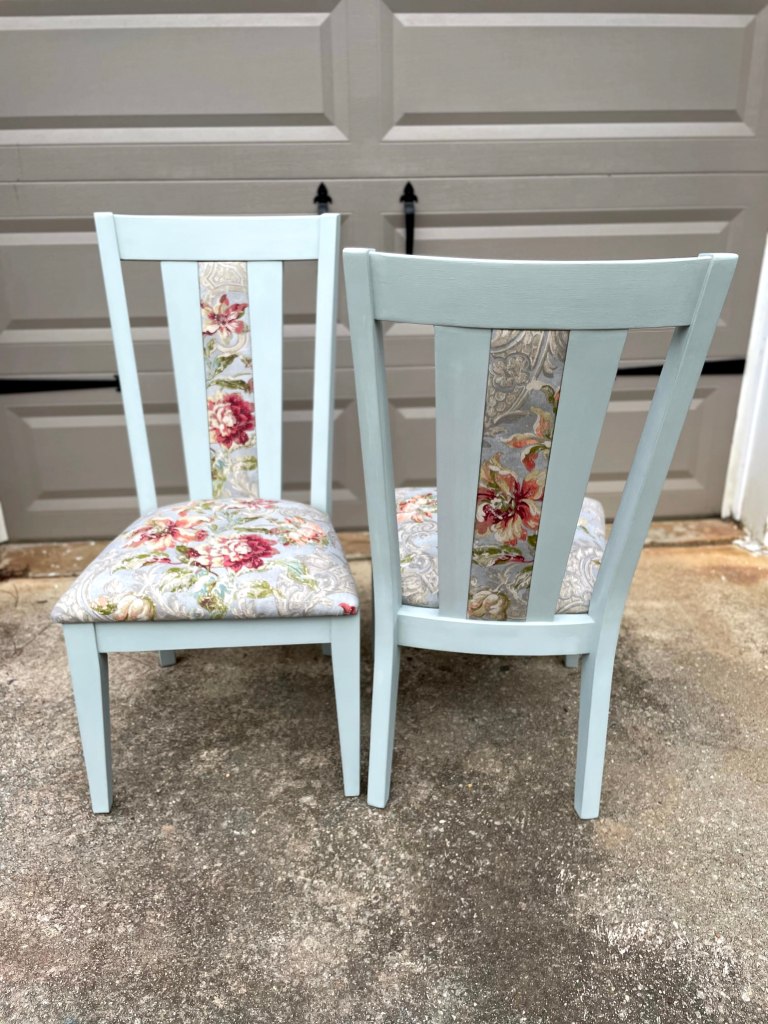
What attracted me to these chairs was the inlaid panels in the backrests. I knew if I could remove them it was an opportunity to have a little fun with some fabric I wanted to use.

First I had to make sure I could remove the “wooden tile”, inlaid panels. There were four all together: one in the front and back of each chair’s backrest. Sure enough they came out easily, as you can see in this 9-second video.

I then gave the frames a good clean, and sanded out a few dings.

After a couple of coats of primer, I applied three coats of chalk paint. I call this color Vintage Paris Grey; it’s a blend of leftover paints with those names. The paintwork was finished with two coats of Behr clear wax.

When the frames were done, it was time to tackle the upholstery. I started with the backrest panels. My handy husband cut four pieces of hardboard to fit the spaces. With spray glue I attached a thin piece of batting to each, then wrapped them in the upholstery fabric.

I re-attached the newly upholstered panels to the frames using Loctite mirror, marble and granite adhesive.

Under the old fabric the original seat pads were in such great shape I could re-use the foam and batting. I was even able to recycle the black cambric. With the old fabric as my pattern, I cut the new material, making sure to match the patterns on the two seats. I then covered the seat pads with the new fabric, and re-attached the black cambric. Then it was just a matter of attaching the new seat pads to the frames.

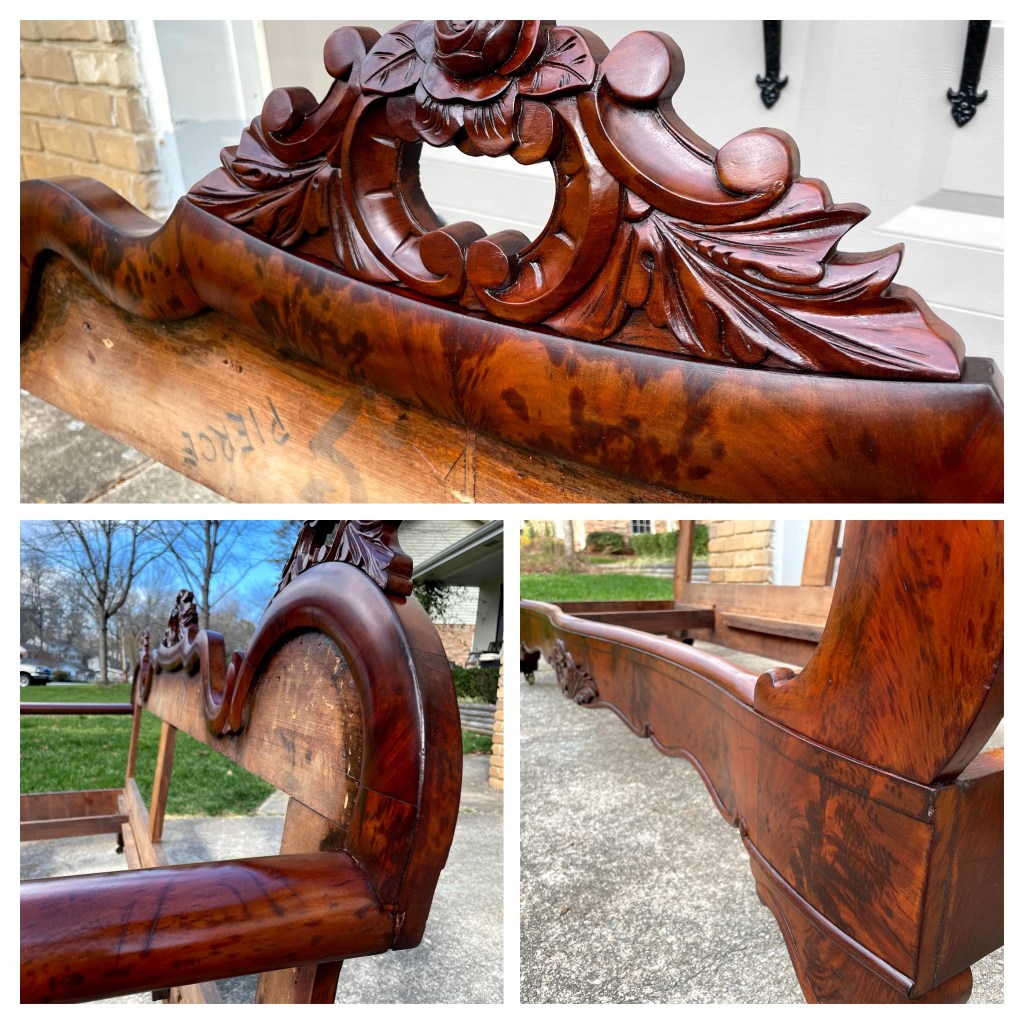
#34 Antique Victorian Empire-Style sofa

Transformation expenses: $24.82 plus upholstering costs

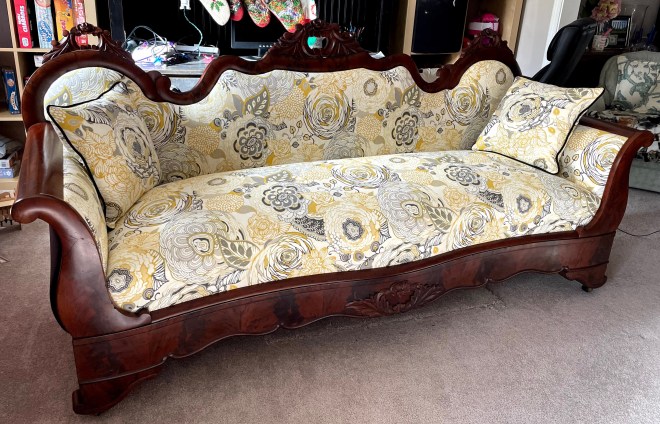
This beautiful turn-of the twentieth century sofa was a family heirloom that got crowded out and was languishing in a basement. Thankfully its owners contacted me before sending it to the thrift store. And thankfully I found a family that saw its potential and was willing to pay for professional upholstering. I think the result is a spectacular, happy ending.

This sofa’s upholstery was outdated, torn, and still had hay and horsehair stuffing. It seriously needed an update! Apart from some previous repairs and some damage to the veneer, the frame (with its original casters) was in reasonable shape and really just needed cleaning and restoring. The first step was to take it to the upholsterer and get the old upholstery removed.

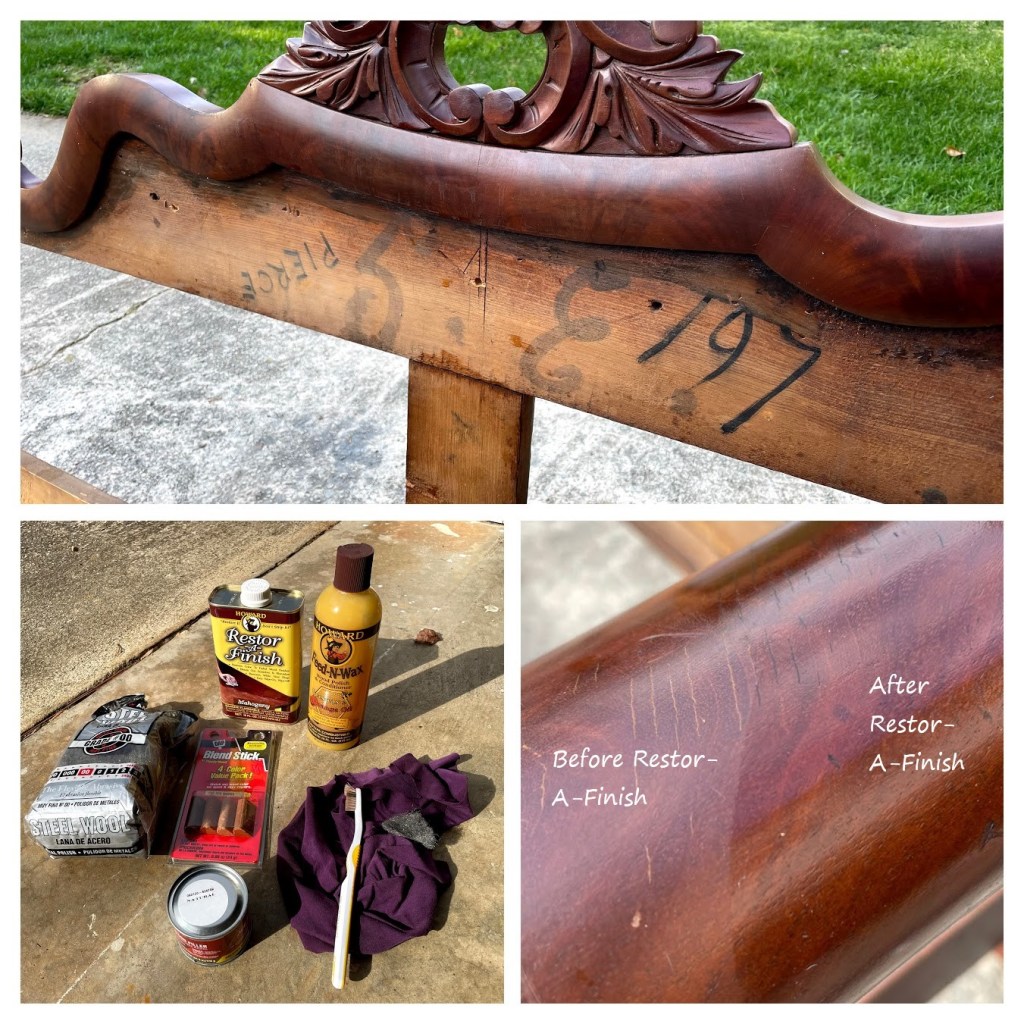
Once the frame was stripped bare I vacuumed and cleaned away the dust, dirt, and cobwebs. Then I pulled out my trusty refinishing tools: Howard’s Restor-A-Finish (mahogany), Howard’s Feed ‘n’ Wax, fine steel wool, clean rags, a toothbrush, and a wood finish repair kit.

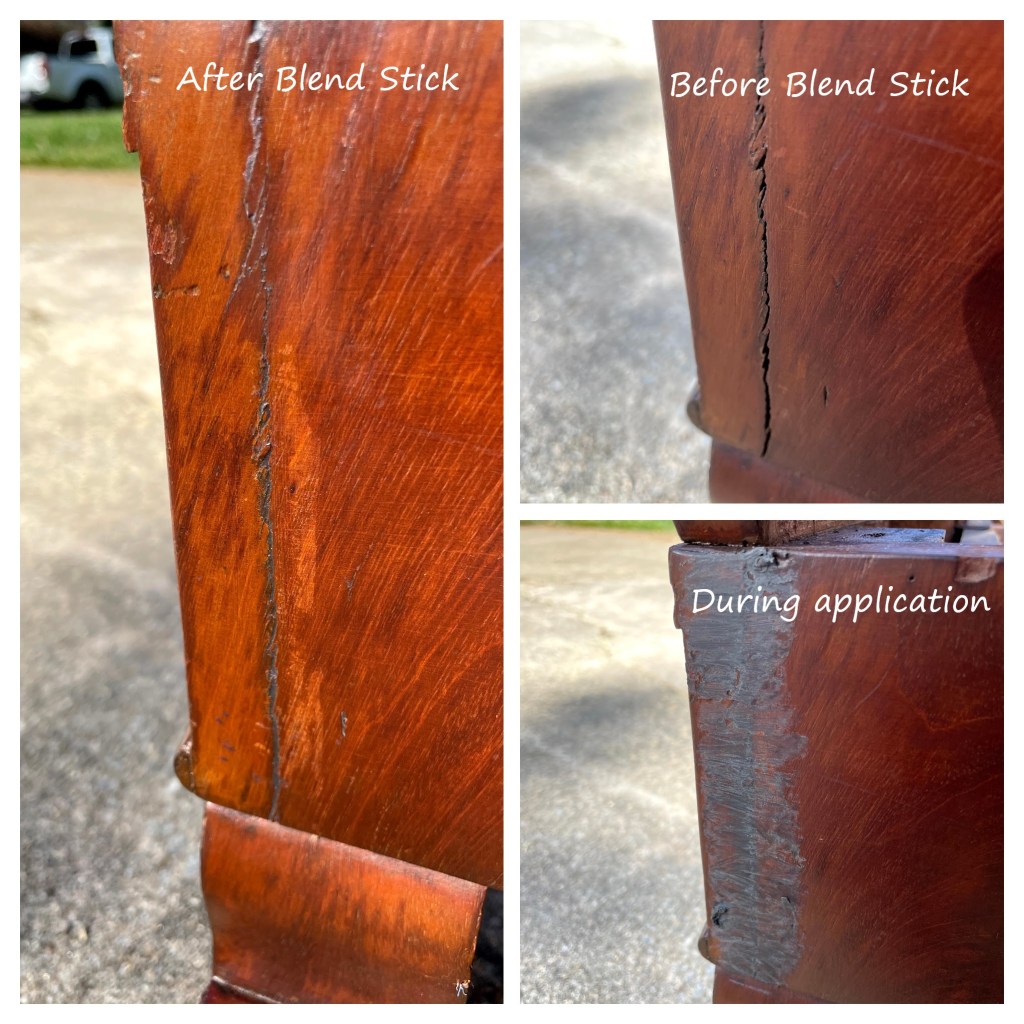
Restor-A-Finish blended out the smallest scratches and (with the careful use of some fine steel wool) removed the scuff and paint marks. I went back to the bigger cracks and scratches with a black Blend Stick and a dark furniture marker.

When the scratches, cracks, and dings had all been treated I finished with a coat of Feed ‘n’ Wax to restore a beautiful glow.

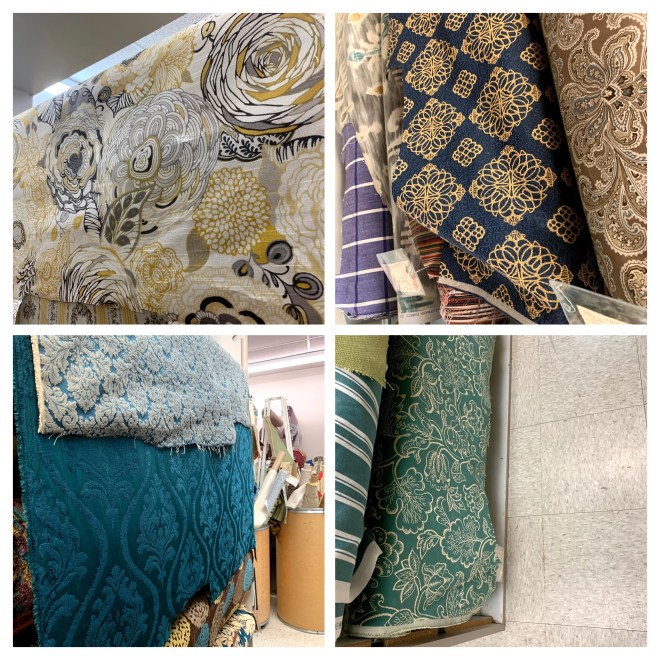
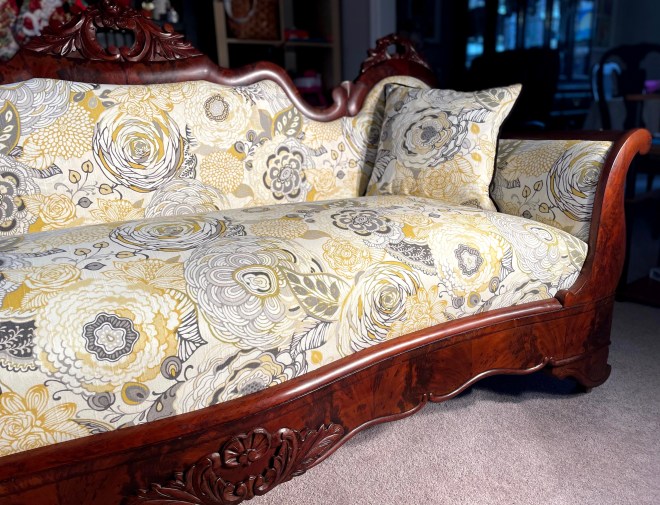
Meanwhile the new owner went fabric shopping. Amongst these and other options her eye kept going back to the one top left, which we decided to call “Modern Rose”. The pattern compliments the rose carvings on the frame perfectly, and the grey/yellow color scheme is a personal favorite of hers. We chose black velvet for the outside back and sides and included matching pillows trimmed with black velvet cording.

The final leg of the journey was back to the upholsterer to put it all together.

The end result is a beautiful blend of the rich wood tones and the new fabric, which is the perfect balance of neutral/vibrant and modern/traditional.

#30 Picture frame jewelry board

Transformation expenses: $35.74

A while ago we hired a dumpster during a landscape project. When neighbors threw in a perfectly good picture frame I grabbed it knowing it would be good for something. Months later some friends and I were browsing quaint shops after a lovely afternoon tea. One friend saw a jewelry board that she particularly liked and I offered to create something similar with this frame.

Keeping costs to a minimum was the biggest challenge on this project. For my design I needed:

  • 5/8″ dowel rod & plywood
  • Leather cord & 1 yd fabric
  • Decorative tacks & cup hooks
  • Wooden decorative appliques

Fortunately I already had these things left over from previous projects:

  • Spray paint
  • Clear, dark & metallic wax
  • Thin batting
  • Beads & craft paper

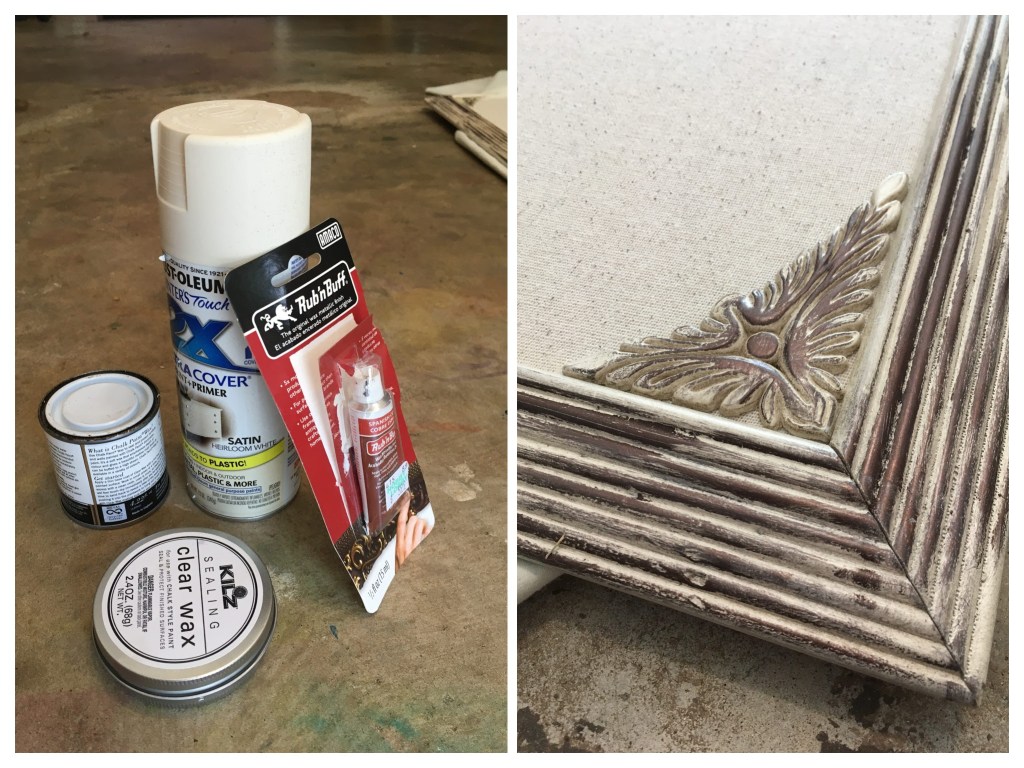
The frame was rather uninteresting so I embellished it with wooden appliques and a layering of paints and waxes. The frame, appliques and doweling were first painted with Rust-Oleum 2X Ultra Cover in Antique White. I also painted the brass cup hooks with Rust-Oleum Hammered spray paint in dark bronze.

I then applied clear wax, followed by dark wax, followed by Amaco Rub ‘n Buff metallic wax in Spanish Copper.

Meanwhile I wrapped the plywood with thin batting followed by a neutral fabric.

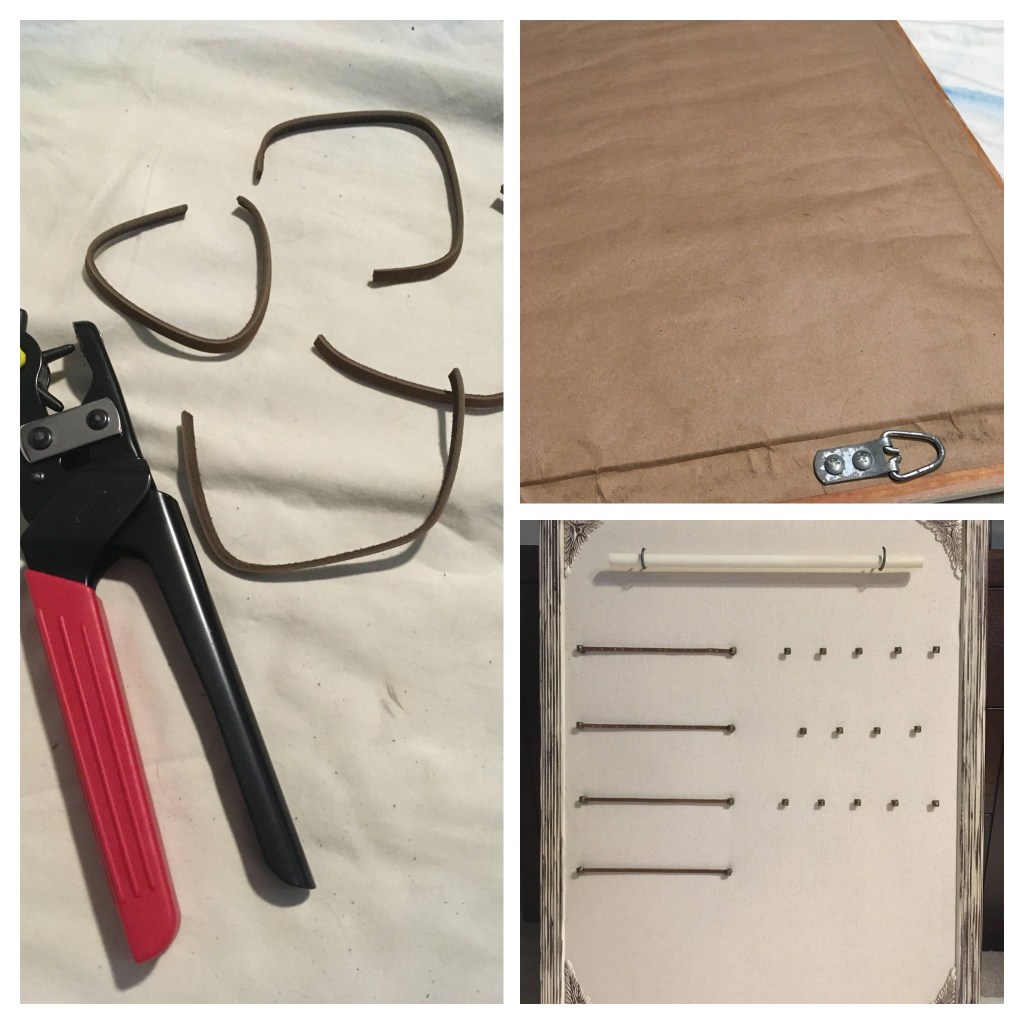
I secured the prepared plywood into the frame using panel pins. I then cut four equal strips of leather cord for hanging earrings. I punched holes in each end of them all and pairs of holes at intervals along two of the strips (for earrings with posts). These were then nailed to the board using decorative tacks and a bead as a spacer. For bracelet storage I attached a length of the painted doweling using the two painted cup hooks. Finally, more decorative tacks function as hangers for necklaces. The back of the frame is finished with craft paper and a pair of D-hooks for hanging.

#27 Antique Jacobean-style chair

Transformation expenses: Frame restoration – $4.84, professional upholstering in leather – $420

This circa 1890s winged armchair was put to the curb at a property that was being flipped. Its transformation was a labor of love. For the first time ever I employed the help of professionals; the re-upholstering of this chair was beyond my capabilities, so after I had transformed the frame, I took it to Budget Upholstery & Fabrics. I would not ordinarily have gone to such great expense but the antique value of this piece made it worthwhile.

Some people reading this might question me refinishing rather than restoring this chair. We’ve seen antique appraisers lamenting over a piece that has diminished in value by being refinished. This was not that type of piece (see below). I’d like to think the original furniture maker would be pleased to know that 120+ years later someone had put so much time and effort into making it functional and beautiful again. Read on for more on its journey from mildewed neglect to fireside treasure.

Peter Cook (executive producer of Antiques Roadshow) wrote: ” Understandably, our Americana experts on the Roadshow live for wonderful old pieces of furniture that have somehow survived in terrific condition …. Most old furniture, of course, doesn’t come close to meeting those standards. On the contrary, most furniture has been well used (even abused), scratched, broken, and often repaired many times. How could such furniture not be improved by a good job of refinishing or restoring? A comparison with a friend’s antique left me in no doubt that this piece was beyond simple restoration. On the left is my friend’s chair which is well preserved and still has its original patina. On the right is this chair which was dull and mildewed in places.

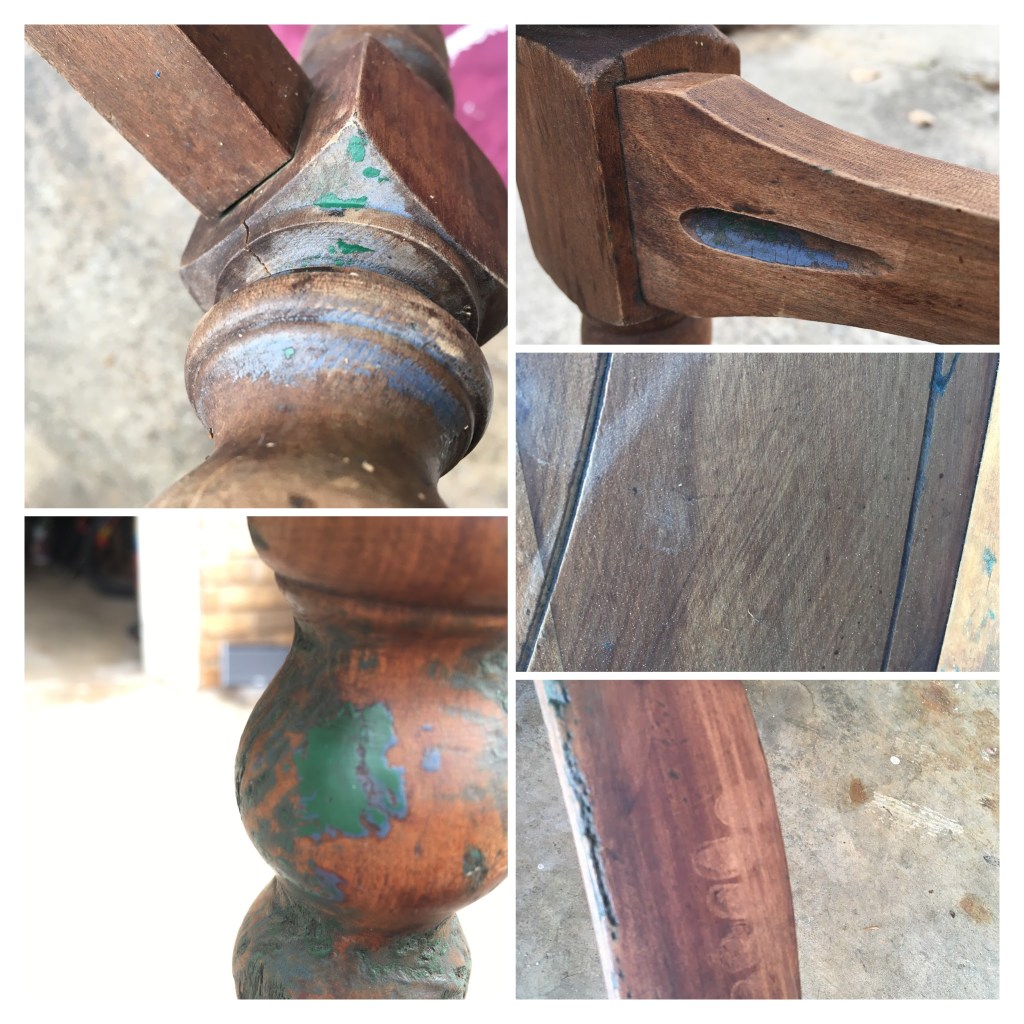
As well as signs of neglect this chair had evidence of poorly applied stain (see brush marks and fingerprints) and at least two different applications of paint (blue & green).

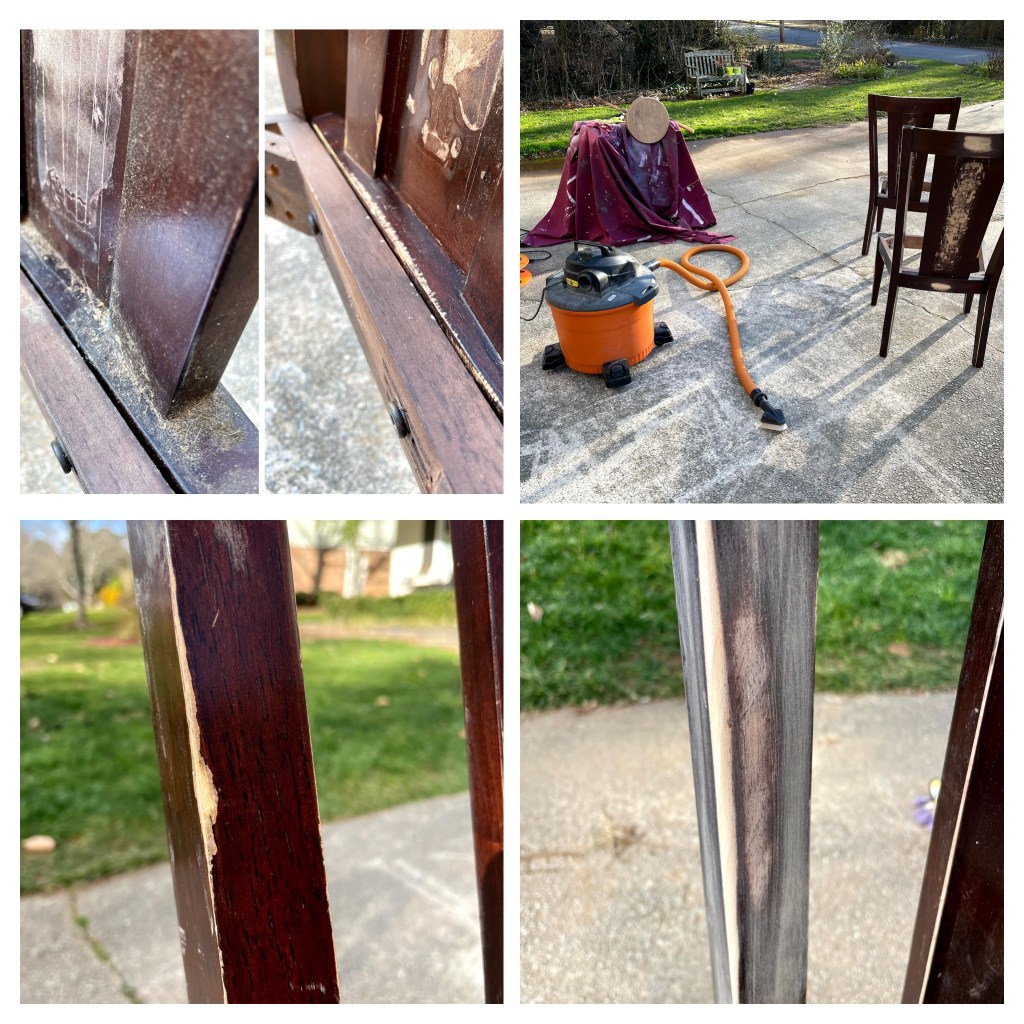
I first cleaned the piece with a mild detergent and then with TSP All Purpose Heavy Duty Cleaner (used by antique restorers). After both cleanings the chair still needed more than just a finish coat. I knew then that I would need to sand it back to the raw wood.

My goal was never to get it looking like new, rather to remove all ingrained dirt/mildew and get it a fairly even color for staining. After many, many hours of painstaking work (using just 220 or 400 grit finishing sandpaper) the sanding was finally complete. The piece still bears a lot of the marks of old age (scratches, dings, traces of old paint) but those all give it character.

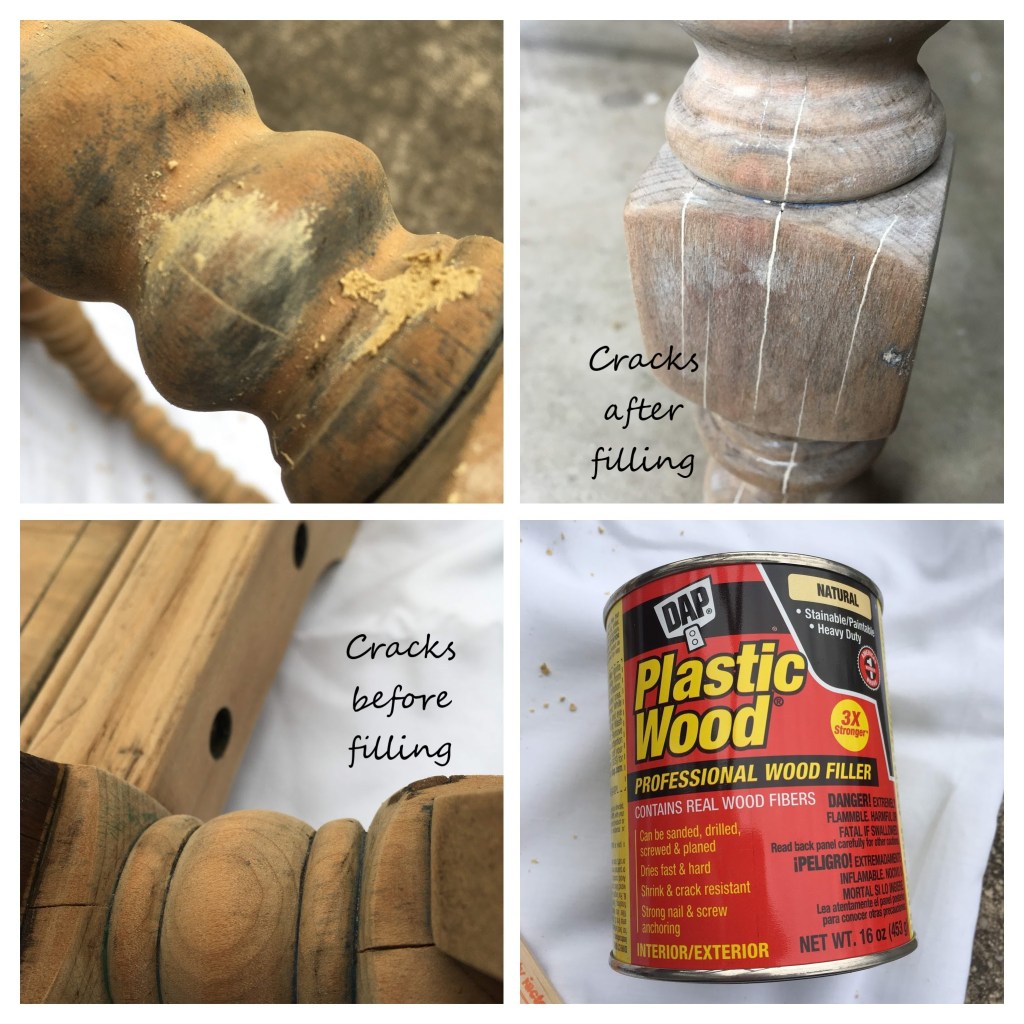
Before staining I filled the hairline cracks (probably from water damage) with Plastic Wood Professional Wood Filler. I simply rubbed it in with a (glove-covered) finger, let it dry, then sanded away the excess.

On recommendation from an online appraiser I chose a dark walnut oil-based stain by MinWax. I applied it with a brush then immediately removed any excess with a clean rag.

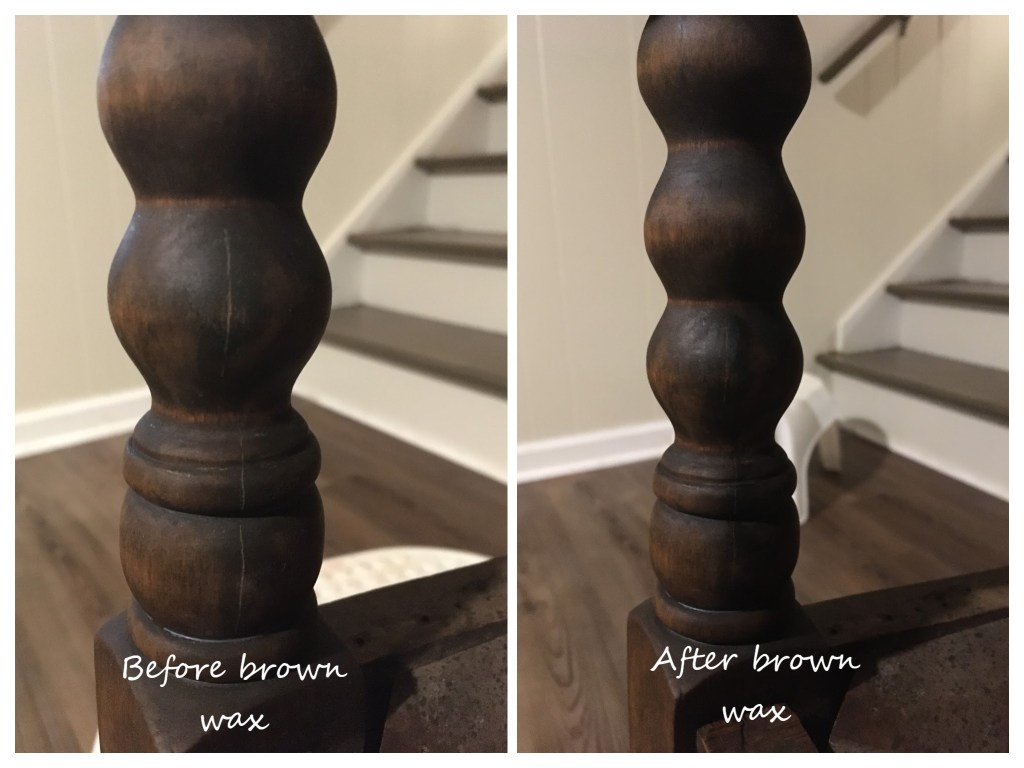
Despite it saying it “May be stained, sealed, or painted immediately after sanding” I was disappointed the wood filler did not pick up enough of the dark walnut color. The filled cracks were still visible, but thankfully I was able to blend them in with a little Annie Sloan dark wax.

As I began applying the finishing coats of Kilz clear sealing wax, some previously unnoticeable smudges of wood filler appeared (left pic). To fix the problem, I removed the wax with some solvent, sanded again, and re-touched the stain. After the whole frame had two coats of buffed wax and cured for 30 days it was ready to go the upholsterer.

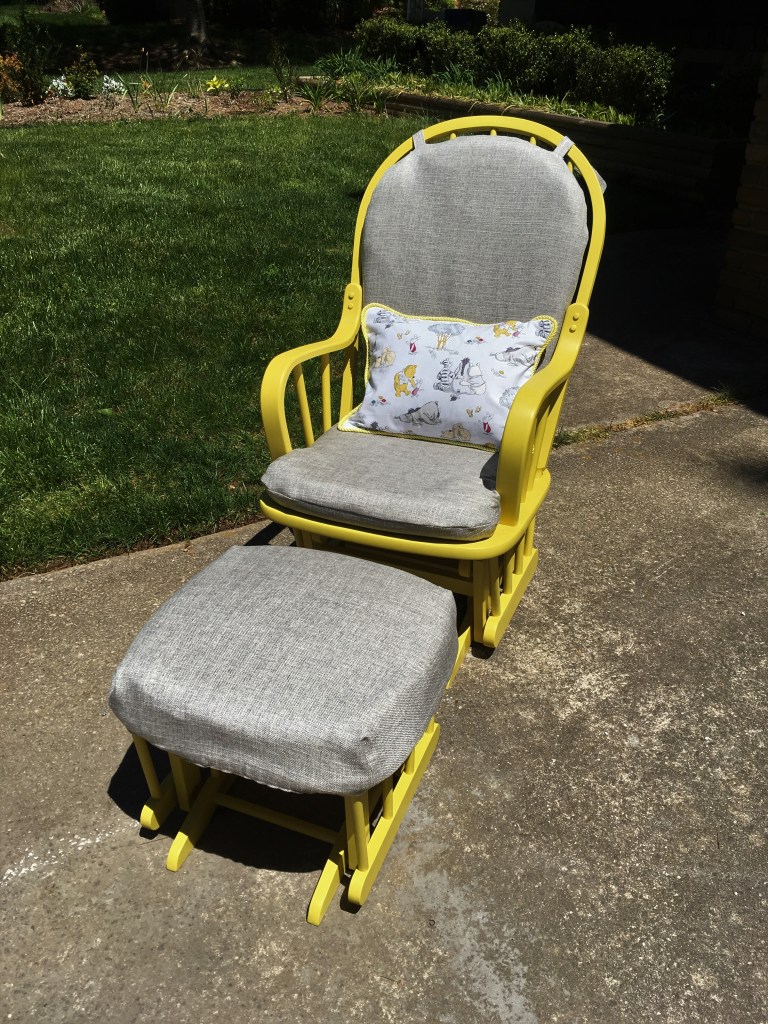
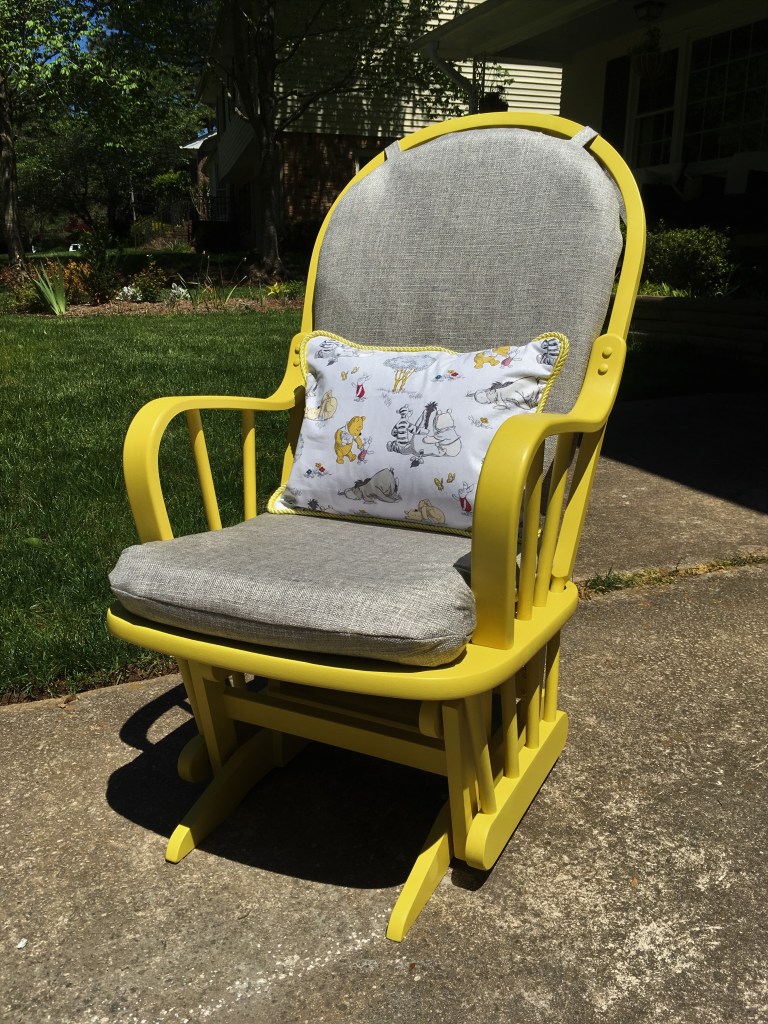
#19 Glider rocker with ottoman

Transformation cost: $73.51 (which includes $16.21 for the throw pillow)

Without doubt this was the most challenging and time consuming project I have worked on so far. Were it not for these two things I might have quit: 1) I had a special client: A dear friend’s daughter who is expecting the family’s first grand-baby 2) I never quit! I’m really a very stubborn person and when I start something I am pretty determined to see it through. There were times when I wasn’t sure I could finish it in time or to the standard I like to set. In the end my perseverance paid off and when it all came together I finally fell in love with the piece.

When I saw that a neighbor was discarding this furniture set I quickly thought of my friend’s expectant daughter. A little research showed that it was a project worth doing; a similar piece by this manufacturer would retail for >$400.

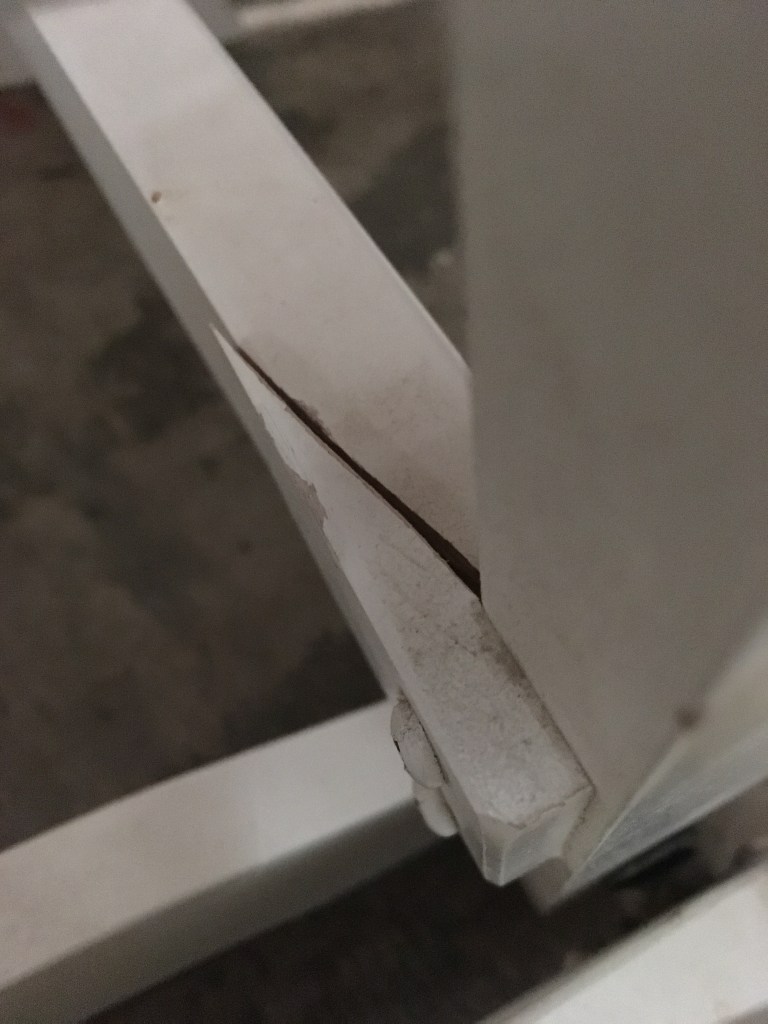
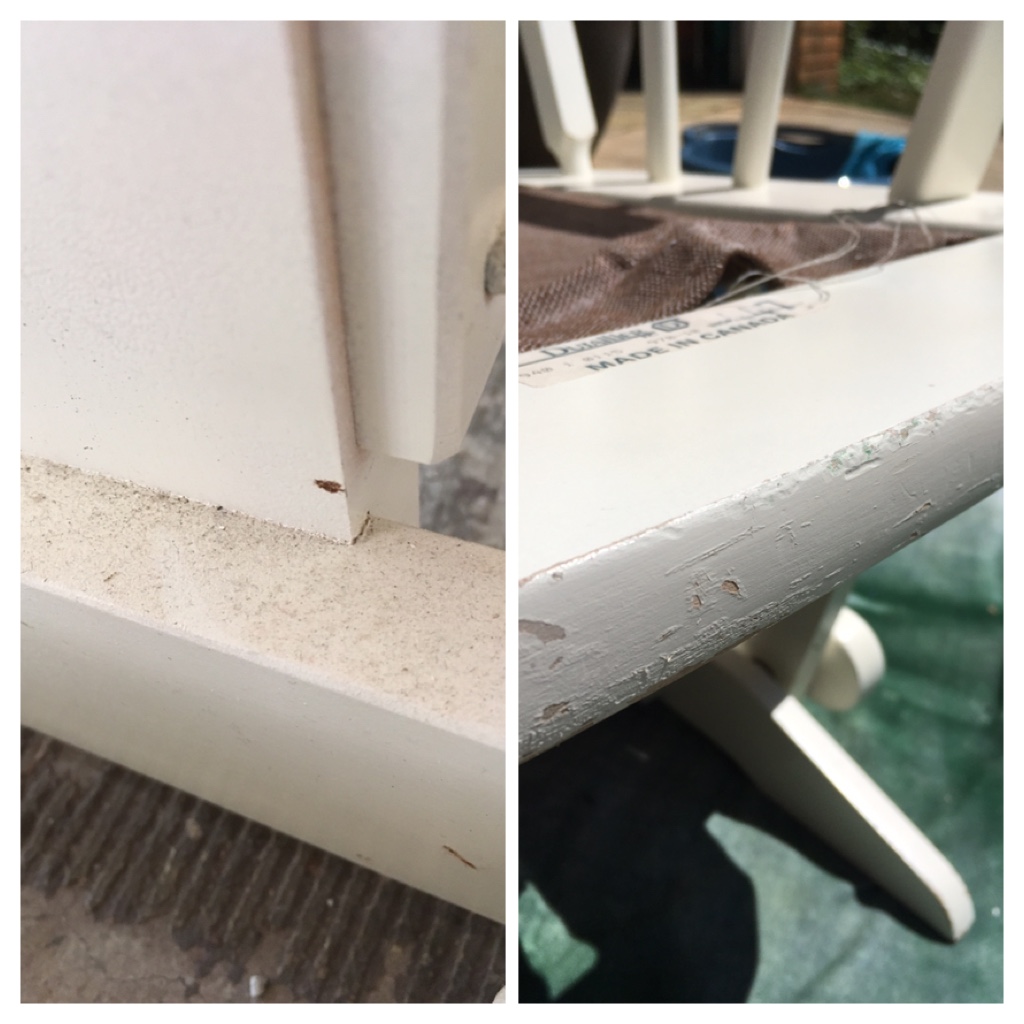
Apart from worn out cushion covers, some slats missing from the ottoman, and some scuffed paintwork, the piece was generally in good condition. The only repair it needed was to a crossbar on the chair.

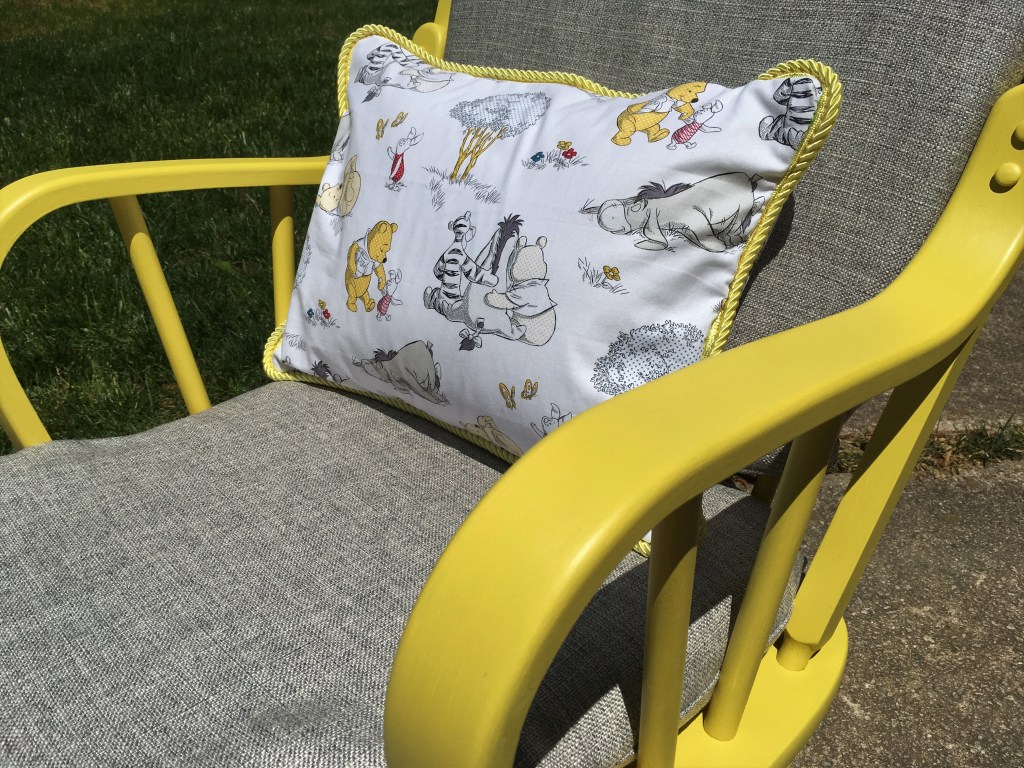
The theme for this piece was to be “Winnie The Pooh” with a yellow, gray and white color scheme. In the end I went with Annie Sloan chalk paint (not the paint pictured here) in English Yellow.

First order of the day was a thorough cleaning with a weak soap solution. Although you don’t have to sand a surface before applying chalk paint I did smooth out some blemishes in the paint finish and sand the very polished factory finish on the arms of the chair.

It transpired that painting a glider rocker and ottoman is nigh on impossible. Fortunately I’m always up for a challenge but my resolve did waver as I painstakingly applied coat after coat after coat. Fortunately by the third coat (which I applied with a wax brush rather than the regular paintbrush I had been using) I got the uniform look I was aiming for.

But the ordeal was not over! I still needed to add 2 coats of clear wax to give protection and a lovely sheen to the finish.

Once the painting was complete my husband added the slats that were missing from the ottoman

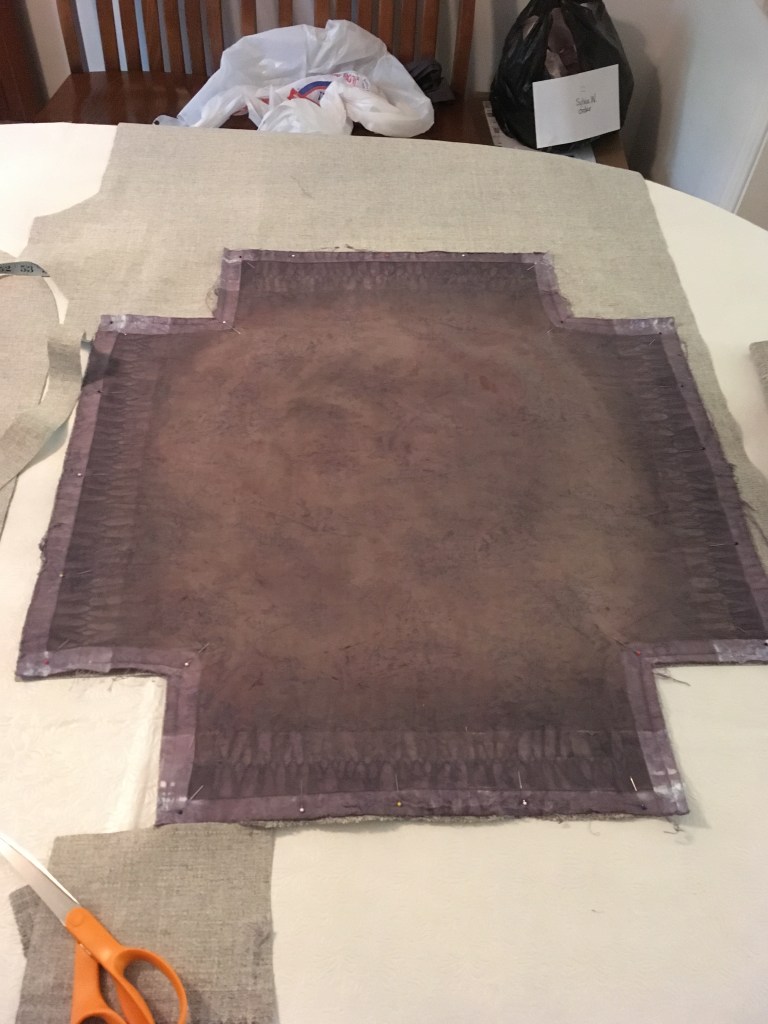
To replace the cushion covers I used the old, unpicked covers as a pattern guide for the new fabric. A brand new throw pillow in the feature fabric brings together all the colors of the piece.

#18 Rocking chair

Transformation cost: $26.53

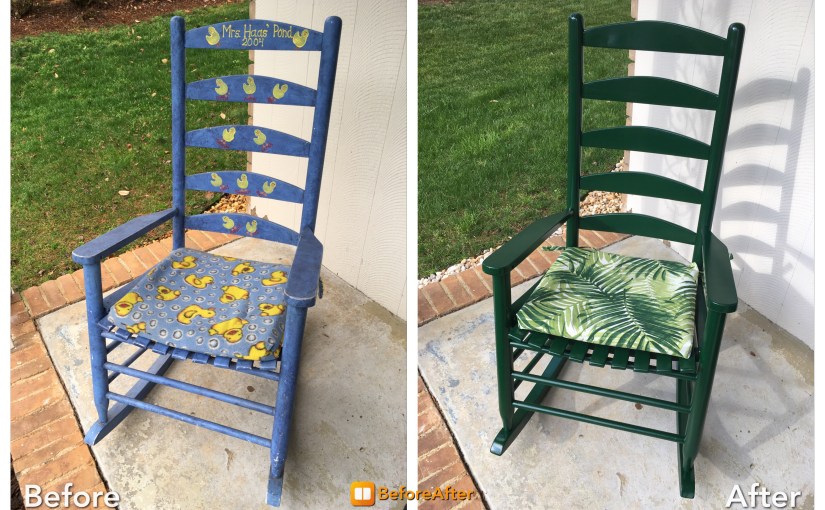
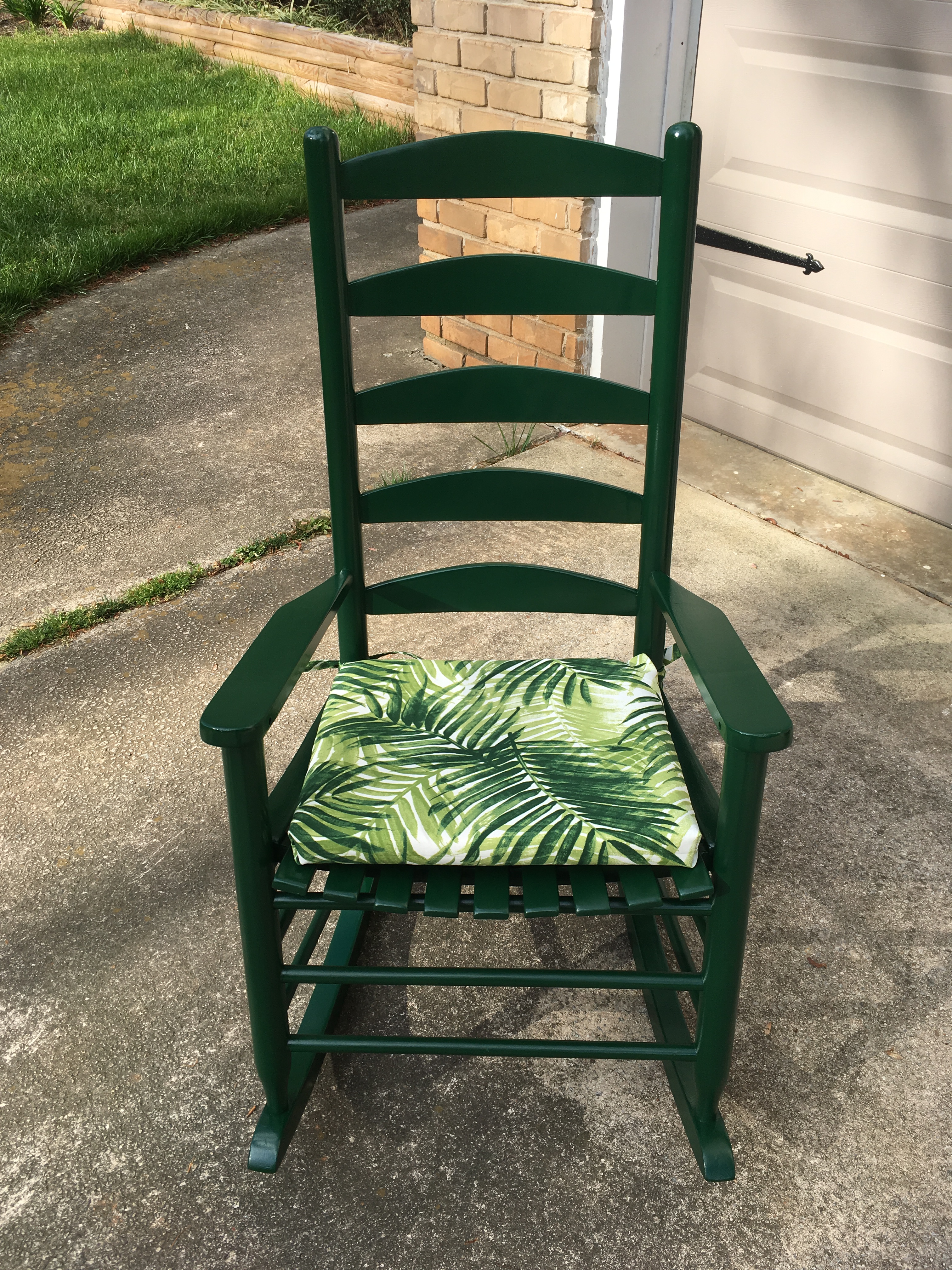
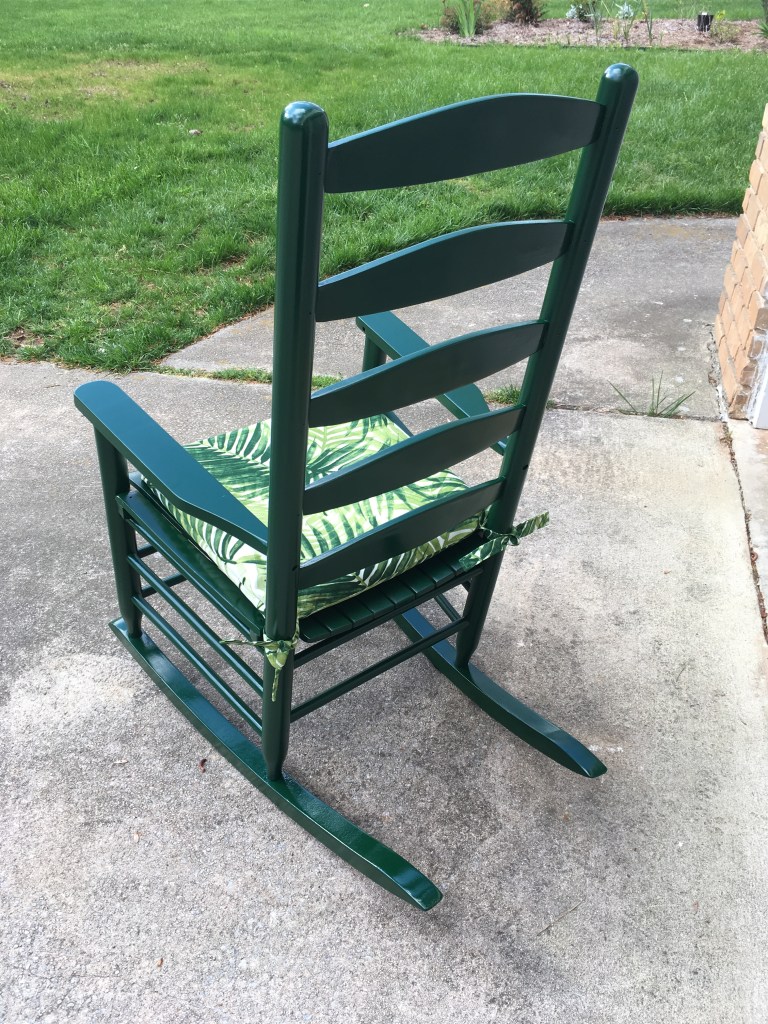
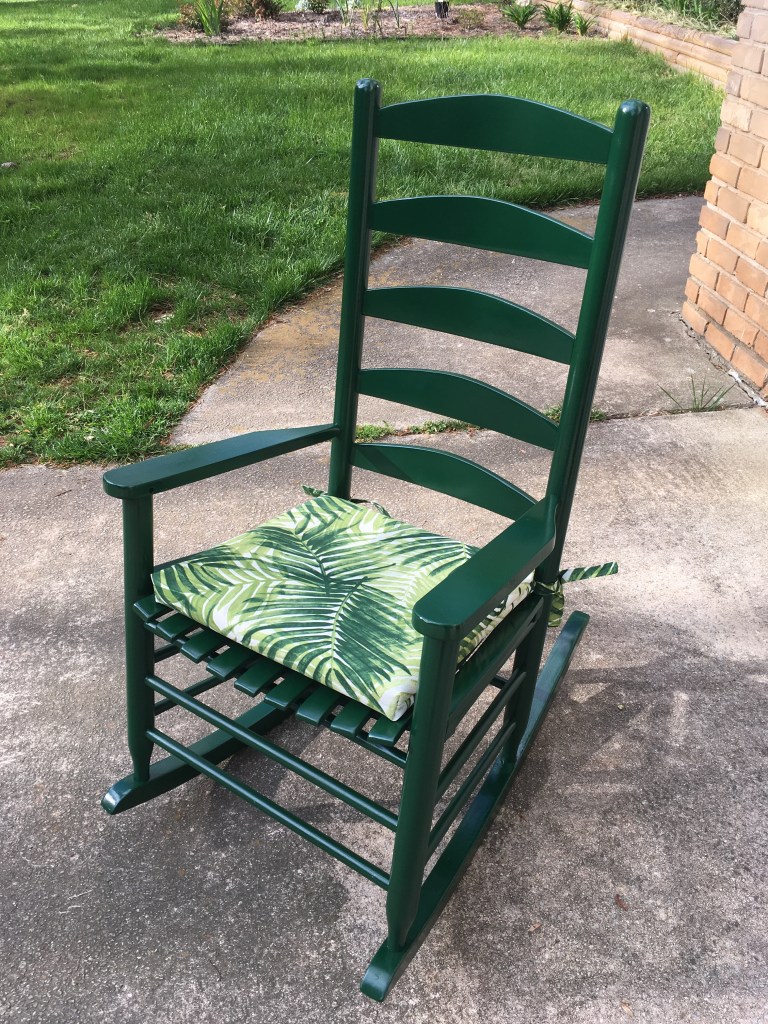
This was a bittersweet transformation; on the one hand it was slightly heartbreaking to eradicate the bespoke finish that had been lovingly and expertly applied by a parent; on the other hand the chair was ready to move on and it rocks its new sophisticated, tropical look.

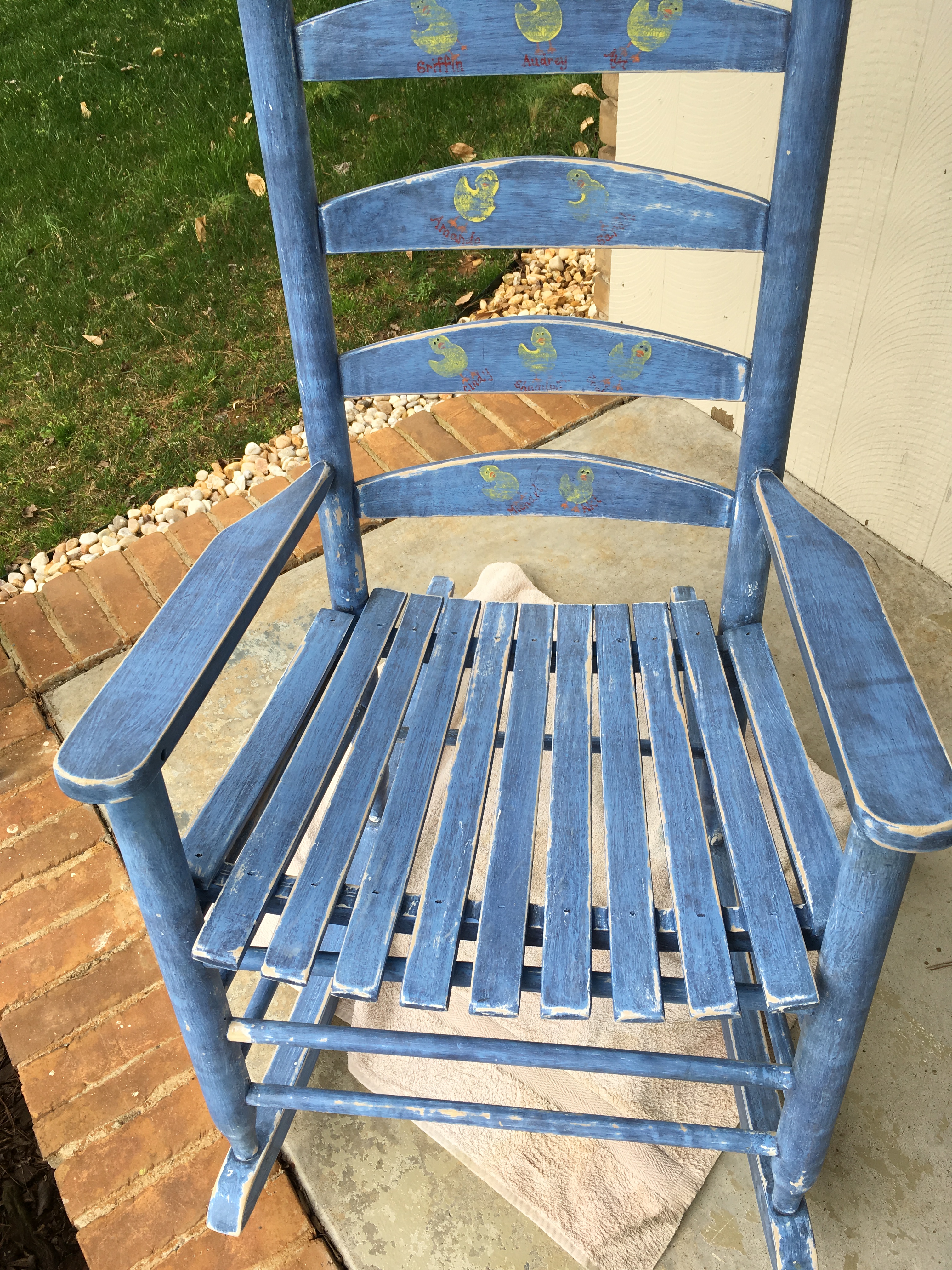
Since the previous finish was a textured one, it first needed a thorough sanding. Without spending days on it I wanted to get the surface as smooth as possible as it would be getting a gloss finish that would show every little defect. After sanding with three different grit papers I gave the chair a good clean with a mild detergent solution.

Beginning with the underside I started applying Rust-Oleum UltraCover spray paint in gloss hunter green. When several coats were thoroughly dry I applied felt pads to the rockers to protect the finish and any flooring it would eventually stand on.

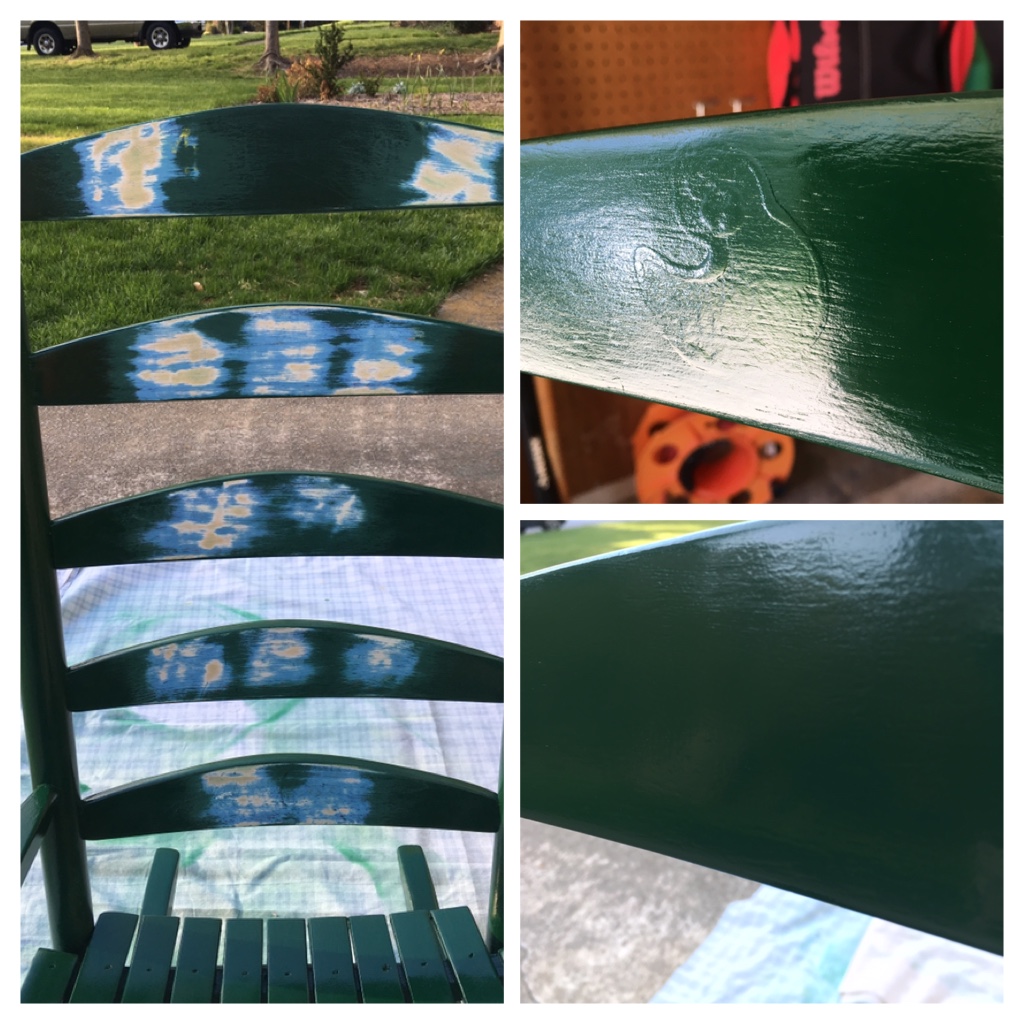
When I started painting the topside my fears were realized. Despite having done what I’d hoped was enough sanding, the outline of the ducks was still visible through the new finish. More sanding and more coats of paint did the trick. Ducks gone!

With the paintwork complete I now needed to revamp the cushion. Using the unpicked old cover as a pattern I cut and sewed a fashionable indoor/outdoor palm print fabric into a new cover.

When chair and cushion were re-united my vision was realized

#9 Bamboo wicker chair with upholstered seat

Transformation cost: $42.64

This piece was being discarded by a friend of mine who was helping her parents move and clean house. Other than missing 3 casters and having a small split in one leg it was in great condition and is a good quality piece. At first I envisaged this piece with a pretty damask fabric and pastel paintwork but the price of the fabric sent me back to the drawing board. In the end the geometric pattern I found at my local craft store (where upholstery fabrics are permanently 30% off!) gave me the inspiration I needed to take a completely different tack!

Cleaning a piece before painting is arguably the most important part of any transformation, and this was no easy piece to clean. However, with my trusty toothbrush, some compressed air and patience the dirt disappeared!

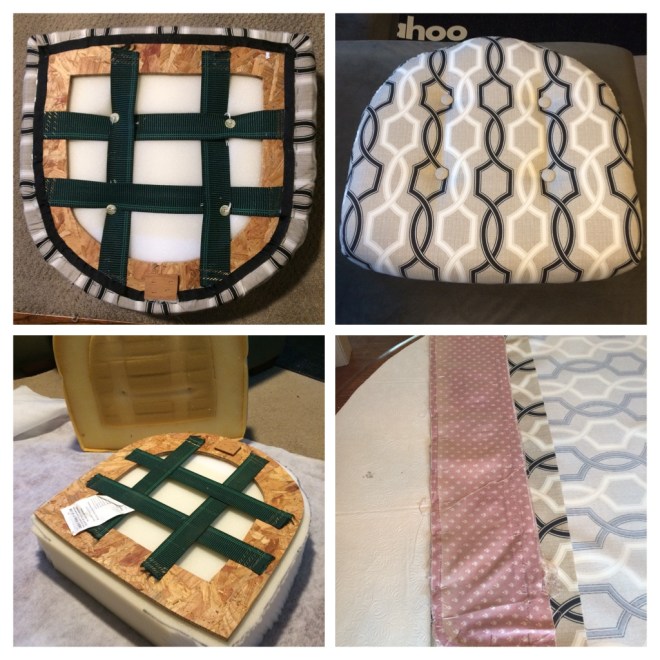
Using the old fabric and foam as a guide I cut and sewed the new cover, carved out a new seat pad and covered it with batting followed by the new fabric cover. The final touches were to hot glue some ribbon trim to the edges of the fabric and re-create the original tufting using four fabric-covered buttons.

Meanwhile I treated the framework of the chair to 3 coats of Krylon ColorMaster paint & primer in gloss black .

And the finishing touch was to reunite frame & seatpad